• Blog
    • Morris Chair and Foot Stool
    • Natural Edge Walnut Coffee Table
    • Drawing Table
    • Prairie Sofa and Love Seat
    • Mission Pedestal Table
    • Shaker Sofa Table
    • Mission Plant Stands
    • Kitchen Door
    • Walnut Bench
    • Wastepaper Baskets
    • Arts & Crafts Lamp
    • Walnut Snare Drum Shell
    • Guitar Amplifier Head Enclosure
    • Folding Step Stool
    • Window Bench Banquette
    • Doorbell Cover
    • Doorbell Cover 2
    • Picture Frames
    • Roubo Workbench
    • Cherry Side Table
  • About
  • Contact
  • Blogroll
Menu

DCW Woodworks

handcrafted fine furniture & custom woodworking
  • Blog
  • Gallery
    • Morris Chair and Foot Stool
    • Natural Edge Walnut Coffee Table
    • Drawing Table
    • Prairie Sofa and Love Seat
    • Mission Pedestal Table
    • Shaker Sofa Table
    • Mission Plant Stands
    • Kitchen Door
    • Walnut Bench
    • Wastepaper Baskets
    • Arts & Crafts Lamp
    • Walnut Snare Drum Shell
    • Guitar Amplifier Head Enclosure
    • Folding Step Stool
    • Window Bench Banquette
    • Doorbell Cover
    • Doorbell Cover 2
    • Picture Frames
    • Roubo Workbench
    • Cherry Side Table
  • About
  • Contact
  • Blogroll

Drawing Table, part 2

July 21, 2016

(This is a continuation of the "Drawing Table" series, click here for part 1 )

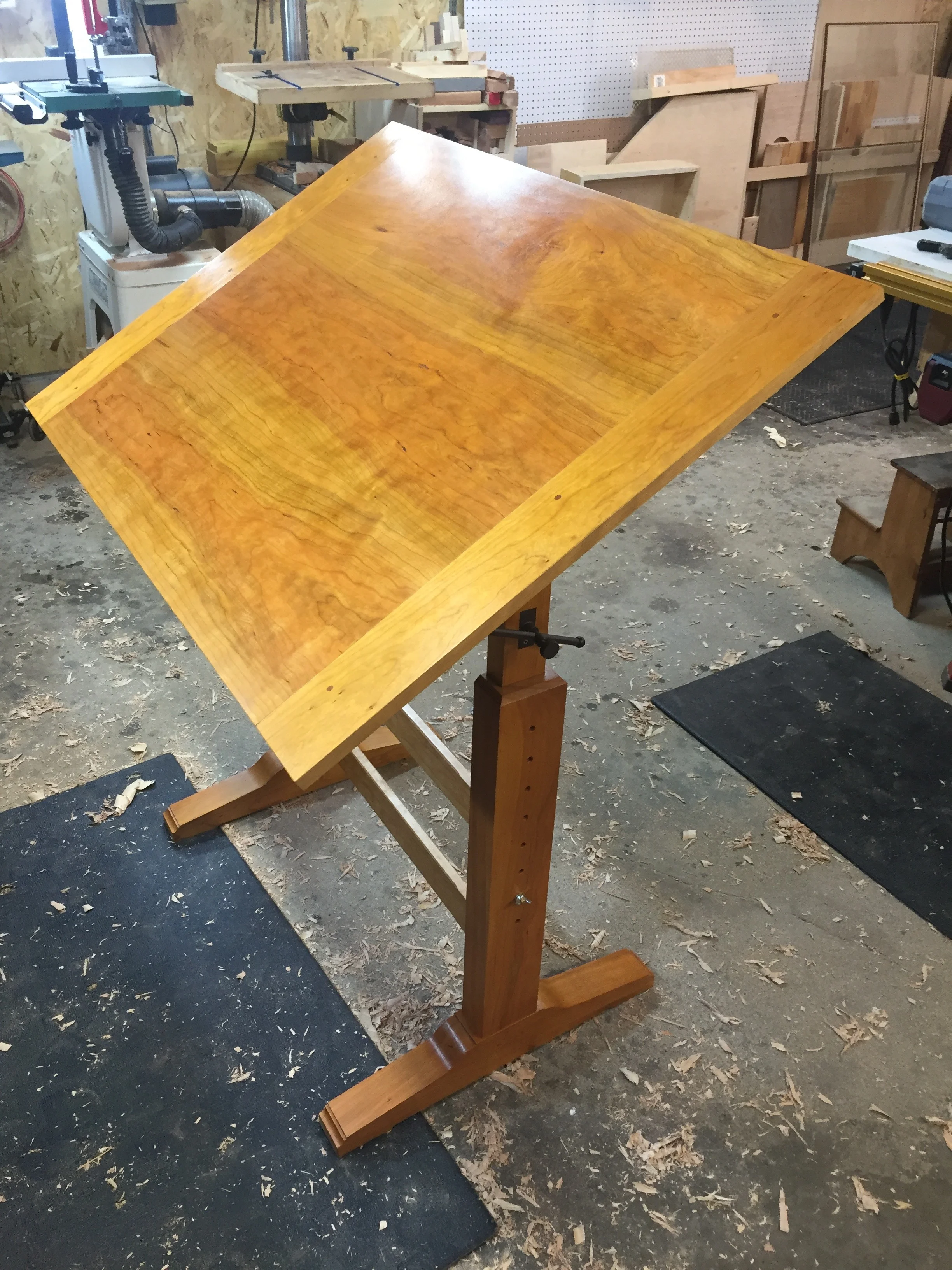
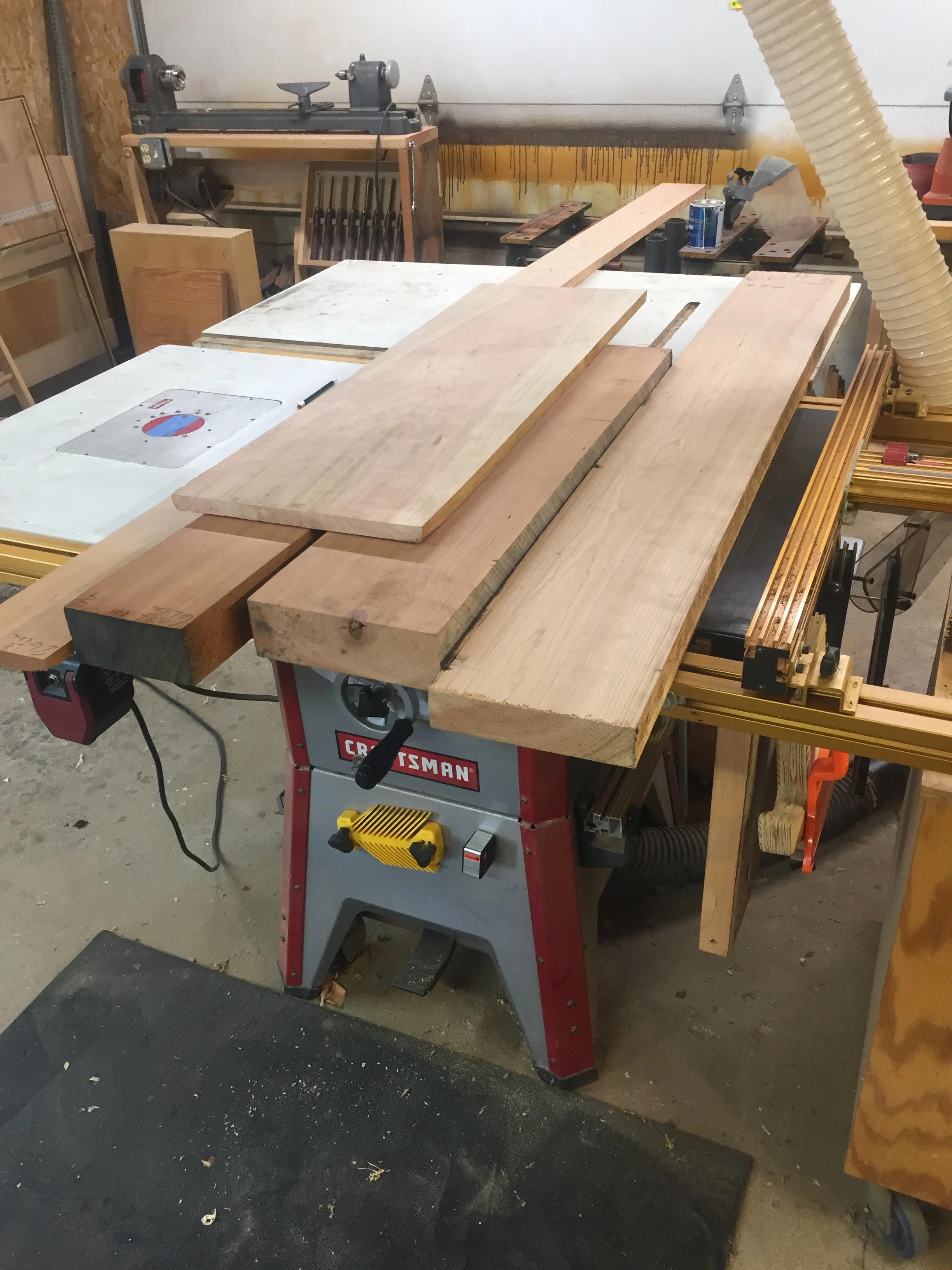
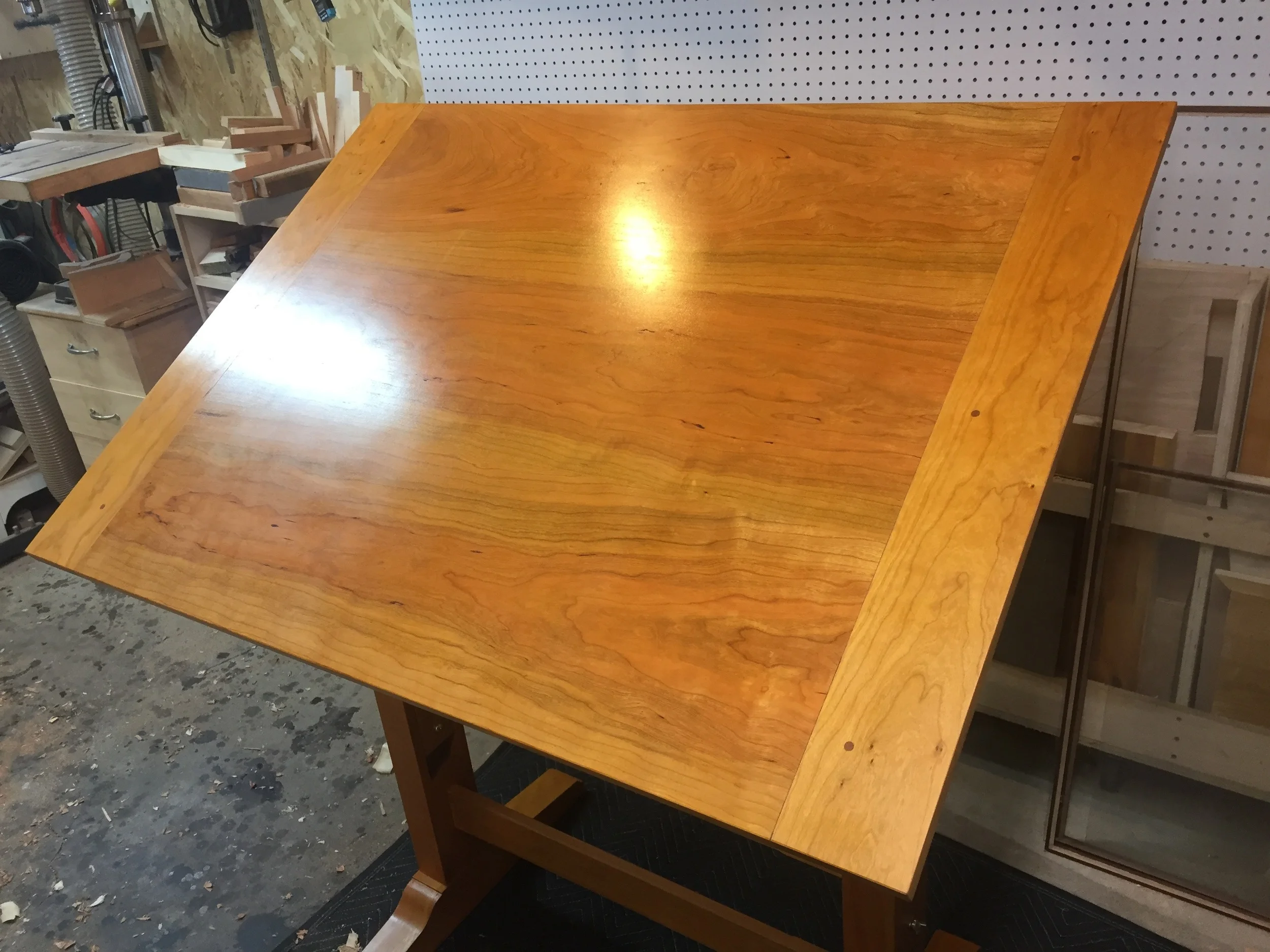
The top of the table is a classic breadboard top. And as it's the most visible part of the whole piece, I wanted to find boards with some nice figure. I found a gorgeous nine foot wide cherry board, that, when cut into three sections, would be enough for the main part of the top. It had a mix of light and dark wood, but I knew it would look great laminated together. I liked the contrast it would produce. The rest of the cherry was easy source on this run, as the hardwood dealer had plenty on hand, and back at the shop, I got to work.

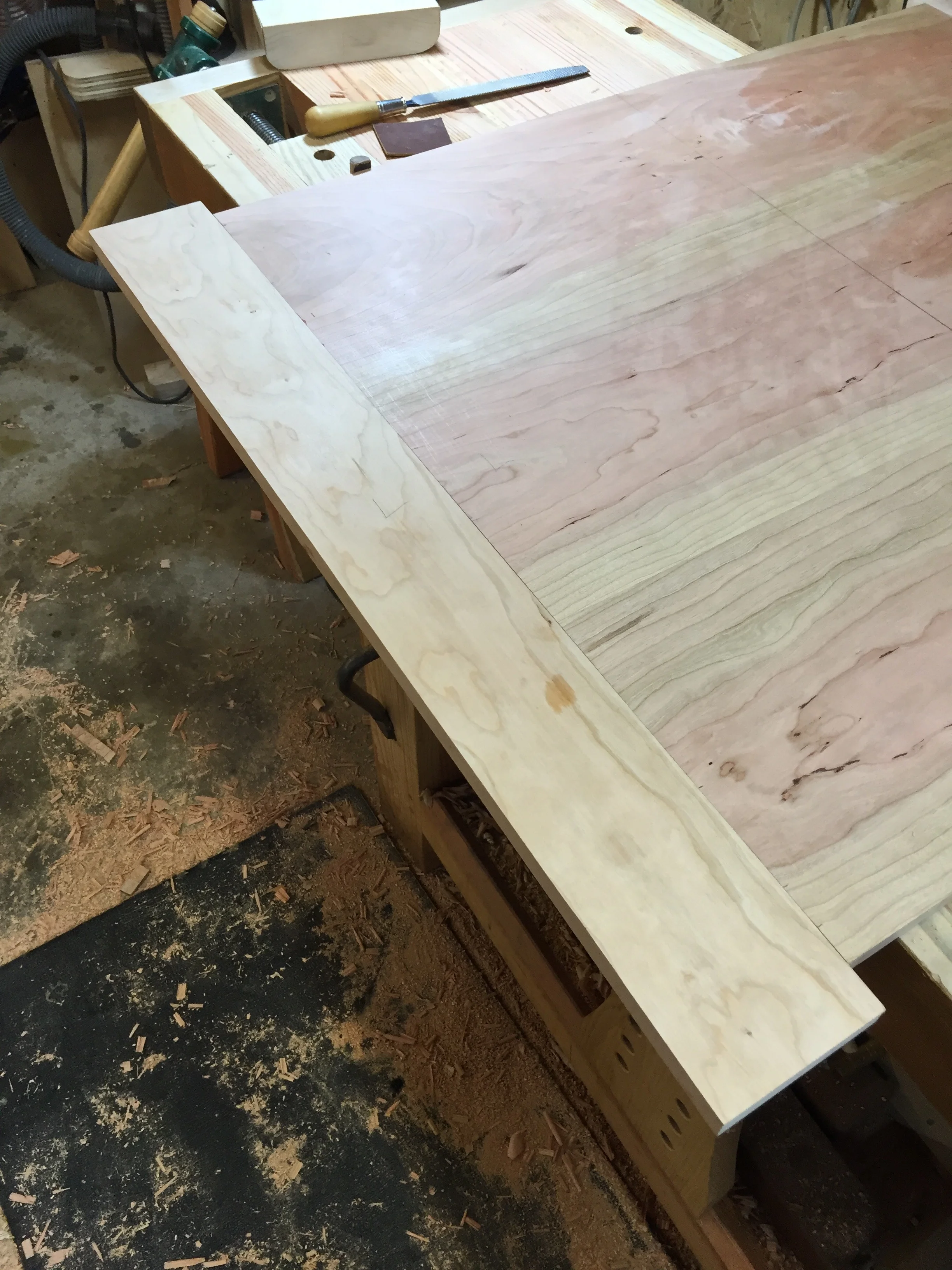
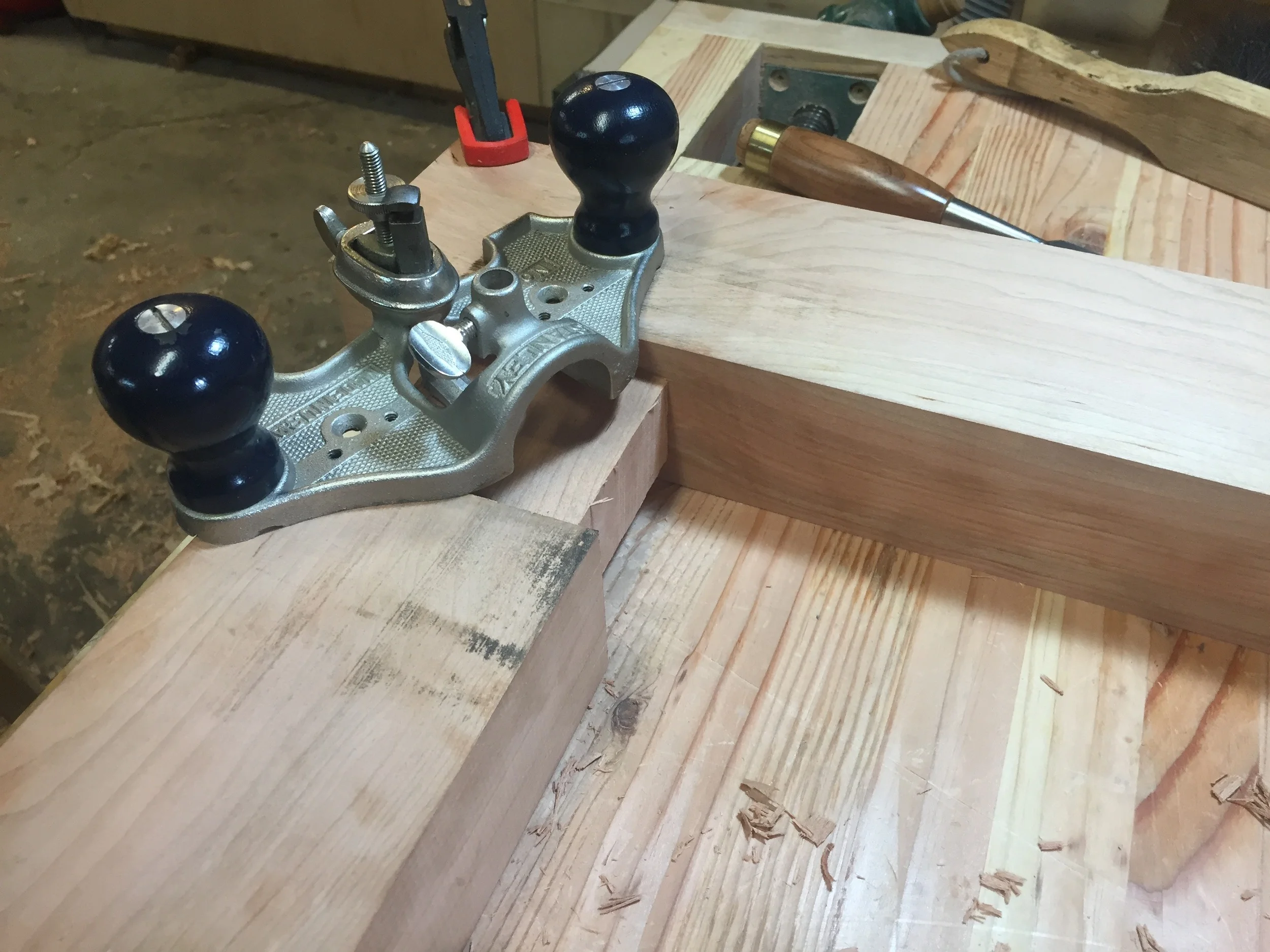
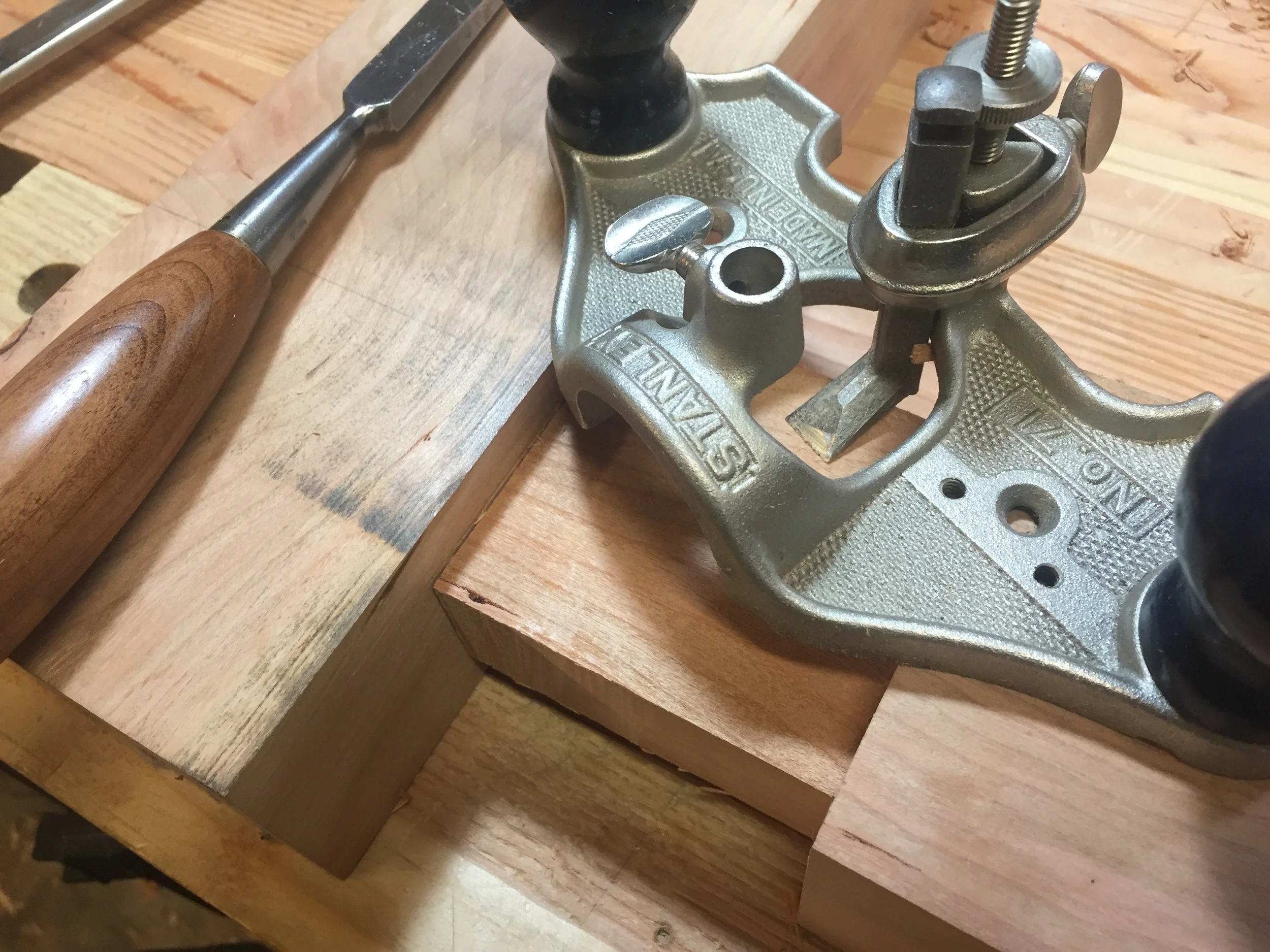
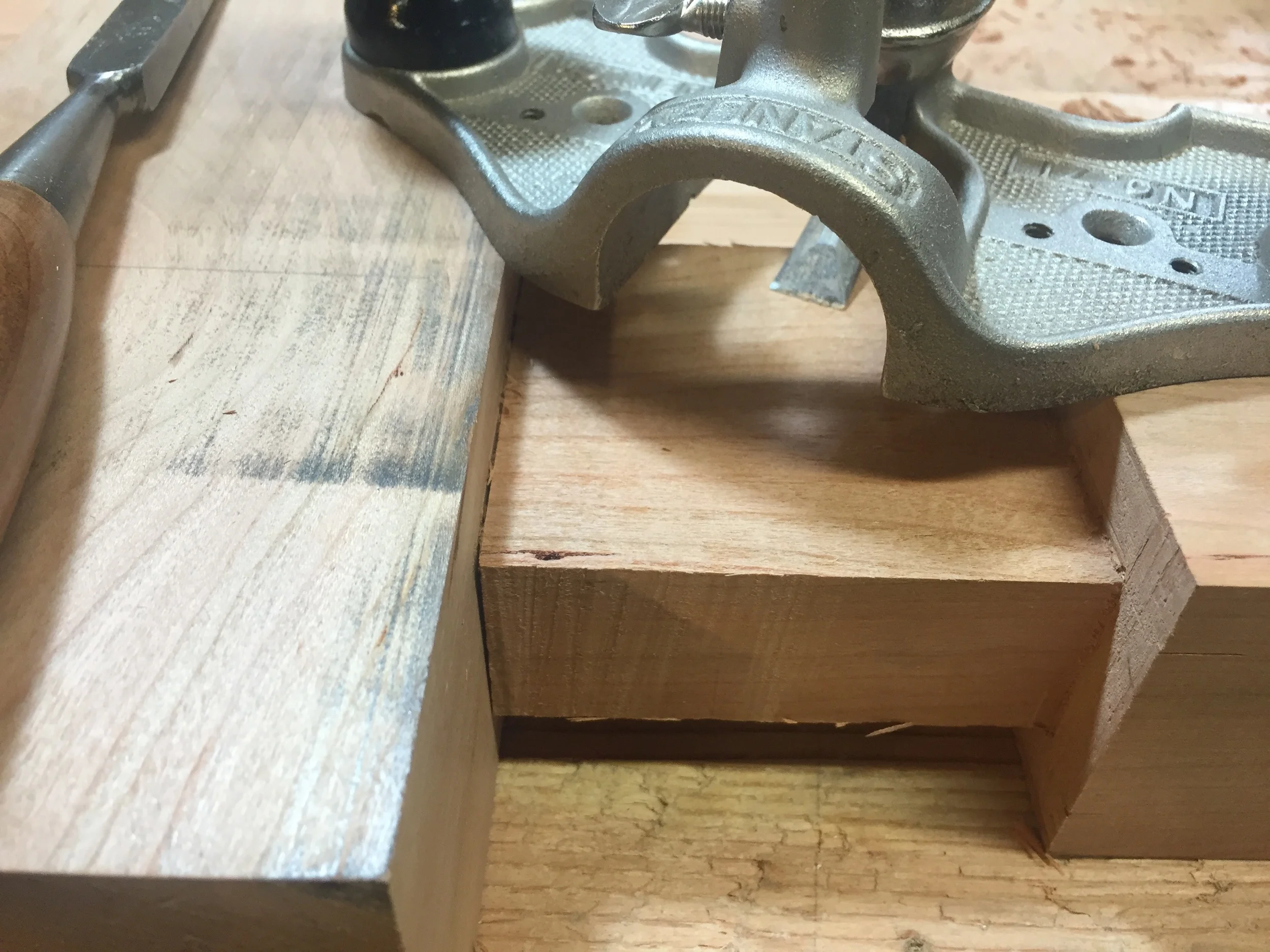
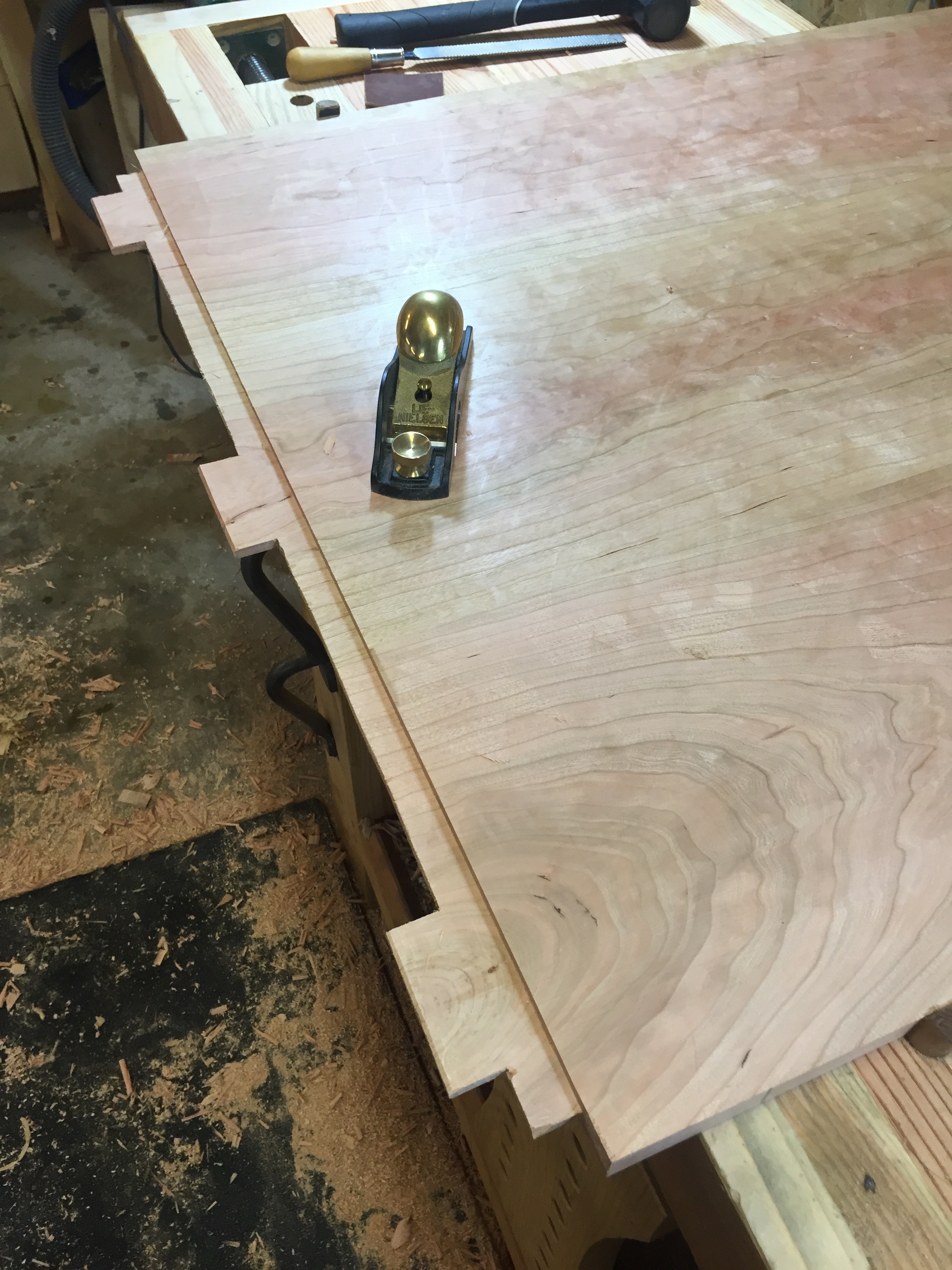
The lamination of the top went well, and before I cut the long tenons for the breadboard ends, I wanted to make the ends first. Those were cut with a hollow chisel mortiser, and cleaned up with a chisel. I was then able to transfer the mortise locations to the top, and then cut the tenons. I did those with a guide and a router, and then cleaned it up with a rabbeting block plane and router plane. I then cut out the sections to make the haunches and long tenons with a hand saw, and cleaned up with a chisel. Finally, holes were cut for the pegs, and the ends were begged onto the top, with the out two holes on each side elongated on the tenon to allow for wood movement. There's a lot of work that goes into such a top, but it's worth in, as it stays flay, level, and allows for seasonal movement.
View fullsize IMG_3729.jpg
View fullsize IMG_3731.jpg
View fullsize IMG_3733.jpg

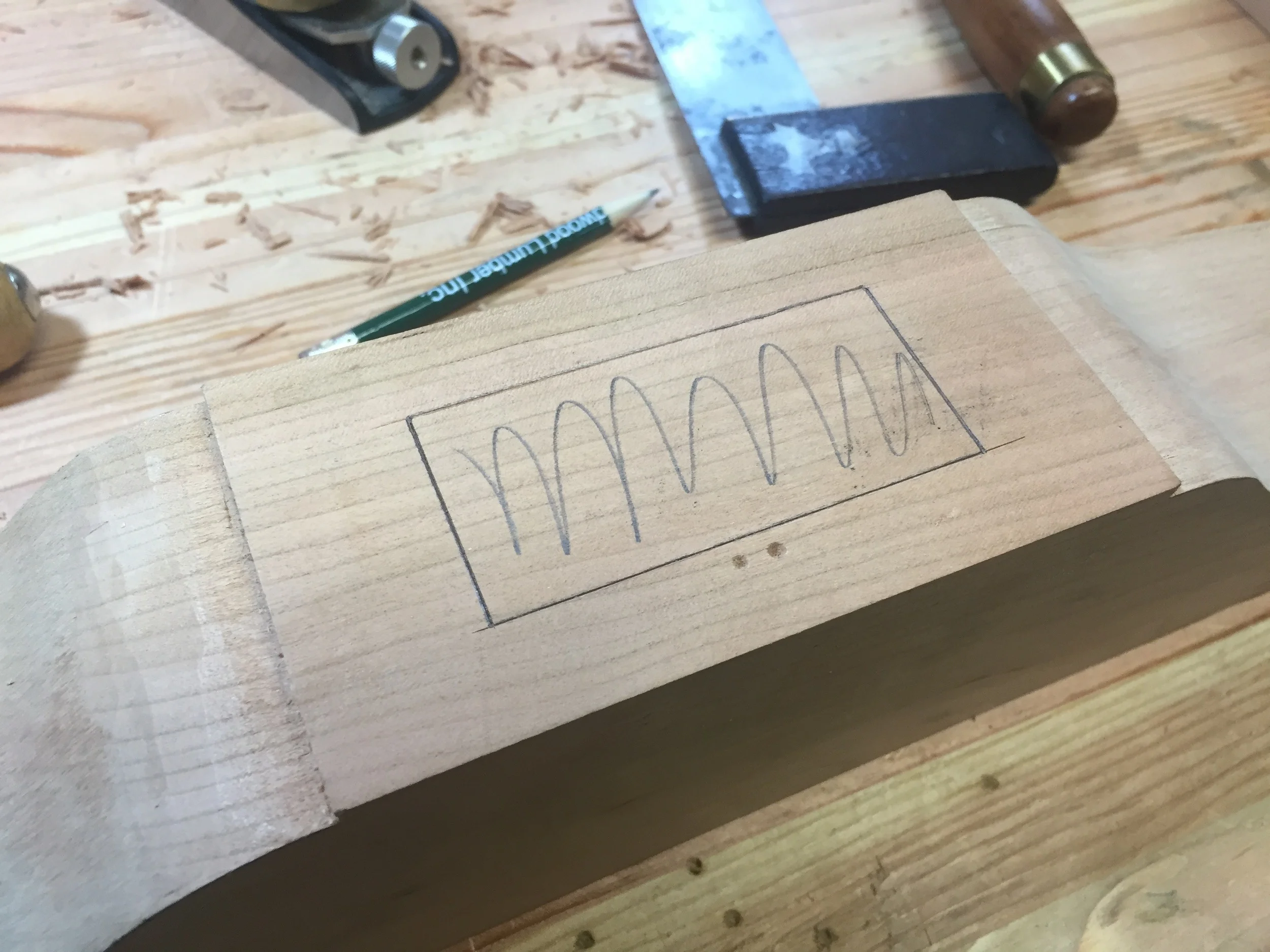
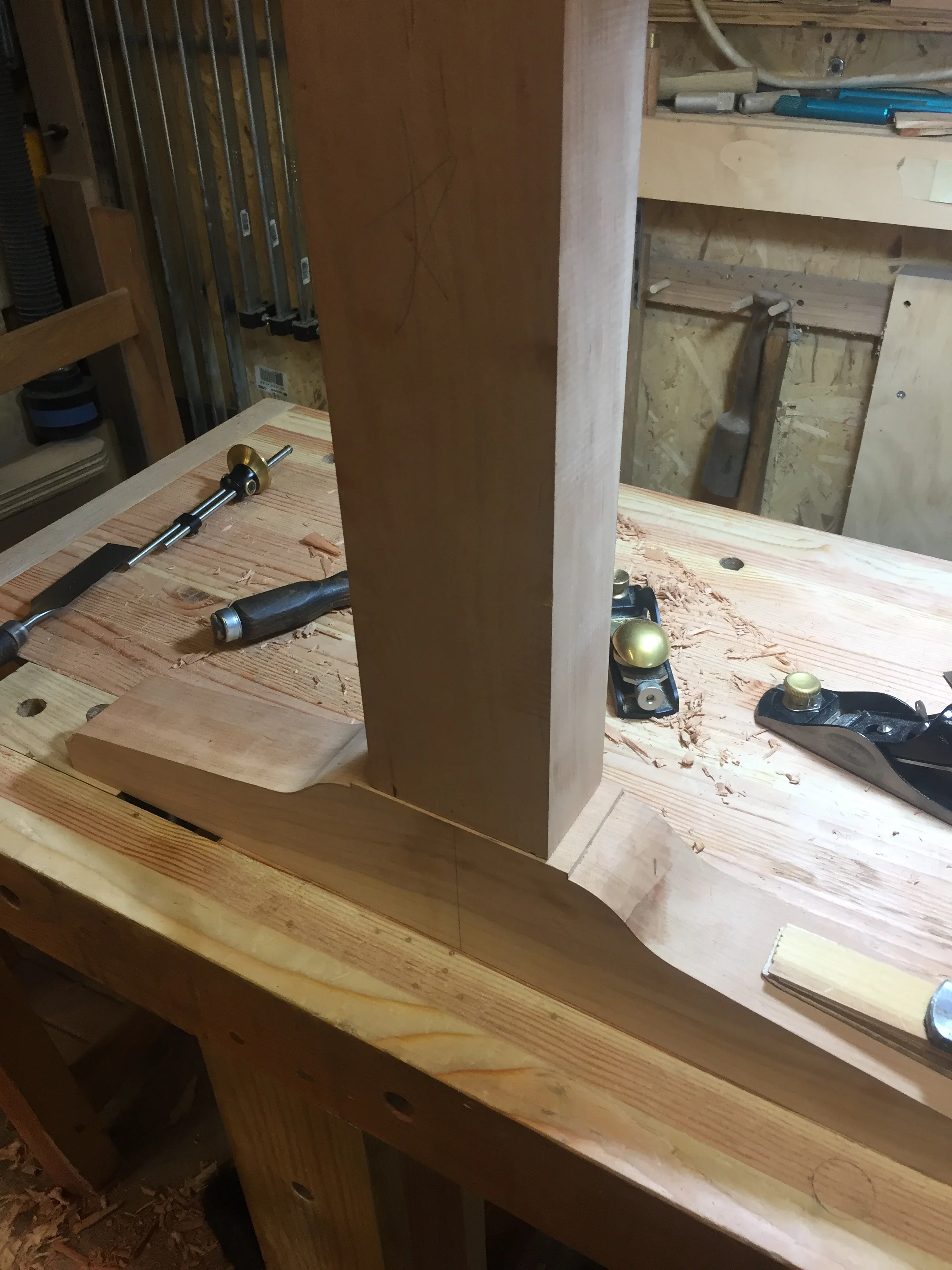
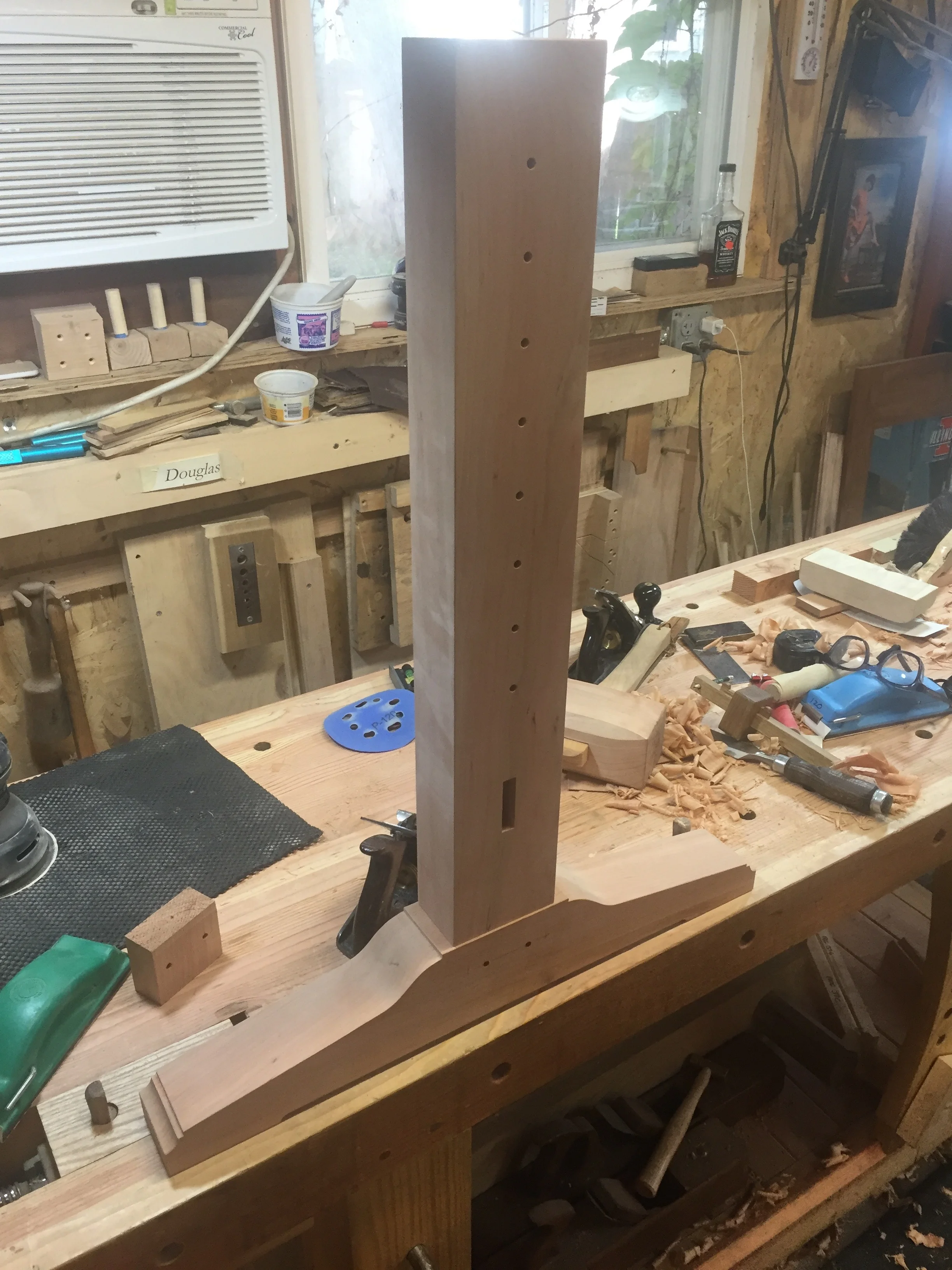
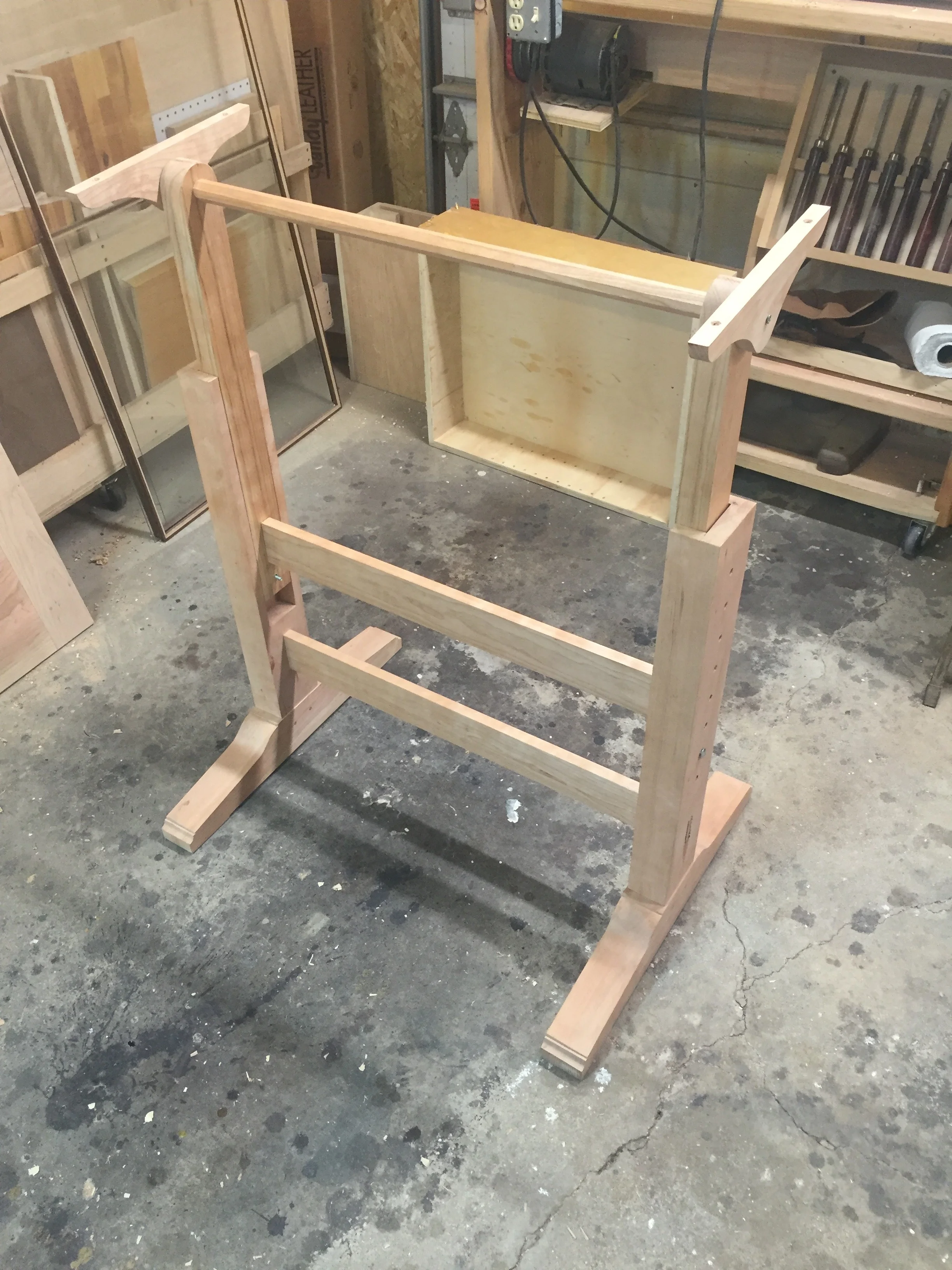
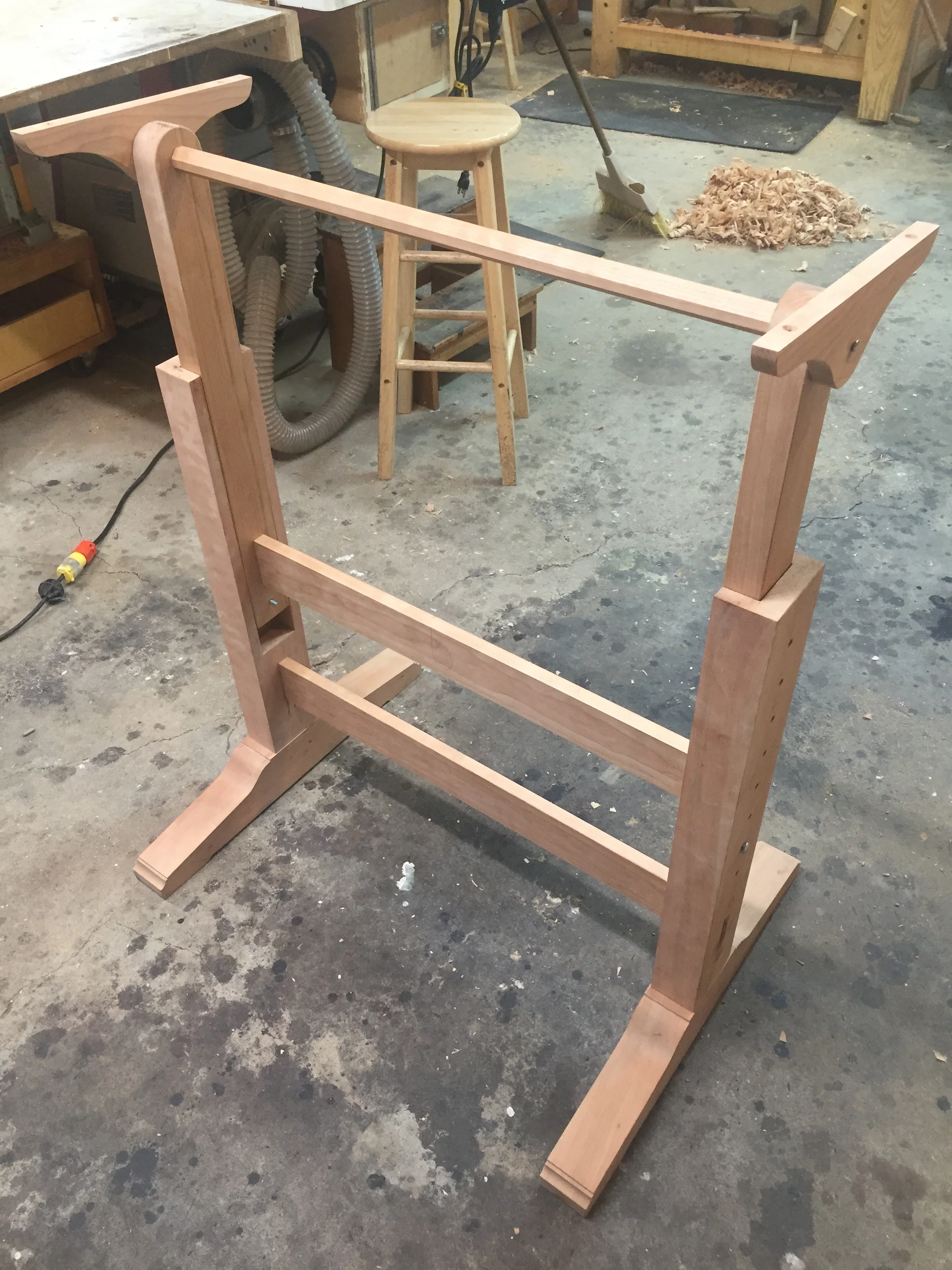
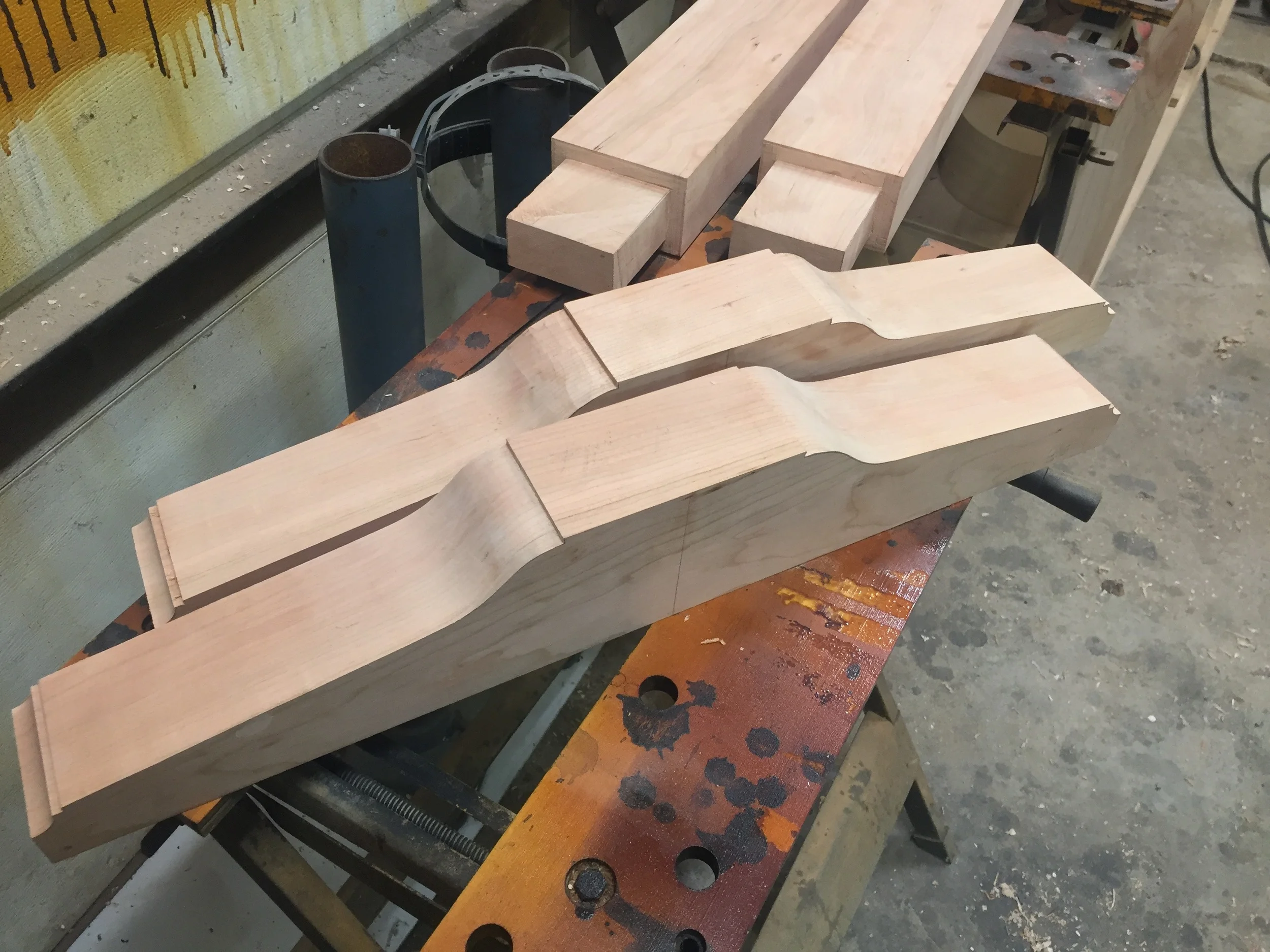
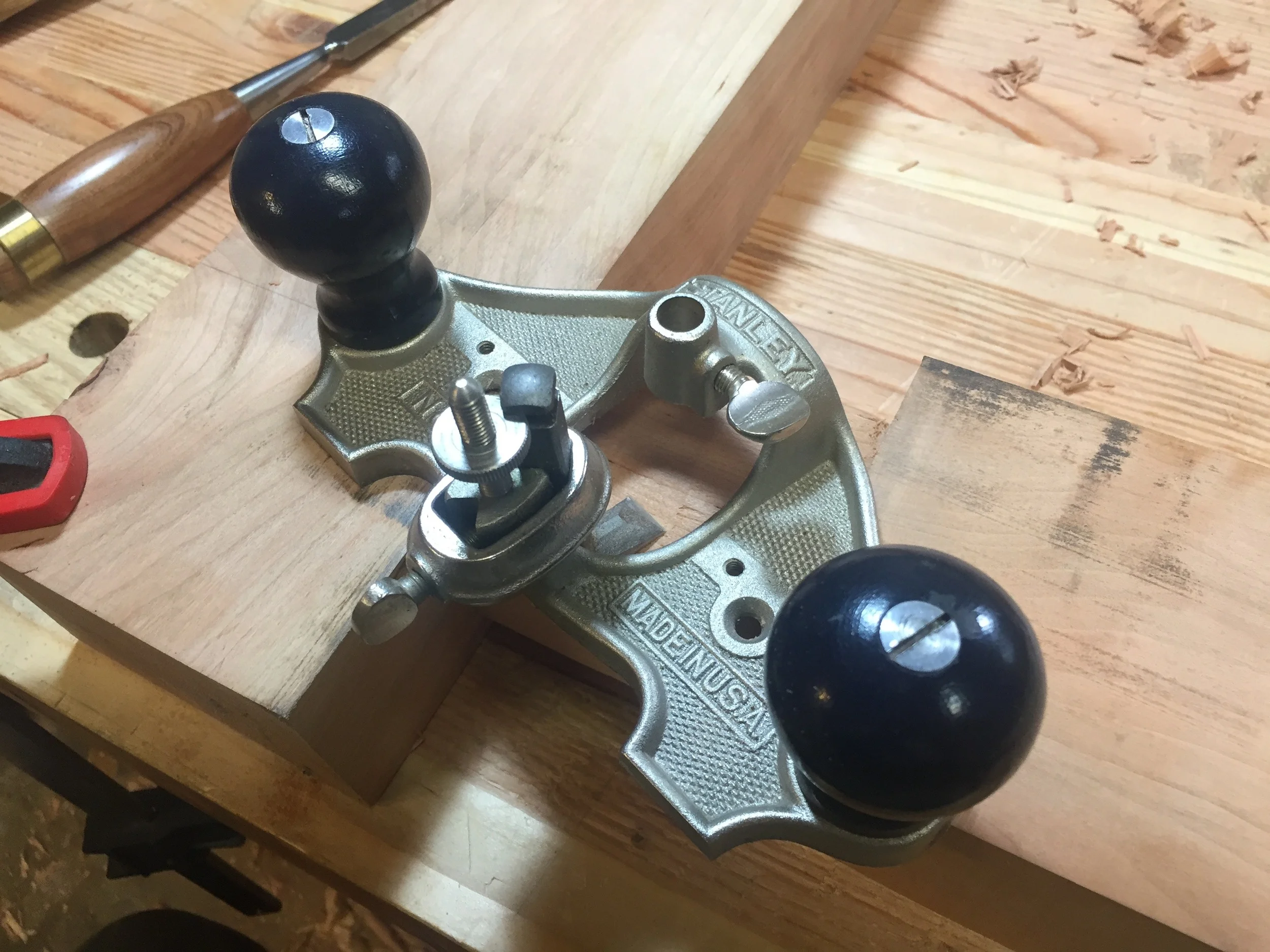
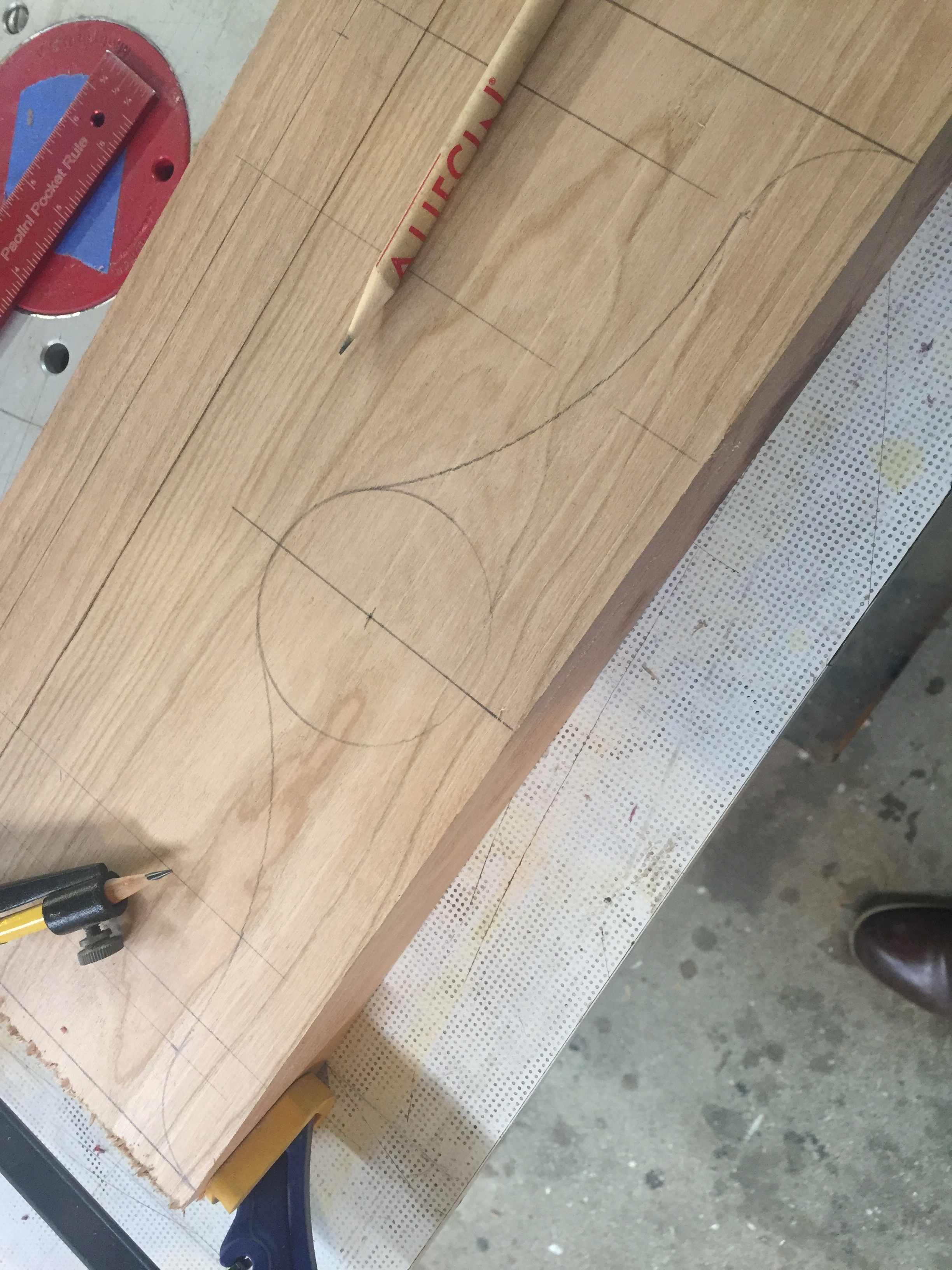
Next, I was able to focus on the legs and feet. The base features thick legs, with a dado to house the upper part and allow for adjustment, tenoned into a large mortise in the thick feet. The feet gave me a great opportunity to add an architectural element, and laid out a series of shoulders and curves. The tenons were cut by hand, and cleaned up with a router plane.
View fullsize IMG_3738.jpg
View fullsize IMG_3739.jpg
View fullsize IMG_3740.jpg
View fullsize IMG_3741.jpg
View fullsize IMG_3742.jpg
View fullsize IMG_3744.jpg
View fullsize IMG_3745.jpg
View fullsize IMG_3747.jpg

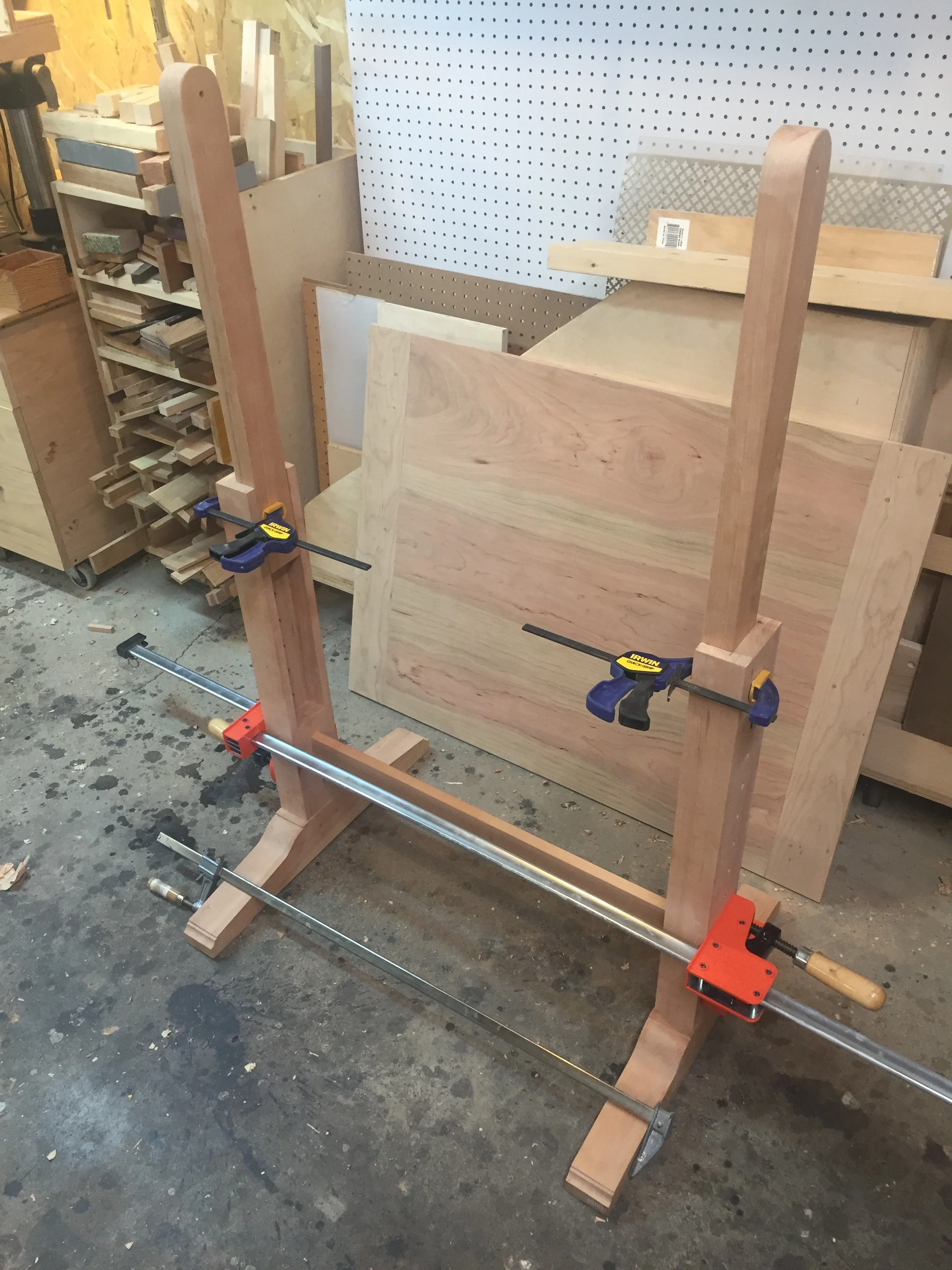
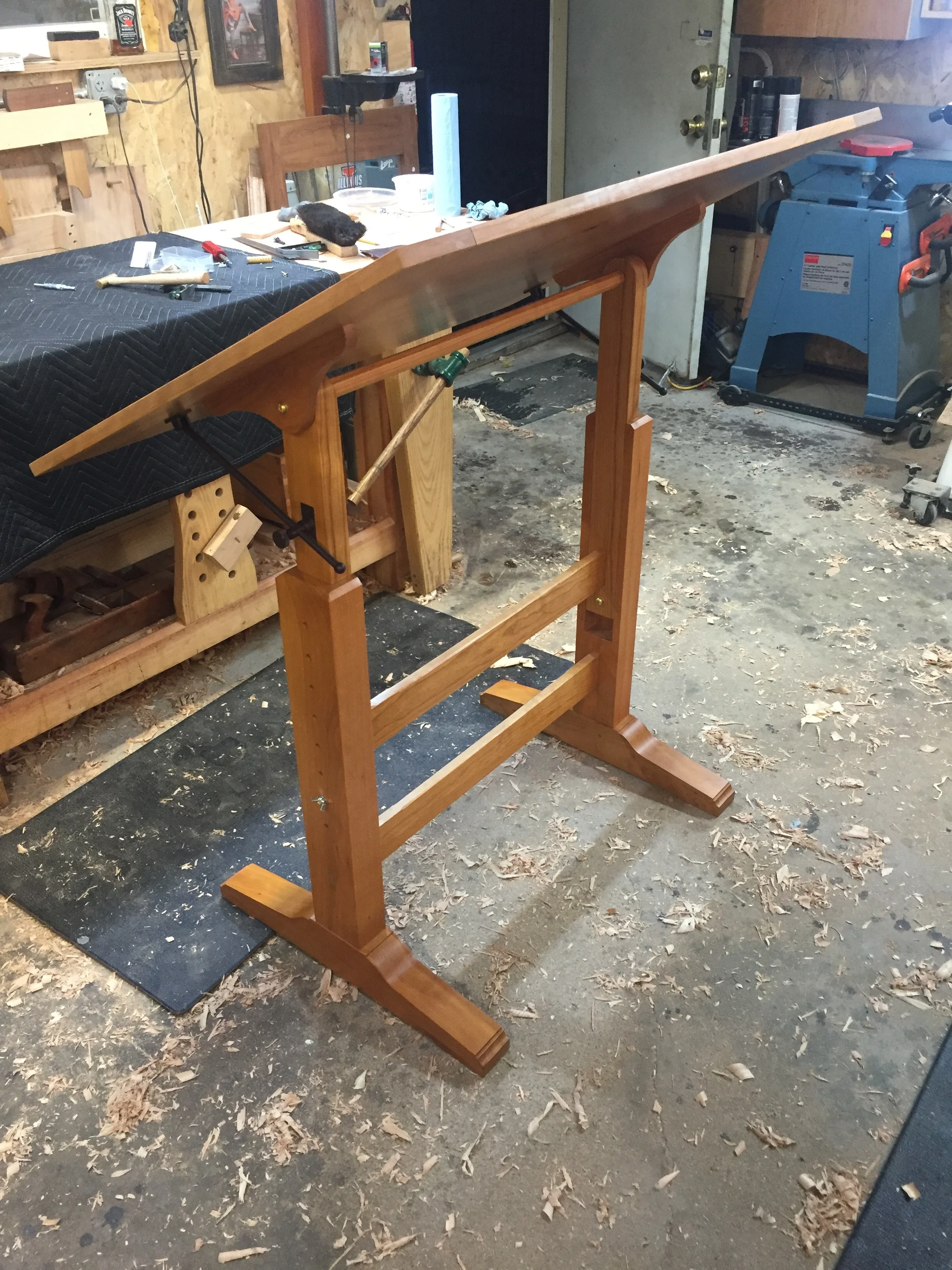
The large dados/housings in each lower leg was a tricky cut, as I had a lot of material to remove. I ended up using a large straight bit in a router table to clear out most of the waste, then cleaned it up with a chisel. The last part of the base was a stretcher that joined to the two halves, joined with a wedged through tenon. The top section was similar to the bottom, with two smaller "legs" joined by a stretcher. Both pairs of legs needed holes drilled through them to allow for adjusting the table height. Then the last little bit was the tilting portion that connected to the top. I made two shaped brackets, pre-drilled with holes for the top, and detailed with a simple curve. These were then pieced along the tilt access in line with the tilt access on the top of the top legs. To add rigidity, I added a faceted dowel between the swivel points. 
View fullsize IMG_3751.jpg
View fullsize IMG_3749.jpg
View fullsize IMG_3752.jpg
View fullsize IMG_3753.jpg

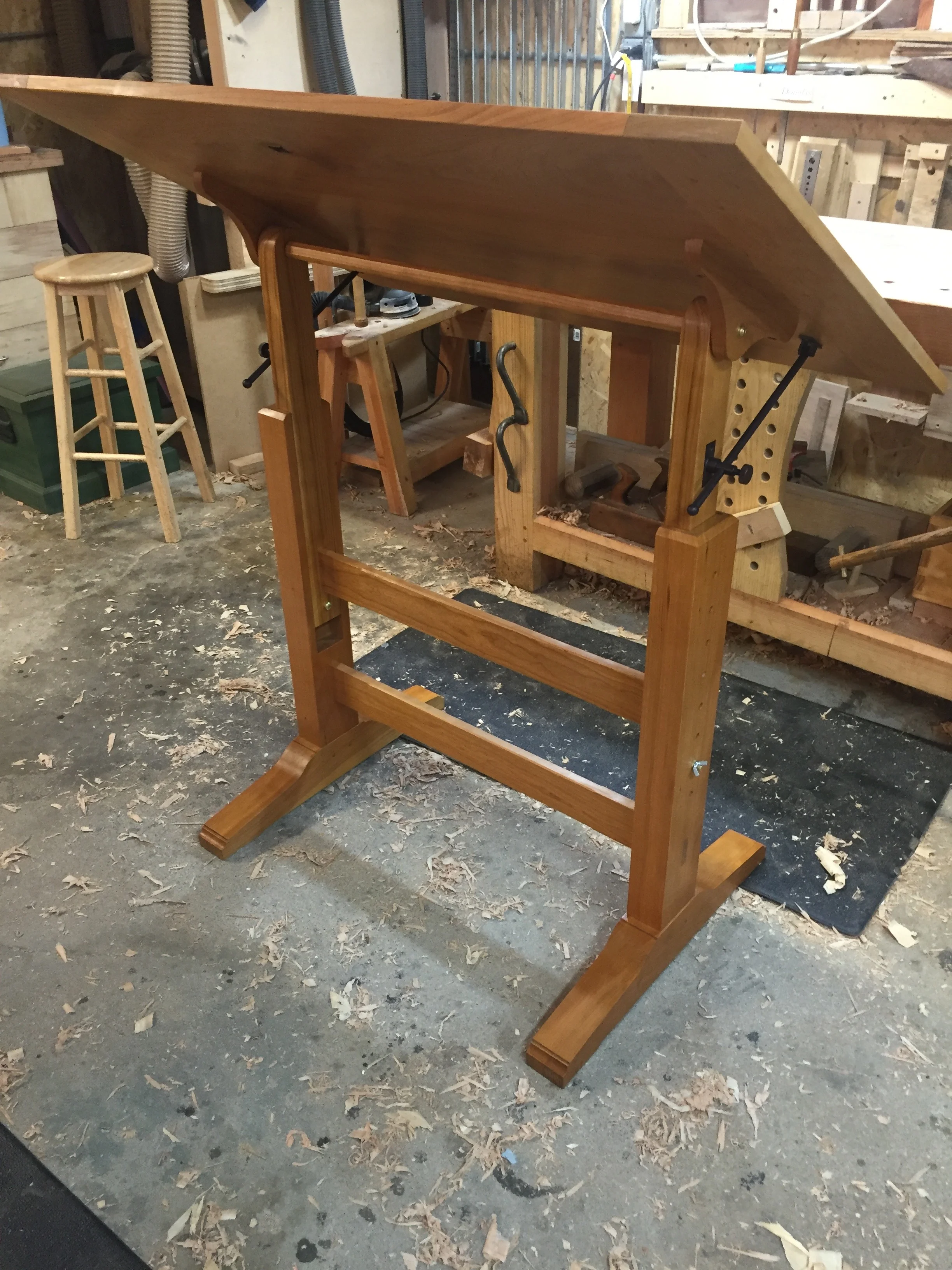
with the base together, I could attach the top, and see how it all worked together, and it did. I then took it apart, and did the fitting for the hardware, including mortising in the casement window stays that controlled the tilt of the top.

Although I still needed the bottom pencil rest, I was ready to finish, and worked on the rest while the finishing process was underway. For cherry, I usually apply a clear shellac. But in this case, I decided to try an amber shellac, which had the effect of "accelerating" the way in which cherry darkens over time. Fresh cherry is very pink, but mellows to a nice medium brown after a couple of years (sunlight depending). Adding the amber shellac gets it closer to that aged cherry look, and will result in a nice blend once the cherry itself ages. So I applied the finish, spraying each section separately; bottom base, top base, and top. After several coats of shellac, sanding in between, I applied paste wax with a 0000 steel wool pad.
View fullsize IMG_3774.jpg
View fullsize IMG_3772.jpg
View fullsize IMG_3773.jpg
View fullsize IMG_3776.jpg

I then re-assembled everything, appealing the hardware, and finally screwing on to the front end the pencil rest.

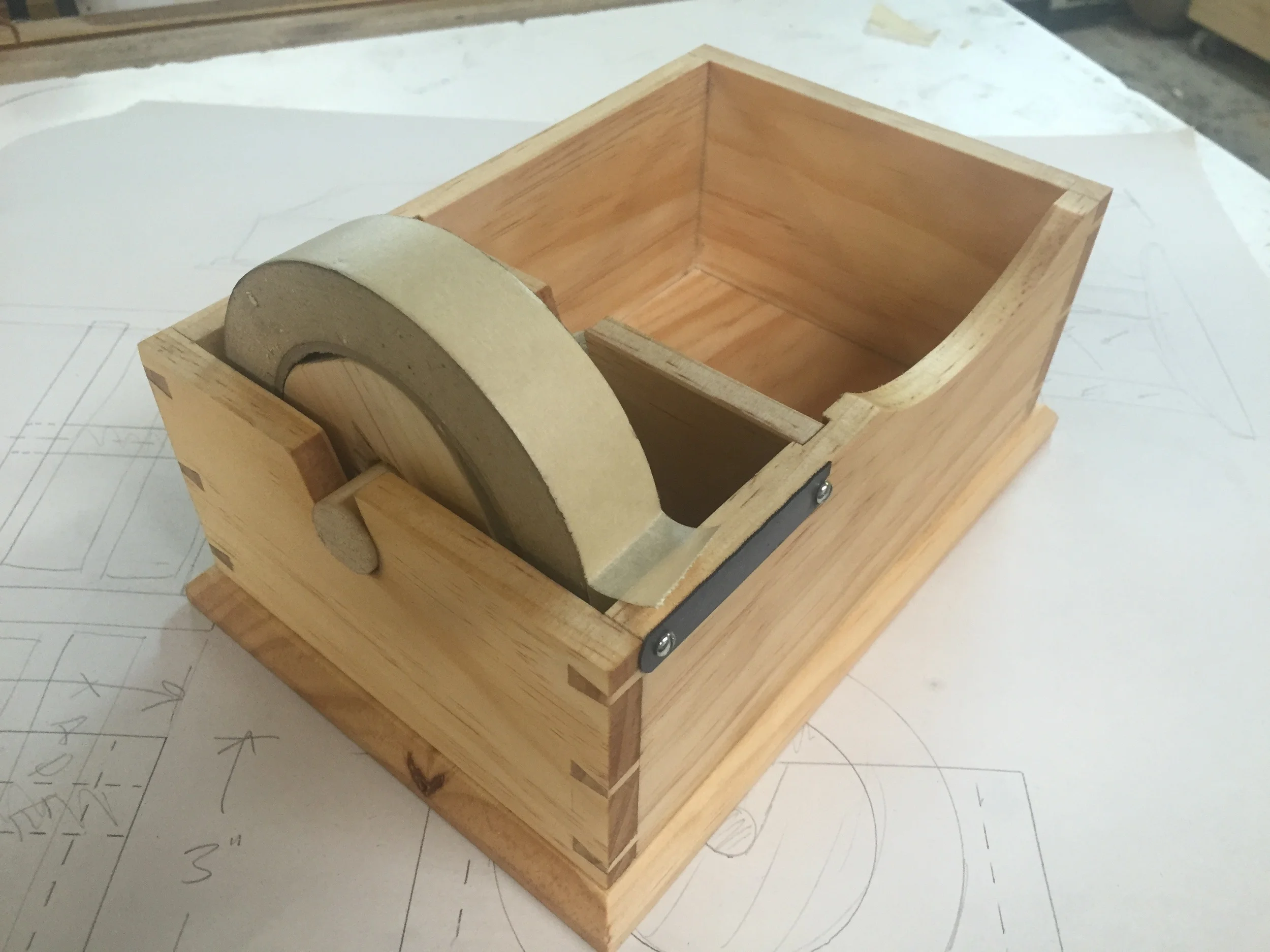
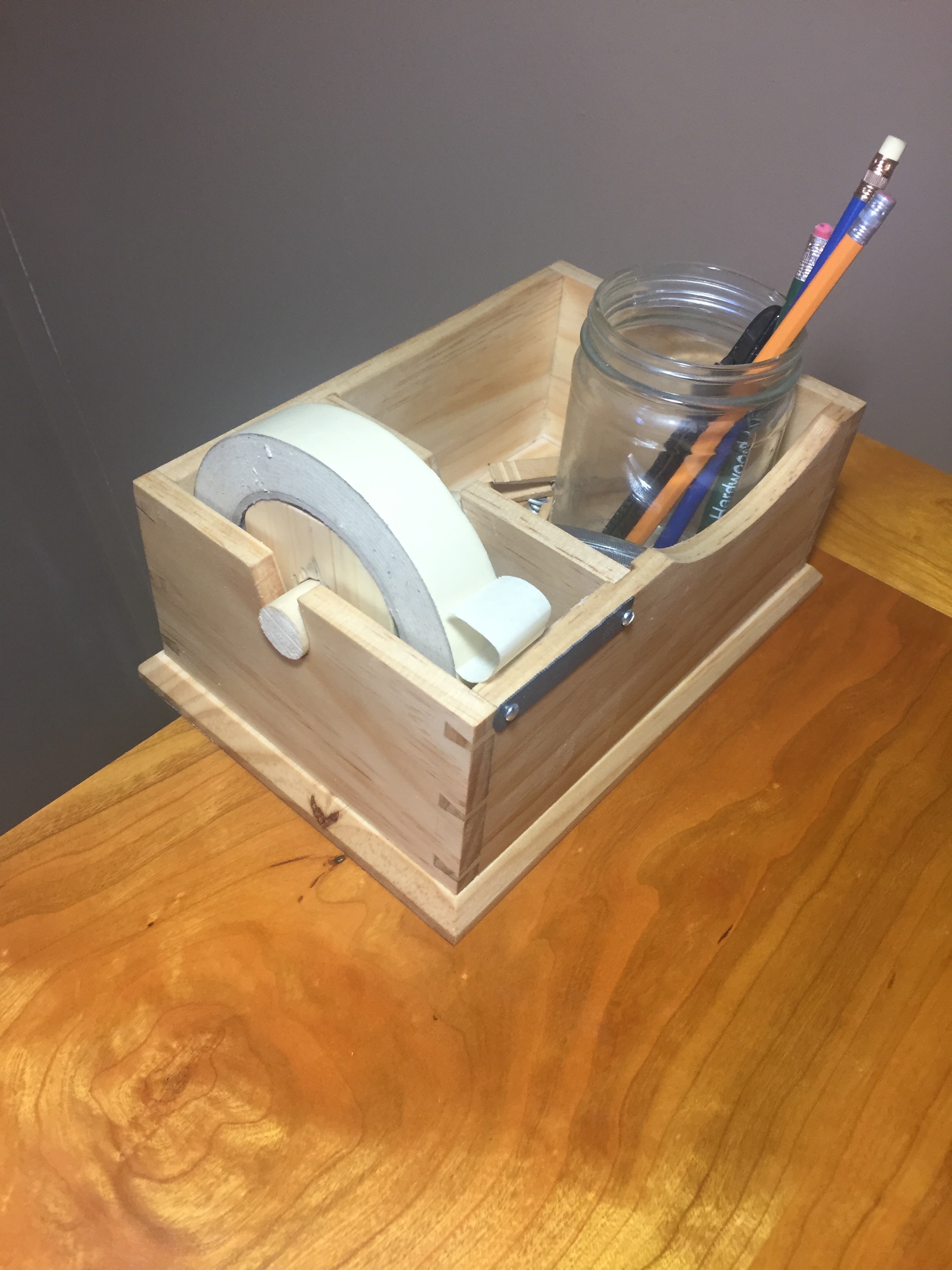
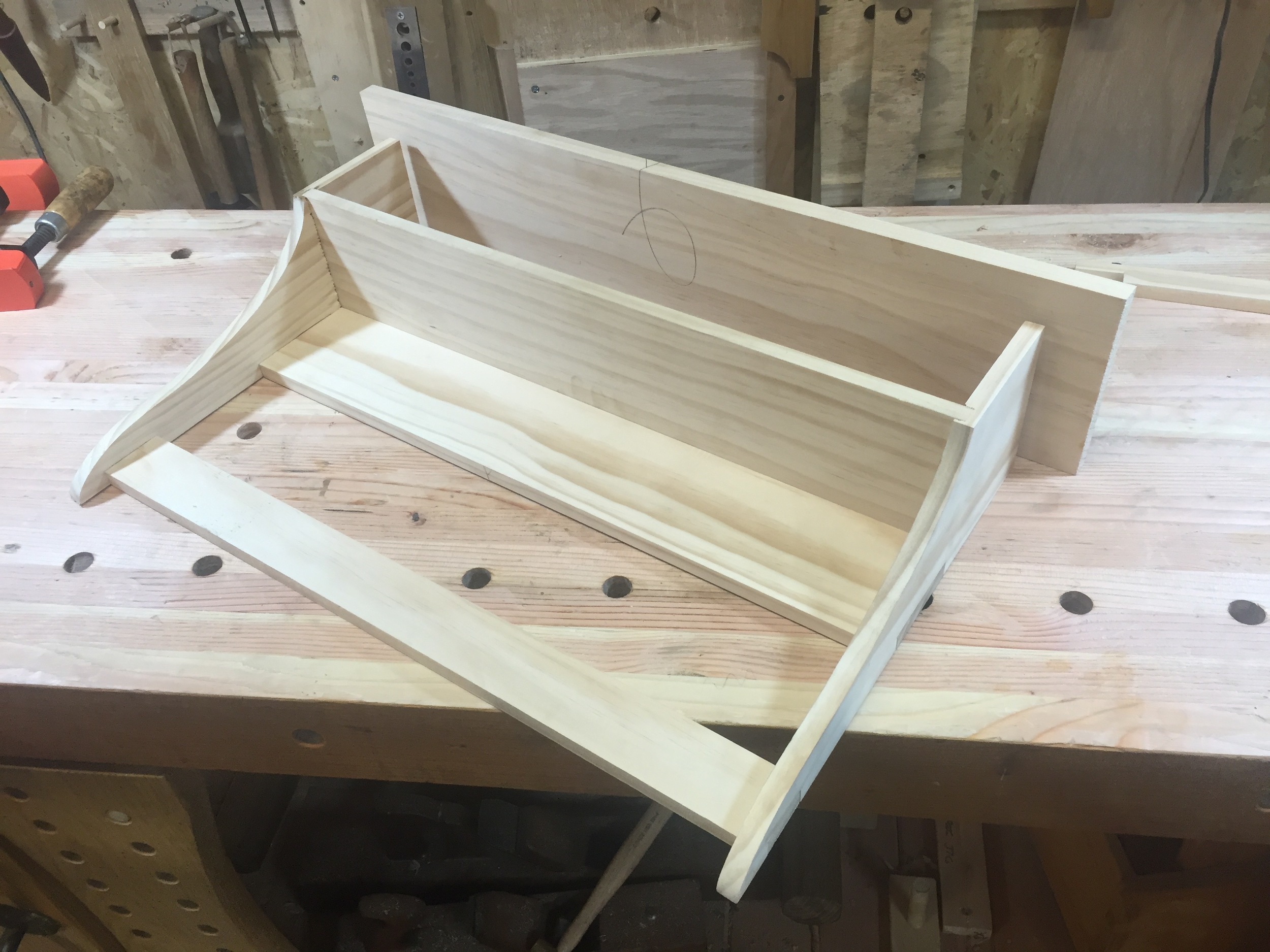
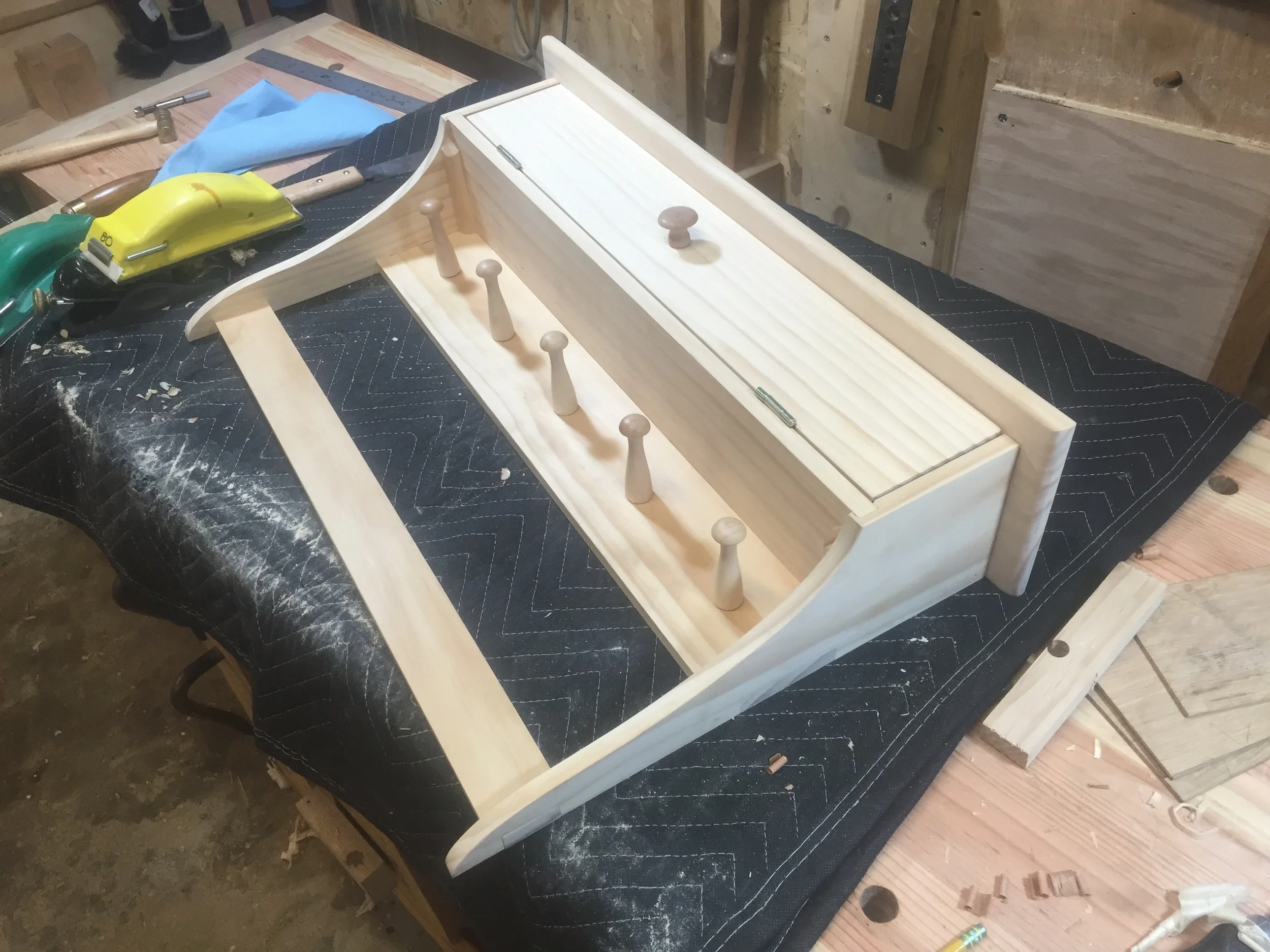
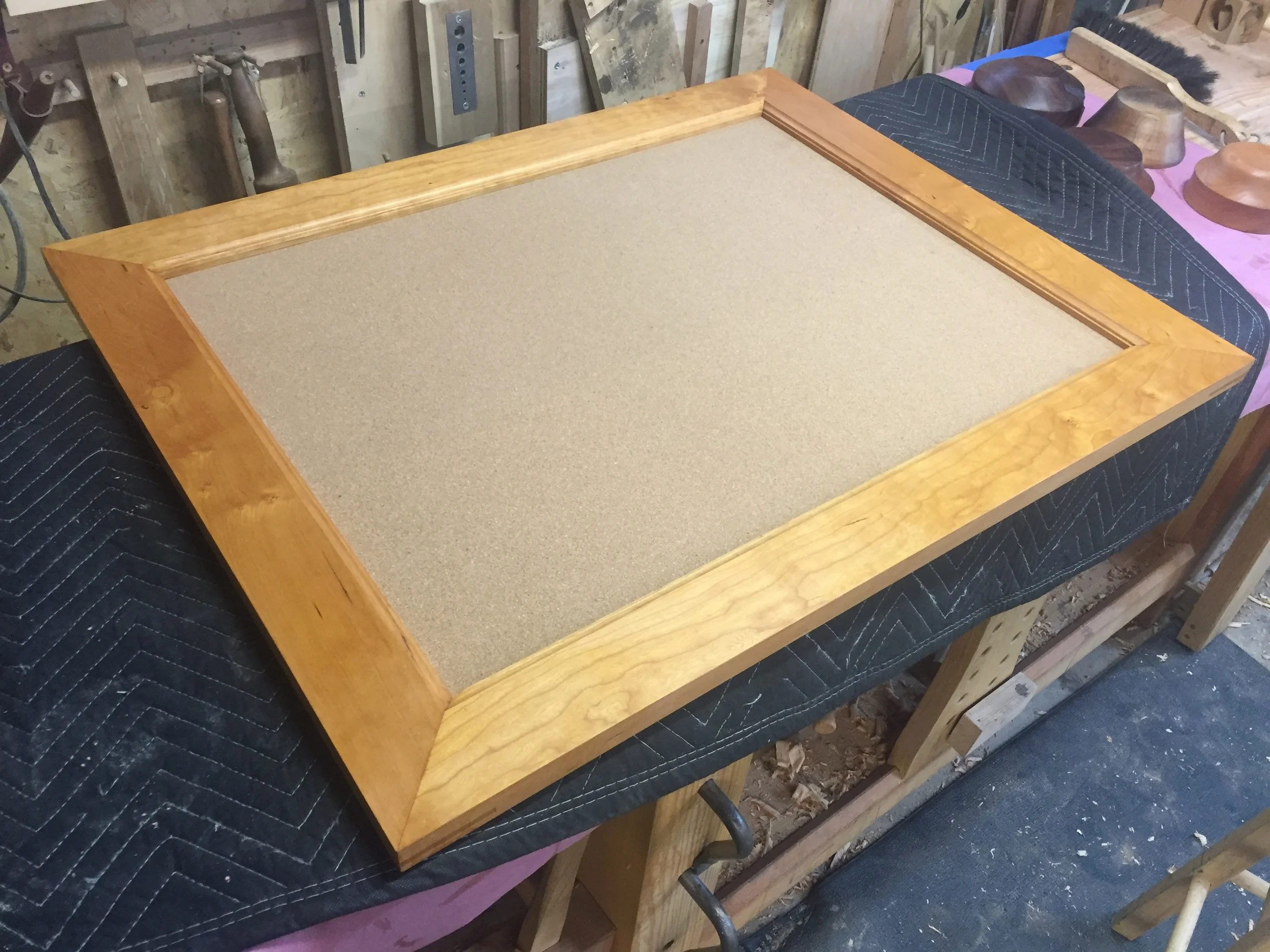
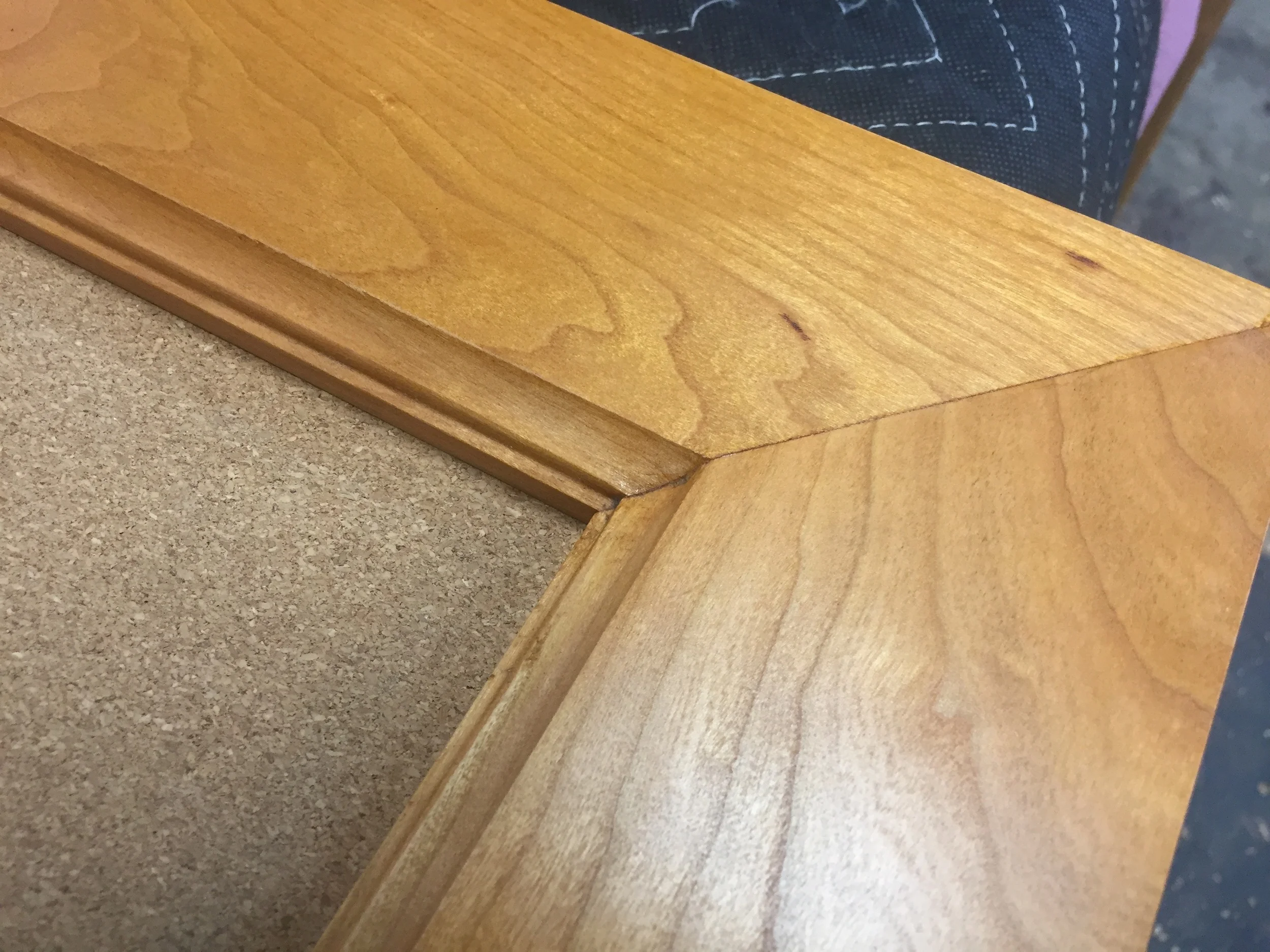
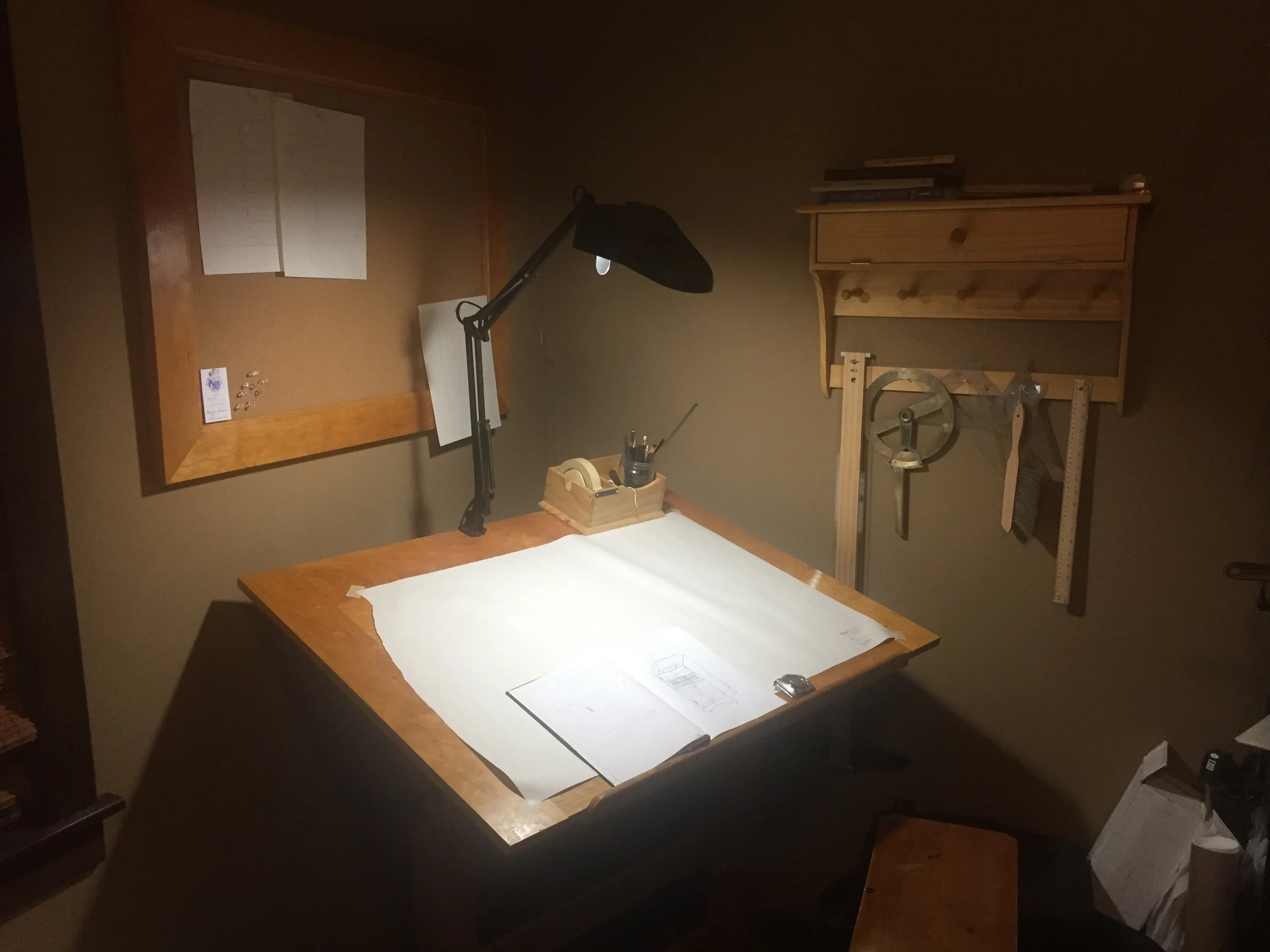
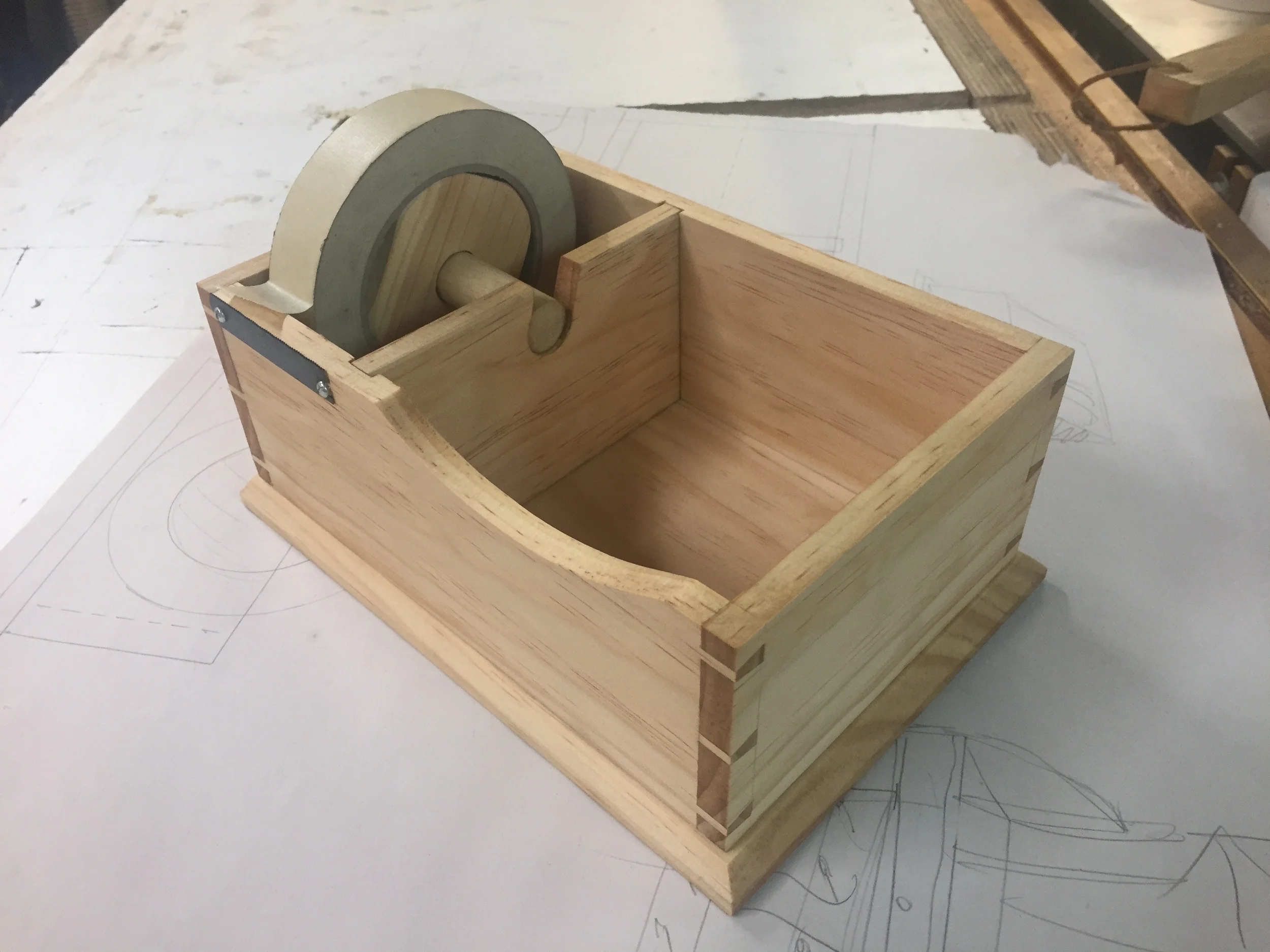
I couldn't wait to get this table installed in my office. But once I did, I soon realized I needed some accompanying parts to make the whole setup work well. So I built a few quick projects. I built a shaker style pine wall shelf for drawing and drafting tools, a cork bulletin board with a cherry frame for the wall behind it, and a little pine tape and pencil caddy to rest on the back edge. And while I originally clamped the drafting light to the top edge of the table, I later made a little wall mounted clamping surface for the light (the lamp clamped to the table made the light too shakey). 
View fullsize IMG_3779.jpg
View fullsize IMG_3780.jpg
View fullsize IMG_3782.jpg
View fullsize IMG_3783.jpg
View fullsize IMG_3792.jpg
View fullsize IMG_3804.jpg
View fullsize IMG_3805.jpg
View fullsize IMG_3810.jpg

And with that, I had a nice little drawing and drafting station on my little office. The only piece I have left to build is a nice stool, as the big box store mystery wood knockoff I'm using now wants to fall apart on my any day now. Having a place dedicated to drawing has been wonderful for helping me work out furniture designs, and slowly my drawing skills are improving.

And finally, I recently had a great photo session for the piece, and posted those on the gallery. Take a look at the final piece here.

Marcus photographing the table
In project Tags drawing, drafting, table, cherry, breadboard
Comment

Book Display Shelves

July 13, 2016

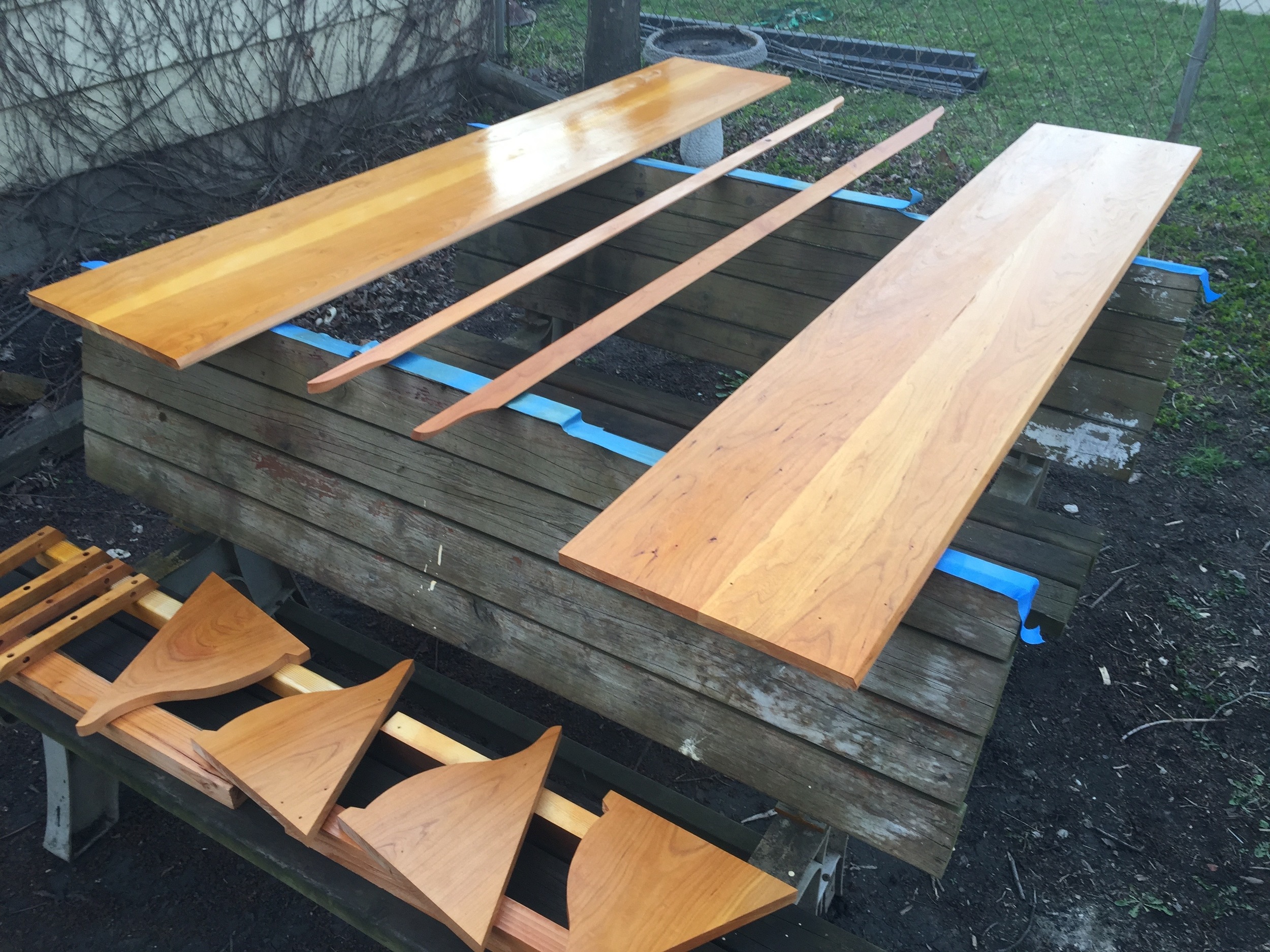
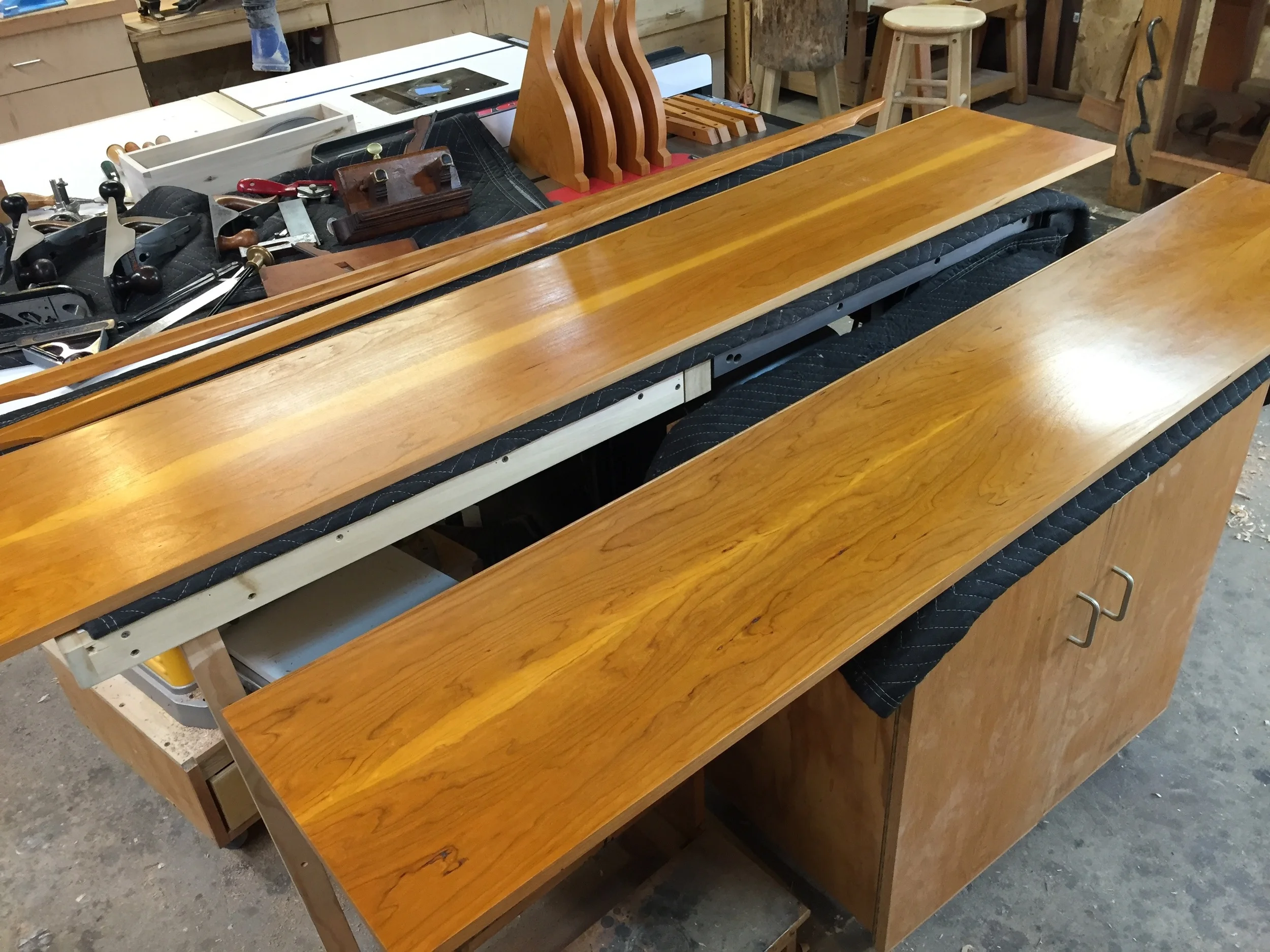
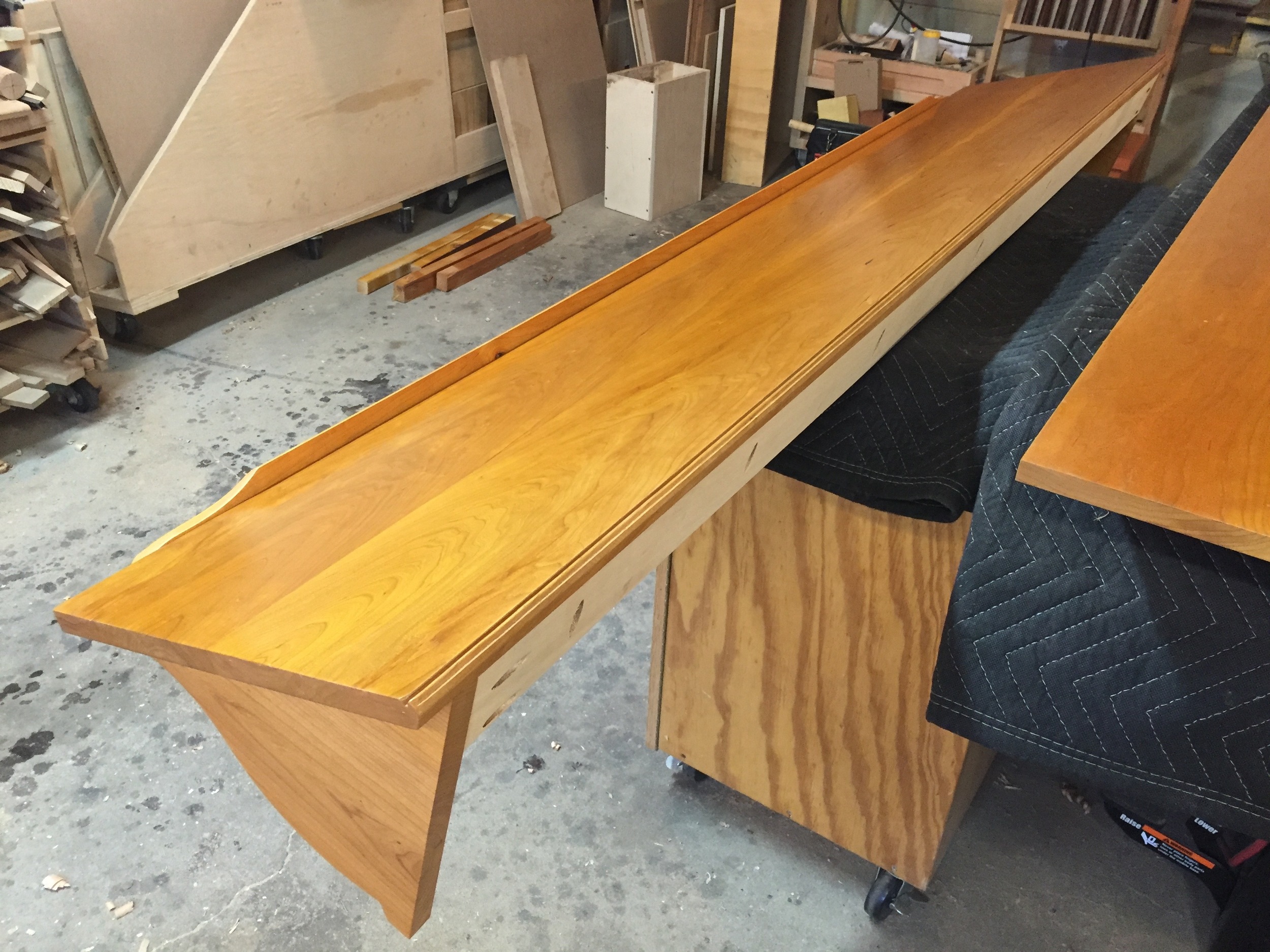
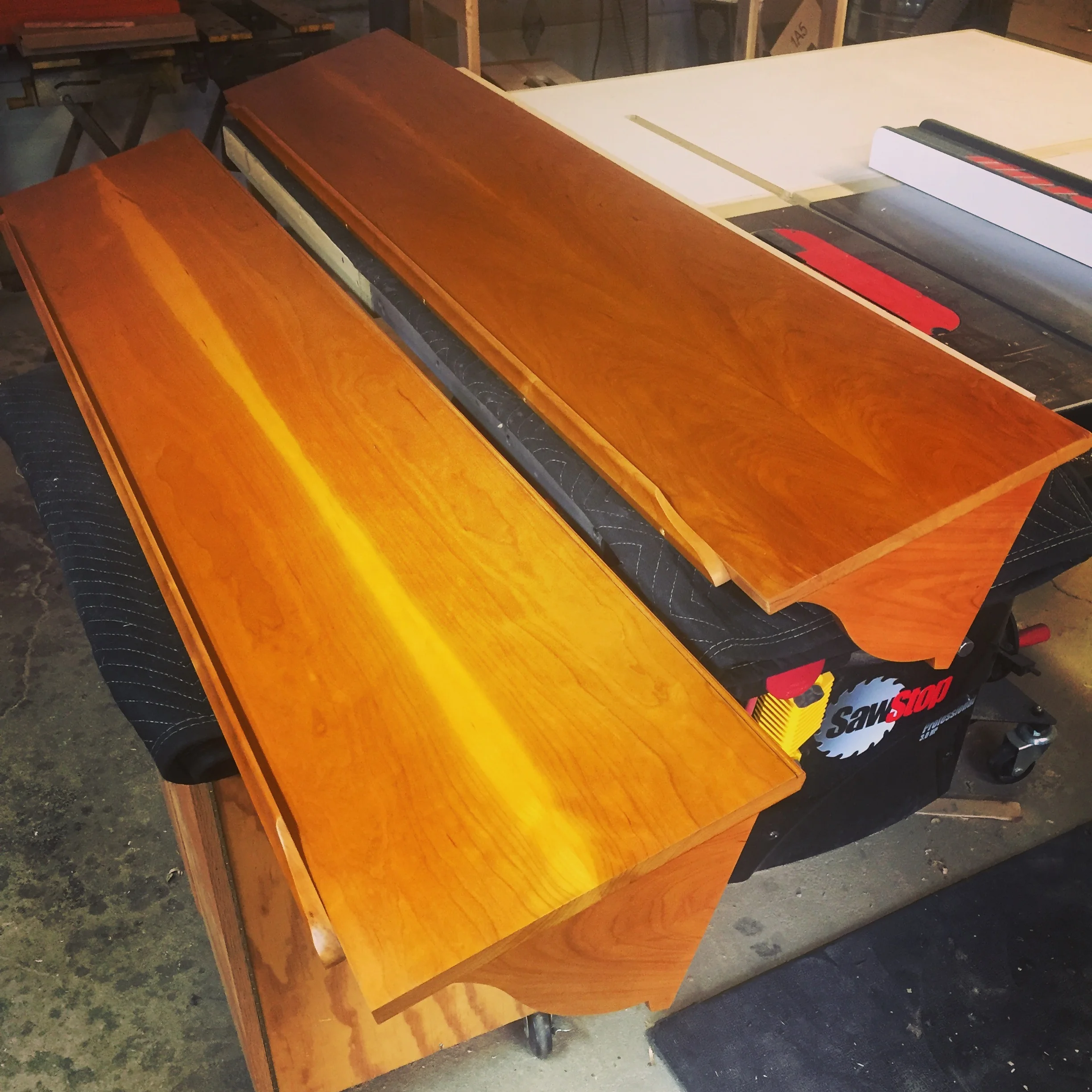
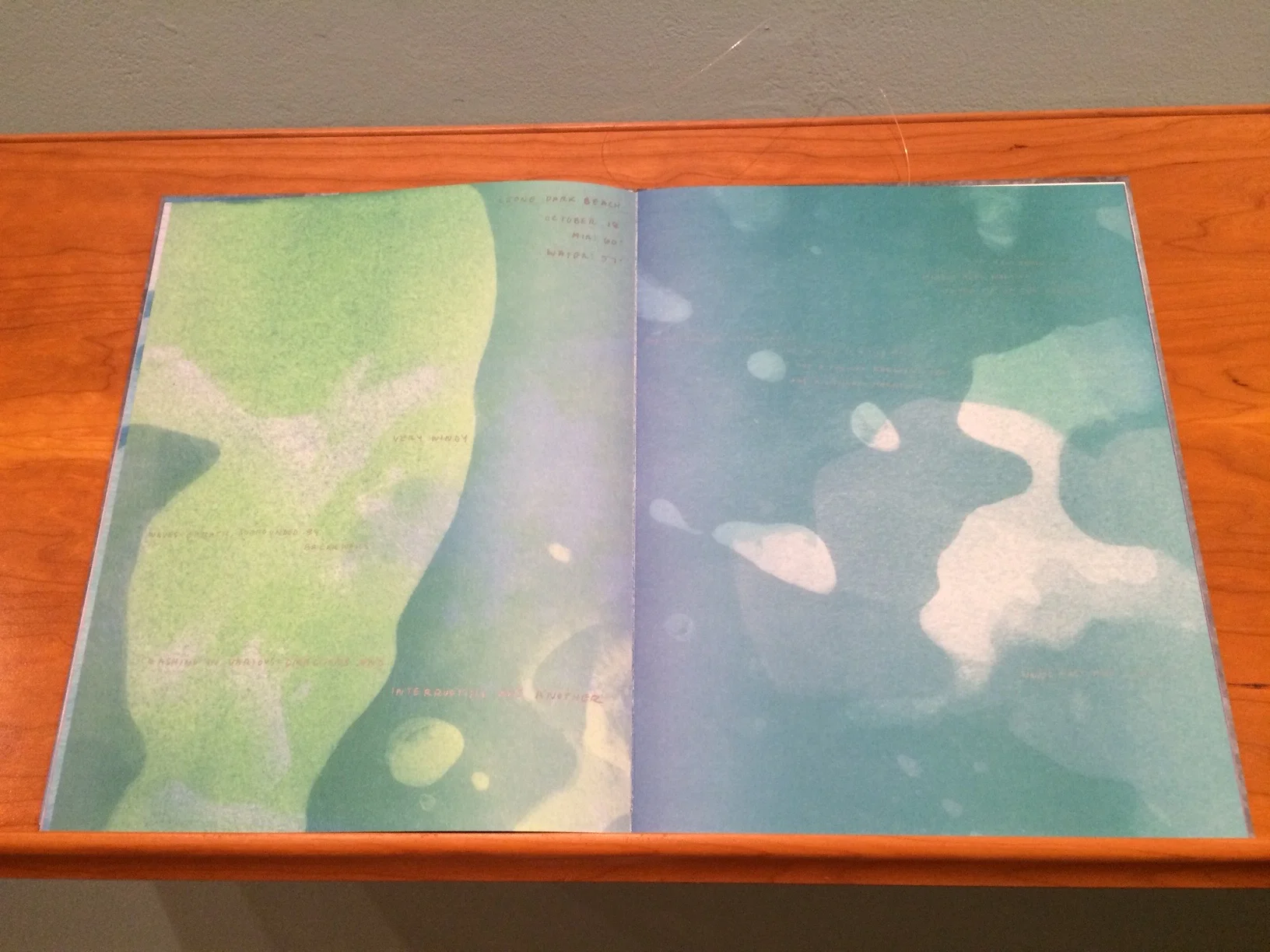
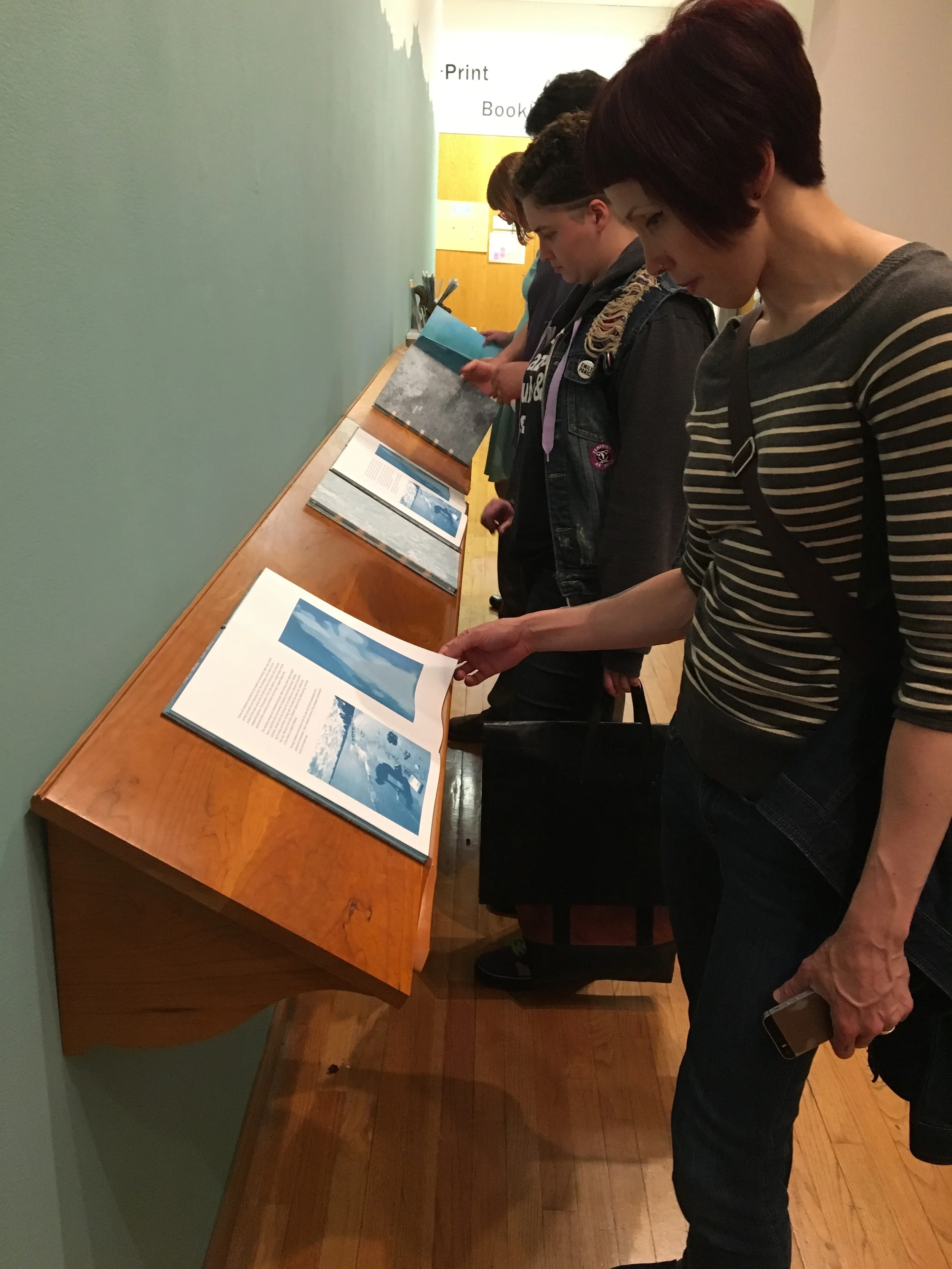
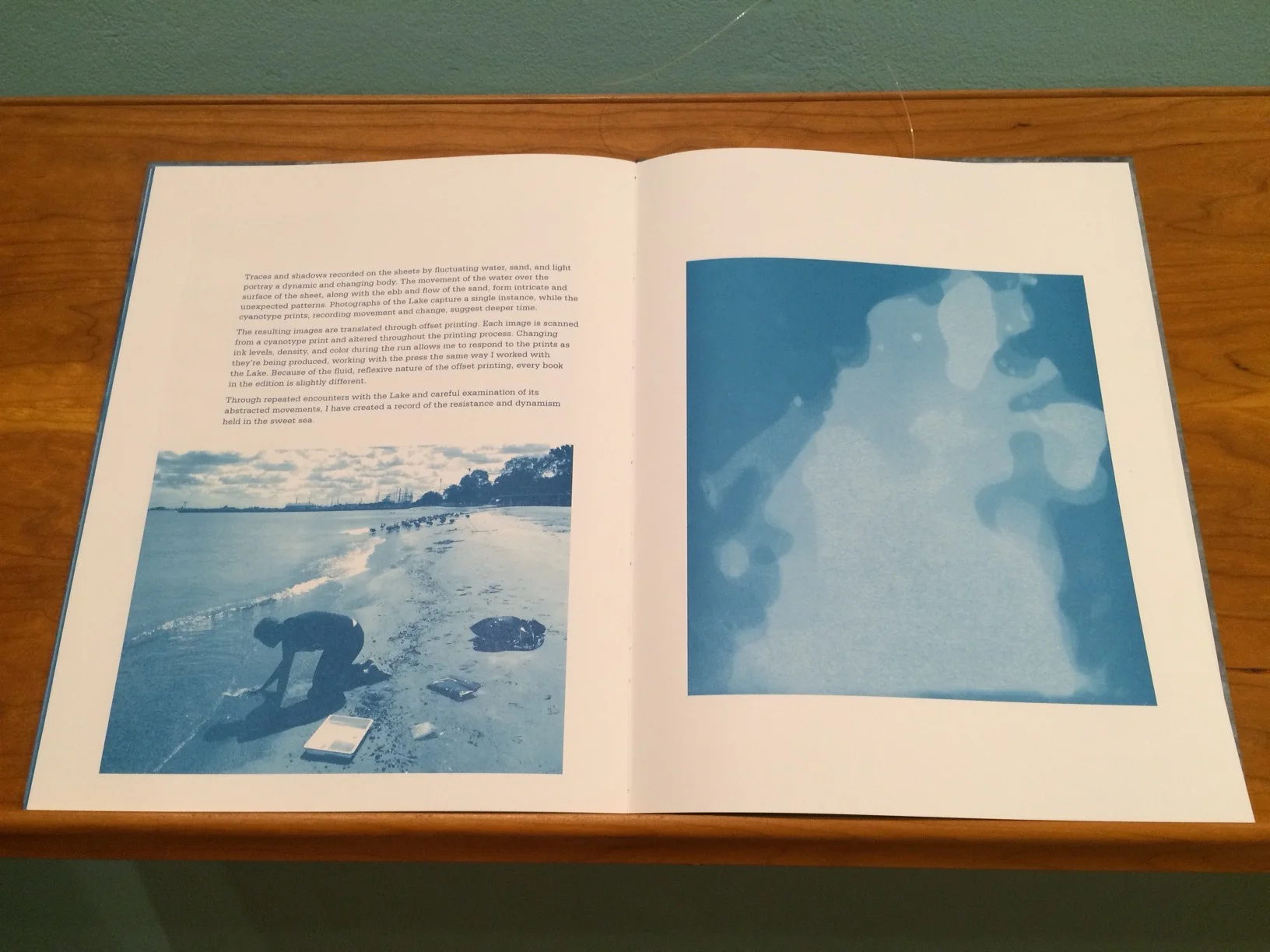
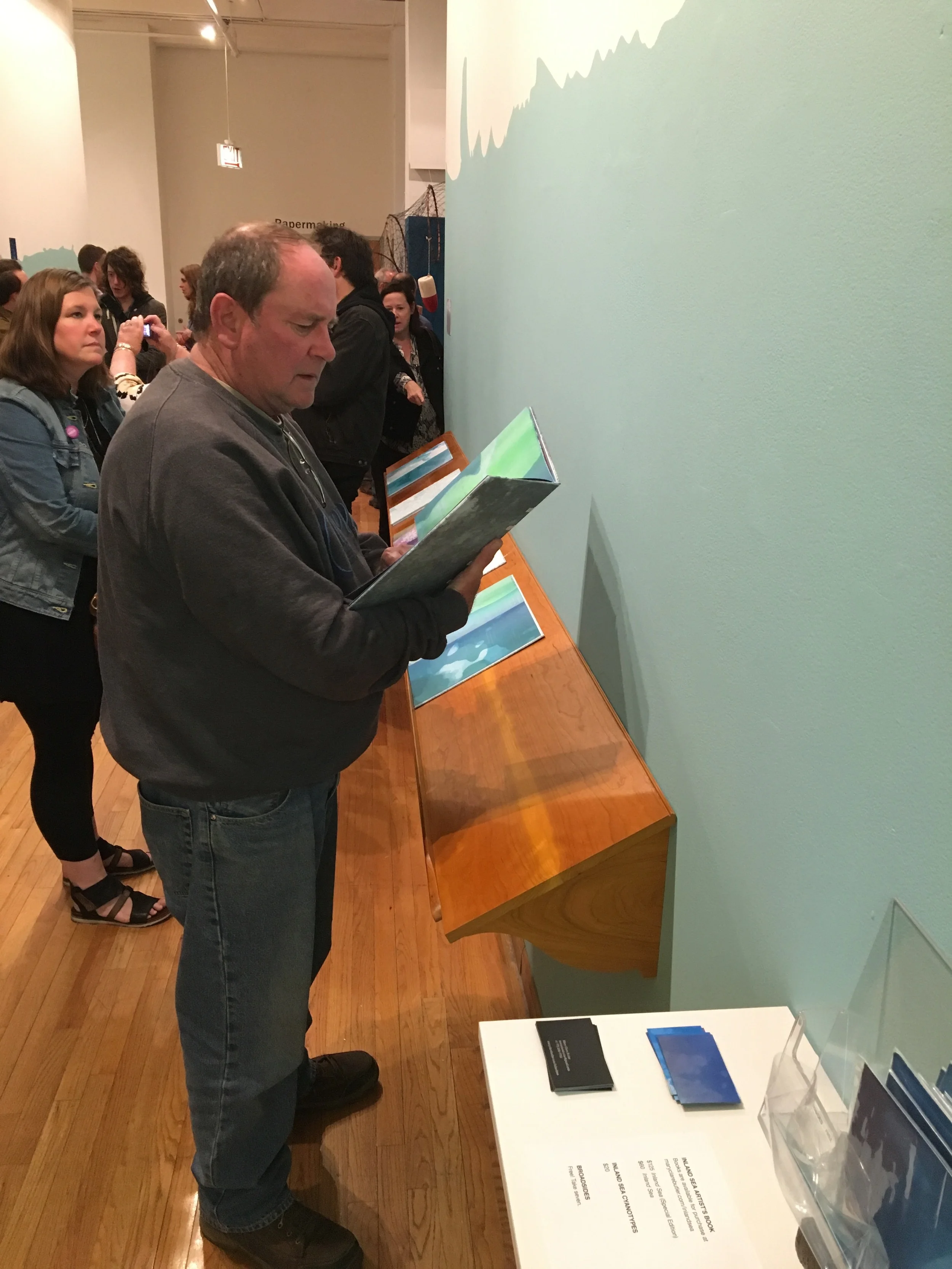
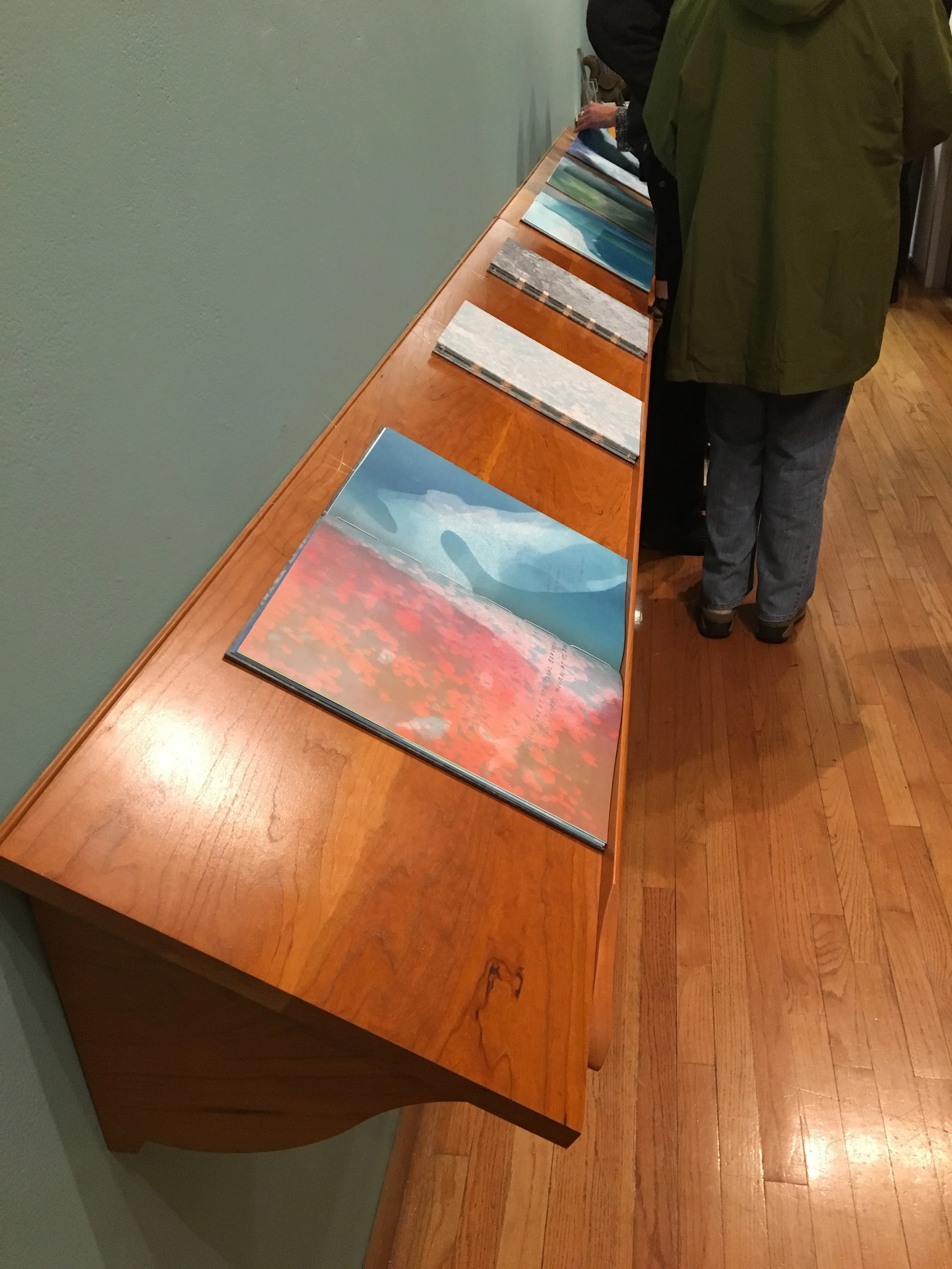
I recently received a commission for an interesting project. A friend of mine, Mary Clare Butler, is an artist that makes hand bound and offset printed books. She was presenting in a show of her work, called "Inland Sea" (read about the Inland Sea project and her process & books on her site) and needed a way to display them. She wanted a wall mounted shelf, but one that wasn't perpendicular to the wall like a regular bookshelf, but rather tilted so that the books would be at an angle to the viewer / reader. She wanted some nice finished wood for the shelves, and came to me to build them. We looked at several wood species, and she was drawn to cherry with an amber shellac finish. I measured the books, and set about making the final size and design.

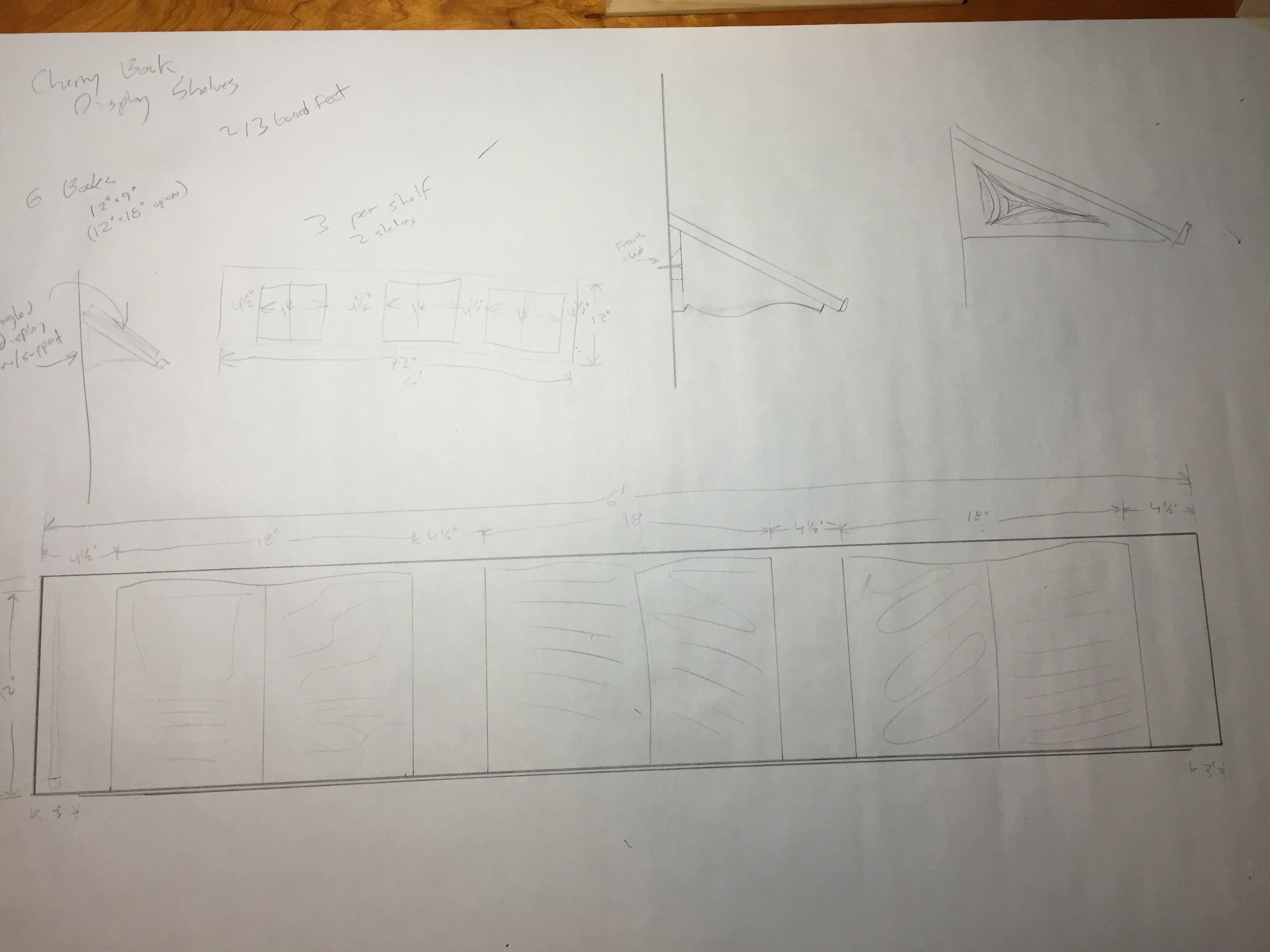
Closed, each book measures 9"w X 12"h, making them 18"w x 12"h open. There were six books to be displayed, so playing around with that, I found that three books per six foot shelf left a nice amount of space between the books. That meant two shelves, that might or might not have been placed next to each other to make one long twelve foot shelf.

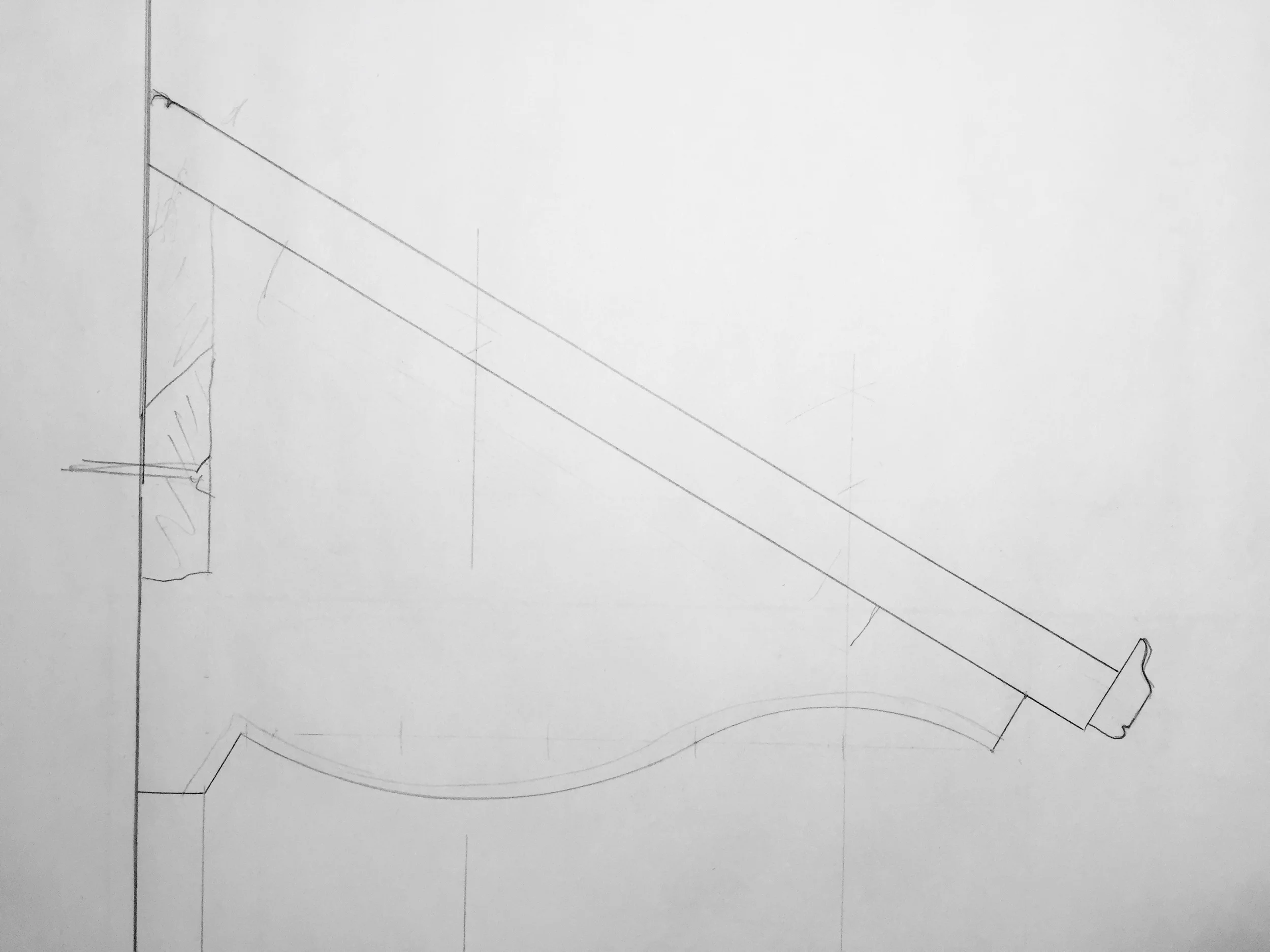
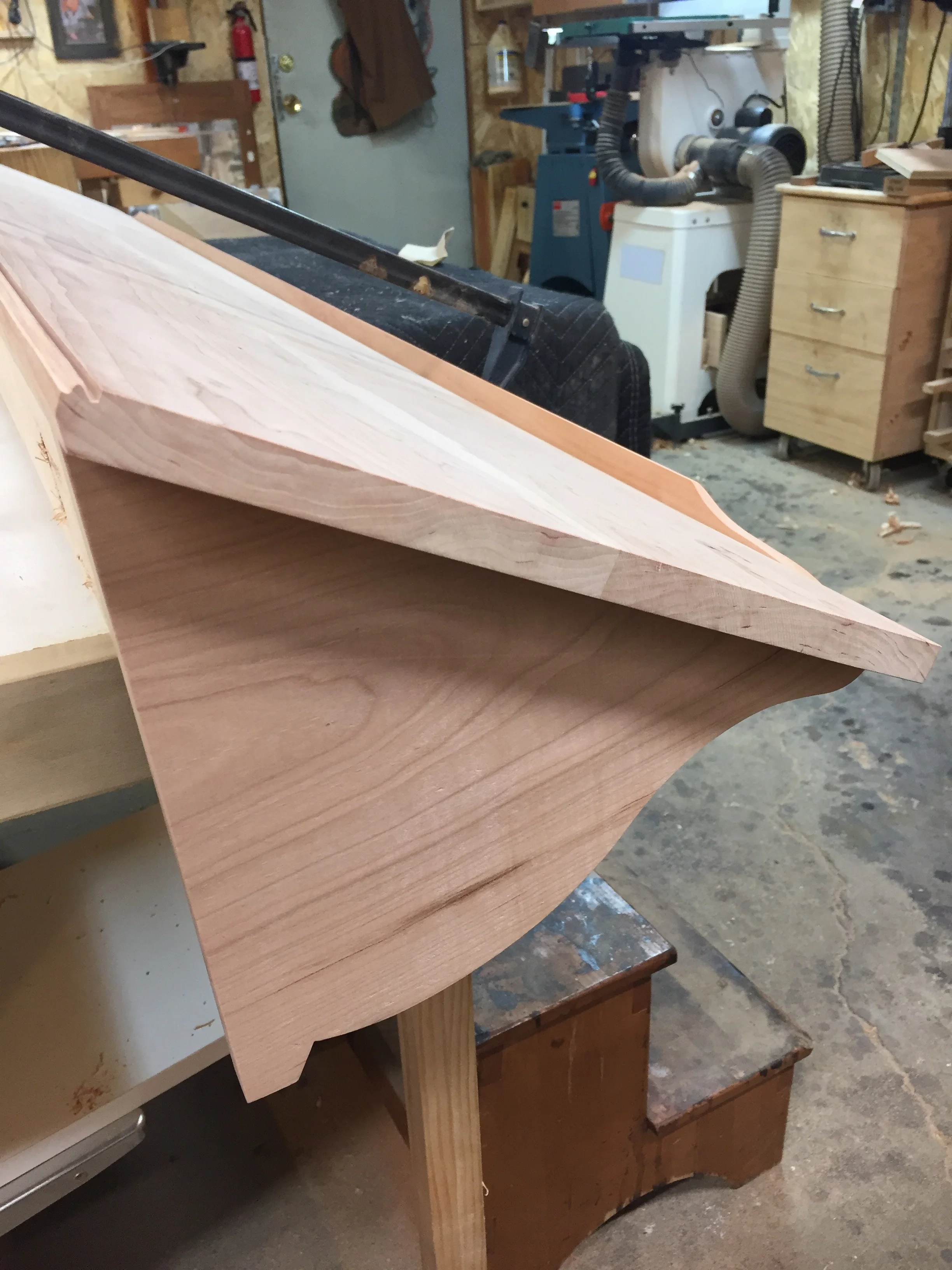
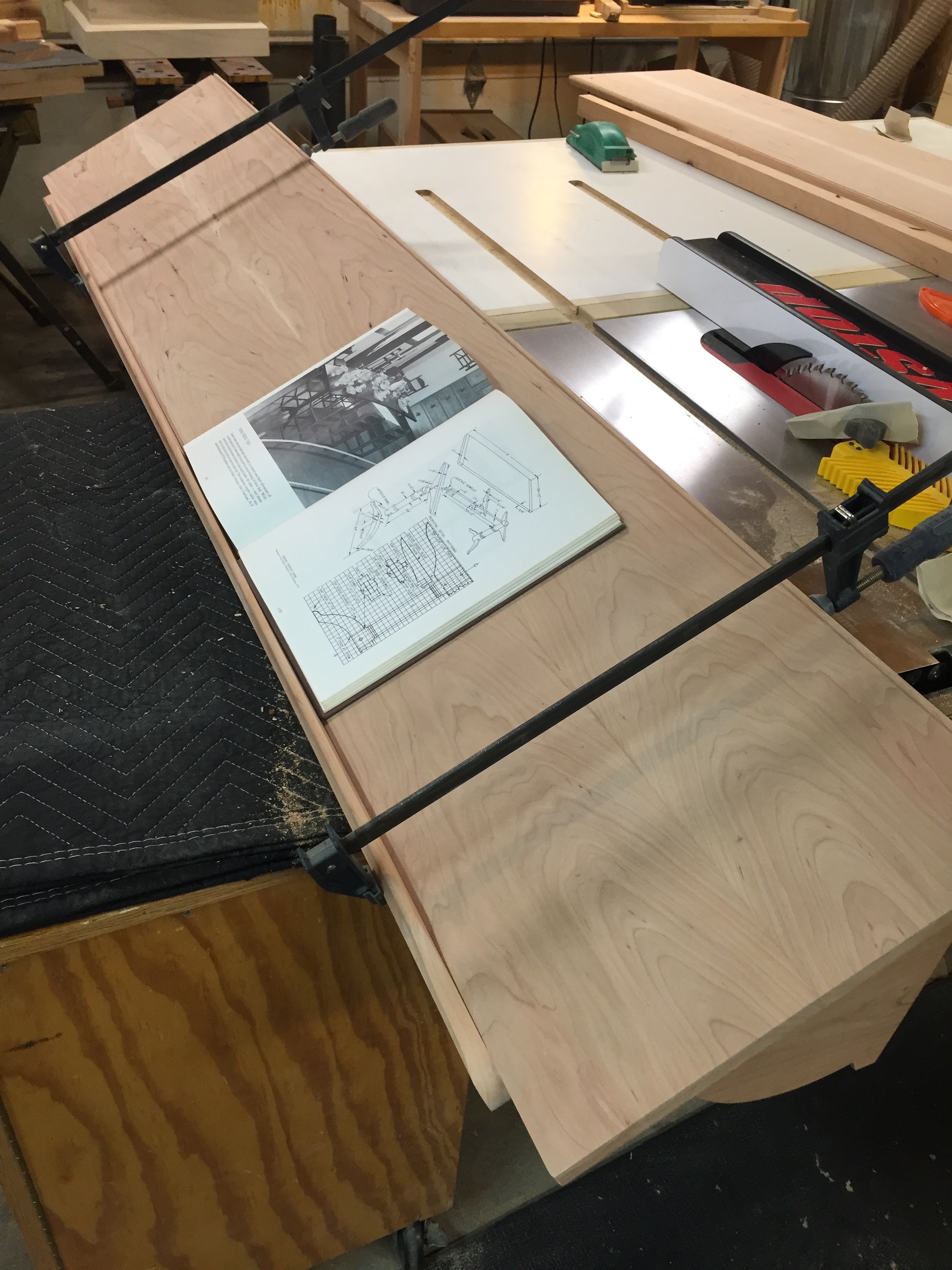
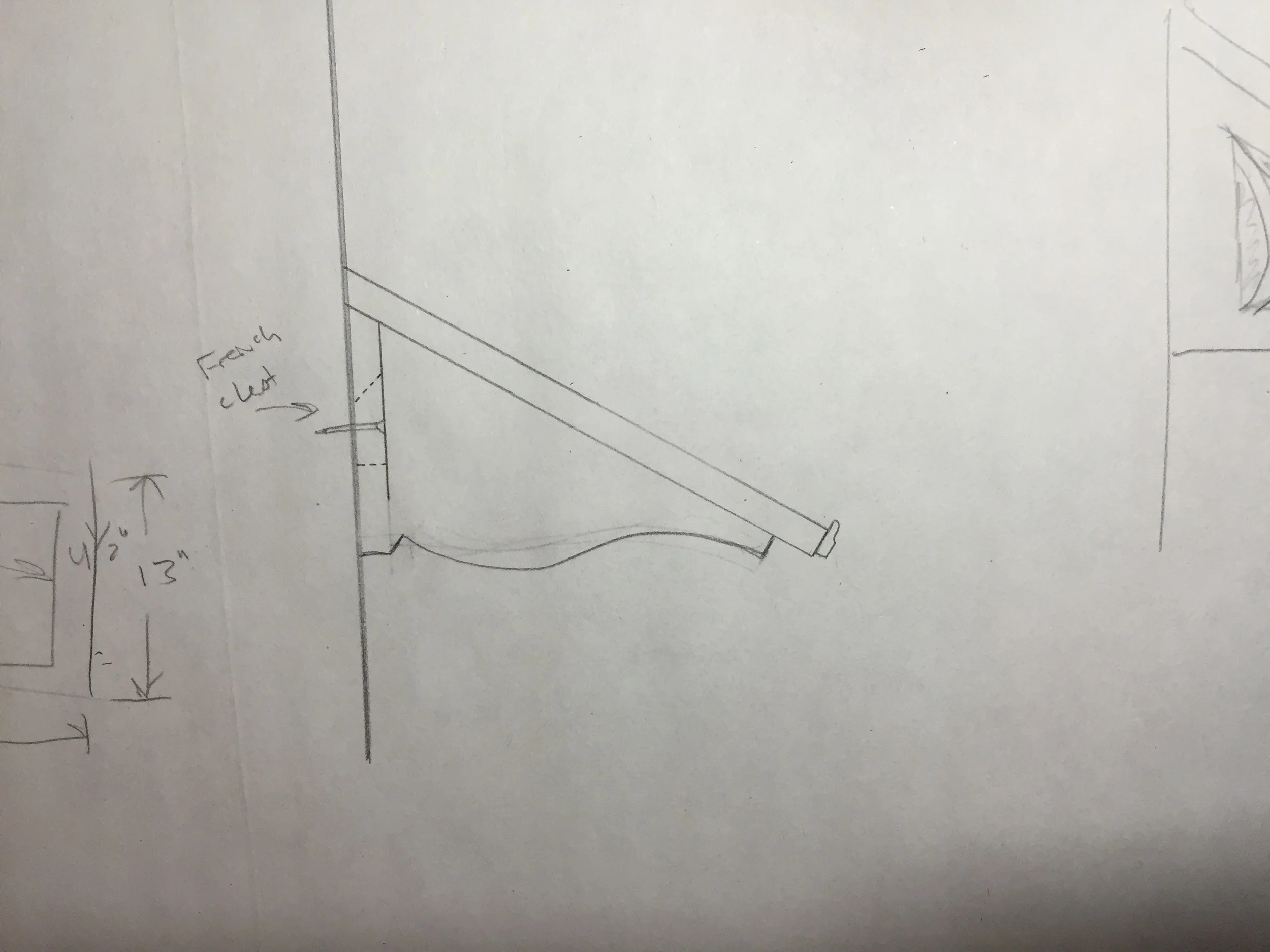
The first element to figure out was the angle of the shelves. After trying several, 30° seemed about right. We knew they would be about 3 1/2 to four feet off the ground, and we wanted to make sure the books were easily seen by both the short and tall. With the angle decided, I turned to the side brackets. I could have simply made them triangles, but that looked too dull and "construction" like -- this was a chance to be a little creative and add a design element. After a bit of drawing, I worked out a classic unequal cyma curve (or ogee curve) that looked nice.

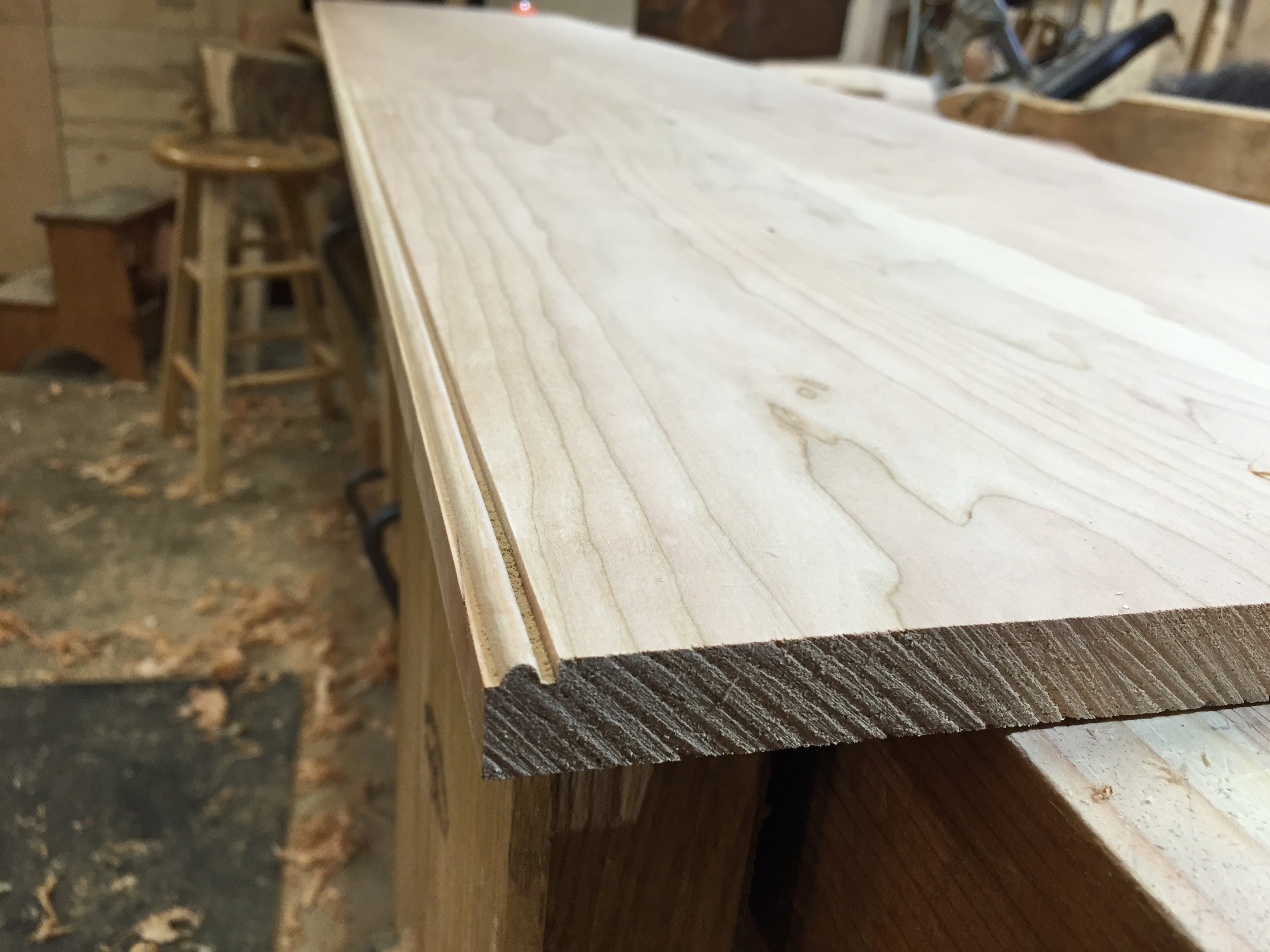
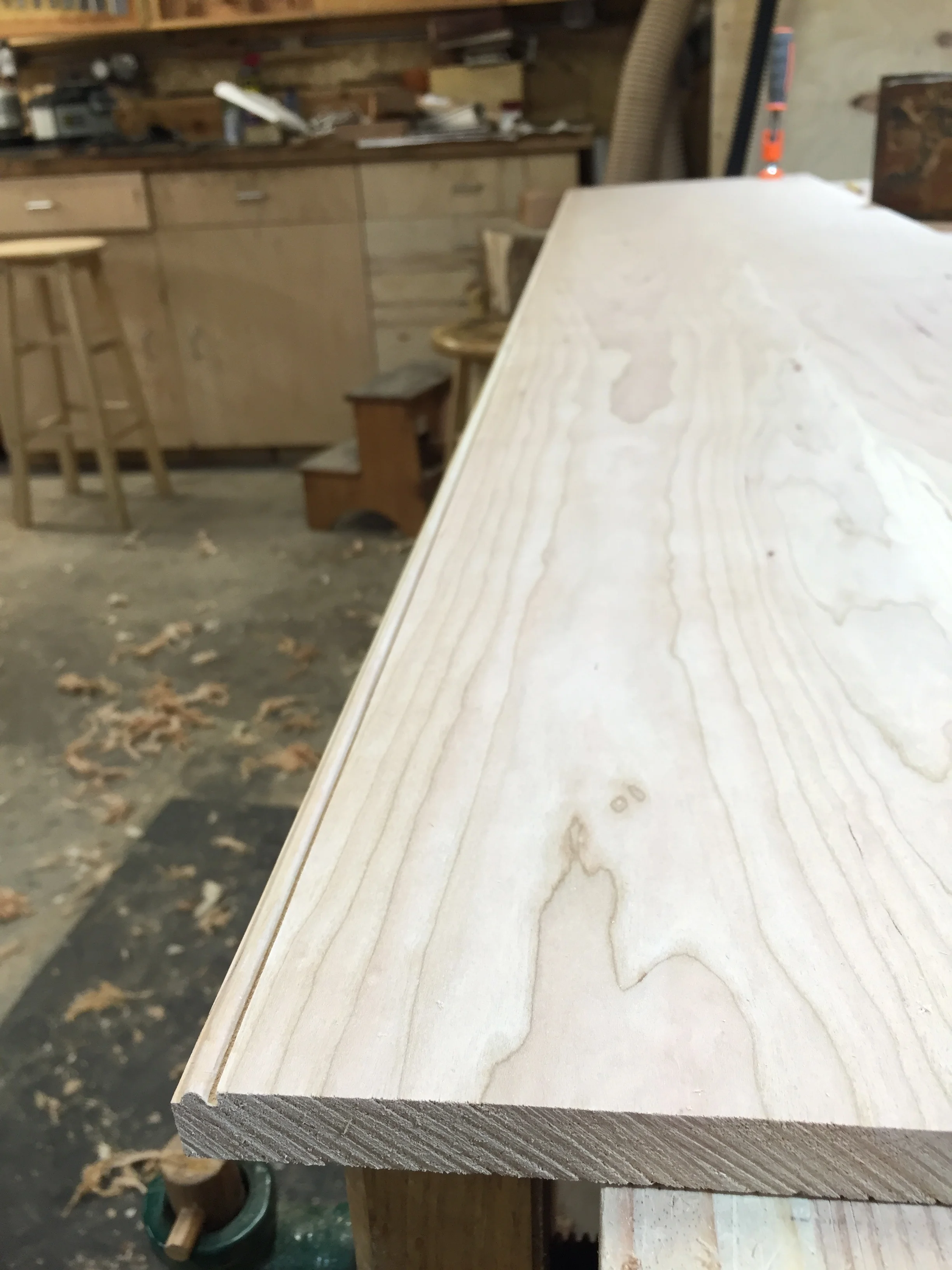
As the angle and bracket design came together, I saw that a potential trouble spot was going to be where the top edge of the shelf met the wall. Walls aren't ever straight or flat, and trying to make a perfect little bevel to meet the wall smoothly along six or twelve feet just wasn't going to happen. So I turned to the venerable bead. Adding a bead to the top edge provides a design element and a shadow line that would plunge the actual contact between the shelf and wall into shadow, obscuring any irregularities.

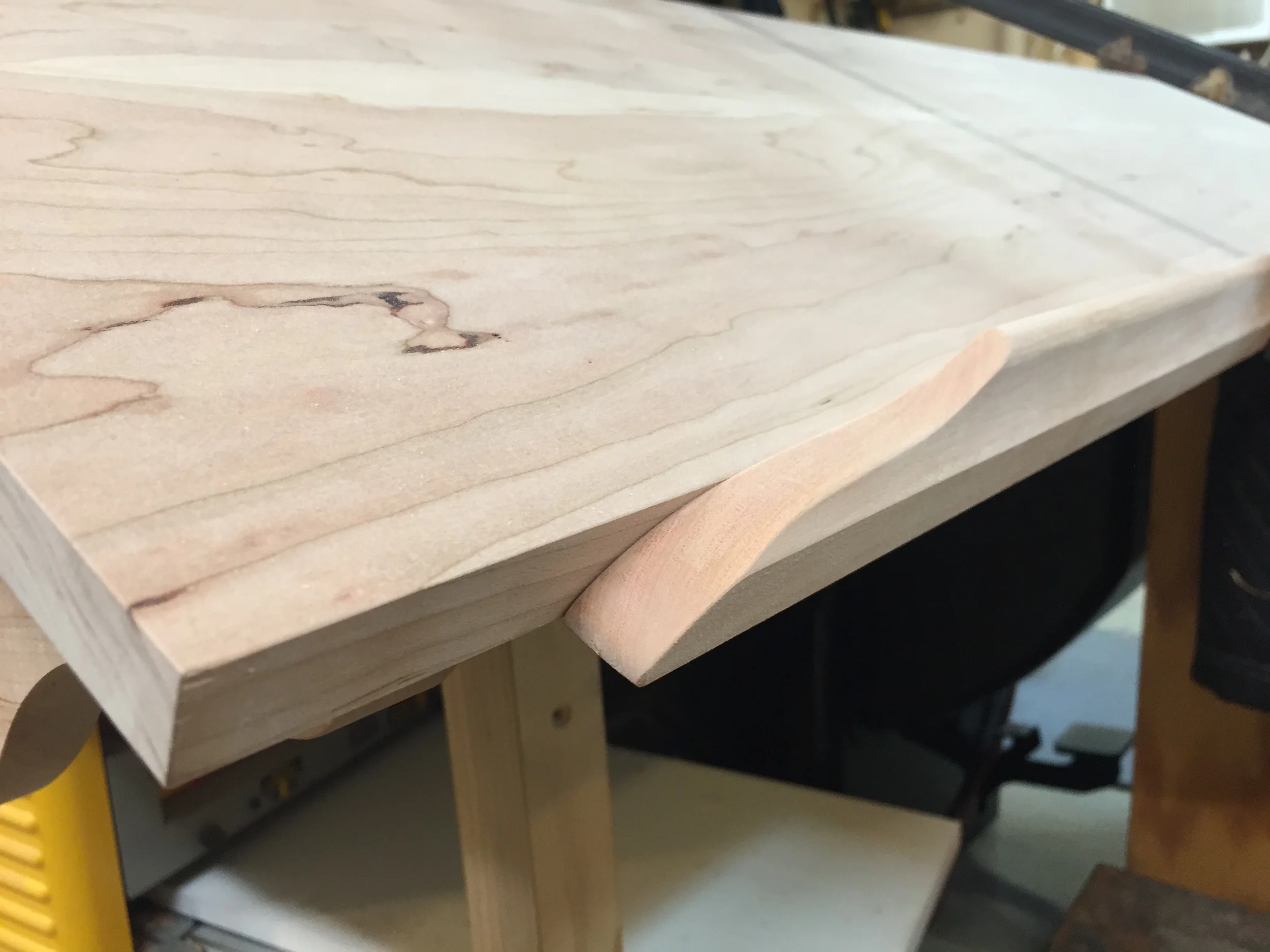
Finally, I had to consider the stop or cleat on the bottom edge of the shelf that would prevent the books from sliding off onto the floor. This was yet another chance to add some detail. I decided to use two intersecting cyma / ogee curves, one along the face or width of the stop's outer edge, and then long gentle ones at each end. Where they intersected created nice shadows and added to the sweep of this otherwise utilitarian feature.

View fullsize early design for the bracket
early design for the bracket
View fullsize refined (but not final) design of the bracket
refined (but not final) design of the bracket
View fullsize working out proportions and design ideas on the drawing board
working out proportions and design ideas on the drawing board

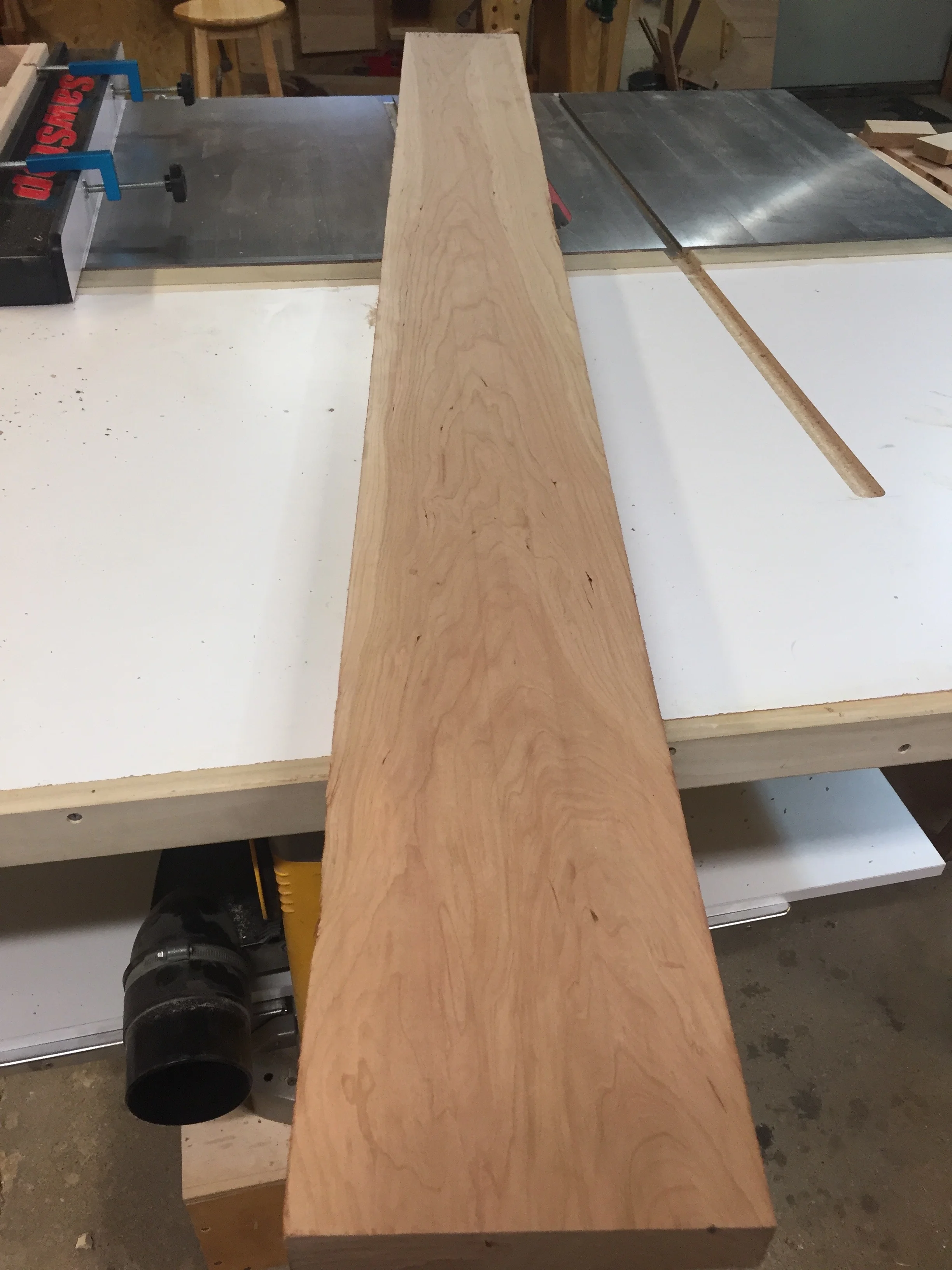
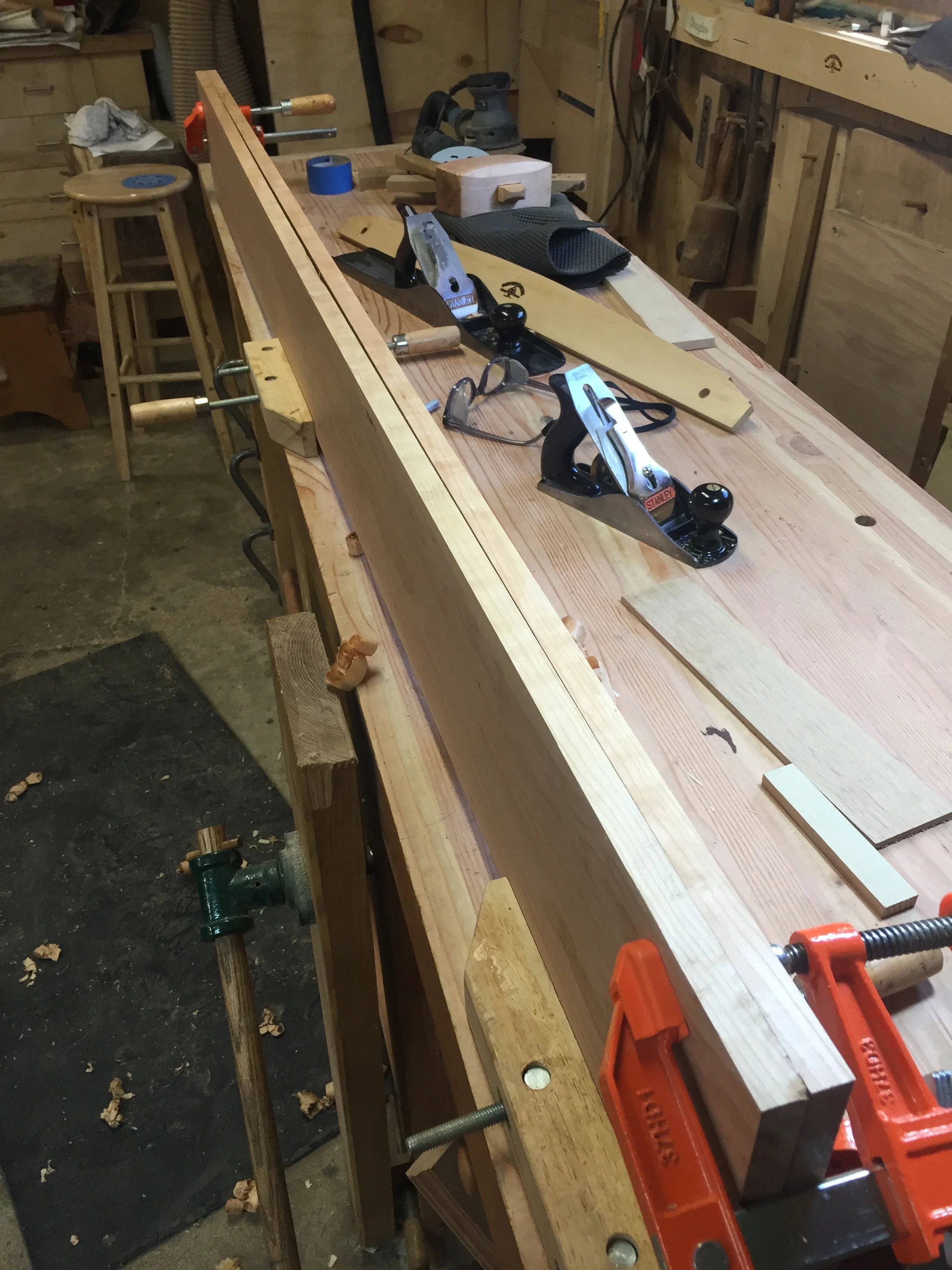
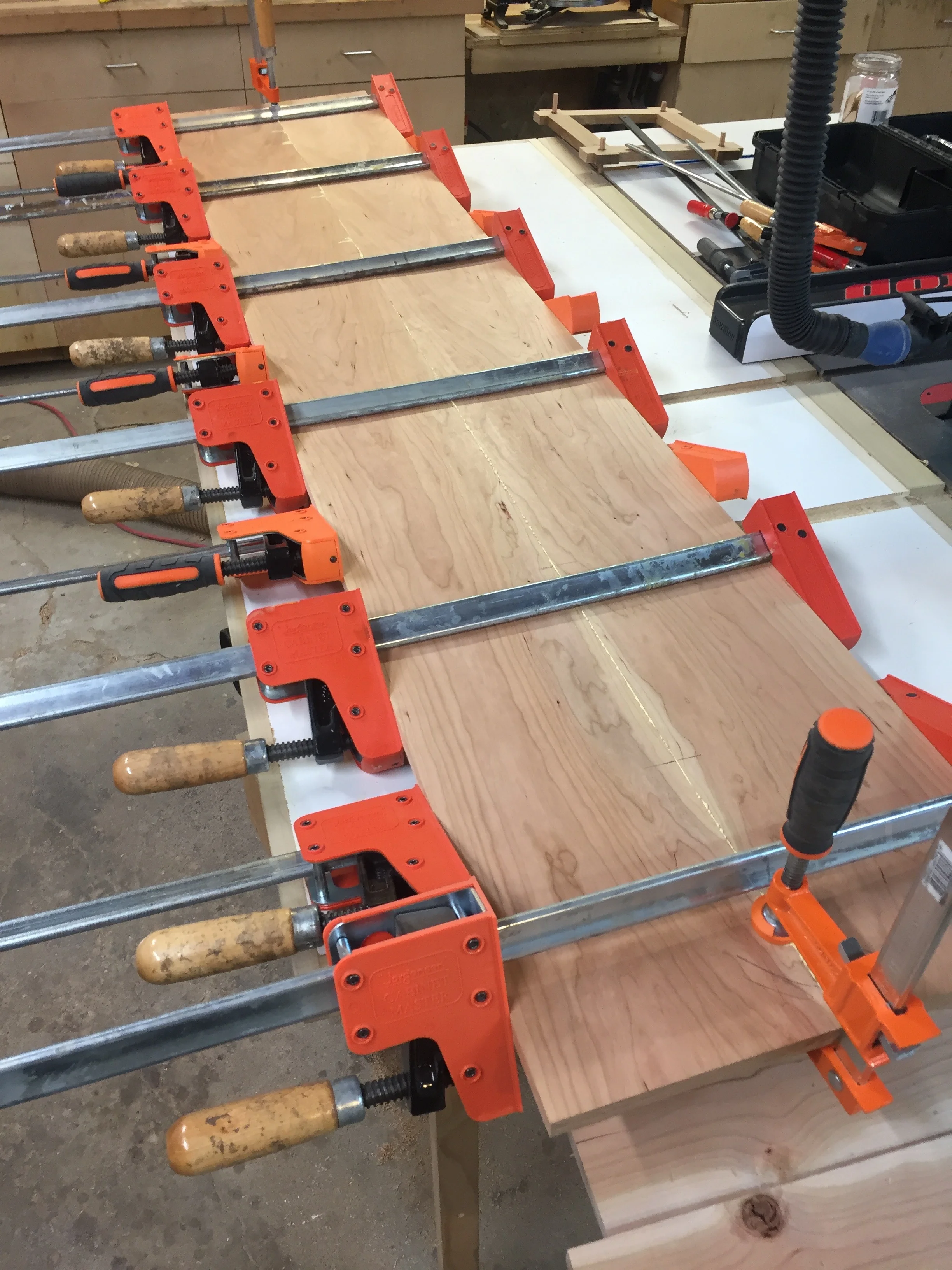
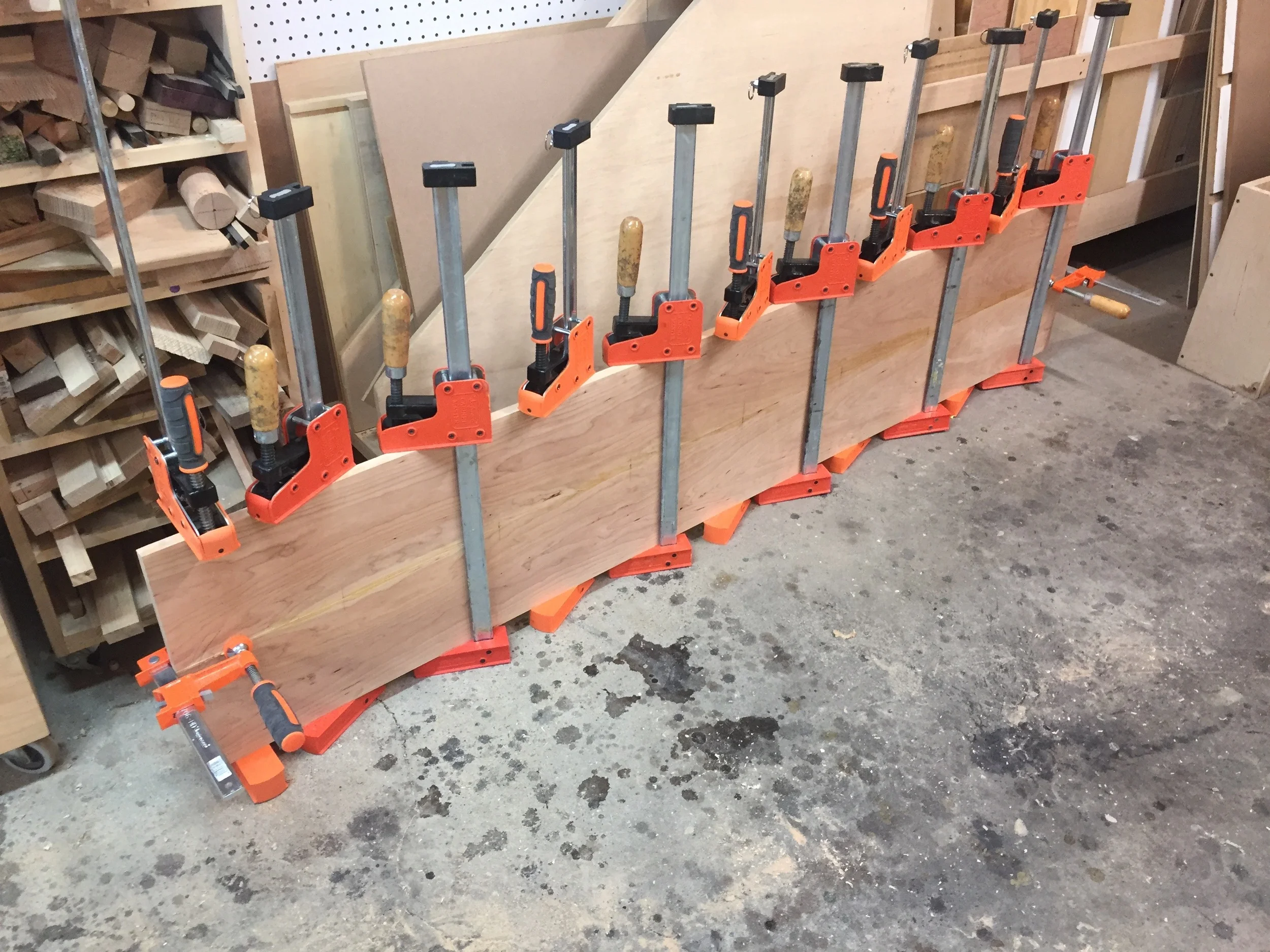
With the design in place, I set about the build. The shelves were to be 14" wide, so I was hoping to find some wide cherry boards for this purpose. But the hardwood dealer didn't have anything that wide in stock, so I went with plan "B" (always have a plan "B" at the lumber store) and found some 8"-9" wide 8/4 stock, and re-sawed that to make book matched pieces. I flattened, jointed and lamenated those into the pieces I needed, and trimmed them to the final size.

View fullsize IMG_4089.jpg
View fullsize IMG_4137.jpg
View fullsize IMG_4138.jpg
View fullsize IMG_4139.jpg

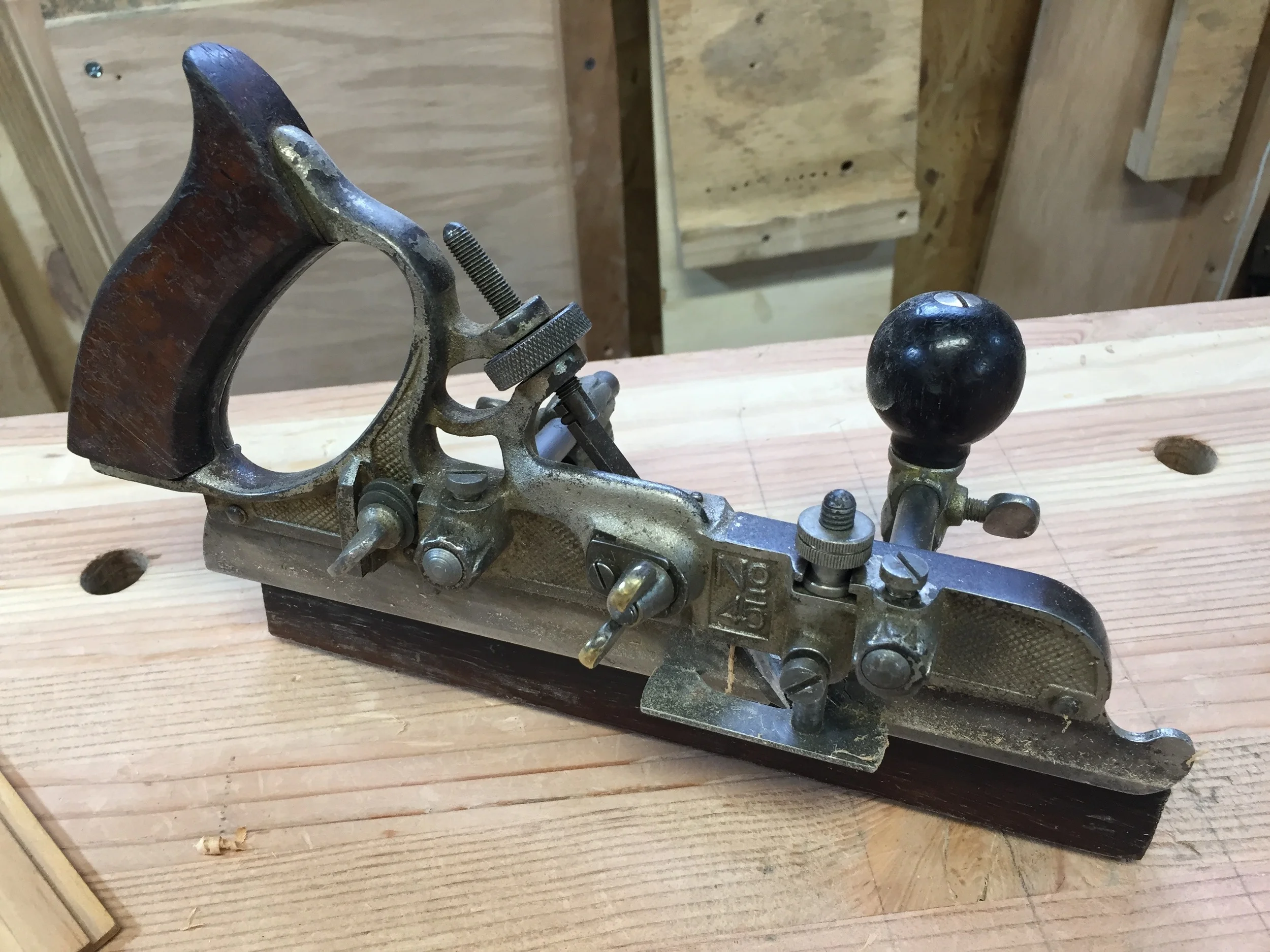
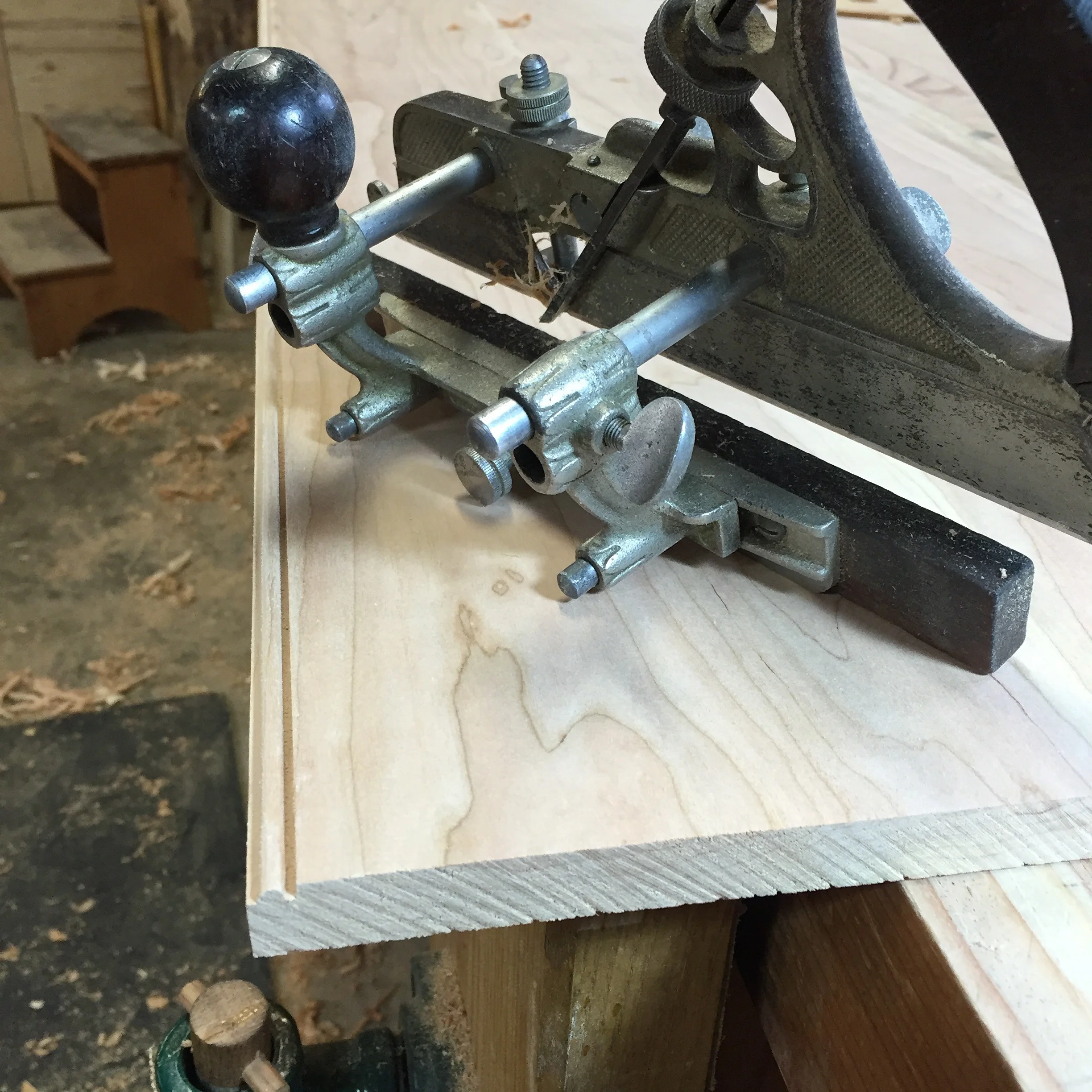
This was good time to apply the top edge bead, so I did that with a beading cutter in my Stanley No. 45. I love that plane, and it made short and crisp work of it.

View fullsize IMG_4149.jpg
View fullsize IMG_4144.jpg
View fullsize IMG_4155.jpg
View fullsize IMG_4145.jpg

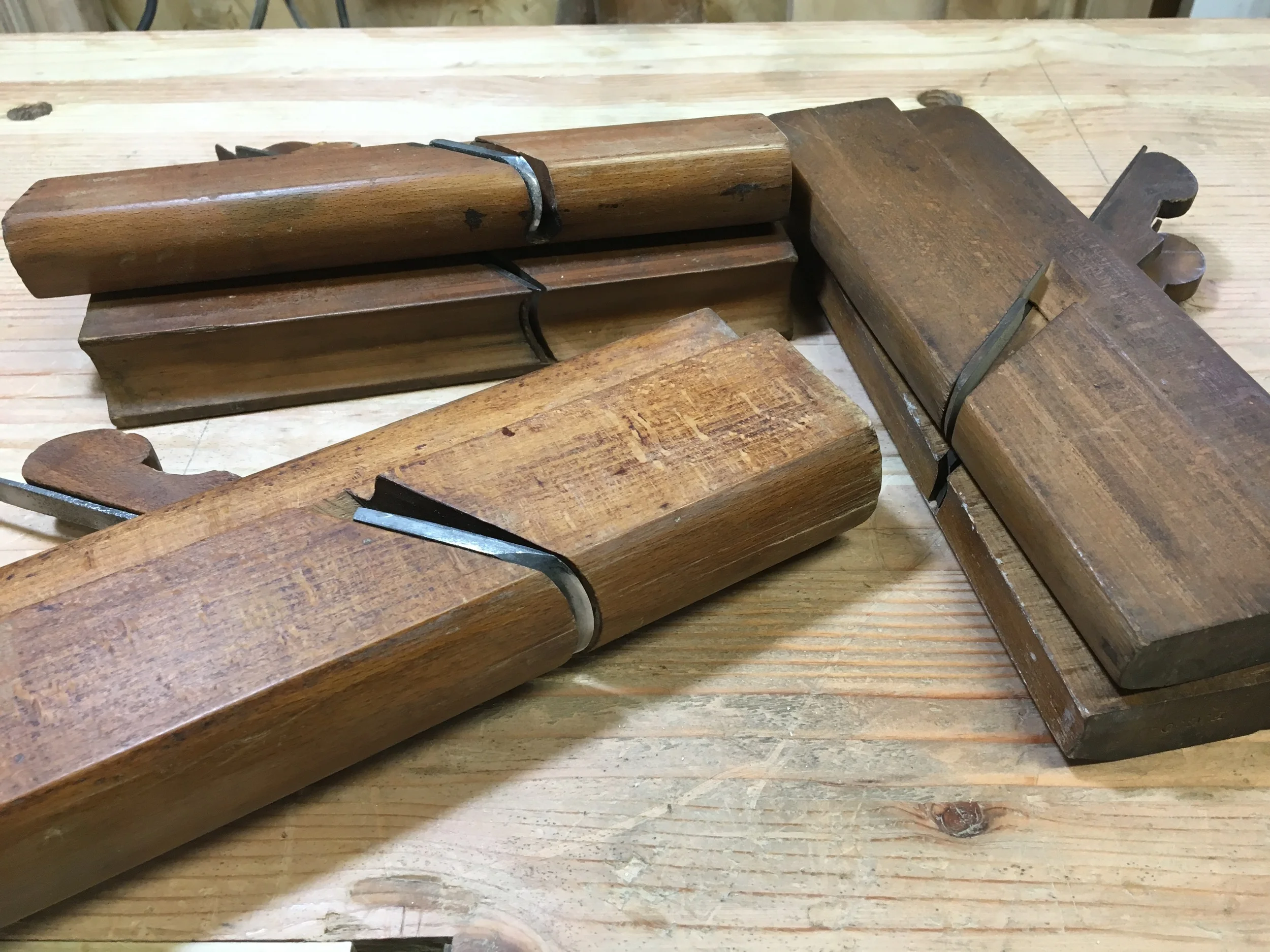
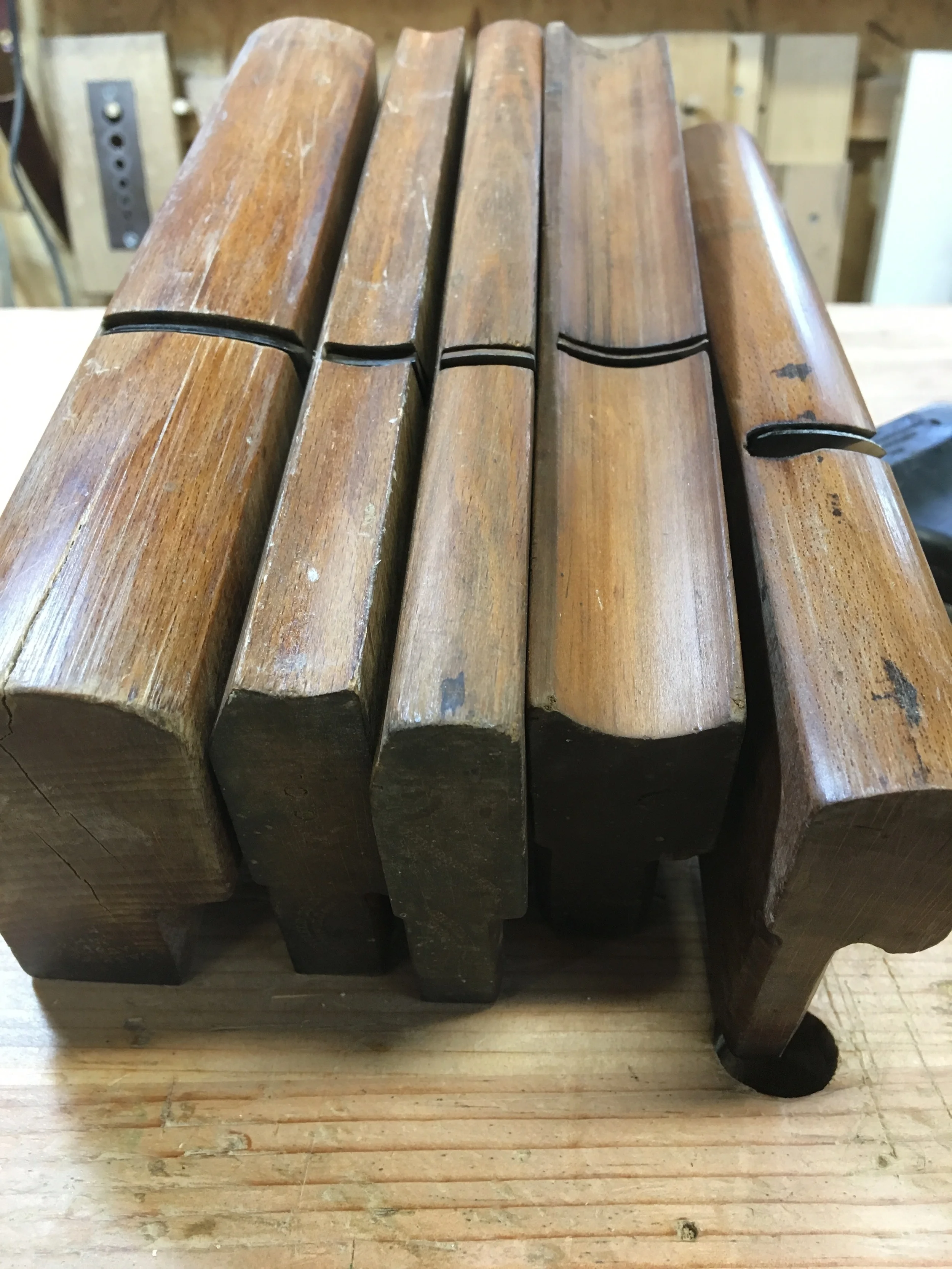
The bottom cleat was fun to make. I drew out the profiles I wanted, made some templates out of 1/4" hardboard, and traced them onto the stock. I then used a couple of the hollow and round moulding planes I have to cut the shape. That process is so much more fun than using a powered router. It is quiet, controlled, and all about finessing to get that final shape. And much more fun than trying to buy one or more dedicated router bits to make a particular shape. With the hollows and rounds, I just designed it, used the planes that were closest to the shapes, and cut it, without having to worry about specific tooling.

View fullsize the final profile
the final profile
View fullsize hollows and rounds
hollows and rounds
View fullsize convex and concave
convex and concave

I then laid out and cut the side brackets. While I was happy with the design, I remain nervous about the exposed short grain on the lower ends of the brackets. It's not an issue when they're mounted on the wall, but the thought of them getting snapped off in transit worried me (they did make it to their final installation without incident). The brackets were attached to the shelves using screws through cleats. The shelves attached to the wall with a French cleat system I made out of plywood. and attached those to the shelves with pocket screws. The french cleat is a simple and reliable system that makes them easy to adjust when installing.

View fullsize bracket shape detail
bracket shape detail
View fullsize testing... does it hold books?
testing... does it hold books?
View fullsize finishing with amber shellac
finishing with amber shellac
View fullsize IMG_4176.jpg
View fullsize IMG_4180.jpg
View fullsize IMG_4186.jpg

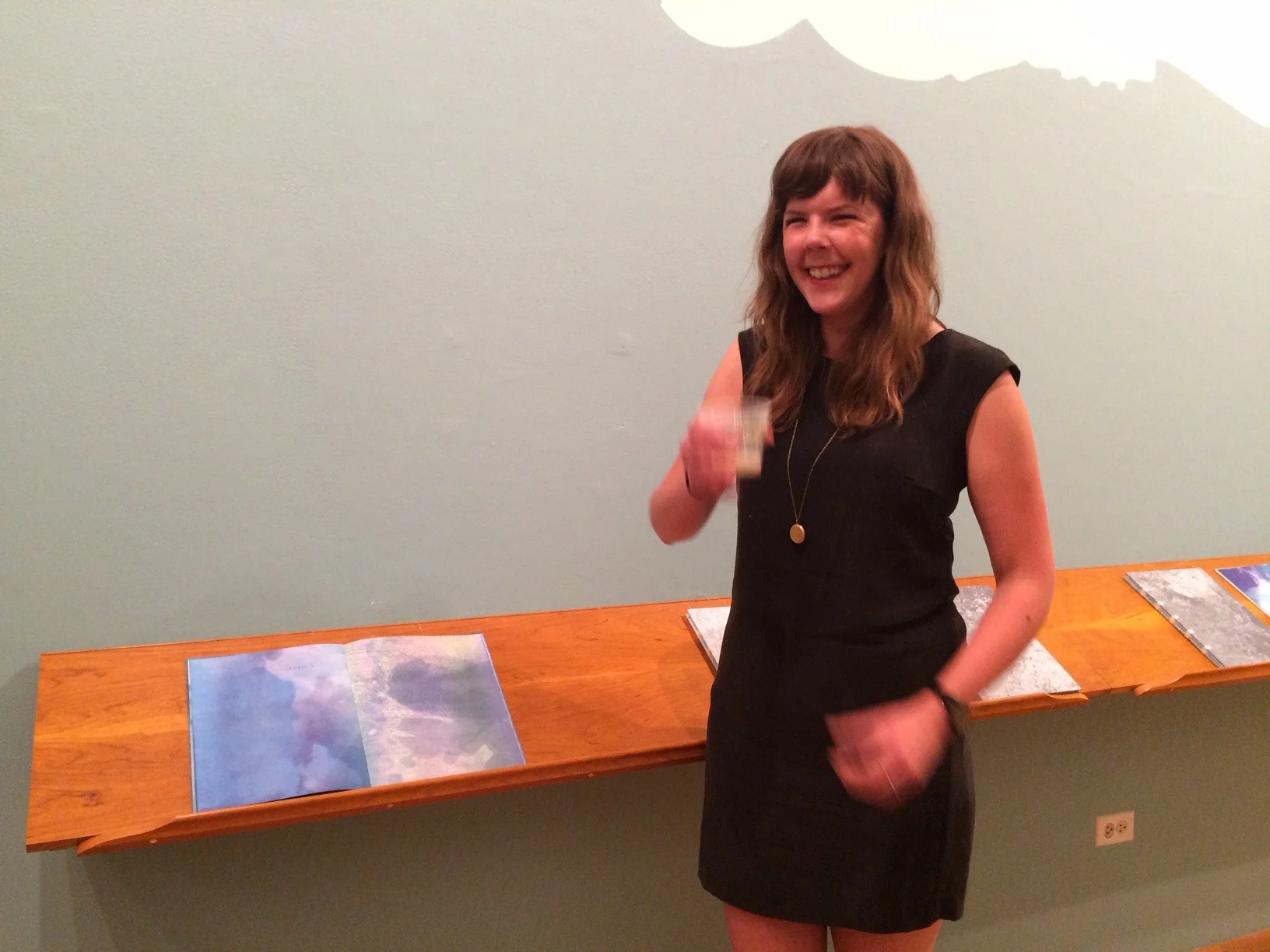
A few weeks later I went down to the show to see them "in action", and I really enjoyed seeing people interact with them. The books were fantastic, and the shelves seemed to complement the natural and organic designs of the books quite well. I was pleased to see that the top edge bead did it's job, making the intersection with the wall nice and subtle. They ended up installing the shelves side by side to make one long, continuous twelve foot shelf, and that worked out fine. I was happy, and Mary Clare was happy. What I really enjoyed the most out of this project was being able to support and work with another artist / craftsperson, and complement their work with mine.

View fullsize IMG_3133.jpg
View fullsize IMG_4225.jpg
View fullsize IMG_3134.jpg
View fullsize IMG_4220.jpg
View fullsize IMG_4221.jpg
View fullsize Mary Claire Butler
Mary Claire Butler
In project Tags display shelves, cherry, bracket, cyma, ogee, hollows and rounds, books
2 Comments

GALLERY

605_2995.jpg 20150709-300A4277.jpg 605_2739.jpg 605_3113.jpg 605_3101.jpg 605_3097.jpg 605_2688.jpg 605_2709.jpg 605_2723.jpg

On Instagram

Drawer slips. Getting back to finishing up this dresser.
Following a 27” haircut after the correct size was figured out, here’s the percussion stand and the musician Bill in situ after the performance of Shank’s Mare at the Art Institute last week. It did not fall over.
A quick last minute project - a percussion stand for a musician performing in this weekend’s Shanks Mare show at the Art Institute https://www.artic.edu/events/4217/performance-shanks-mare , replacing the PVC think in the last picture. #shanksm
A quick last minute project - a percussion stand for a musician performing in this weekend’s Shanks Mare show at the Art Institute https://www.artic.edu/events/4217/performance-shanks-mare , replacing the PVC think in the last picture. #shanksmare . Pine, maple wedges, shellac.

Latest Posts

Featured
Don't Fear the Camber
Mar 17, 2017
Don't Fear the Camber
Mar 17, 2017
Mar 17, 2017
Mortising Hinges
Dec 19, 2016
Mortising Hinges
Dec 19, 2016
Dec 19, 2016
What the Wax Does
Oct 11, 2016
What the Wax Does
Oct 11, 2016
Oct 11, 2016
Walnut Slab Coffee Table
Oct 4, 2016
Walnut Slab Coffee Table
Oct 4, 2016
Oct 4, 2016
Oct 4, 2016
MWS visits the Rock River Valley chapter of SAPFM
Oct 4, 2016
Oct 4, 2016
I'm Teaching
Sep 29, 2016
I'm Teaching
Sep 29, 2016
Sep 29, 2016
Some Trim Carpentry for Fun
Sep 21, 2016
Some Trim Carpentry for Fun
Sep 21, 2016
Sep 21, 2016
Keep Your Eyes Open
Sep 13, 2016
Keep Your Eyes Open
Sep 13, 2016
Sep 13, 2016
Drawing Table, part 2
Jul 21, 2016
Drawing Table, part 2
Jul 21, 2016
Jul 21, 2016
Drawing Table, part 1
Jul 17, 2016
Drawing Table, part 1
Jul 17, 2016
Jul 17, 2016

Powered by Squarespace