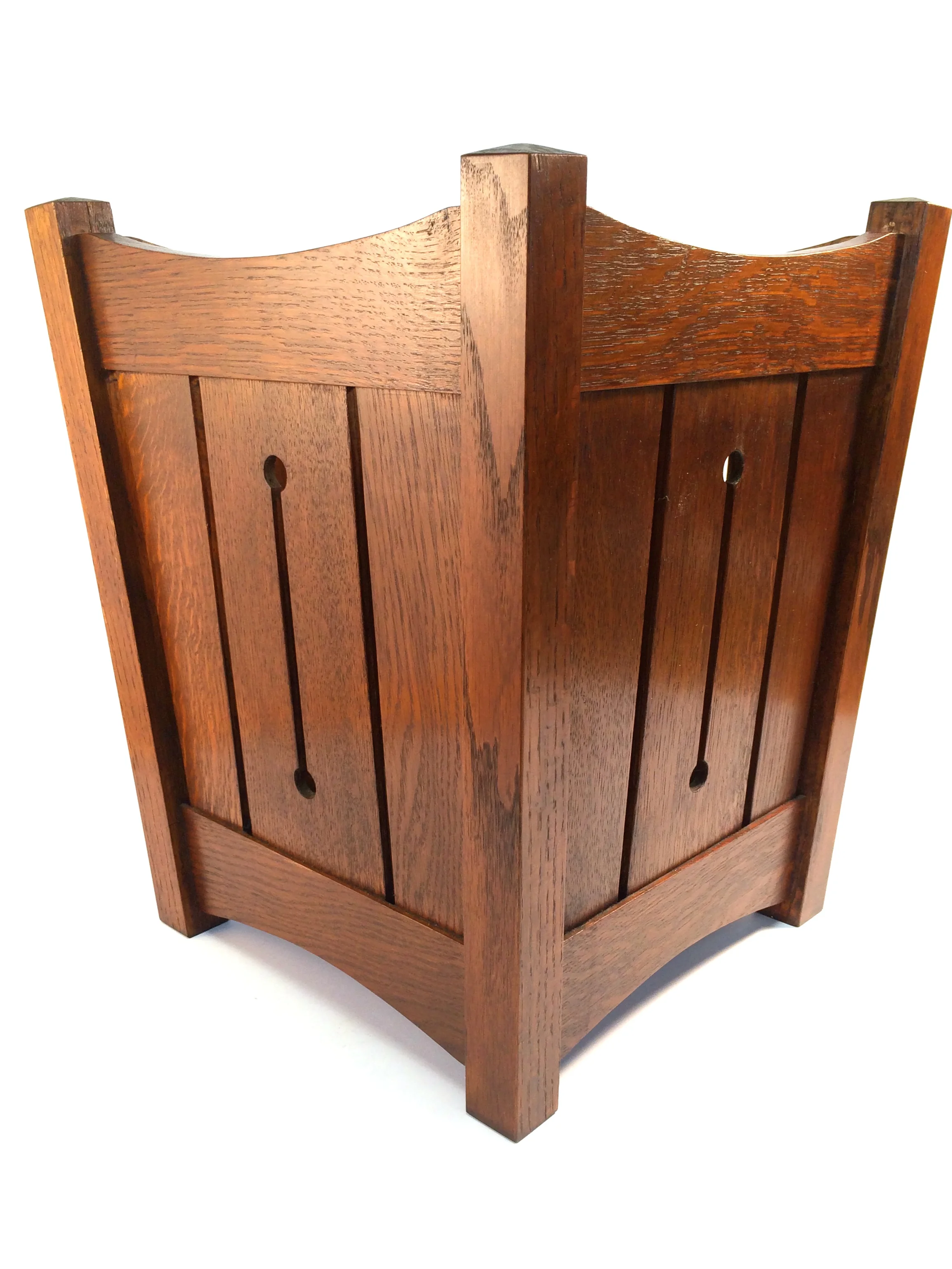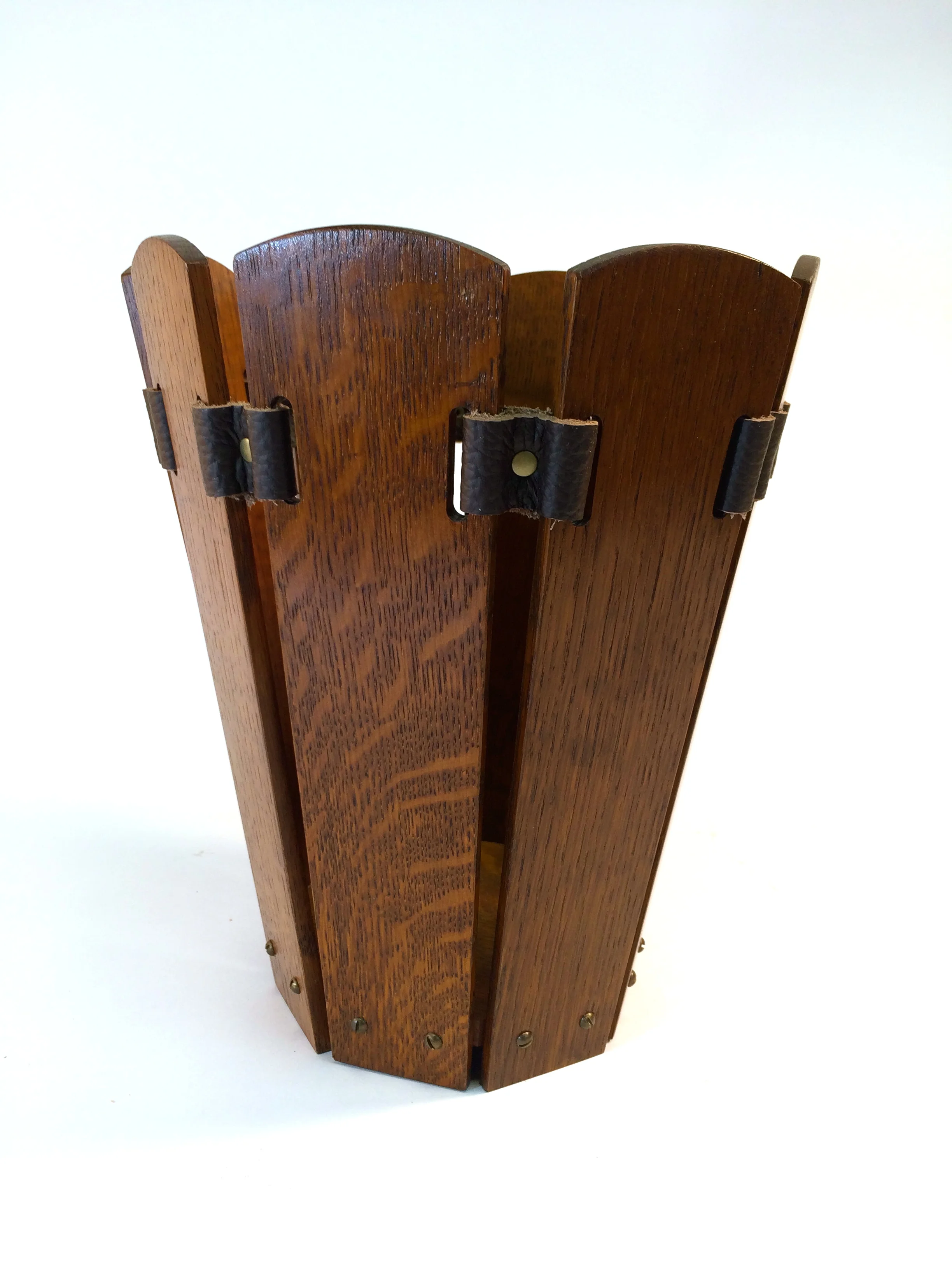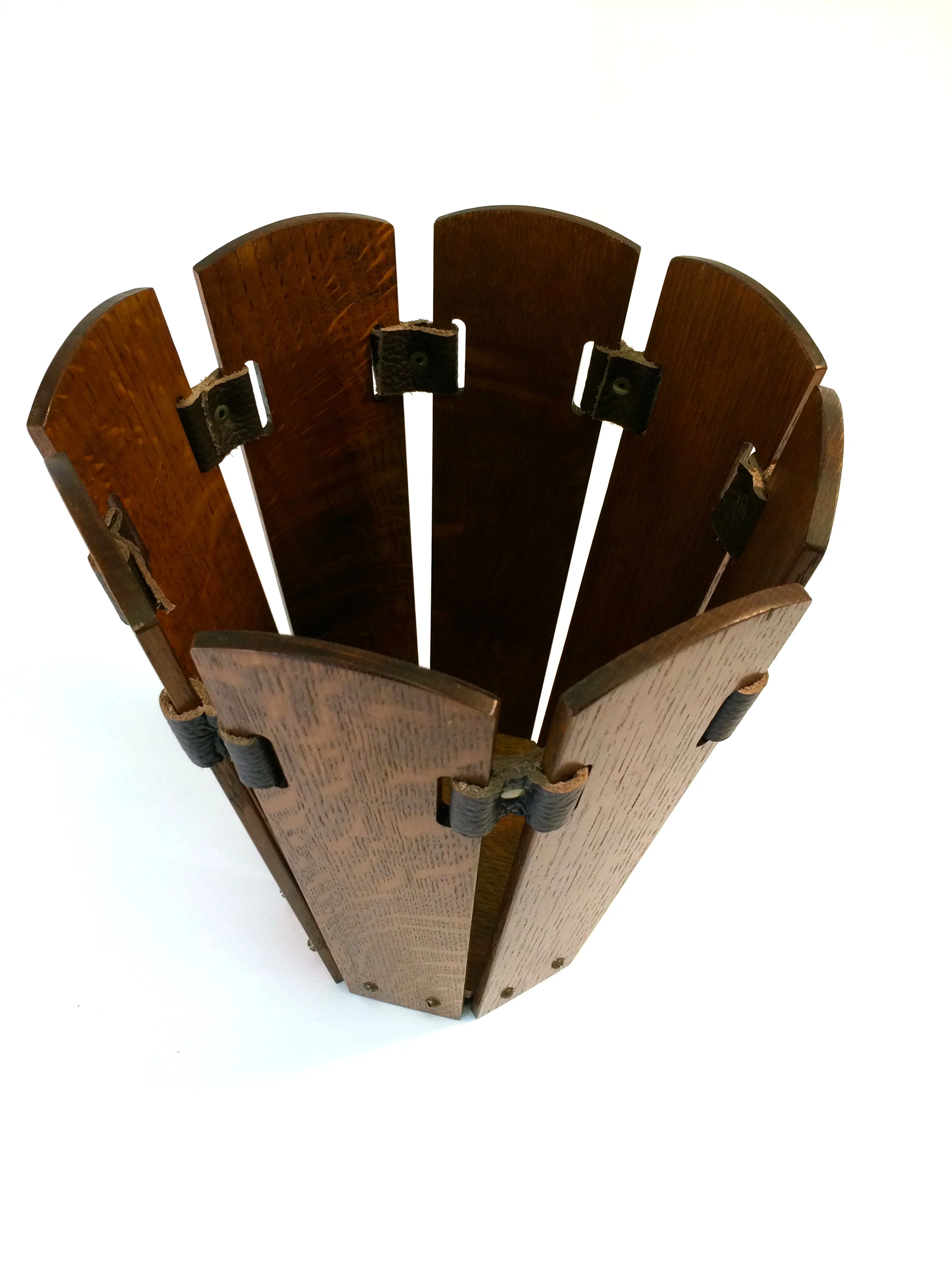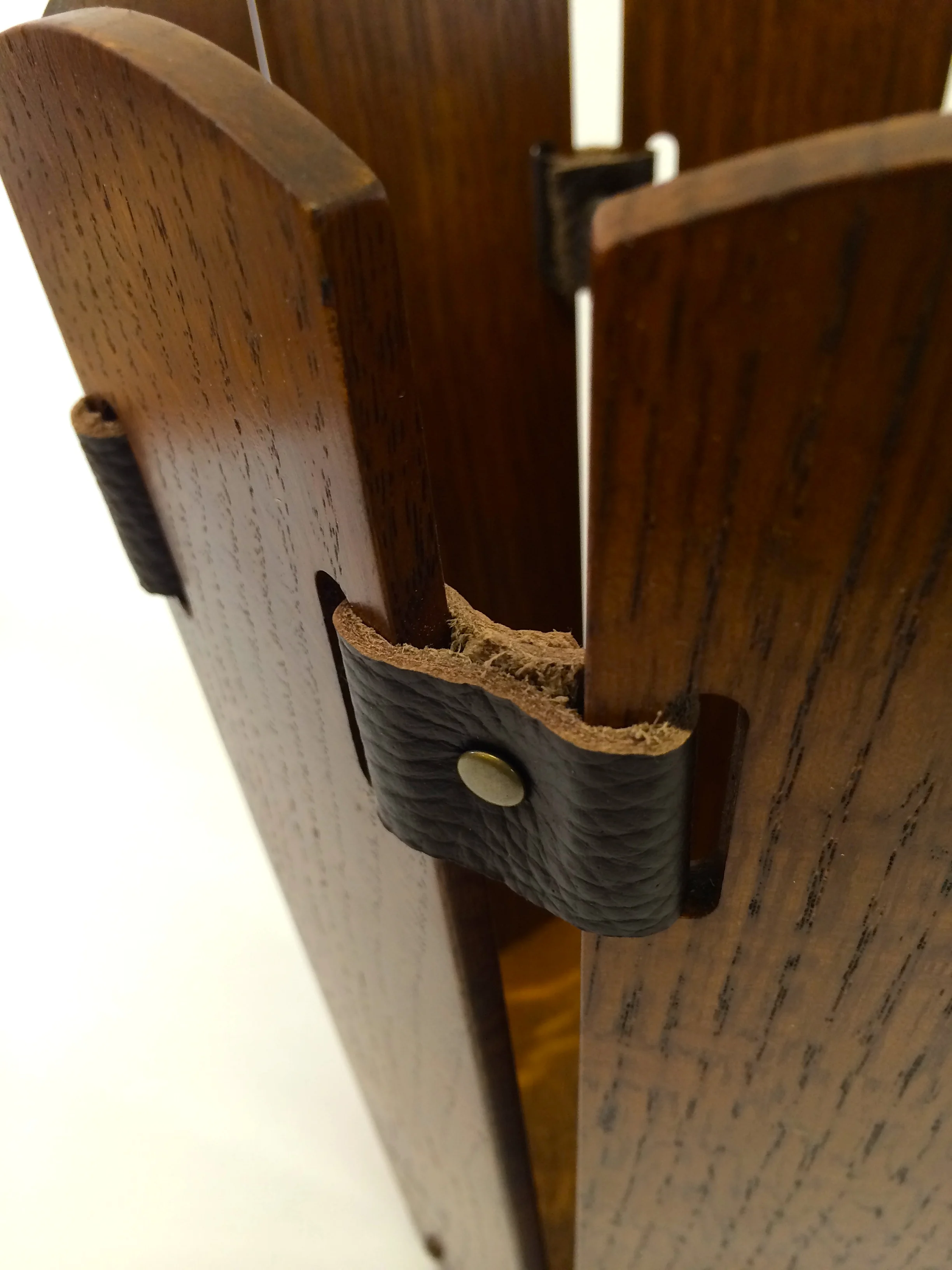
What a Waste

As I get further along the path of making things for my home, I've found that the things that aren't made by me, and especially the ones that are made of ugly plastic or are otherwise crappy, beg to be dealt with. Specifically, they beg to be replaced by something hand made, or at least by some natural material.

planning with sketches

There's also the perpetual discussion among woodworkers about dealing with all the scrap wood and cutoffs that woodworking creates. On one side, there are the fanatical, I'm-thriftier-than-thou zealots who loudly proclaim "Scrap wood?!?! There's no such thing!", and go on to explain how they went from using the 200 year old trees on their property to build their house, then all furniture in it, then scores of picture frames and cutting boards, then turned a bunch of pens, and now pick their teeth with the remainder. On the other side, there are the "I only have what I need for my current project" types, with the rest heading right into the "burn pile" (those people usually have wood burning stoves), or even the trash. Most of us woodworkers are somewhere in between, and deal with the scrap wood problem like most people (and us too) deal with being overweight: we do our best, we could do better, and we're always just a little big heavier than we want to be.

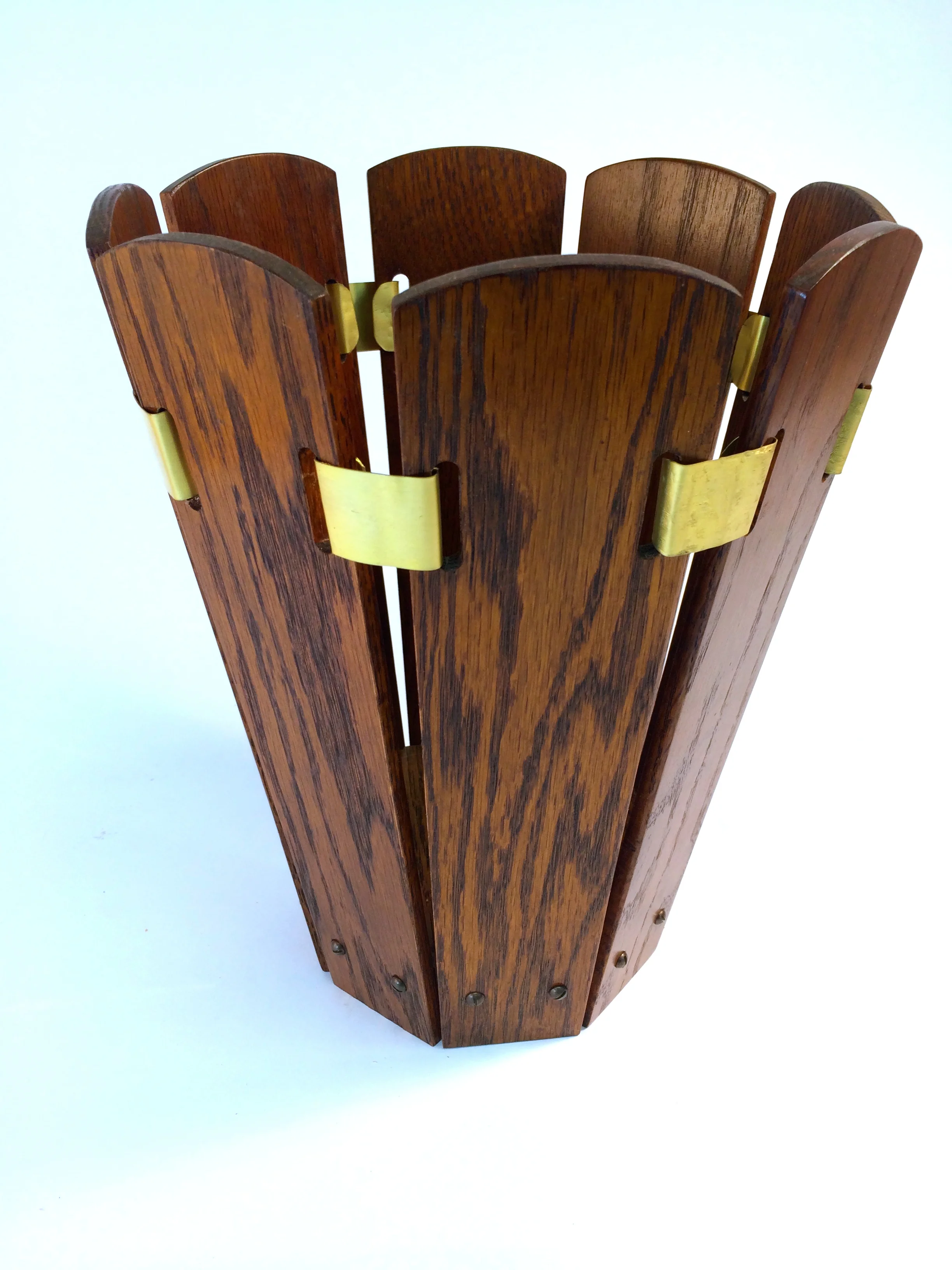
the "leaves" design

My own scrap wood coping technique is to have both a large lumber cart, for sheet and large flat things, a small cart for long & narrow things, and several lumber shelves for the very long boards. When those are full, the rest goes into my burn pile. Yup, that's the RULE. I try to be strict, I really do. But, when a cutoff is just so damn gorgeous, or when the sting of the cost of the lumber is still fairly fresh in my mind, it is hard to follow the RULE. Sometimes I'll swap out the new, better scraps for older, less useful scraps. And then, sometimes, you just get a good pile of too-good-to-toss stuff built up.

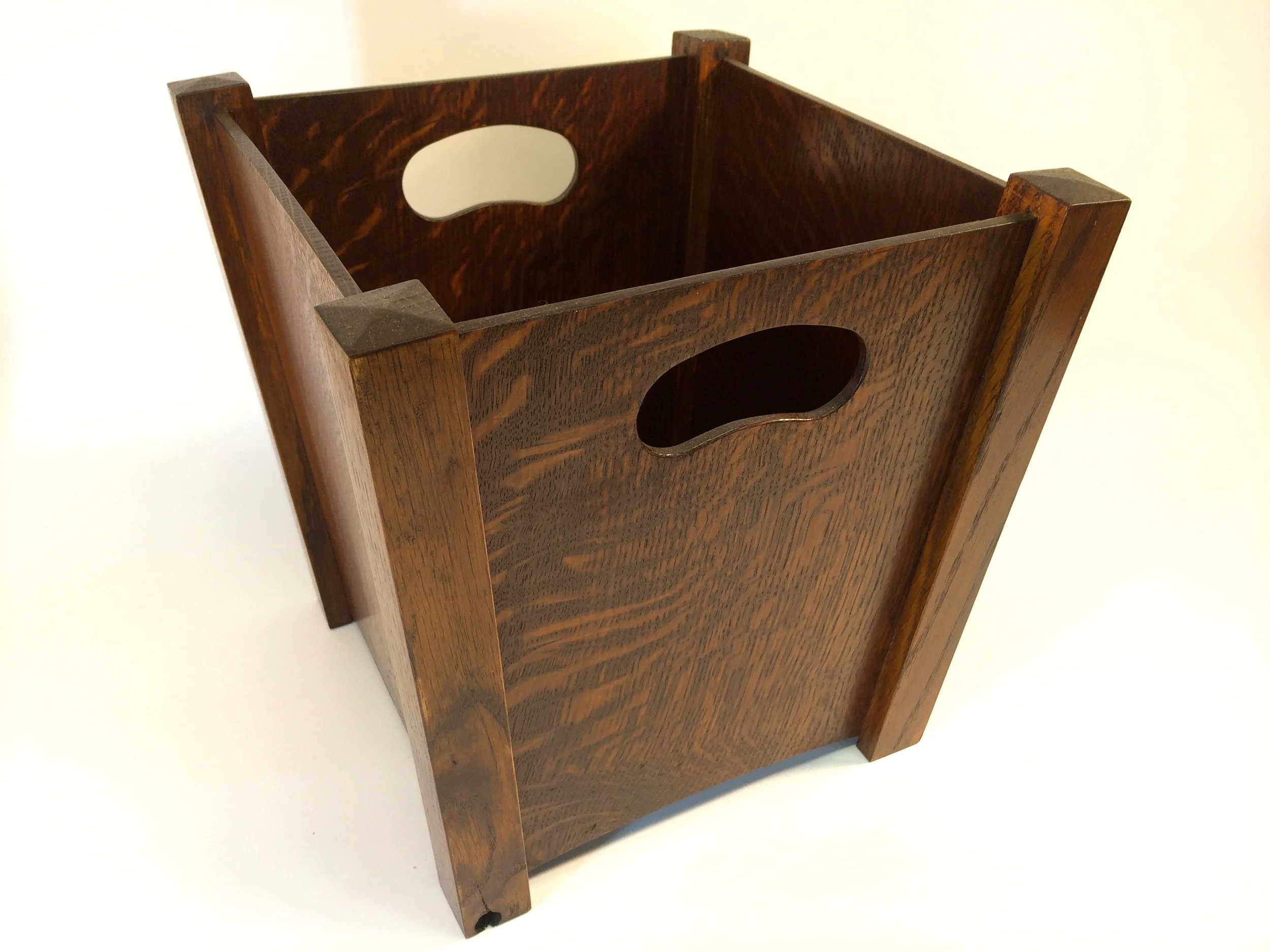
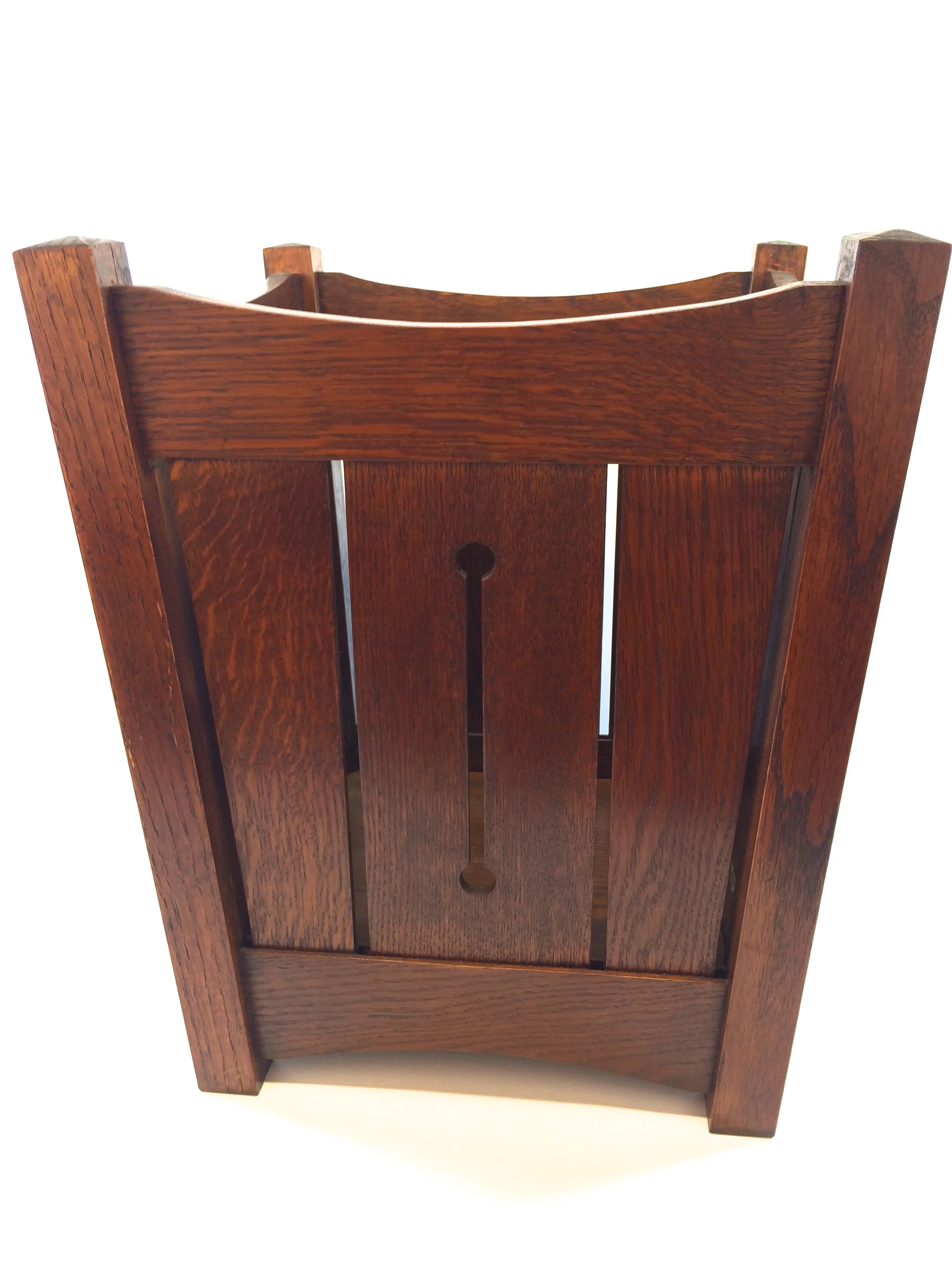
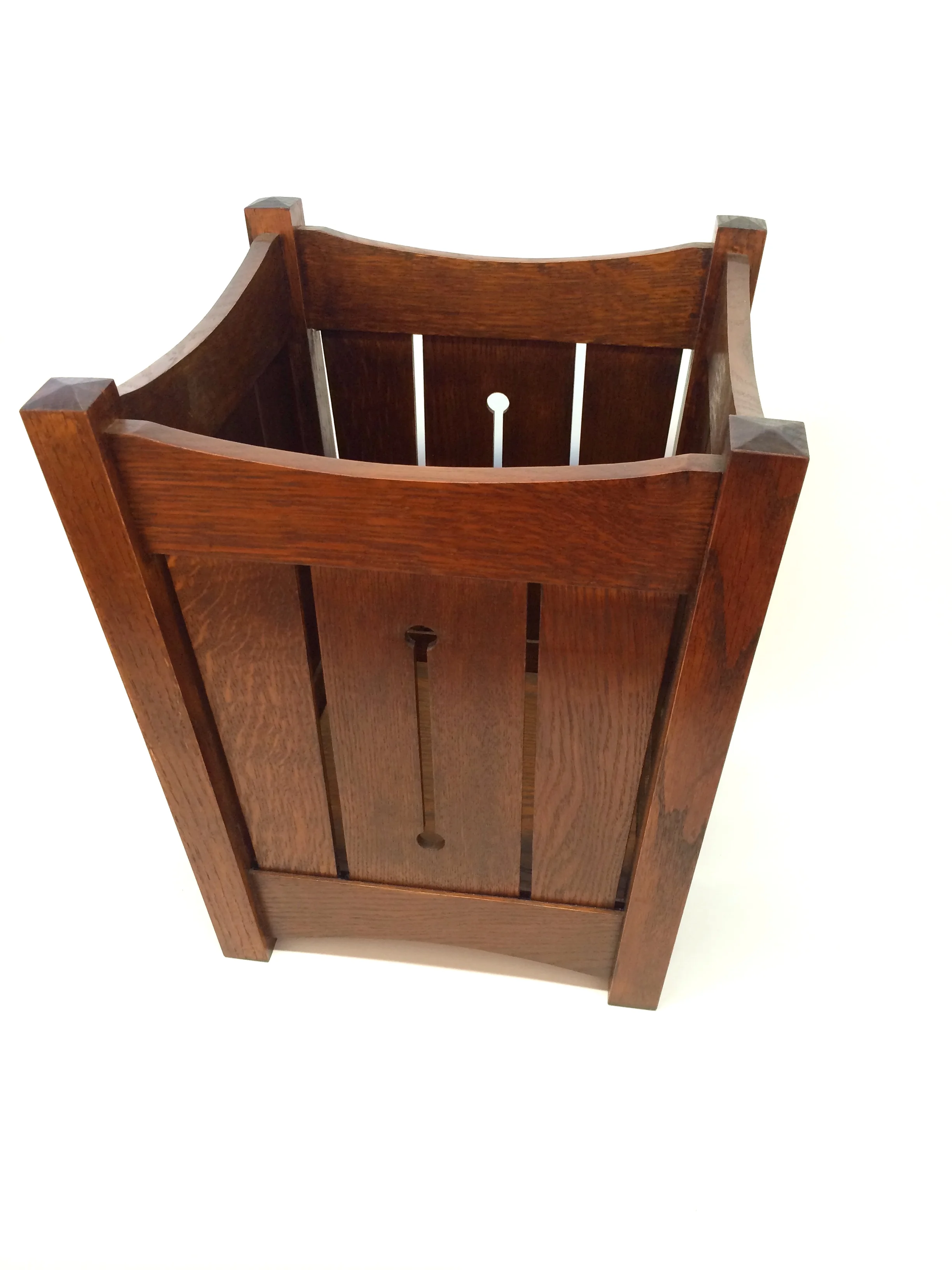
That was me a while ago with some red & white oak. Too good to toss, and it was overflowing my system. Around that time, I happened upon an image online of a great craftsman style wastepaper basket. As I looked at it, peaking around the corner of my desk, just in the corner of my eye, was an ugly grey plastic Office Depot garbage can that sits in my office, and another one around the corner in my kitchen...

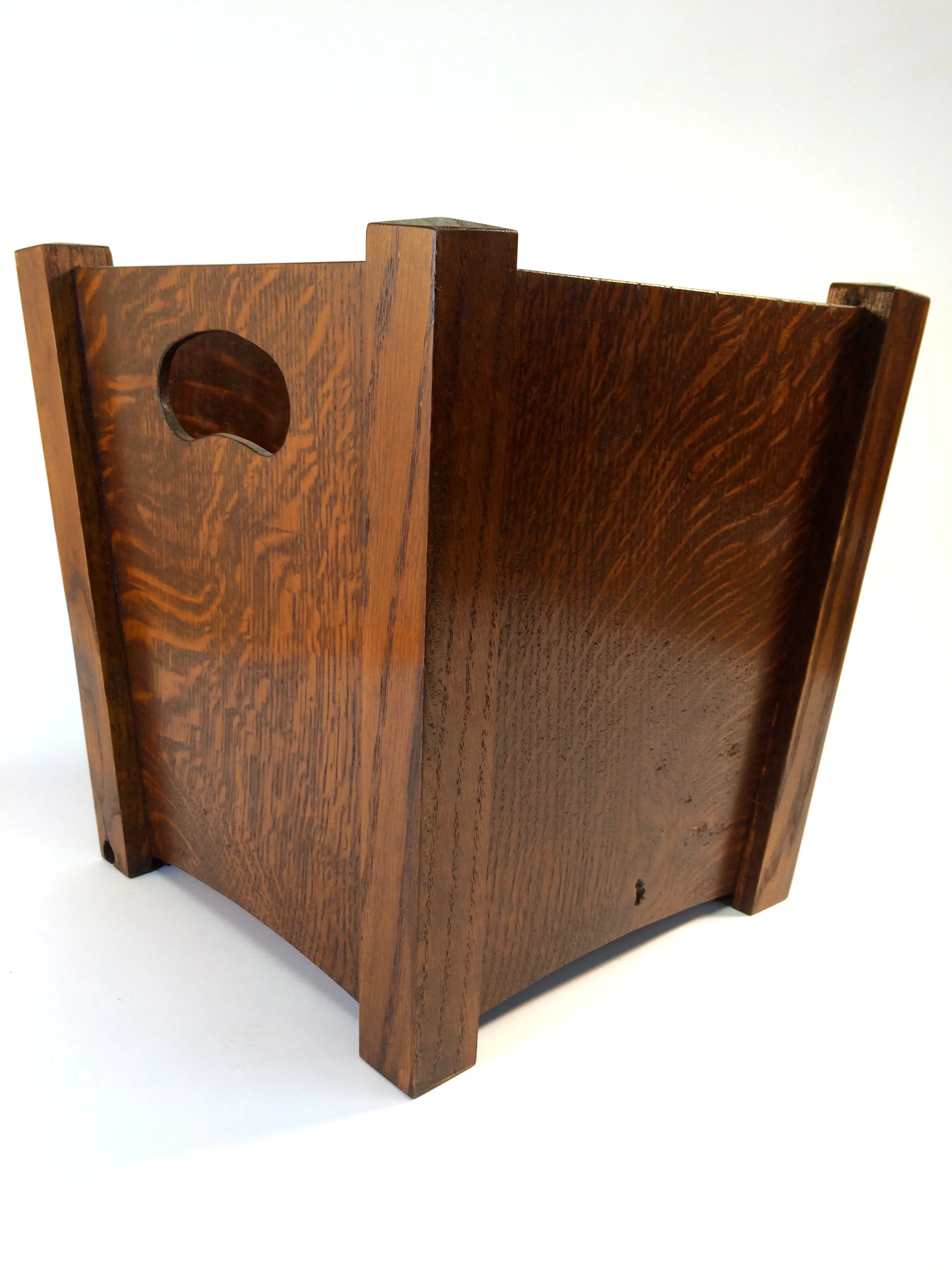
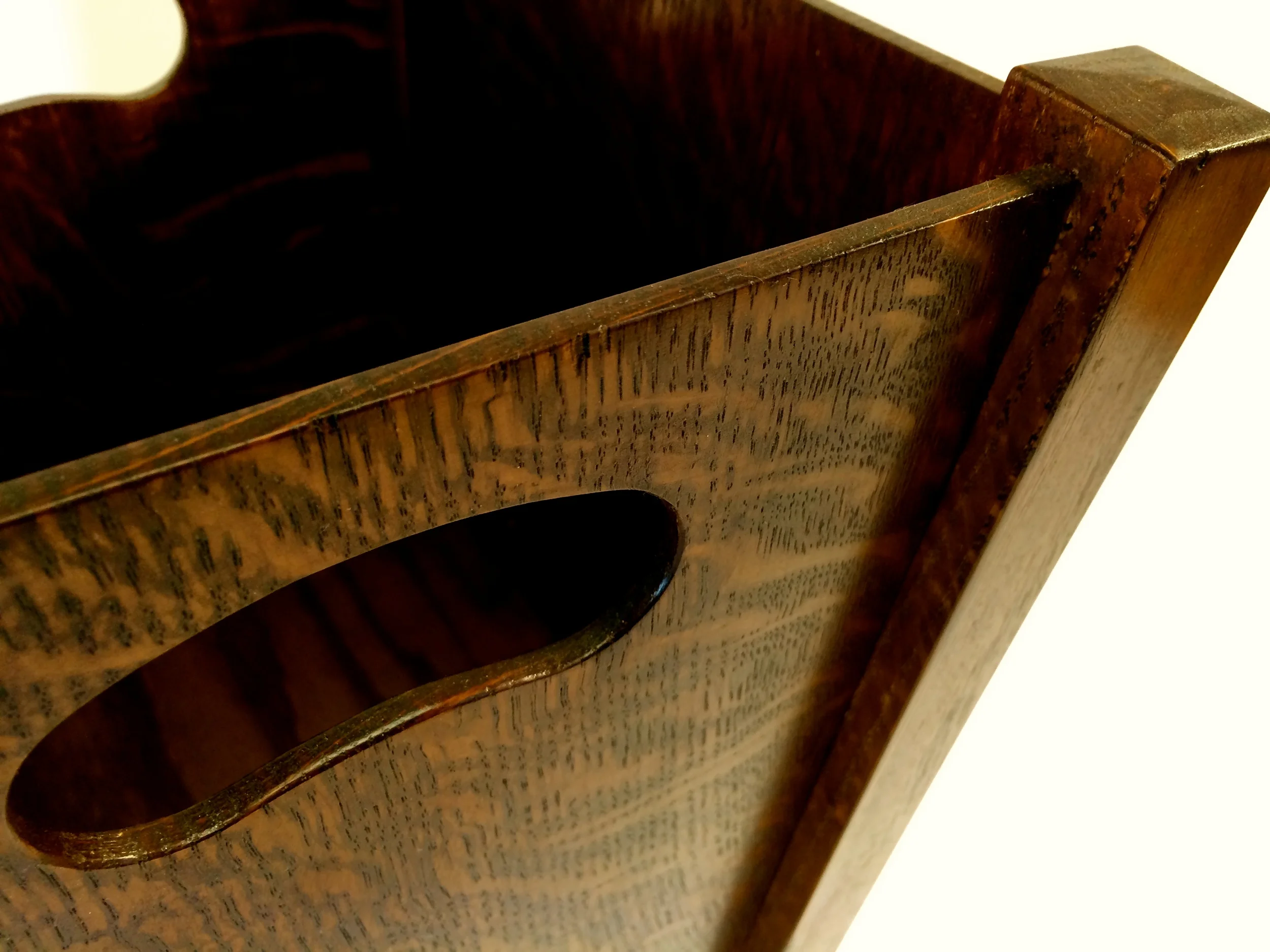
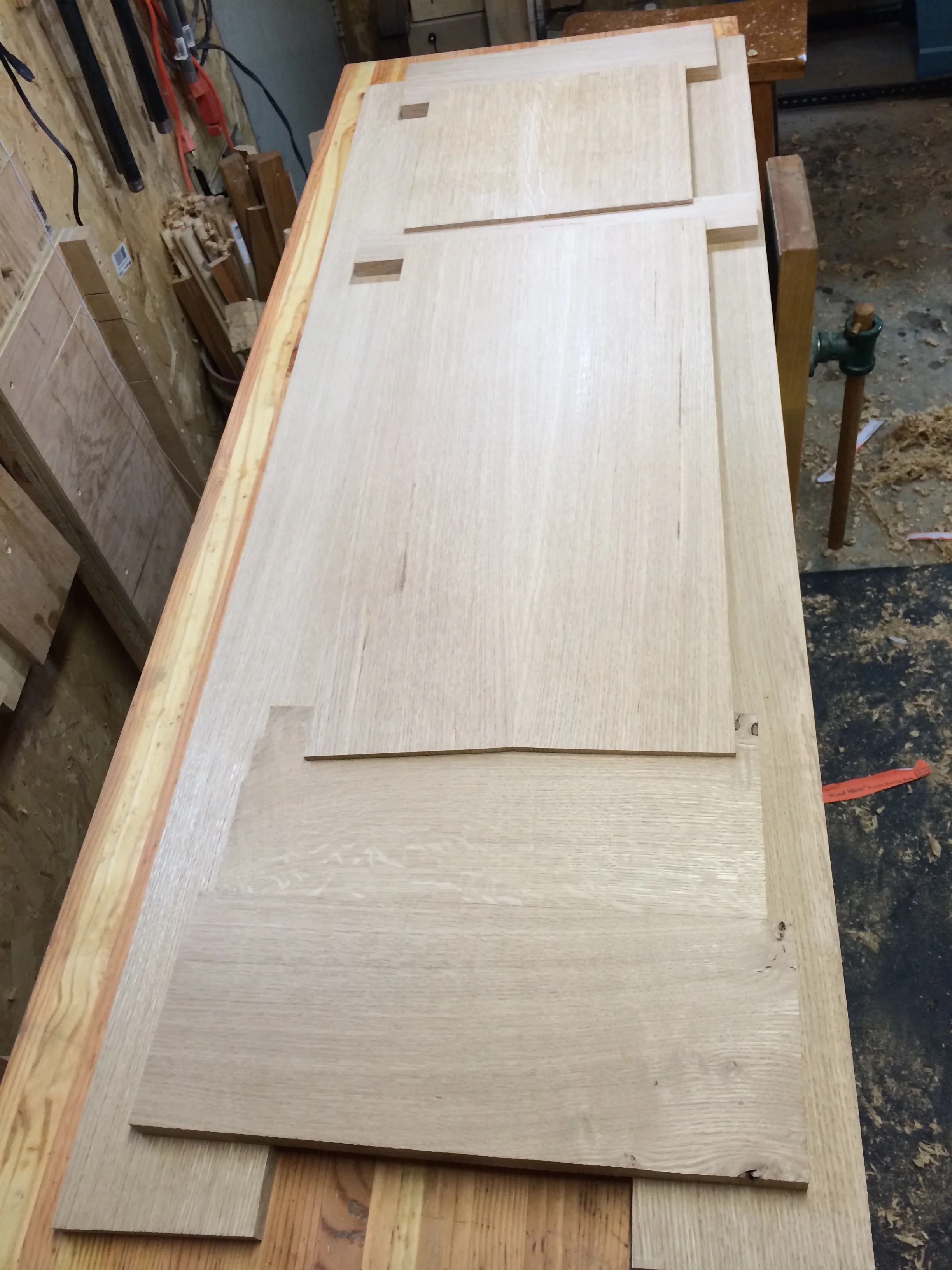
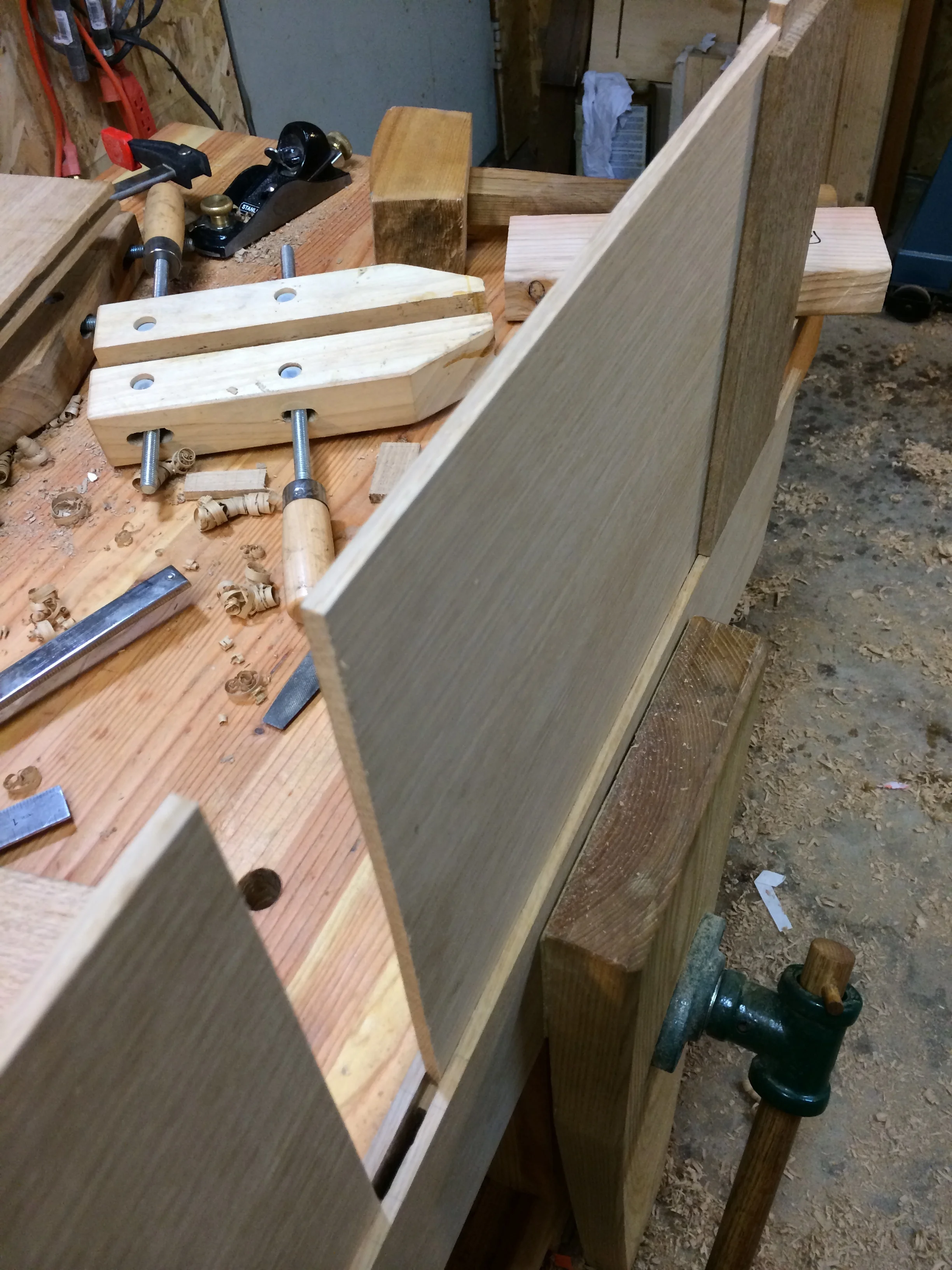
So, it all clicked. Ugly stuff + some great un-tossable scrap = project, and I made these four wastepaper baskets - they're much too nice to be called "garbage cans".

sizing and dry fitting

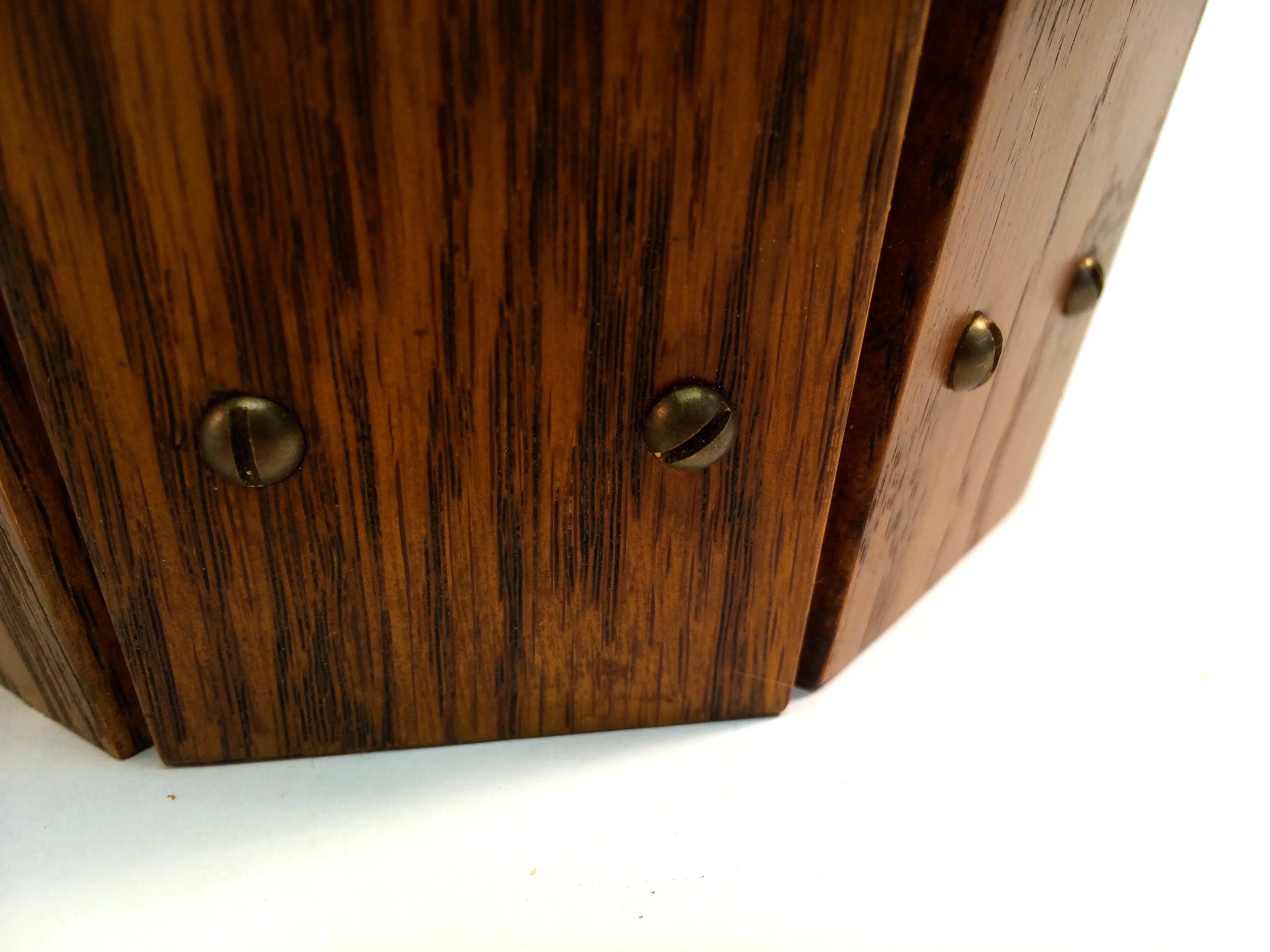
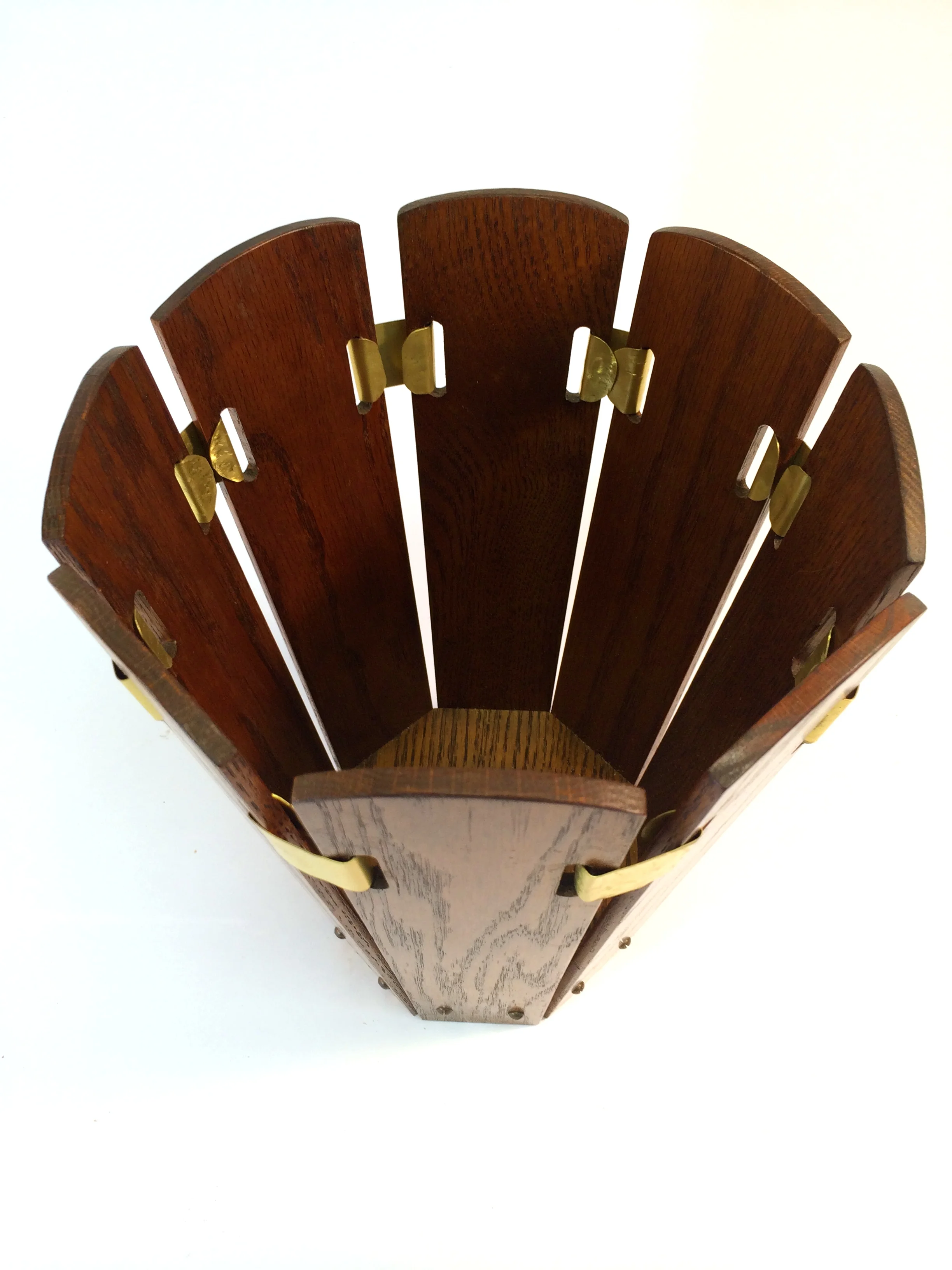
I tried three different main designs, variations on ones I saw online, and two variations of the "leaves" design. On the "leaves" design, I got a chance to try working with some different materials; brass clips on one, and leather loops fastened with copper rivets on the other. I think the brass clips idea was good, but I couldn't get a clean bend on them, and the way they look on the back isn't very satisfying. The leather loops idea came out much better, and were easier to do as well.

After the build, and with much pleasure, I relegated the plastic garbage cans to the basement, and placed the four news ones throughout the house. The brass clip version of the "leaves" one is in my office, where I don't mind the flaws very much. The only thing I might add to these, especially to the large "slats" one, is a copper liner, so that a) messier things could be put in it, and b) one would only have to empty the liner, rather than picking up the whole thing. I'd like to try making the liner with folded sheets of copper (copper roof flashing?) and a soldered weld. I've never done that before, but I look forward to figuring that out.
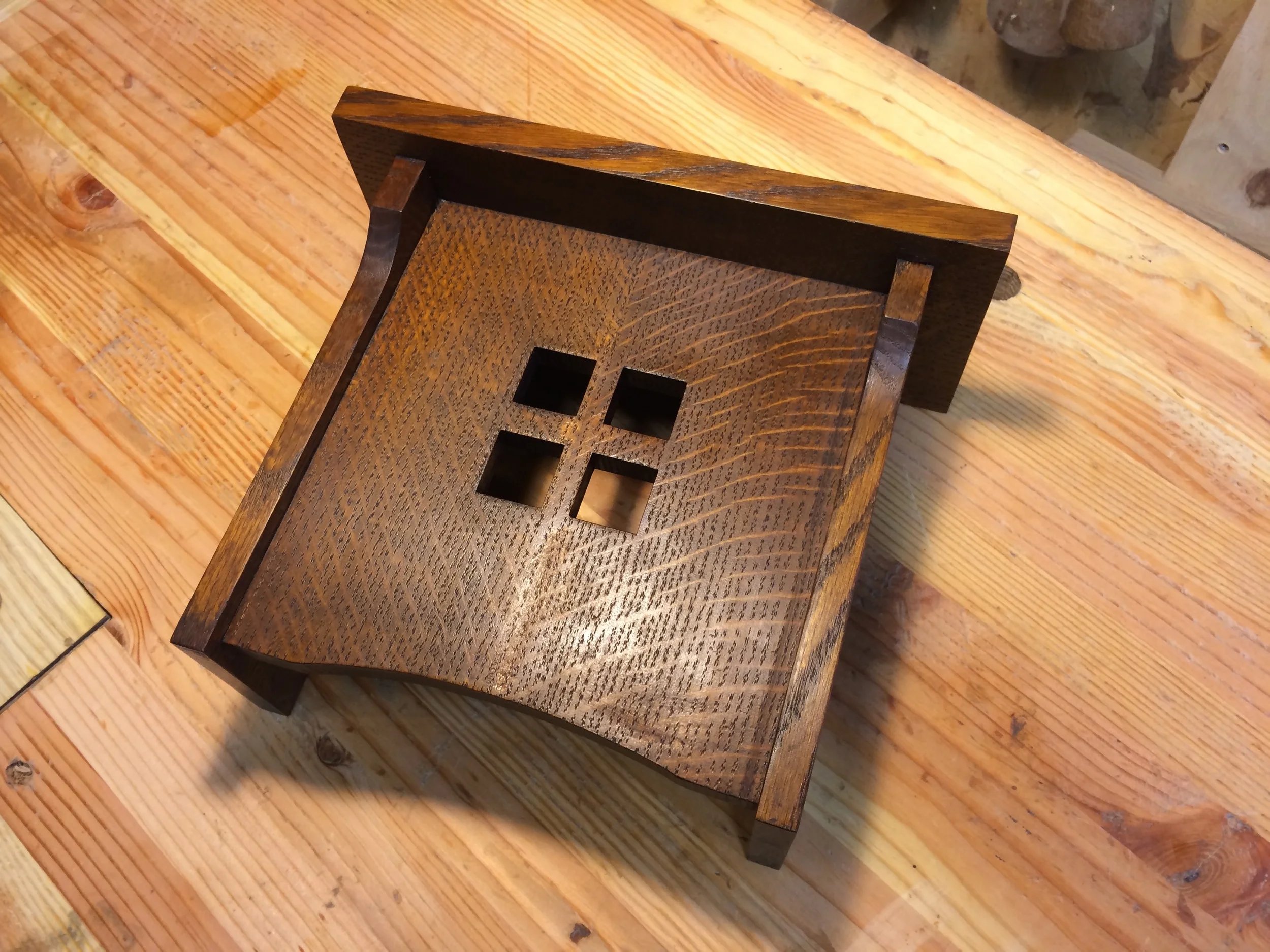
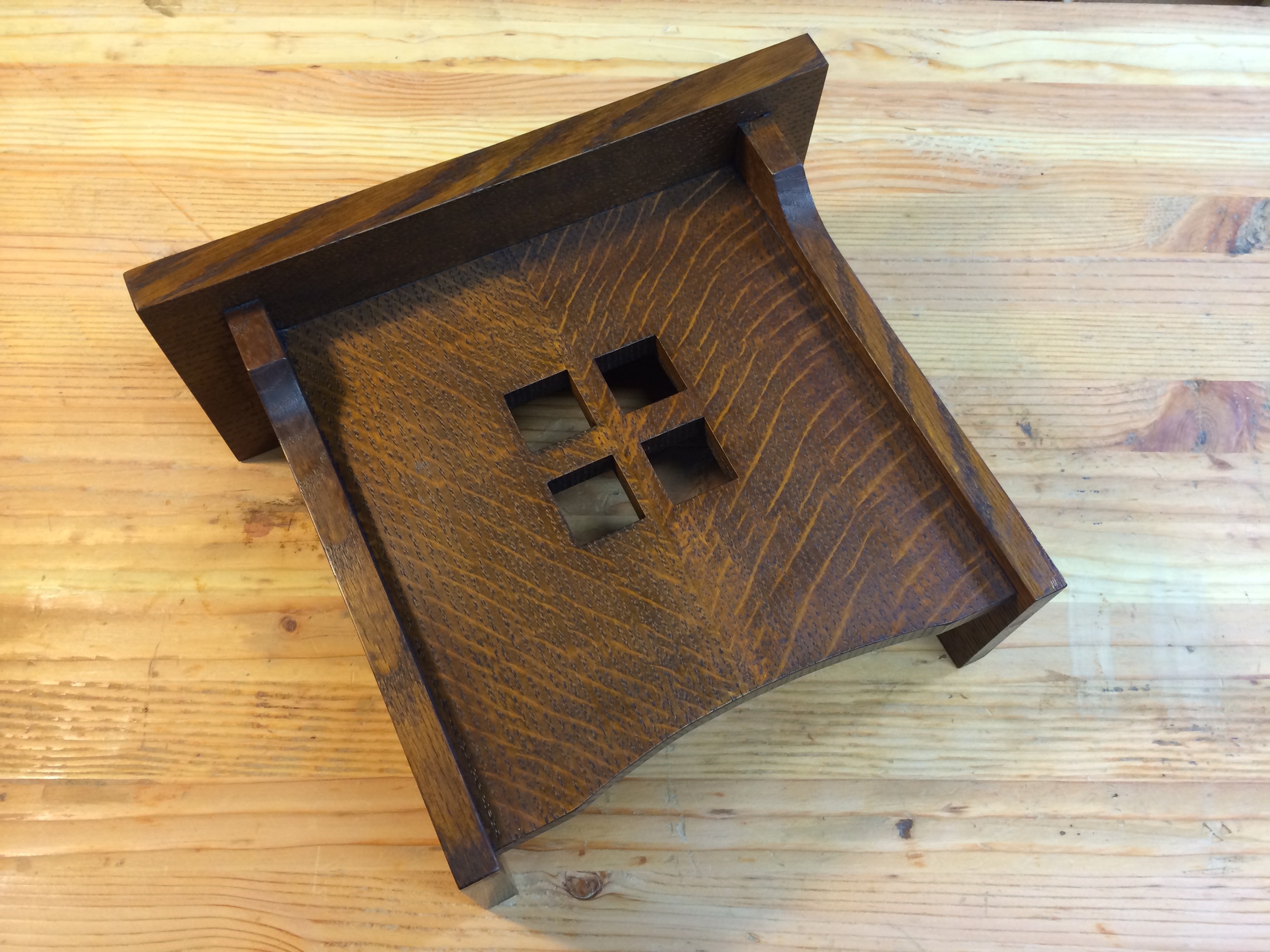
Doorbell Cover 2

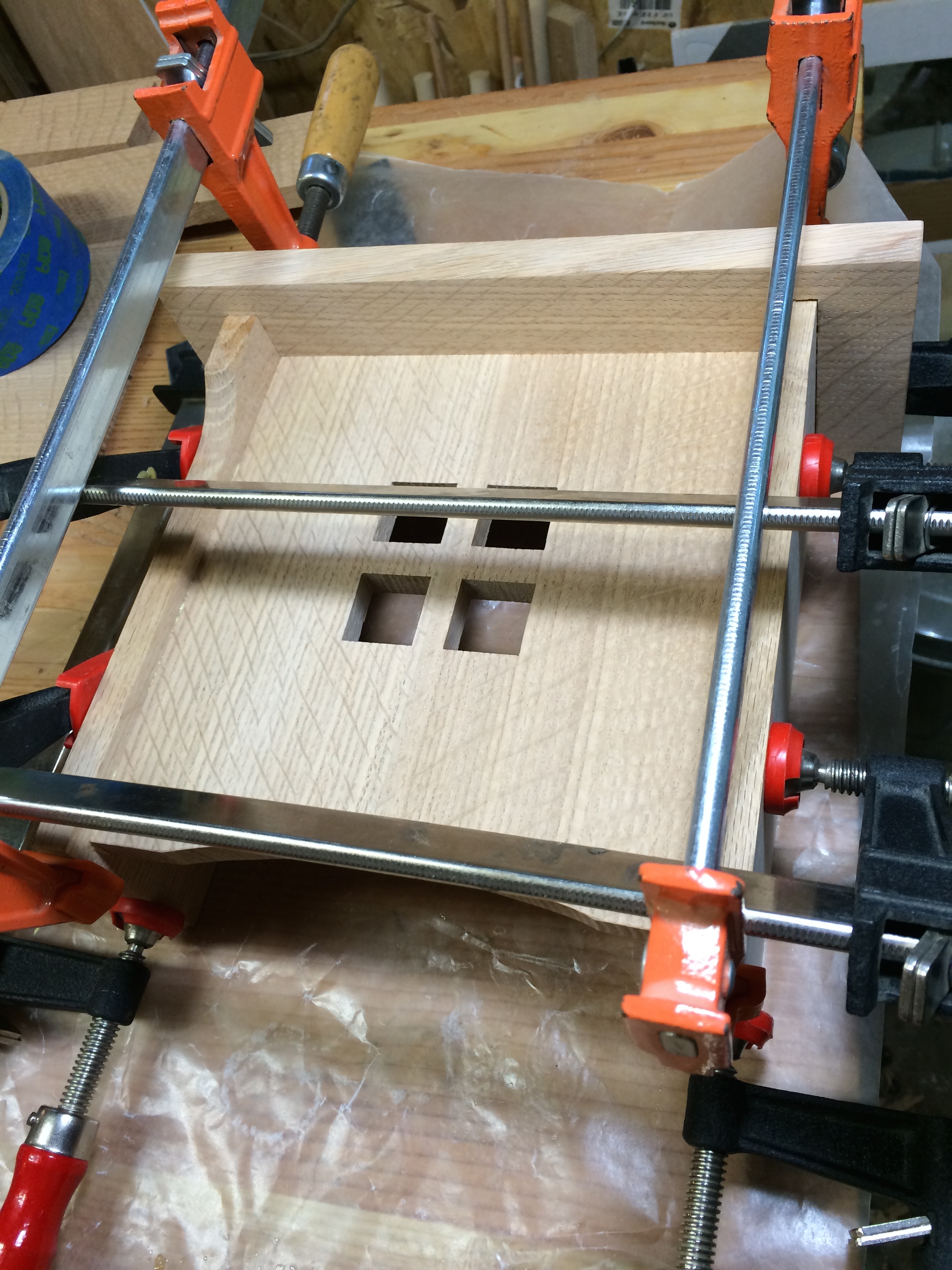
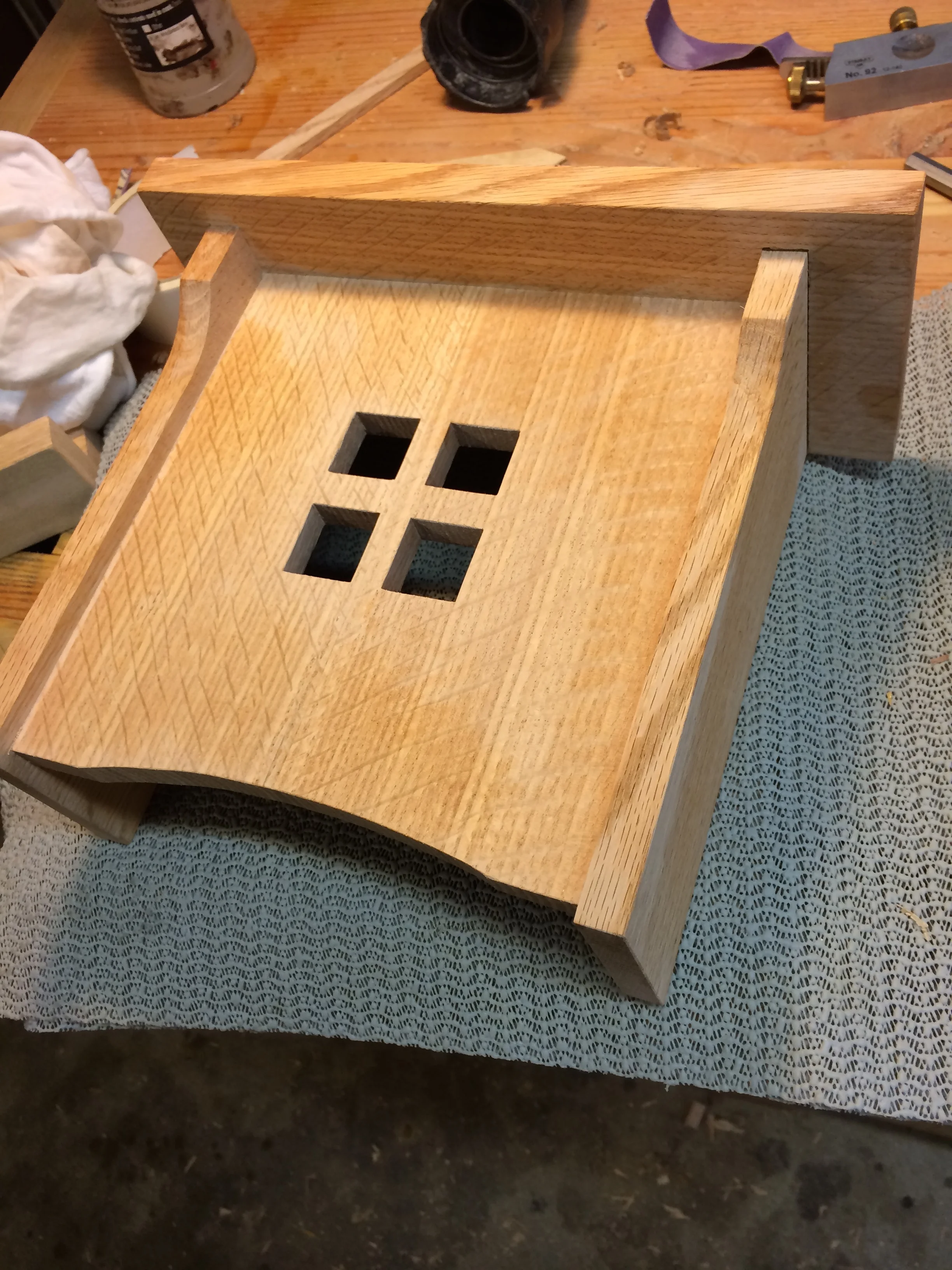
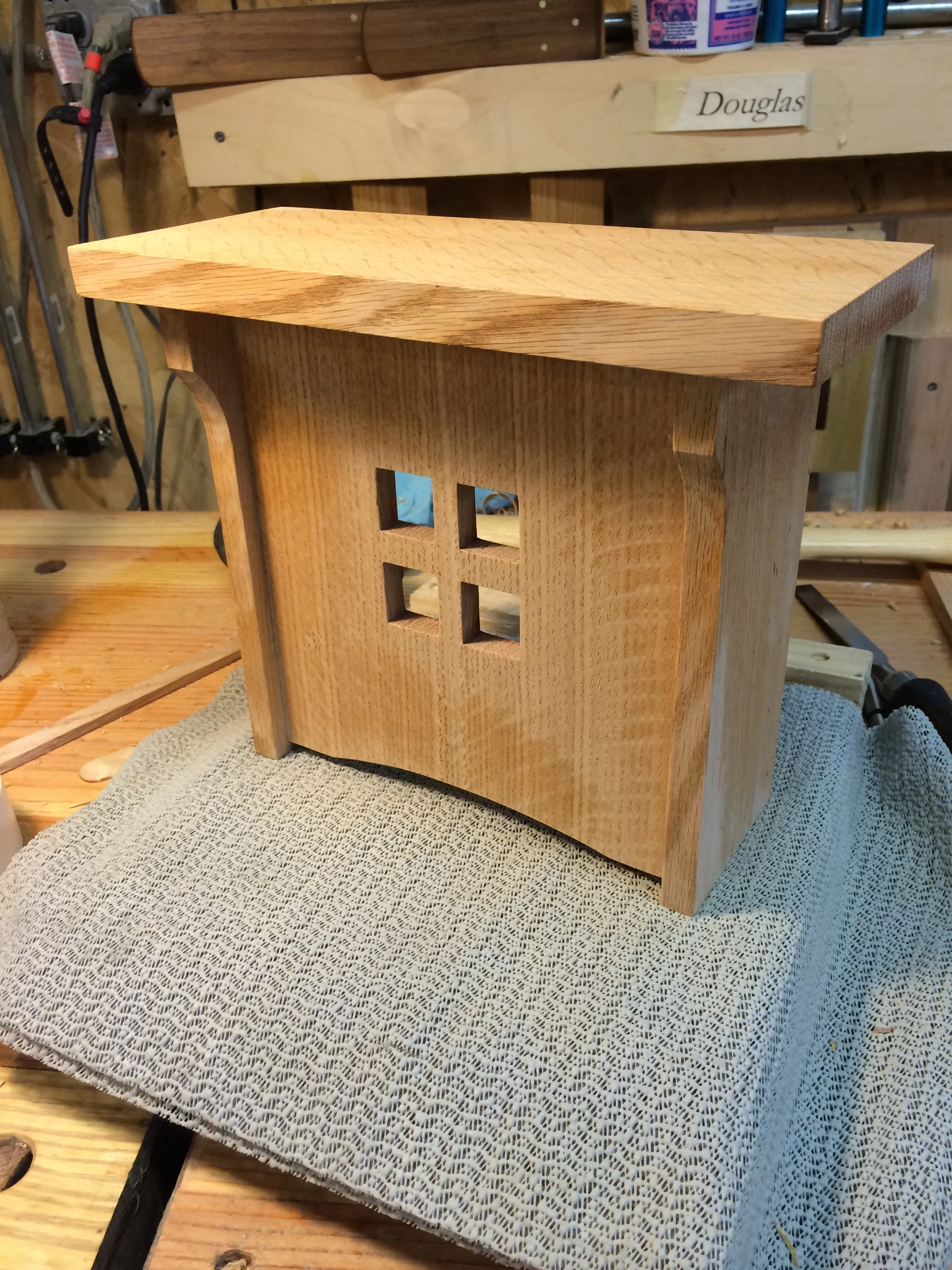
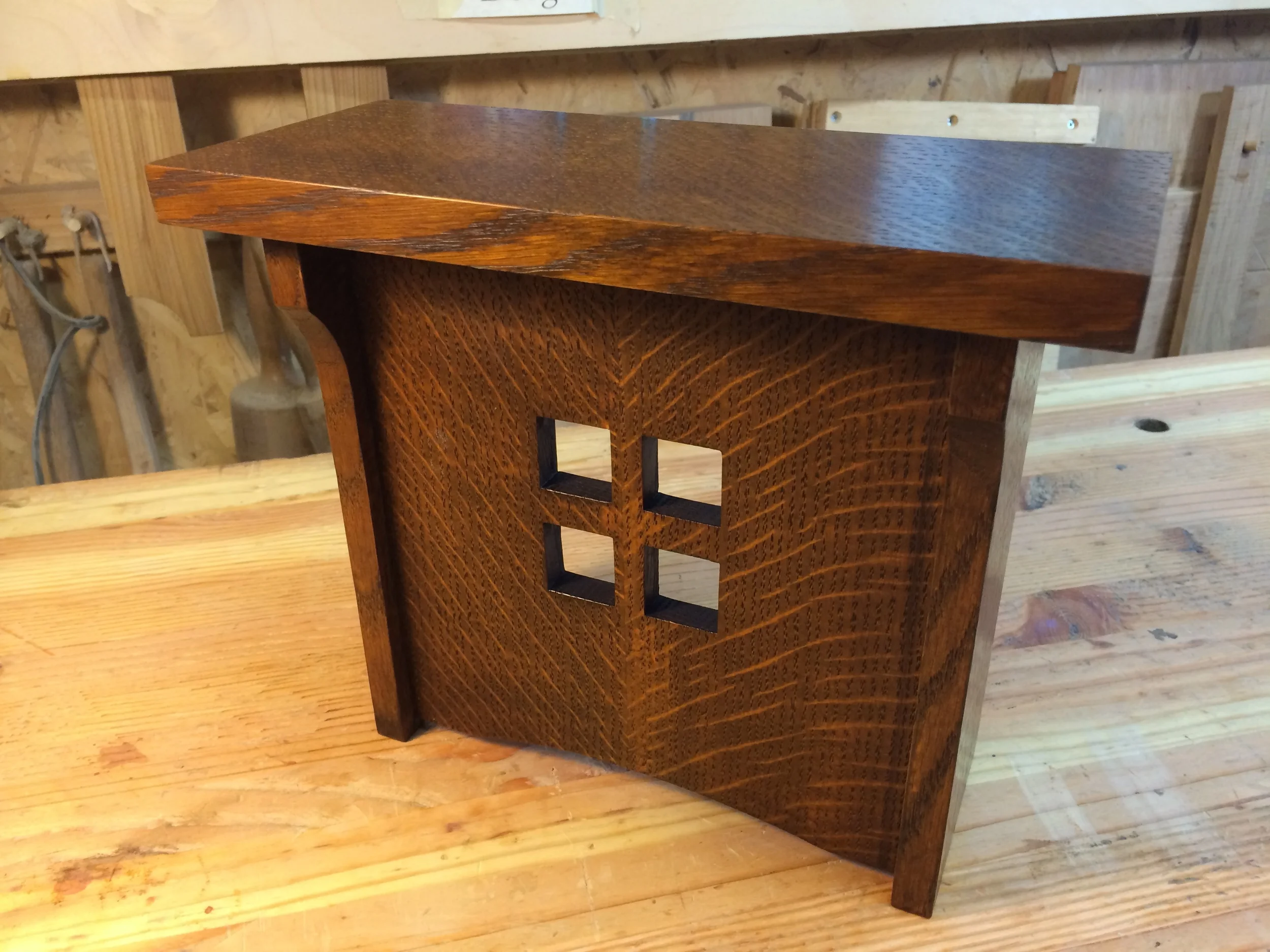
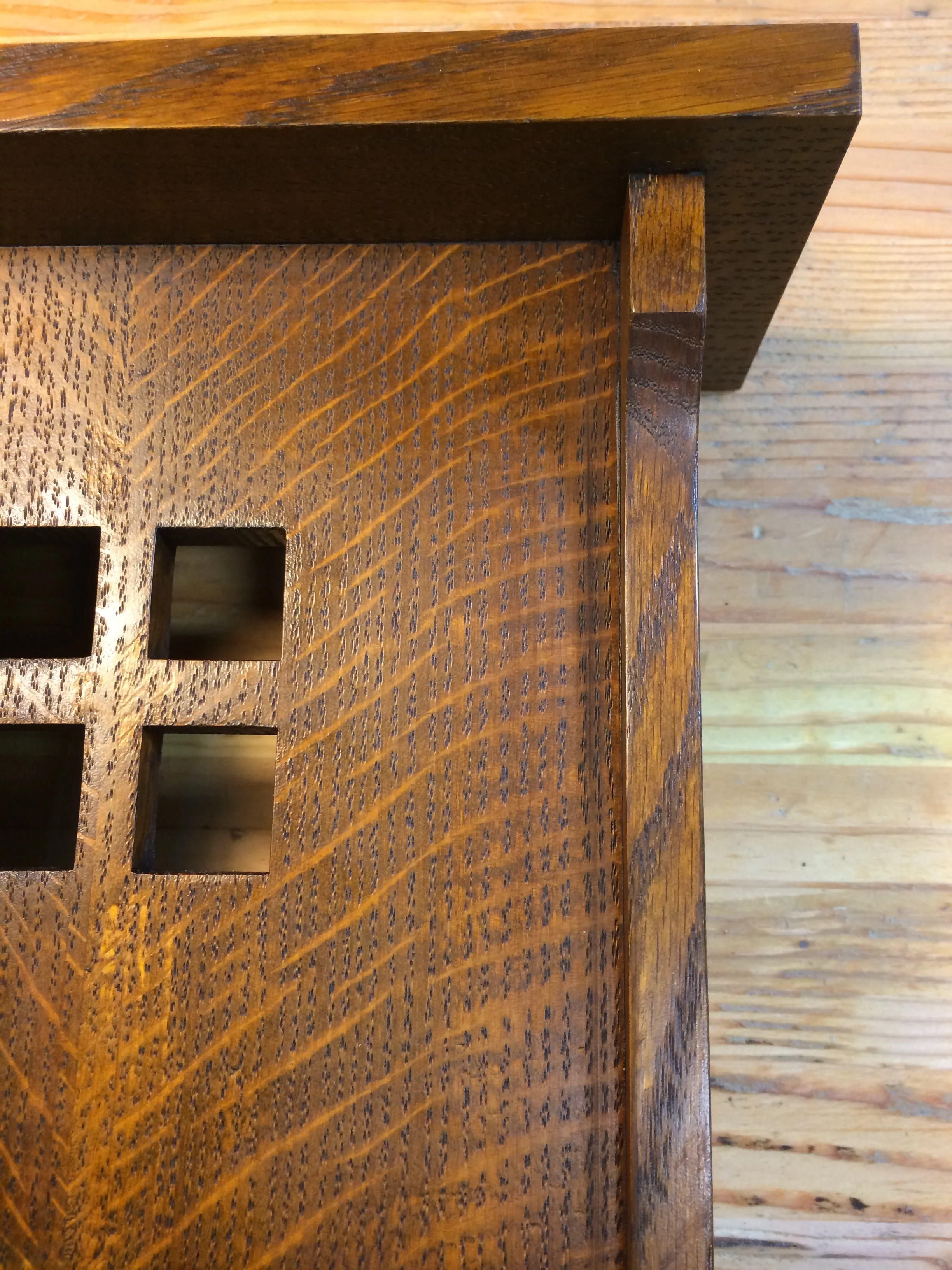
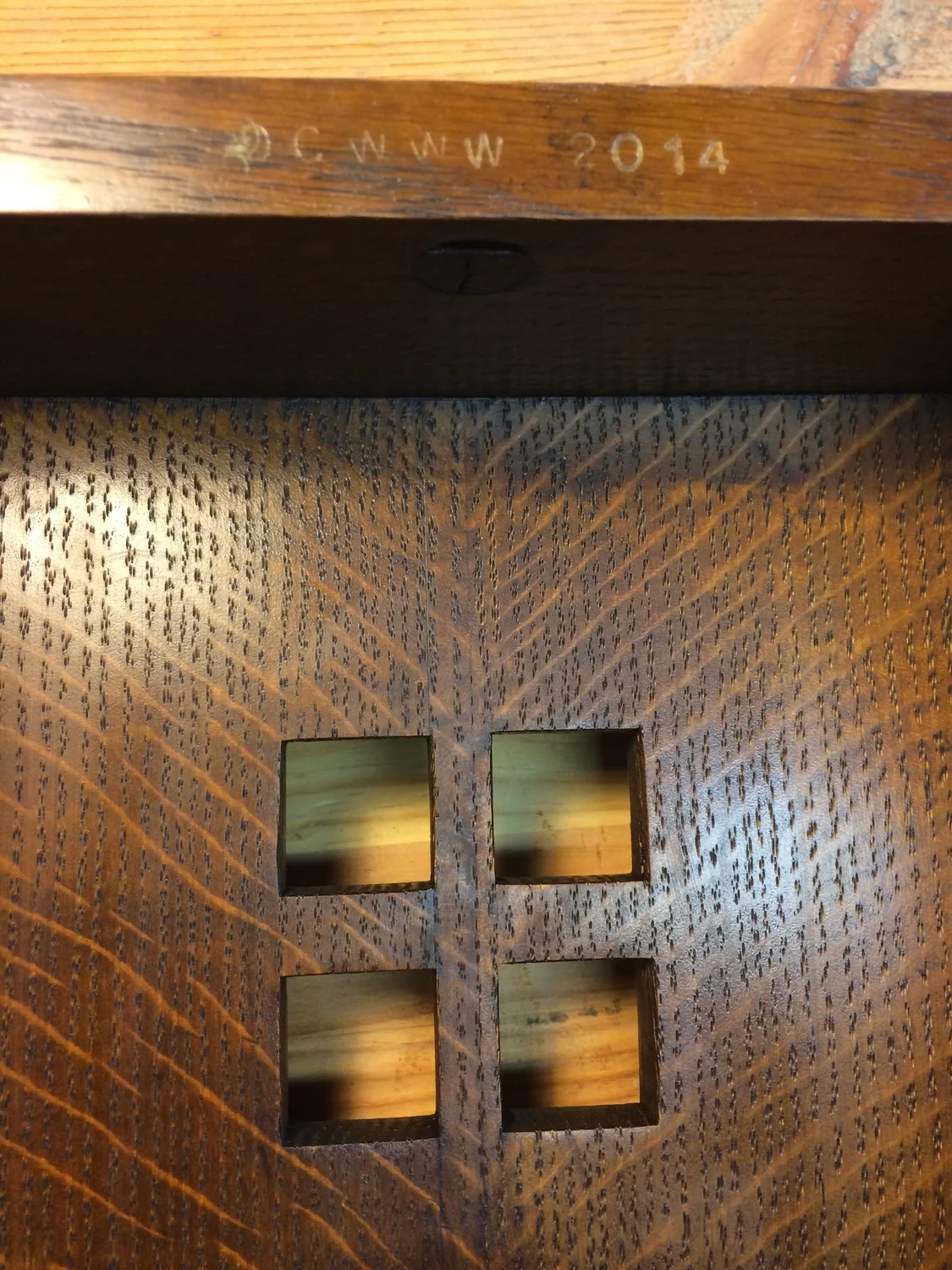
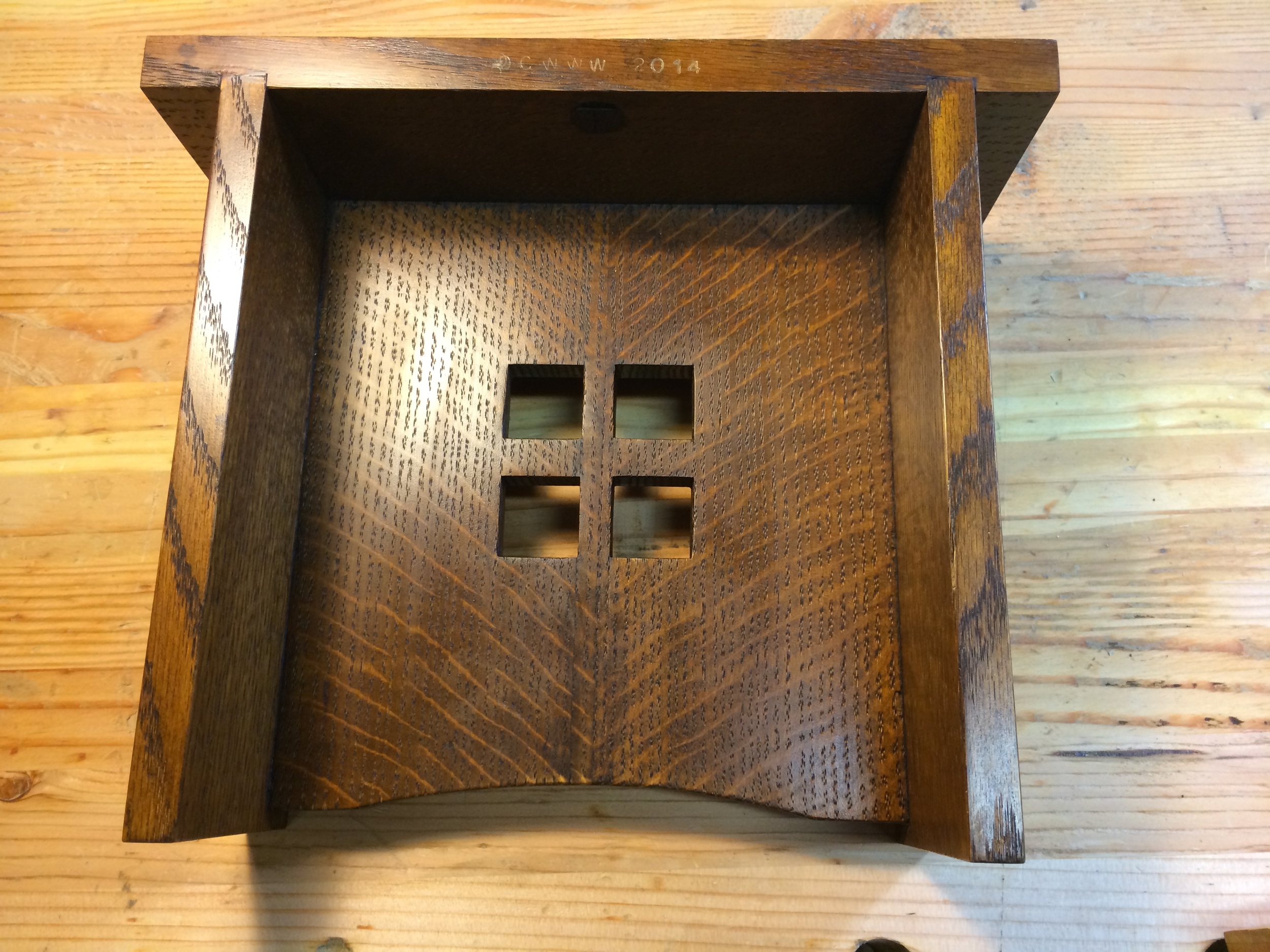
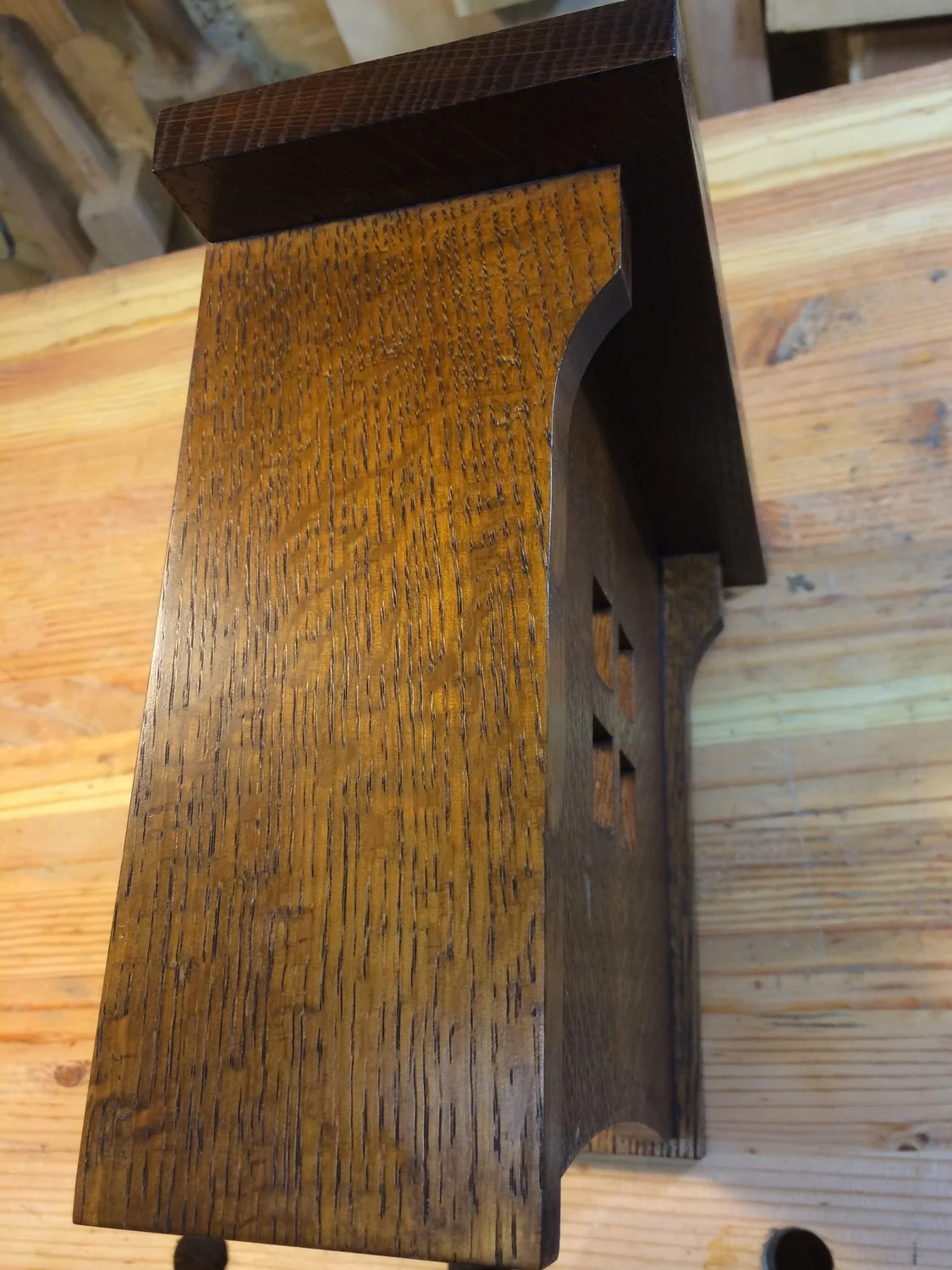
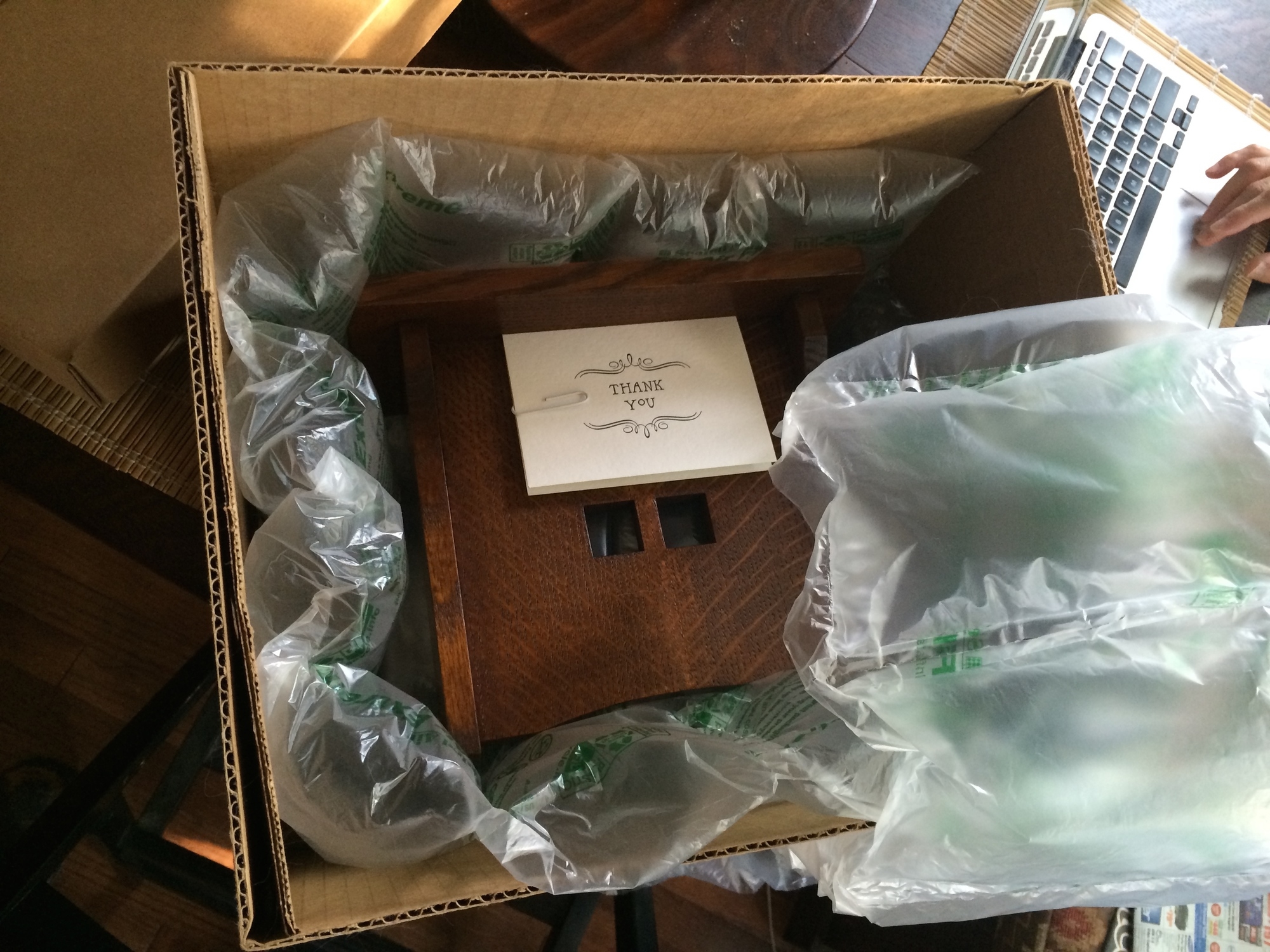
I recently received a commission for another version of my doorbell cover. Of course, it had to be custom sized to the customer's doorbell chime mechanism, so we exchanged photos and measurements. It was nice to get a chance to revisit a project, as it provides an opportunity to improve on the original. Although this project is small and fairly simple, there were one efficiencies I was able to add to the construction this time around.

In the first build, to make the four square cutouts, I did the following:

(obviously, I did all this to just the face, when it was a stand alone piece, before it was glued up: I just used the final assembly sketch up for illustration here)

version 1

  • First, I made four rip cuts on the bandsaw in the material (red).
  • Then, I crosscut the waste away from the two side strips, again with the bandsaw (purple and yellow).
  • Finally, I glued it all back together, keeping the pieces and grain aligned.

This worked fine, but it made fiddling with the little "middle" pieces in-between the two squares a little fussy to get right.

So the second time around, I made less work for myself...

version 2

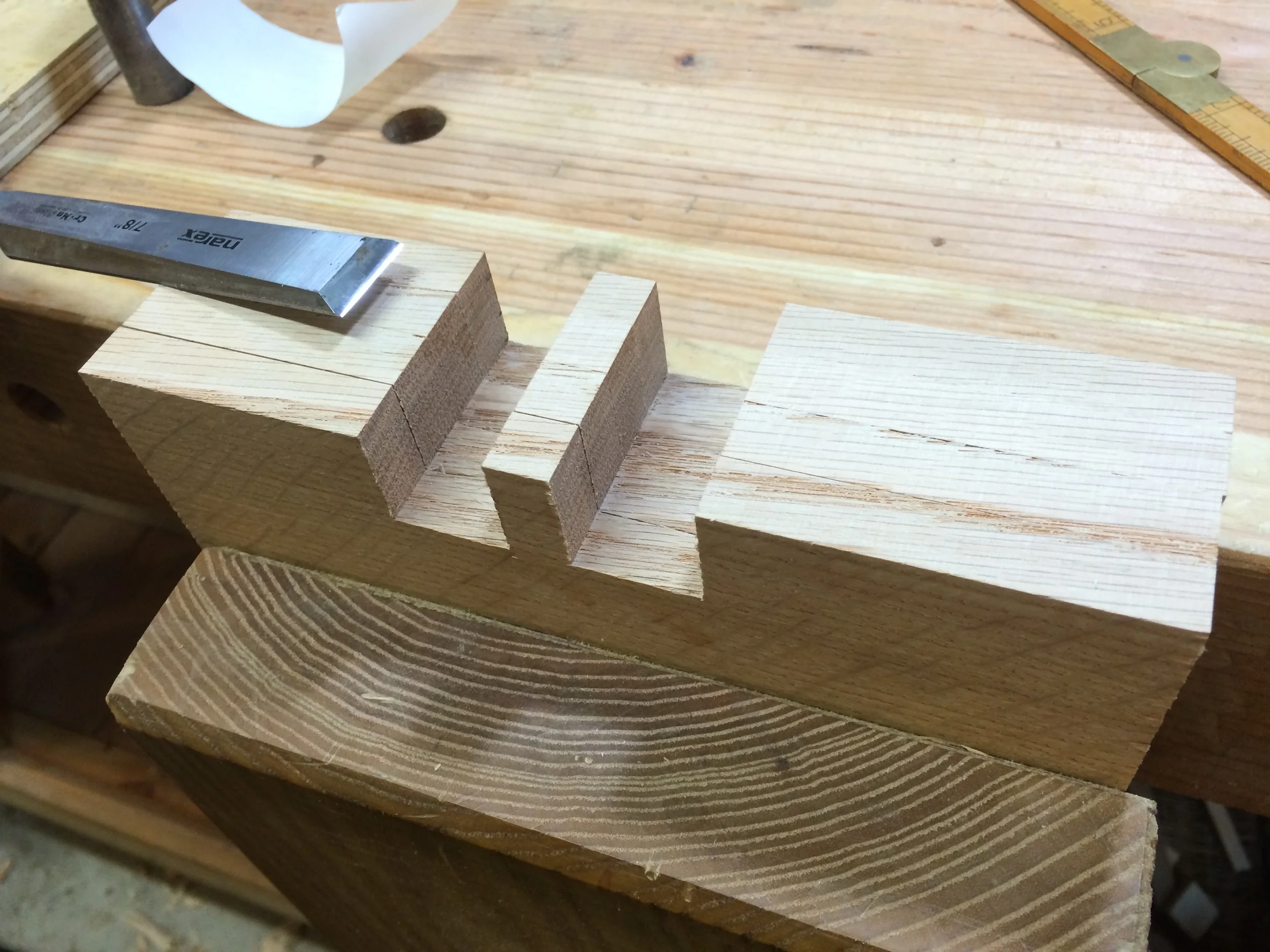
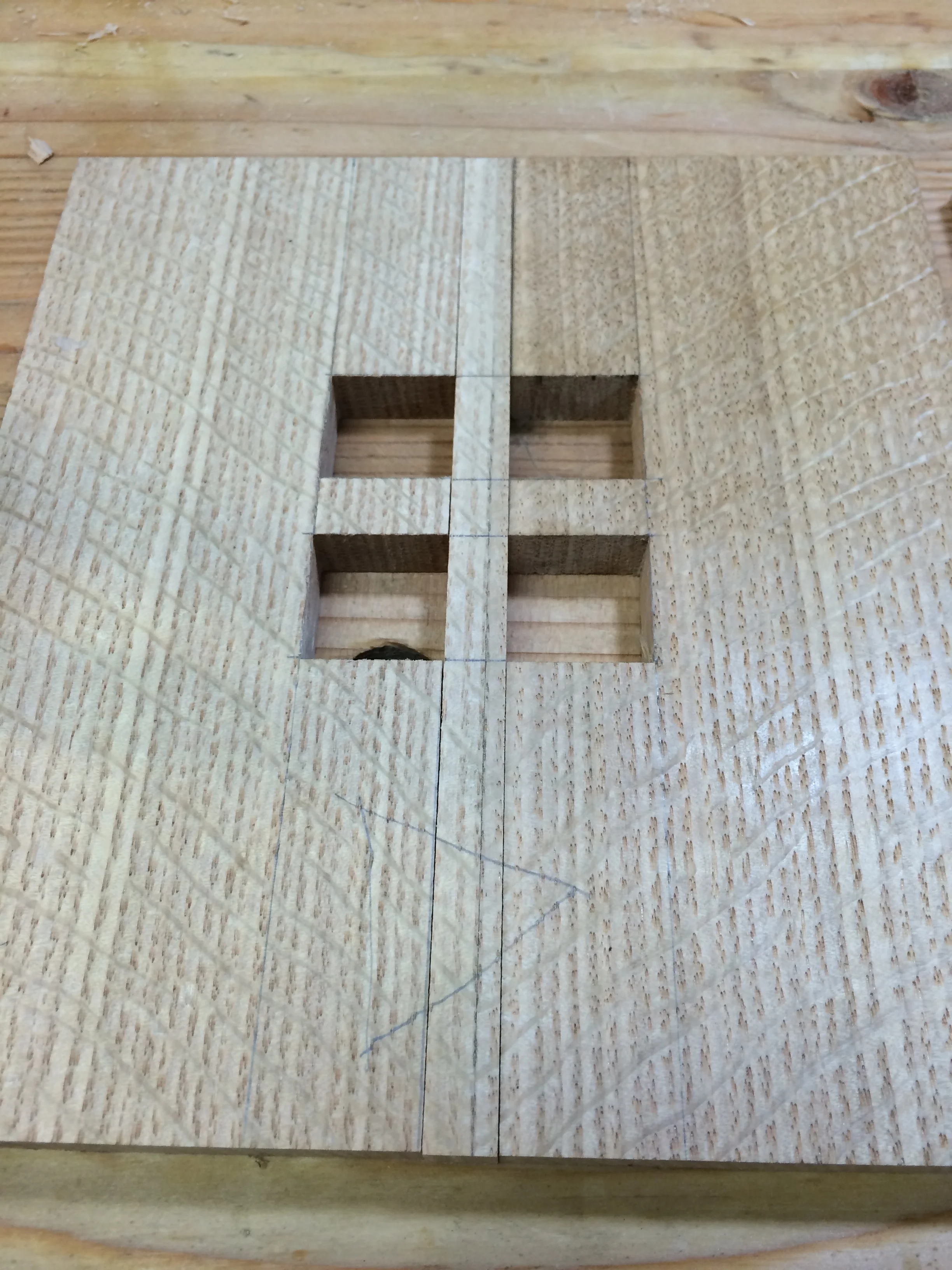
  • first, I made two rip cuts on the bandsaw to separate the middle strip from the sides (red).
  • then I cut away the "holes", using the bandsaw for the tops & bottoms, a chisel for the side (yellow).
  • finally, re-glued everything in position.

Obviously, the second approach is much easier. Not only are the fewer cuts, but the pieces stay aligned better, especially the two little middle pieces, which tended to slide around during a glue-up. Also, there are two fewer kerfs, leaving more original width.

Why didn't I do it that way the first time? It does seem obvious when its explained. But these are to the sorts of things you pick up and learn as you go, and especially as you revisit the same, or similar items, again and again. My first attempt at this was my... first attempt, and the way I came up with to execute it was fine. But there's nothing as powerful as learning by doing. I'm sure that by doorbell cover #50, I'll be humming along, running Ding-Dong Covers, Inc. I'll just throw a board at the wall the voila!, a perfect doorbell cover will appear.

.

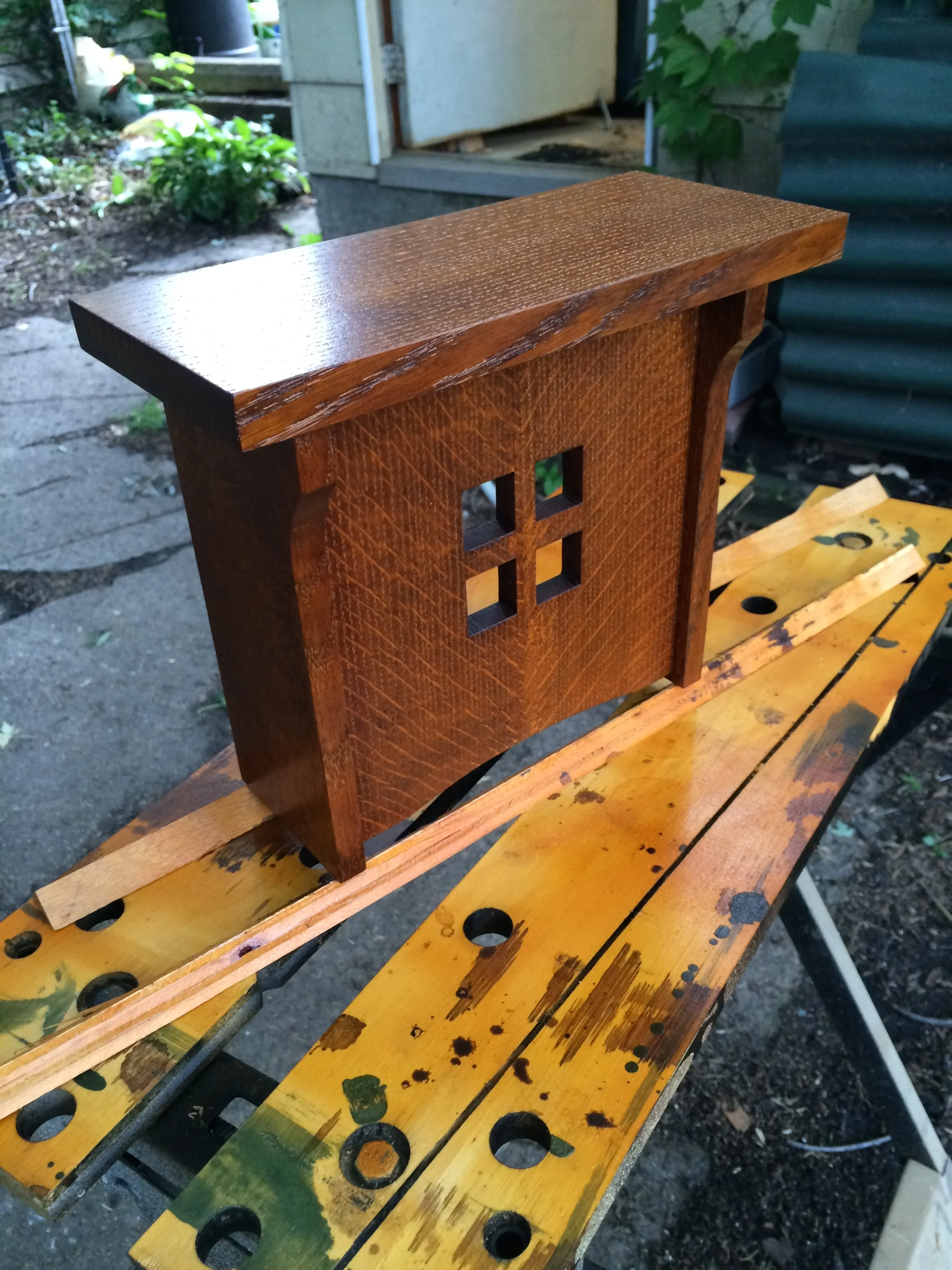
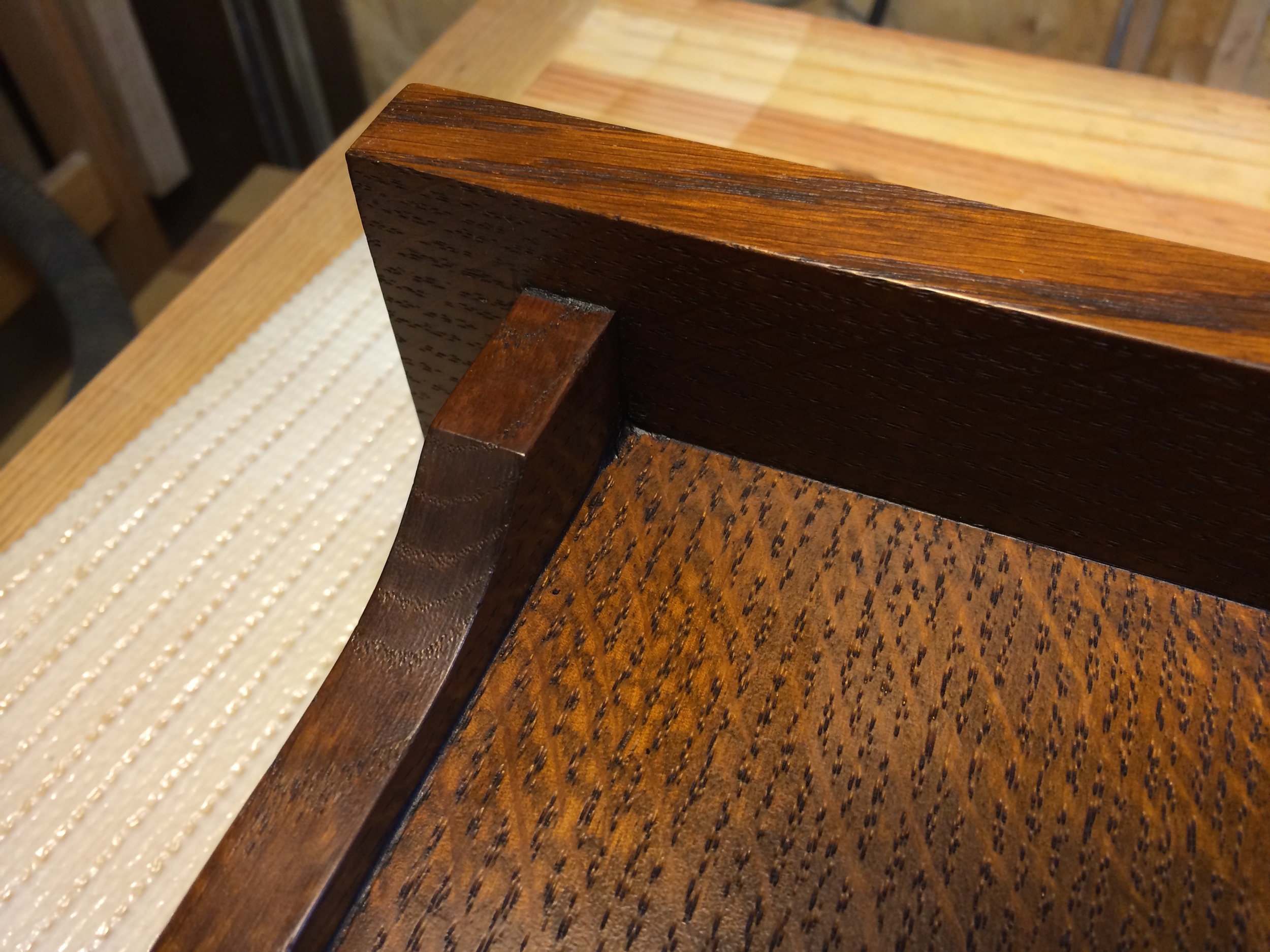
Here's the final piece. The customer wanted the same finish and wood (red oak) as the original. I had used some flat-sawn red oak before, but as I was hunting for materials, came across some leftover quarter-sawn red oak that was gorgeous, so I used that instead. I book matched the main front panel to give it that nice figure.

Rebuilding a railing

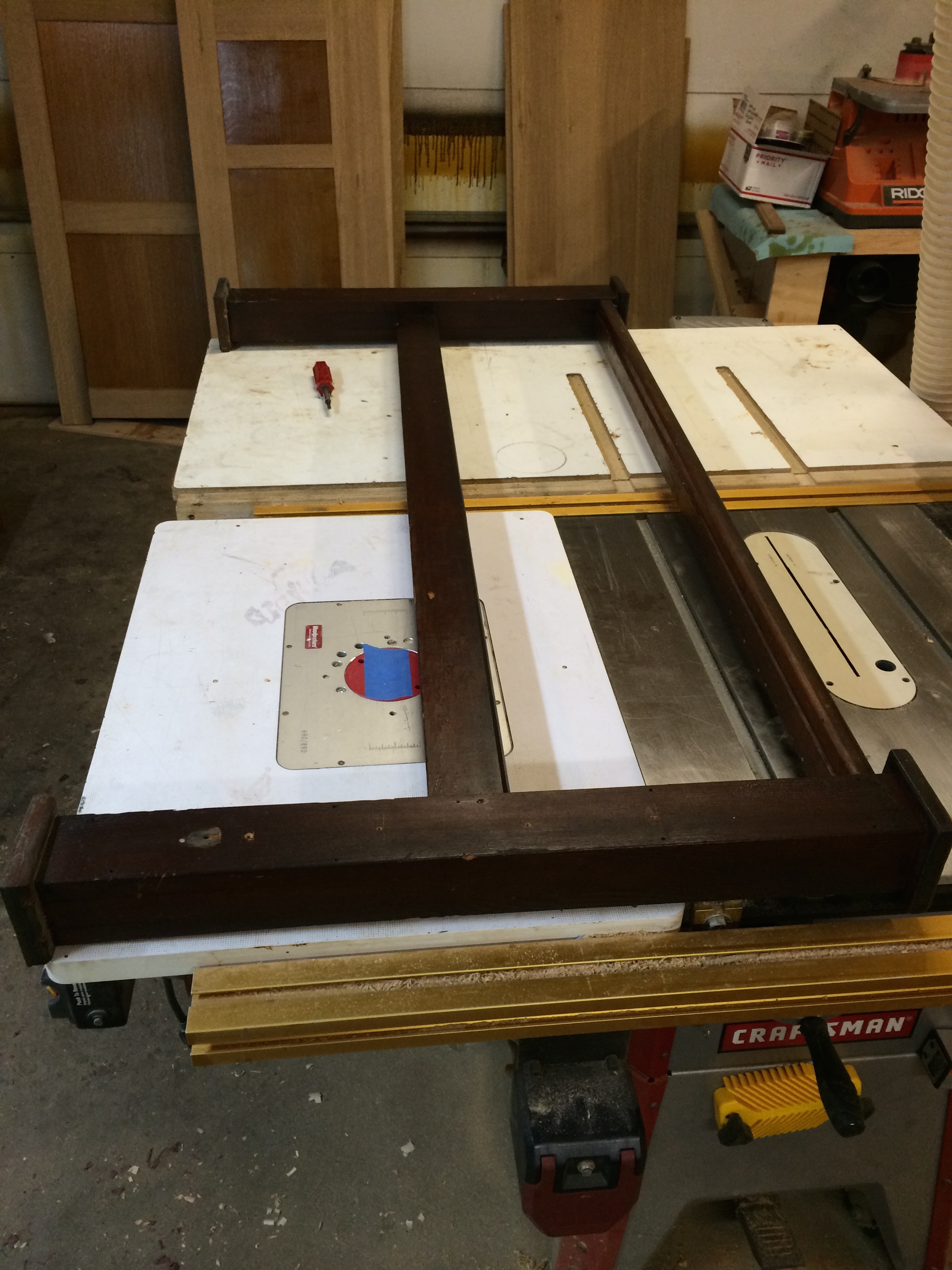
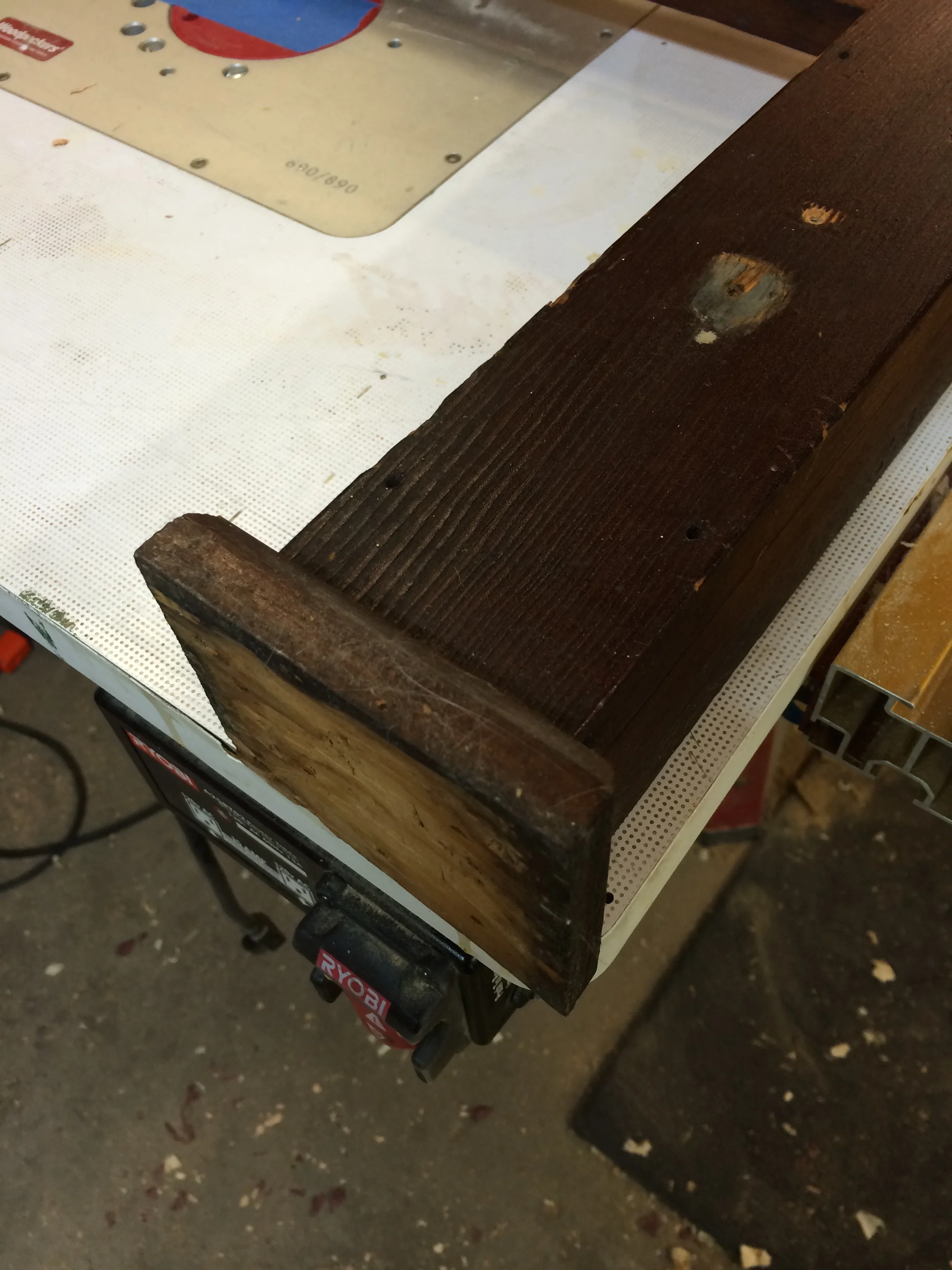
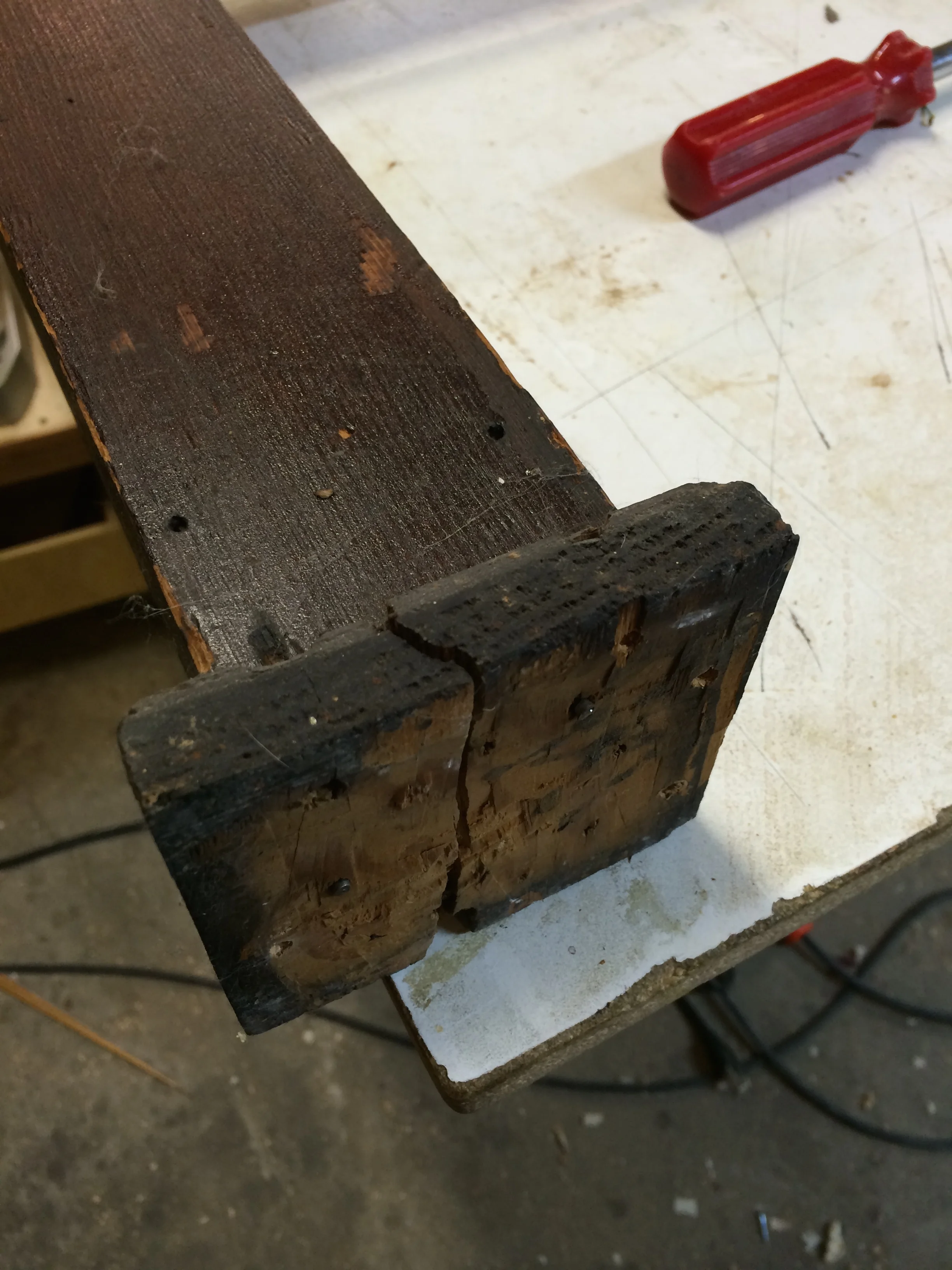
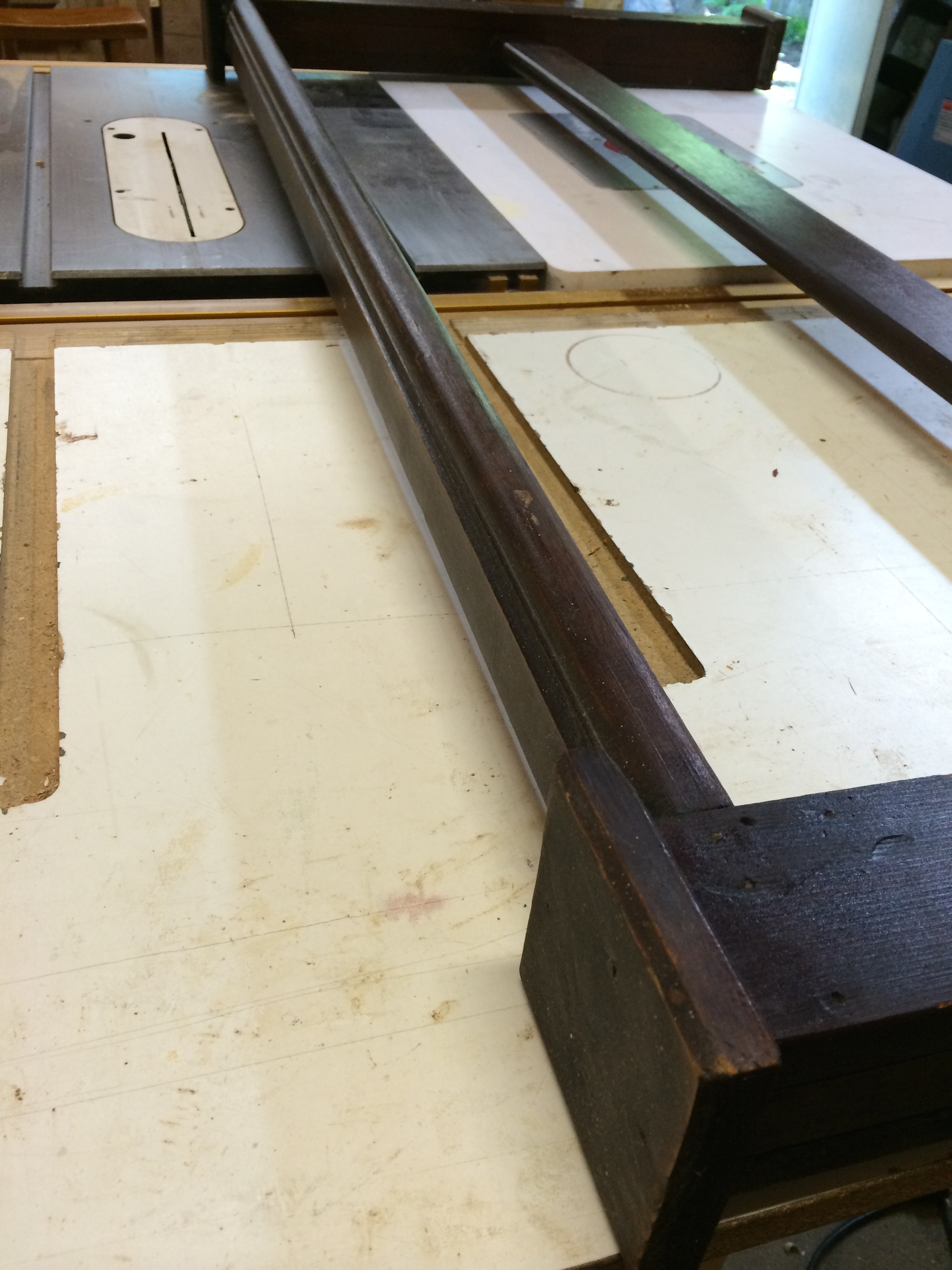
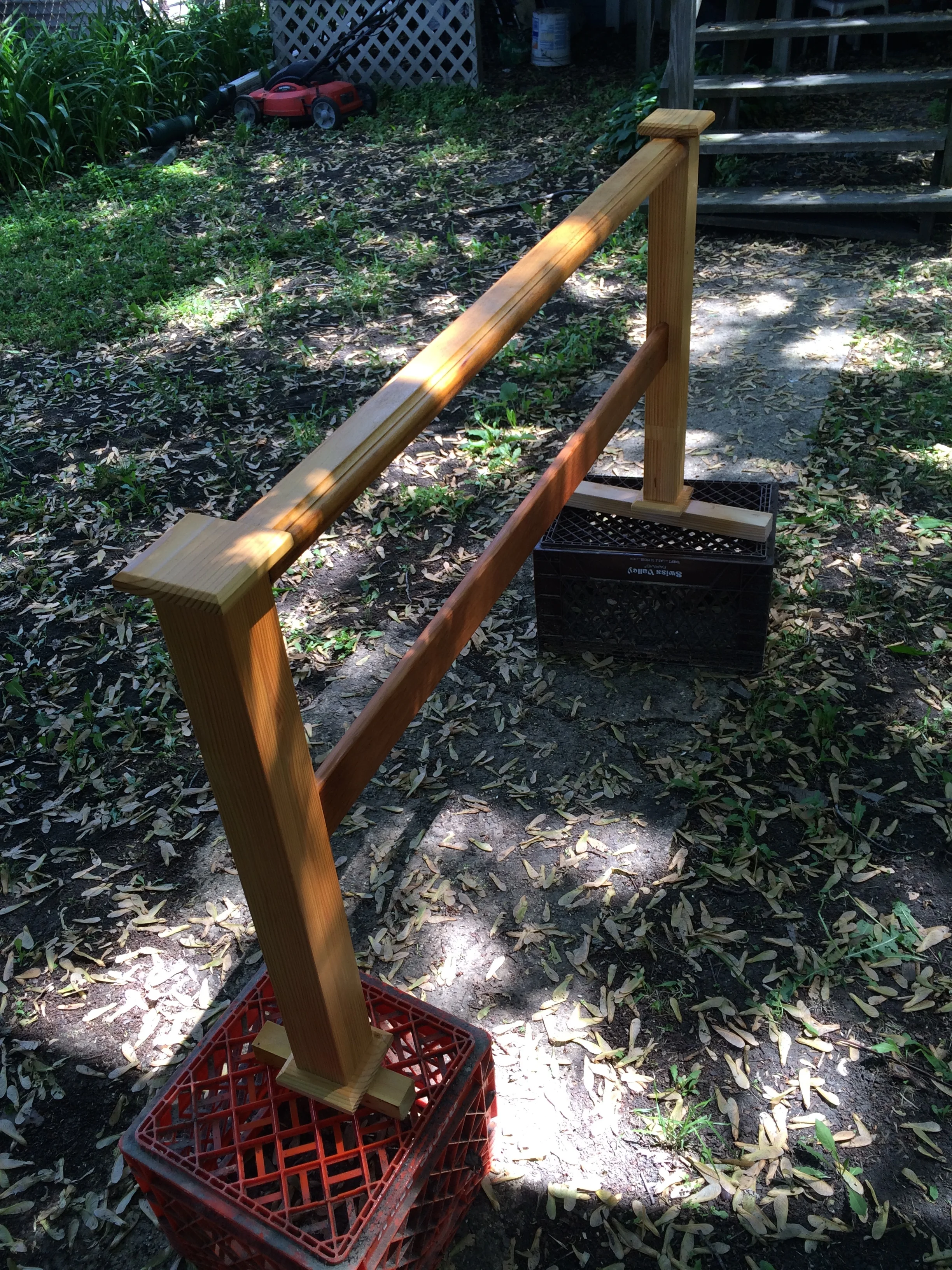
Our house is a 1 & 1/2 story 1903 frame house. Like many older homes, it has seen its share of changes and renovations over the years. When houses like this were built, the second story (the "1/2" story) was usually left unfinished, serving as a bare attic for storage. Eventually, many of those were finished, and expanded with gables and dormers and such. The second floor in our house seems to have been originally accessible only by an exterior stairway, off the back porch. When the back porch was enclosed, and made into an expanded kitchen many years ago, the roofline was extended, and it absorbed the formally exterior stairs. There was no gable or dormer expansion of the second floor, and that left a stairway that wound up onto what we nicknamed "the slanty room", due the slope of the roof on all sides. Today, that means that one has to lean towards the inside of the room when using the stairs, which is a little awkward. Also, anyone in the room would face a potentially long drop if they stepped off the edge into the stairwell. To make it all a little easier and safer to use, a four foot hand rail was made/installed sometime back in the past. The hand rail was made of pine, varnished, and then screwed into the floor. It was a nice detail, but over time, the base of the handrail split, loosened, and wobbled terribly.

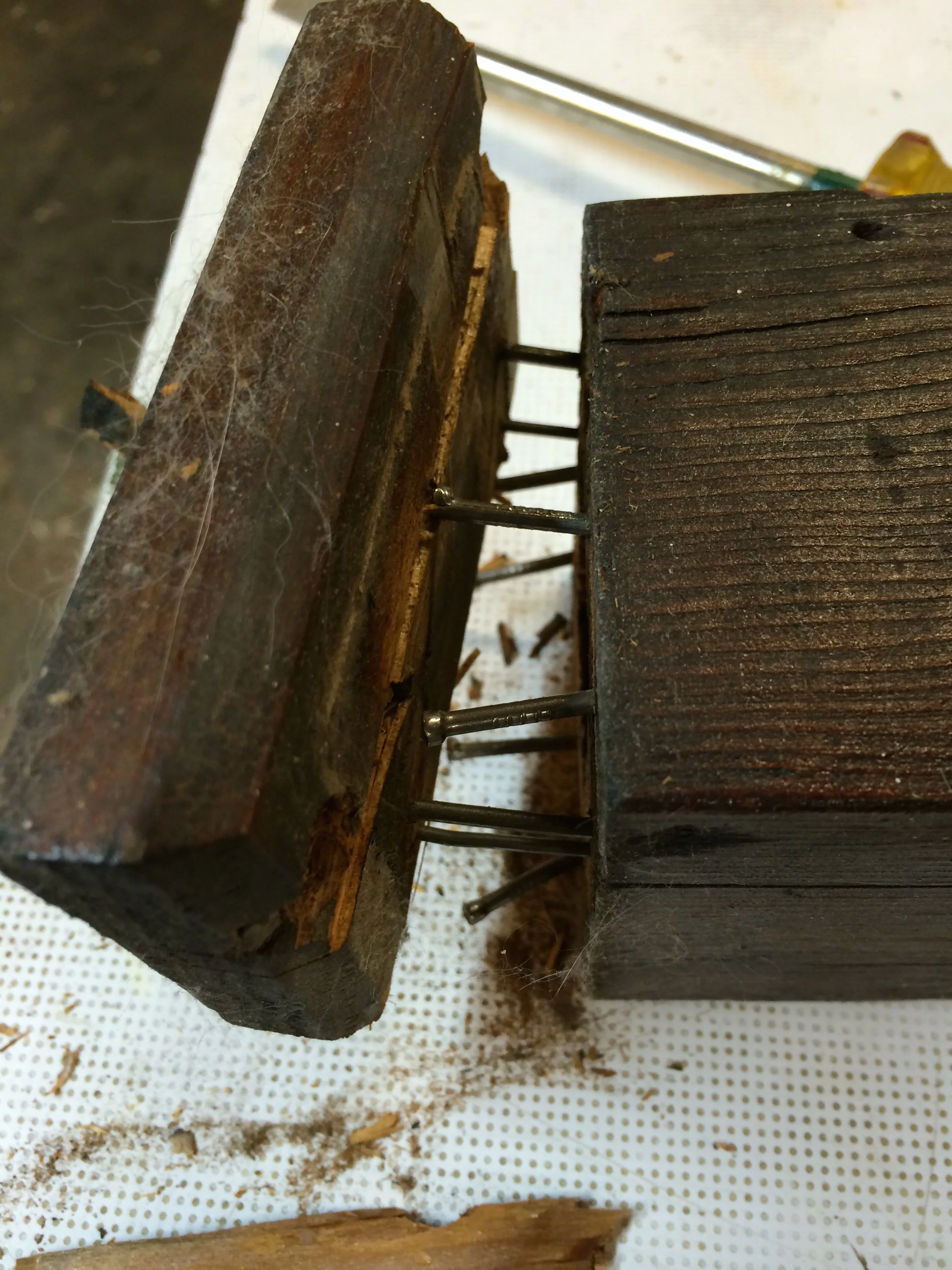
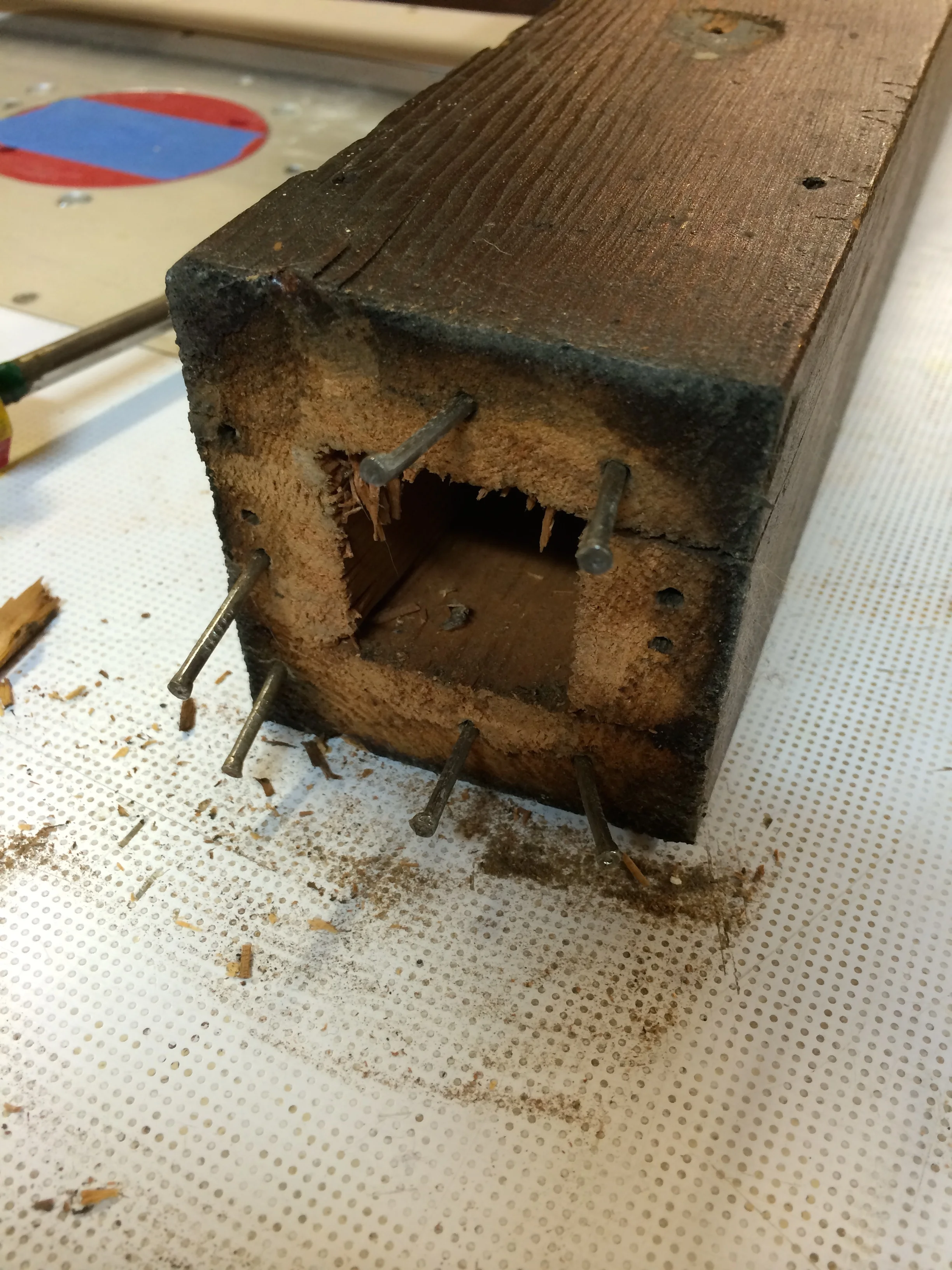
Several weeks ago, I decided to rebuild it, keeping it as true to the original as possible. At first, I intended on just replacing the cracked bases, to give a fresh place for the screws to attach. But after pulling off the bases, I saw that the two upright posts were in pretty bad shape as well. They were not solid; merely four sided hollow boxes. Not only that, but the joinery on the whole piece was pretty basic: lots of nails. Lots, and lots of nails.

If I was going to rebuild the posts, that meant getting new material, and that nice aged patina on the rails was not going to match the new stuff. That meant I had to get the surface of the rails down to the bare wood, and finish both the old and new parts together. At first I tried sanding the old finish/patina off, but either the grime and dirt that had built up over the years, or the old varnish, (or a combo of both), made sanding it off impossible. Within a few strokes, the sandpaper would load up with a sticky wad, rendering the paper useless. So I got out my hand planes and card scrapers, and removed the least amount of material I could get away with. That went well, and soon I had clear, clean stock. 

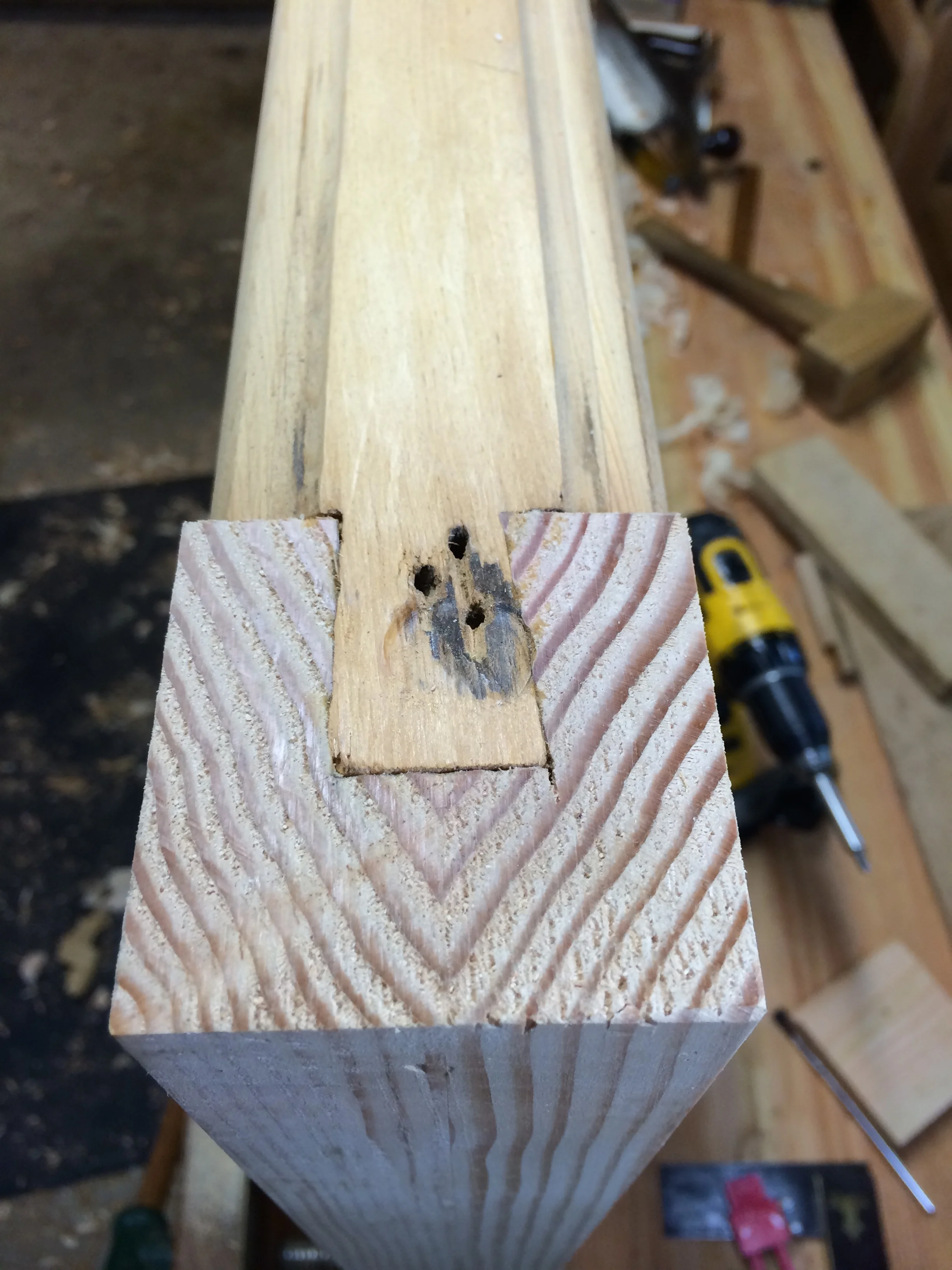
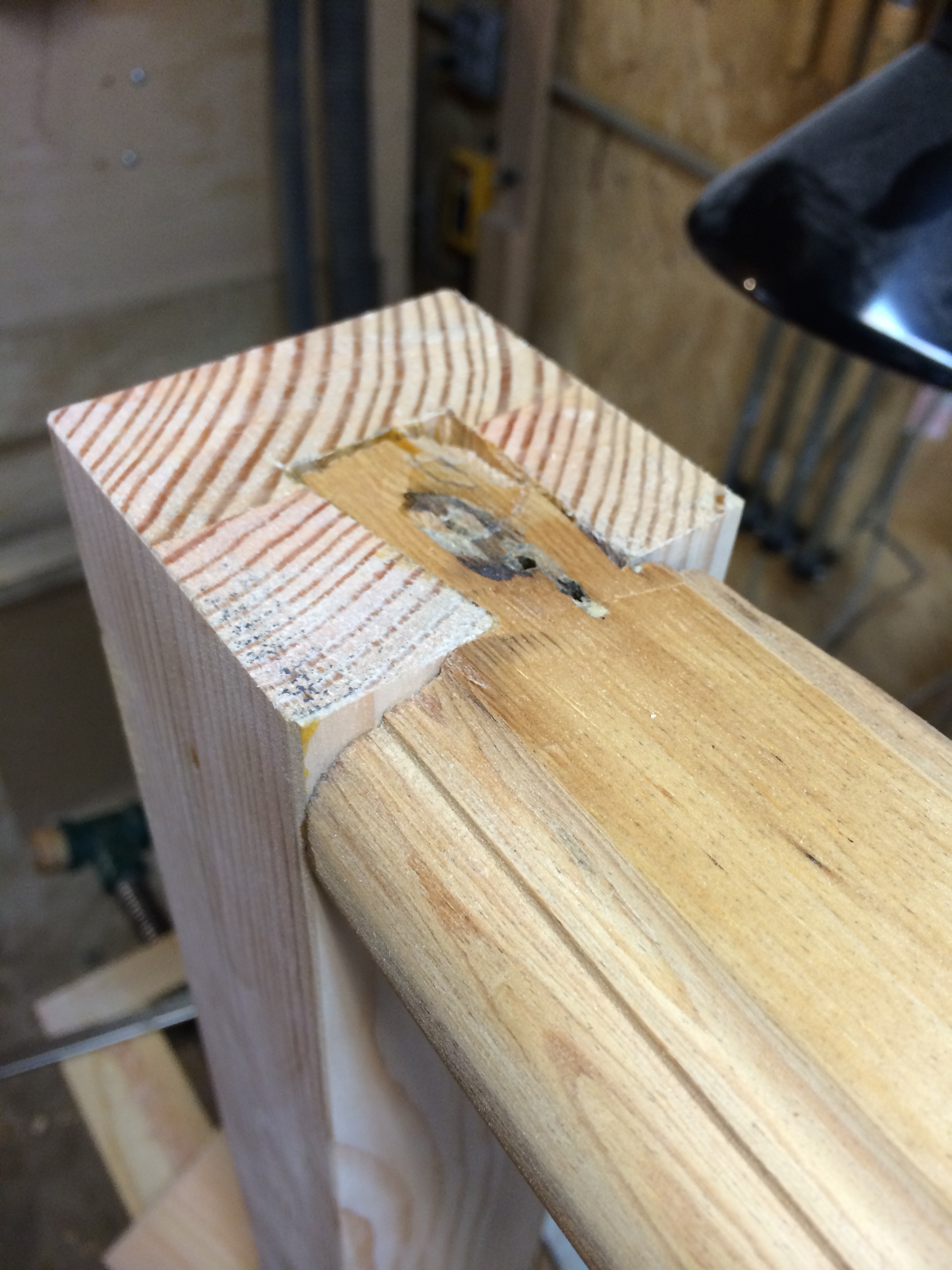
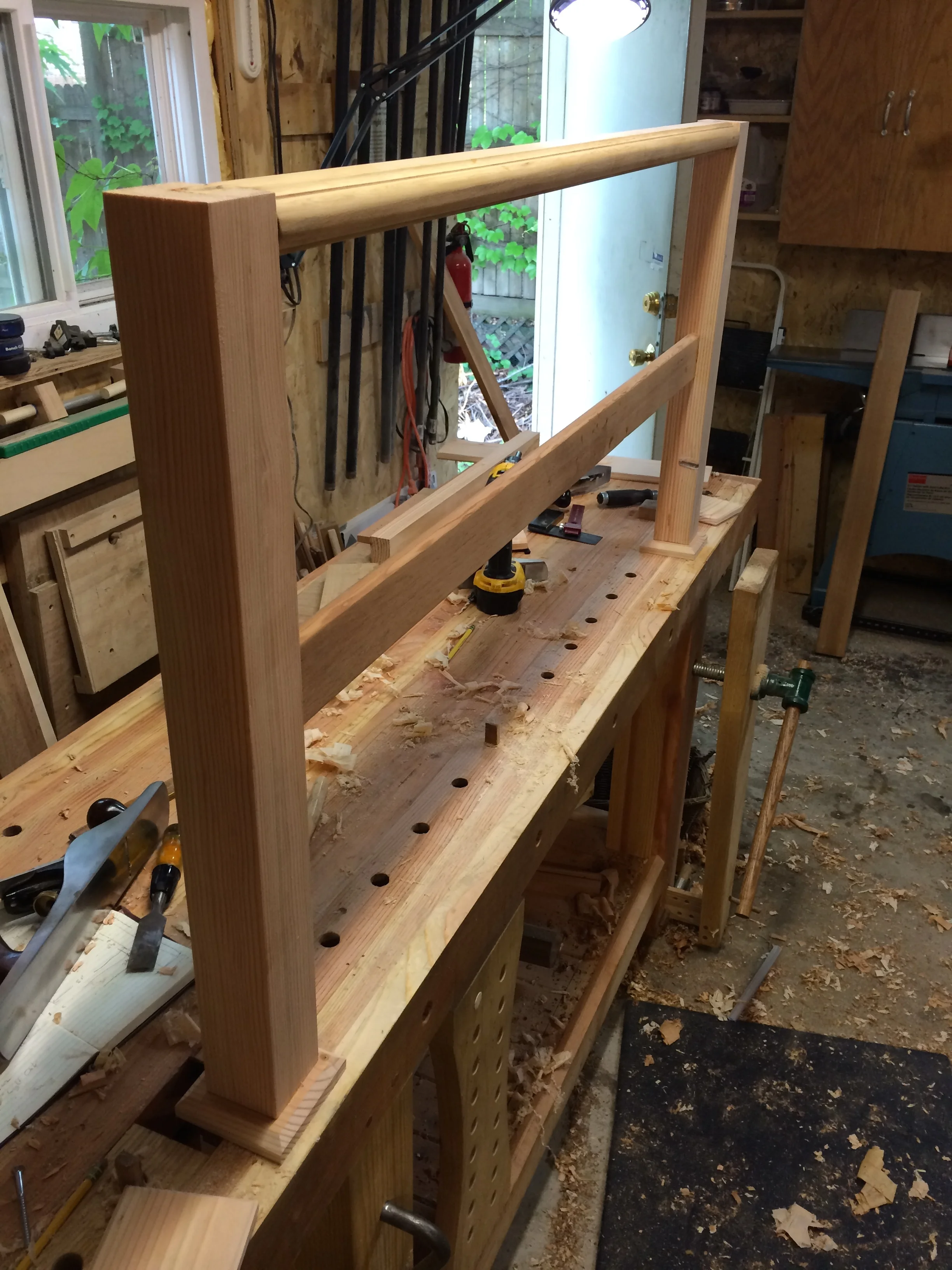
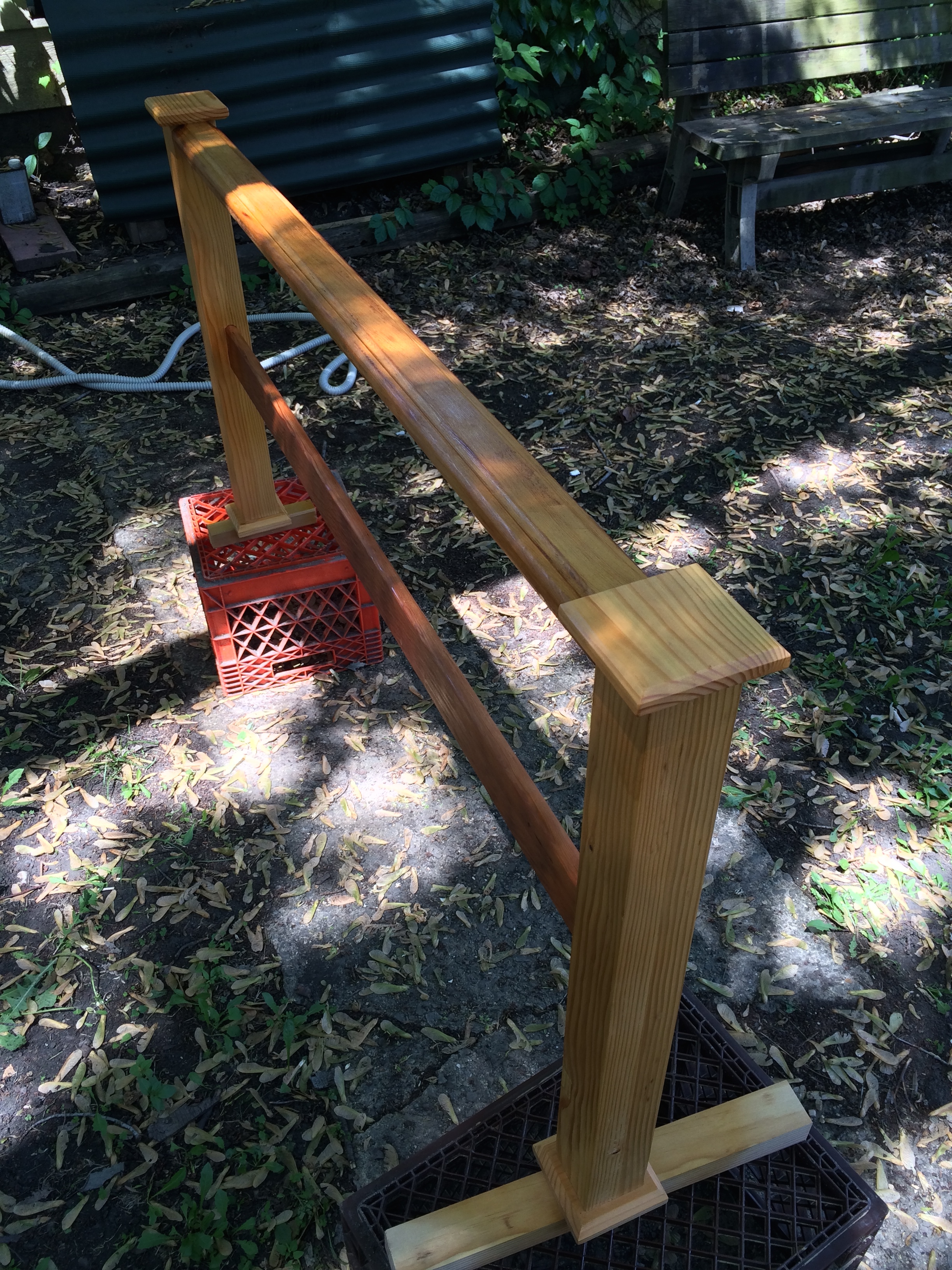
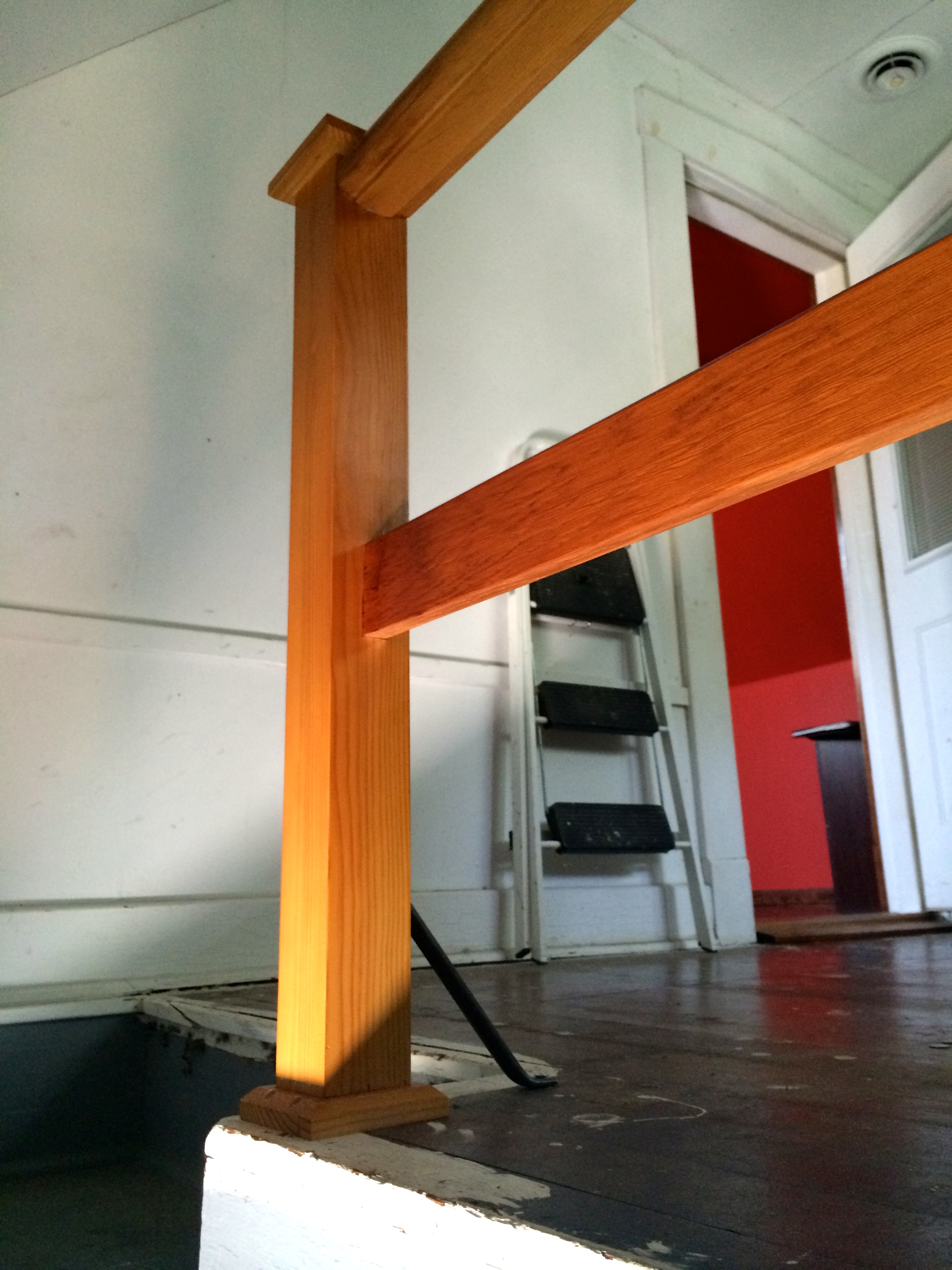
I then glued up some douglas fir stock for the approximately 3"x3" posts, and milled those square. With the posts being solid wood, and to longer hollow, I could cut a proper mortise for the lower rail to sit in (in the original, the bottom rail's tenon went to the open space inside the post - pretty weak, and was nailed in - also pretty weak). I made a half dovetail to secure the top rail. I only did a half dovetail, because I afraid of weakening the "tails" by removing too much stock from both sides.

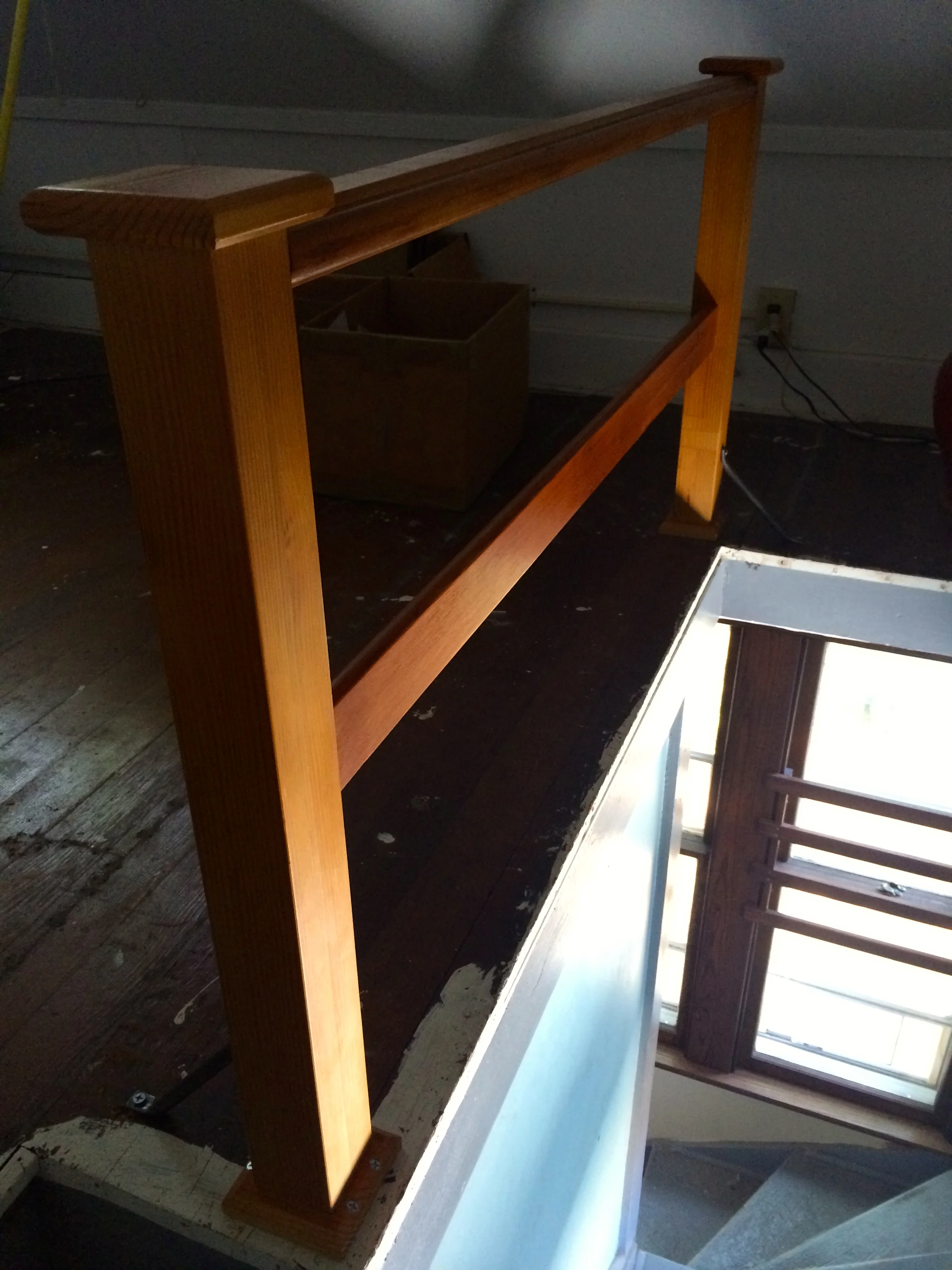
I milled up simple chamfered bases and caps, screwing and gluing the bottom bases into the posts, and then cowling and glueing the caps to the tops of the posts (I didn't want to screw down from the top for aesthetics). Then it was on to finishing, which was several layers of garnet shellac, sprayed via HVLP. I was hoping it would have turned out darker, but I think if I wait another 50 years, it will get there. It look great this way, and will will darken with time. I'm in no hurry.

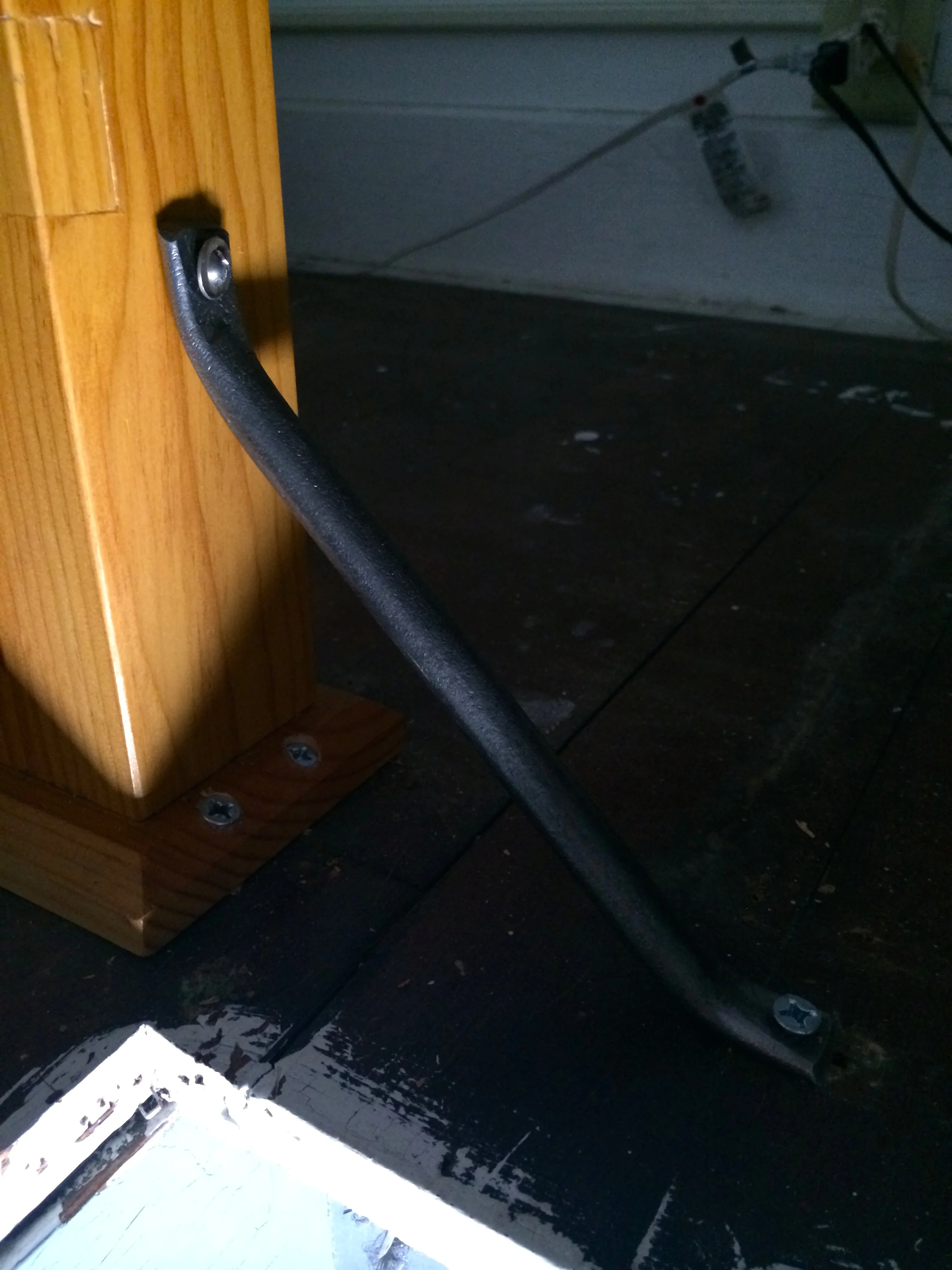
Once the layers of shellac cured, I rubbed it with clear paste wax & steel wool, and installed it. Also, the original had these two homemade metal braces, for added stability, and I cleaned the rust and dirt off those as well, and re-used them.

So that's that. Yes, I know, the floor needs refinishing, and the whole room needs to be re-done. I'll get to it!

What I liked about this project is being able to use my woodworking skill in doing some home improvement stuff. This isn't fine furniture, nor is it restoration exactly. But using my skills to preserve and enhance an original, or at least pretty old, feature/fixture of my house is very satisfying.

I made a head

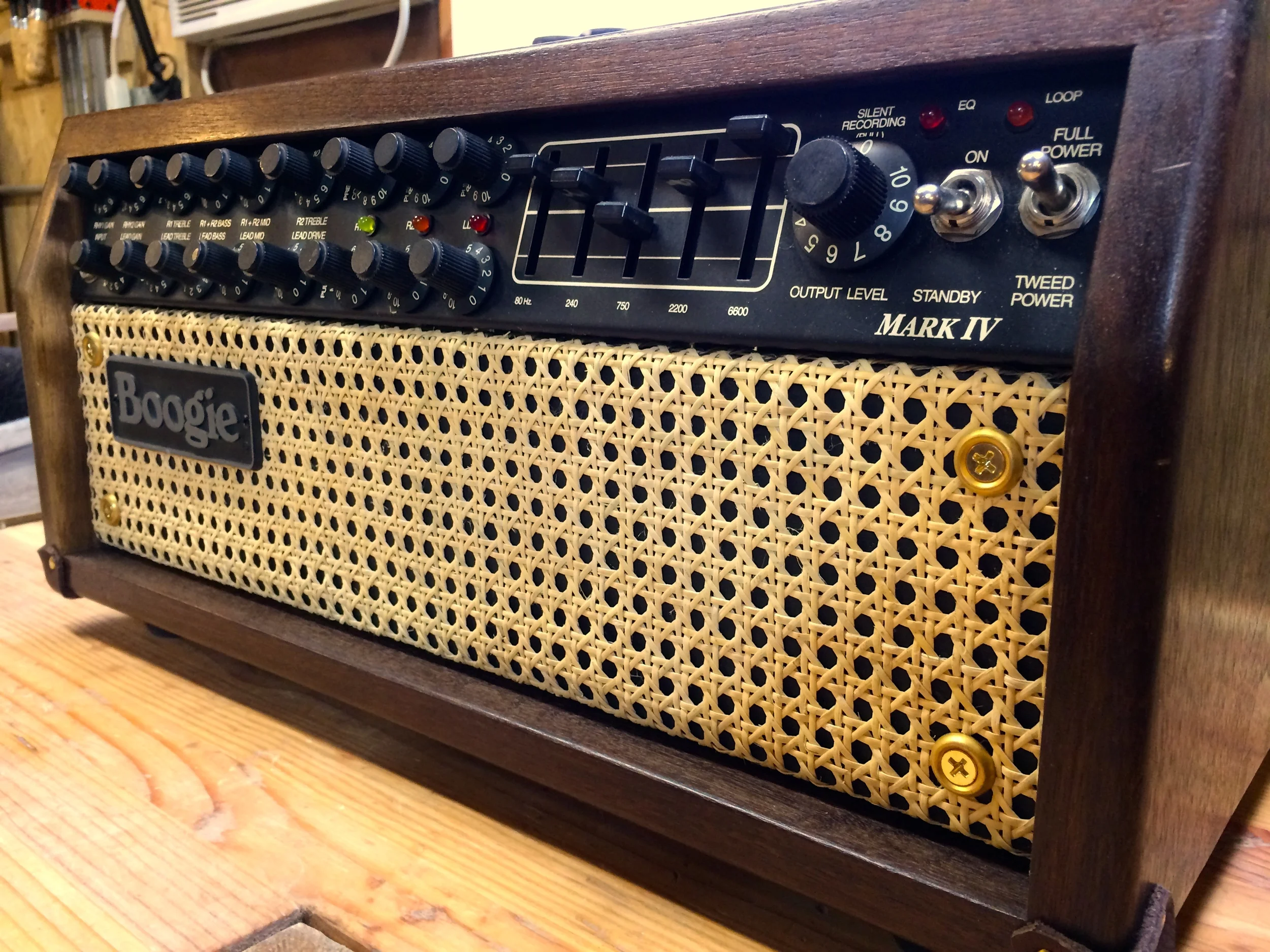
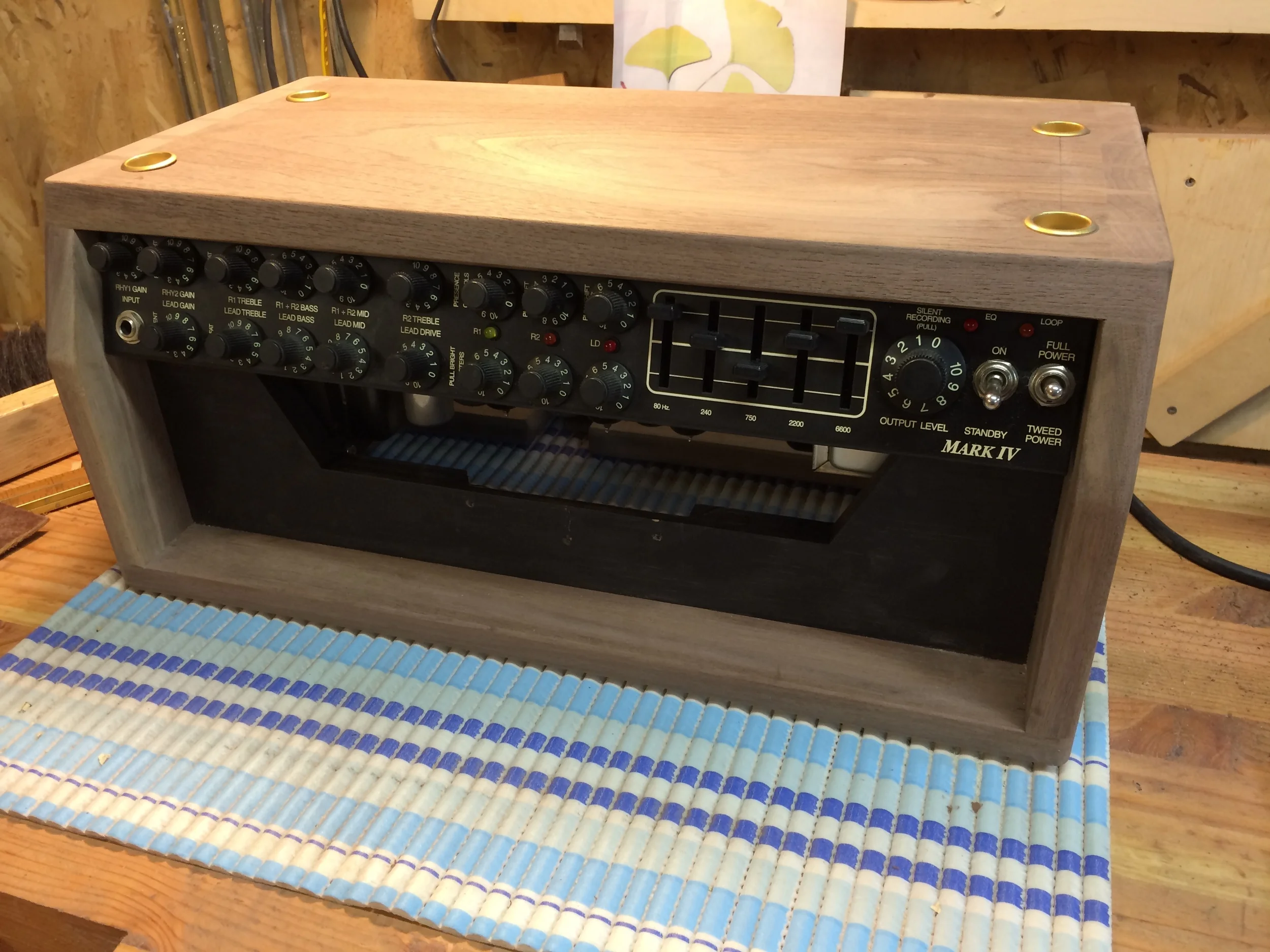
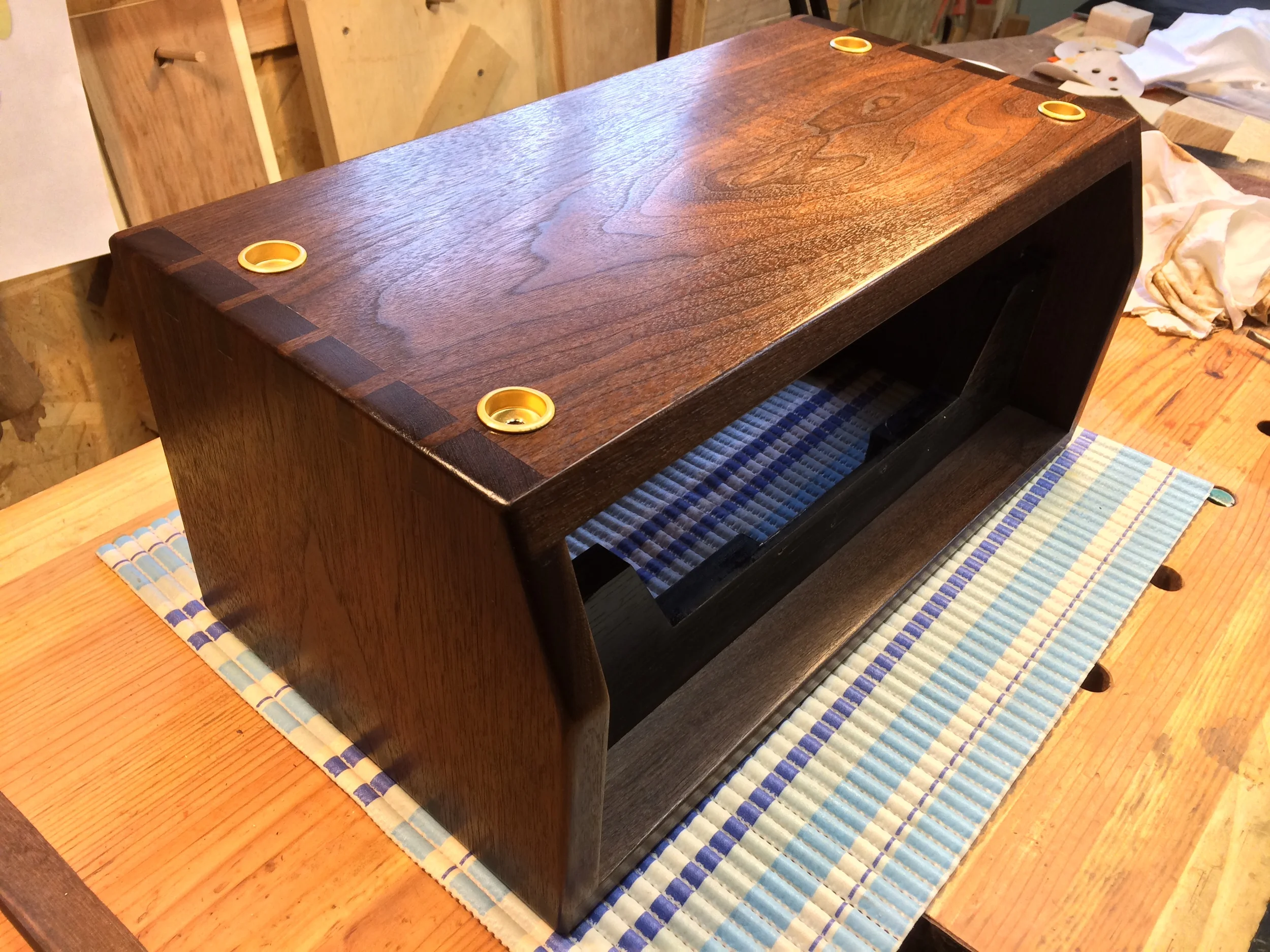
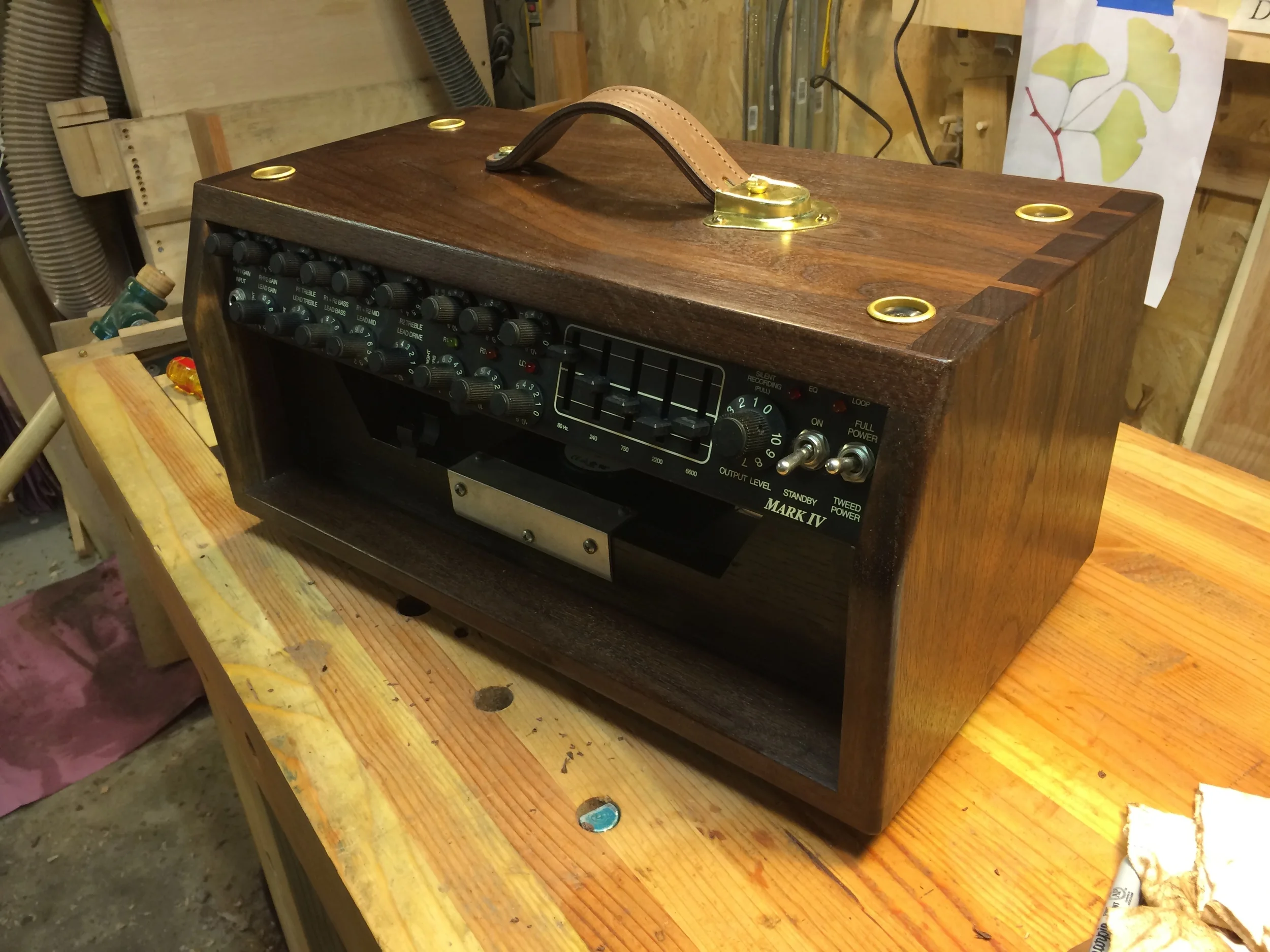
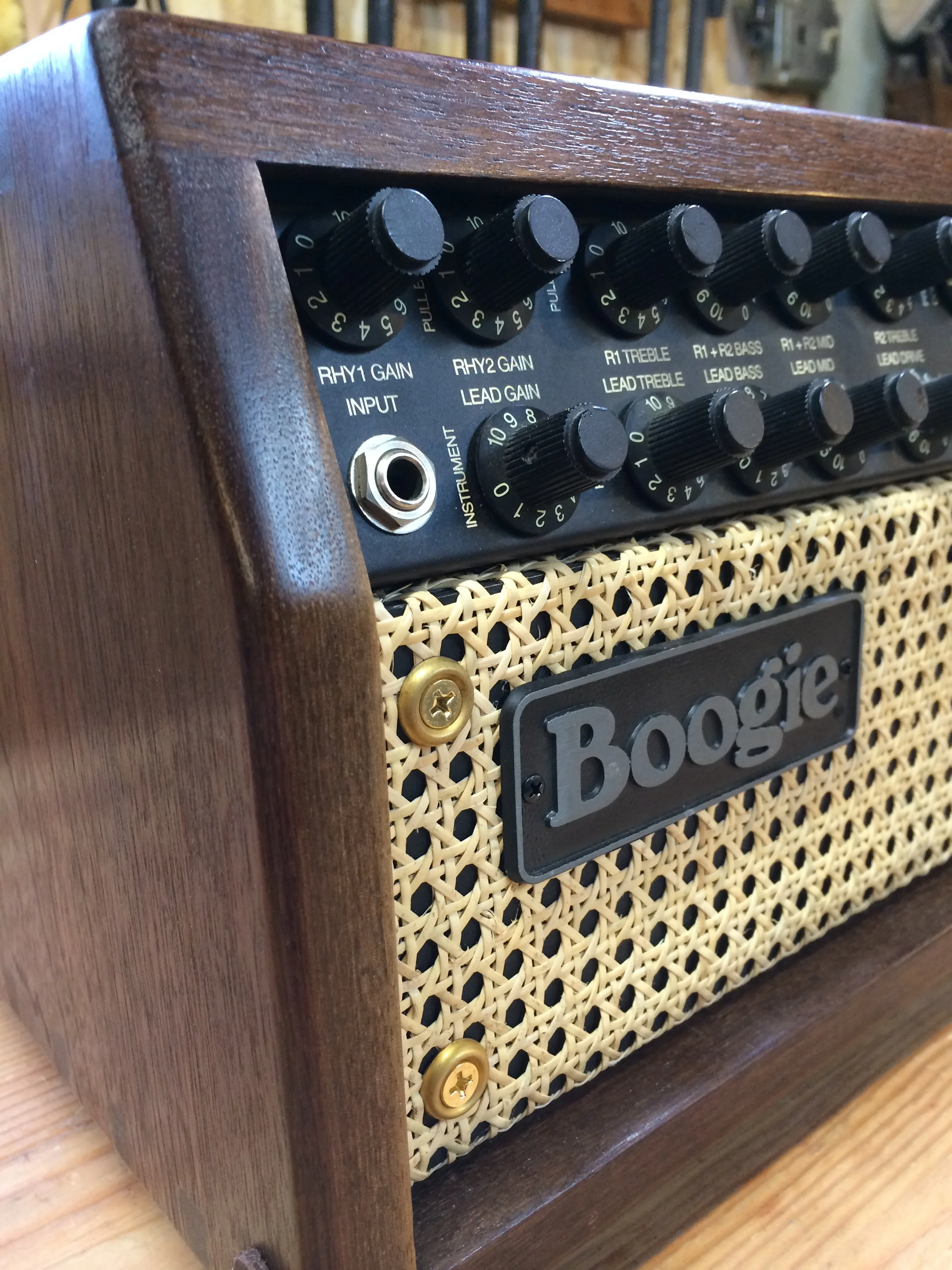
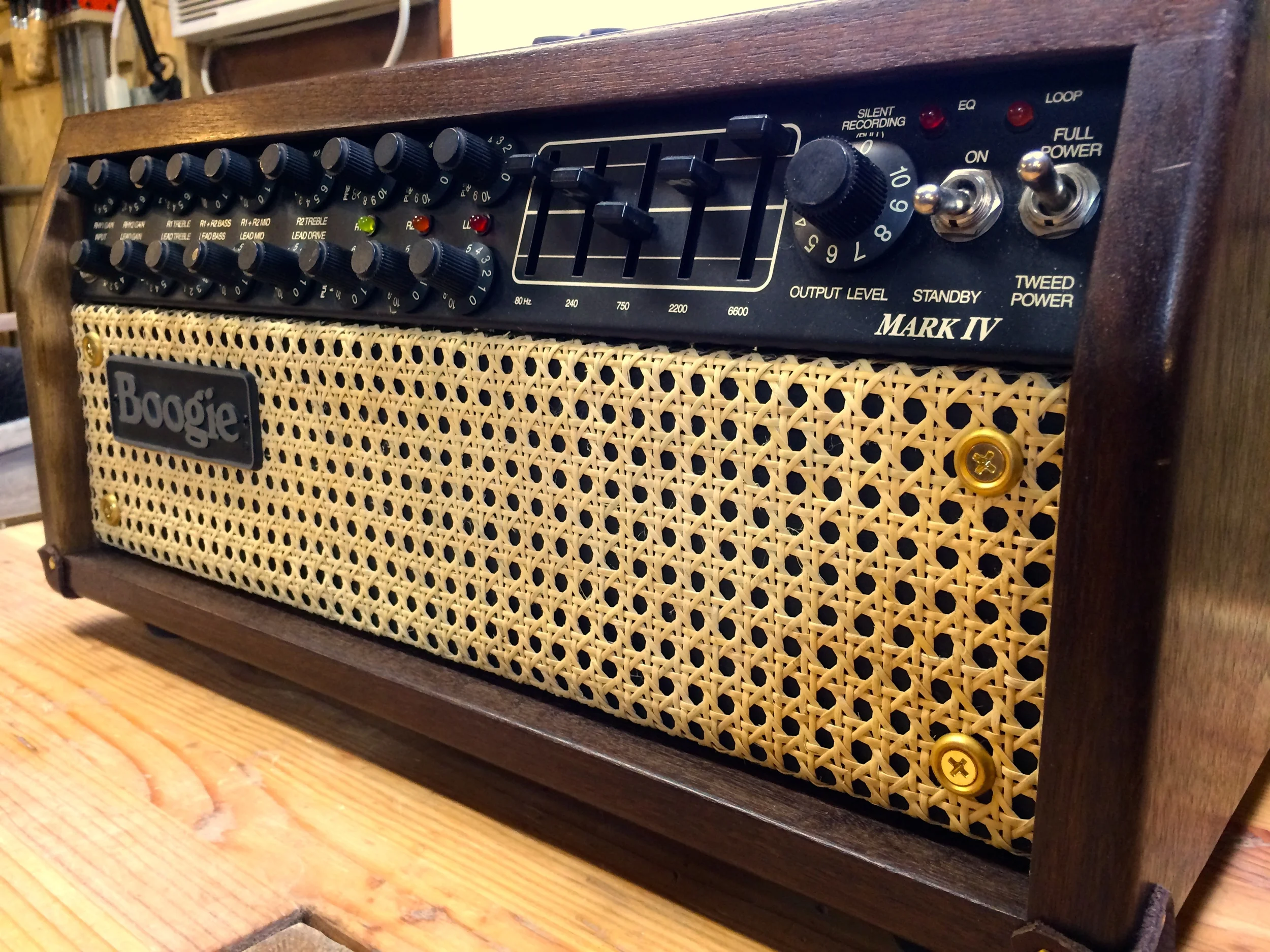
In addition to being a woodworker, I'm a musician, and have been all my life. I play in bands (a couple of them with my wife, a drummer), and am a guitar player, bass player, singer. I have been the proud owner of a pretty nice and epic guitar amplifier setup, the classic Mesa Boogie Mark IV. The Mark IV is one of Mesa's "classic" amps, that is out of production. Mine is in a configuration of an amplifier head that sits atop a separate speaker cabinet (actually, two separate speaker cabinets), as opposed to a "combo" where the amplifier electronics and the speaker are all in one enclosure.

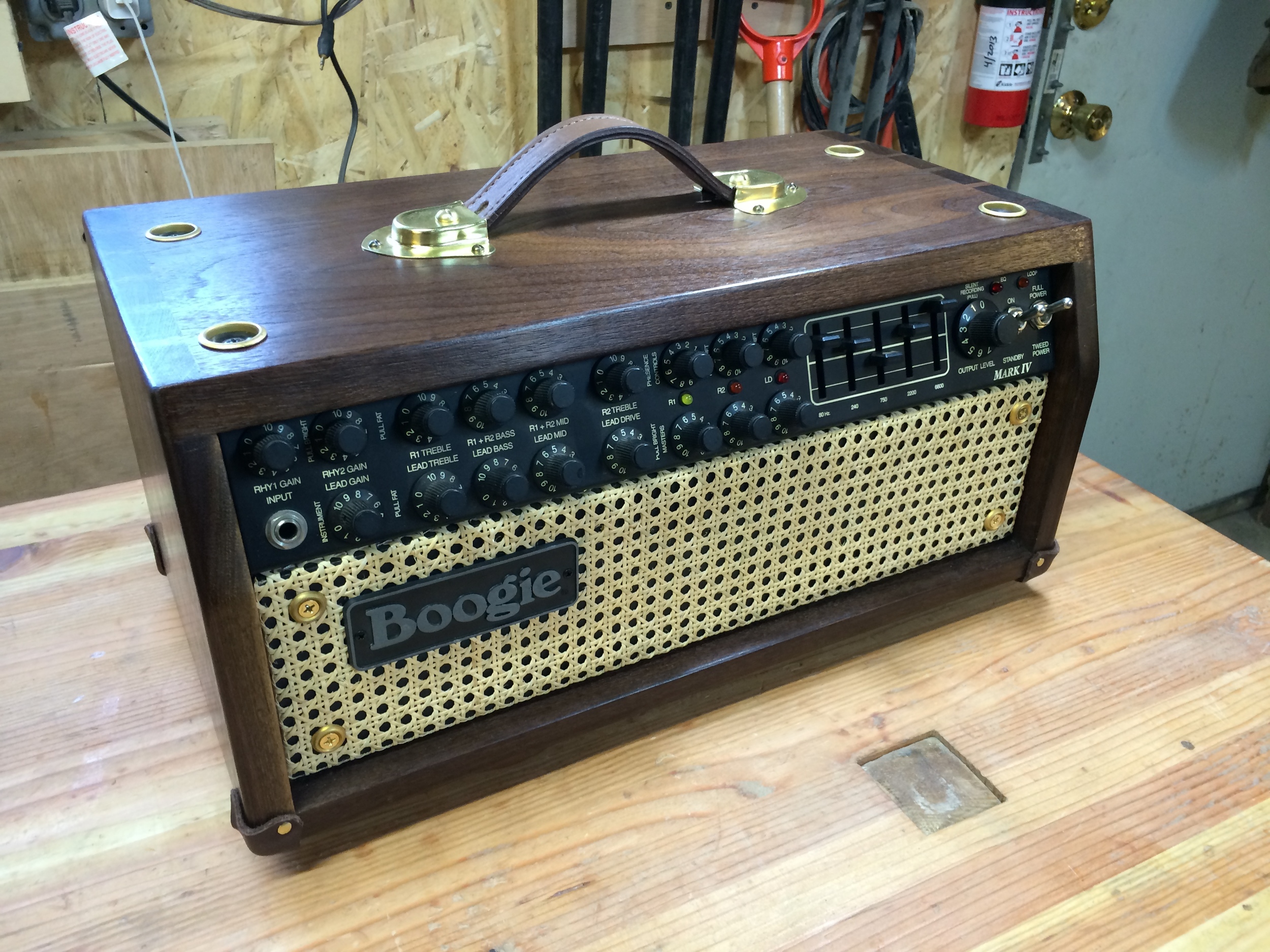
As a longtime fan of Mesa's classic amps, I'd long ago acquired a couple of their glossy sales catalogs, and in there they showed some fancy "custom" options for their amps. Instead of the standard plywood-wrapped-in-vinyl construction (like mine), you could order yours with all sorts of coverings, or hardwood, and grill patterns, etc. One configuration that looked awesome was a bubinga (or some other tropical hardwood) hardwood version with a cane grill. At the time, the standard config was great, and it served me well for the many years of using the amp.

But I'm now a woodworker, and I had the urge, and capability, to convert my beloved amp into a fancy amp.

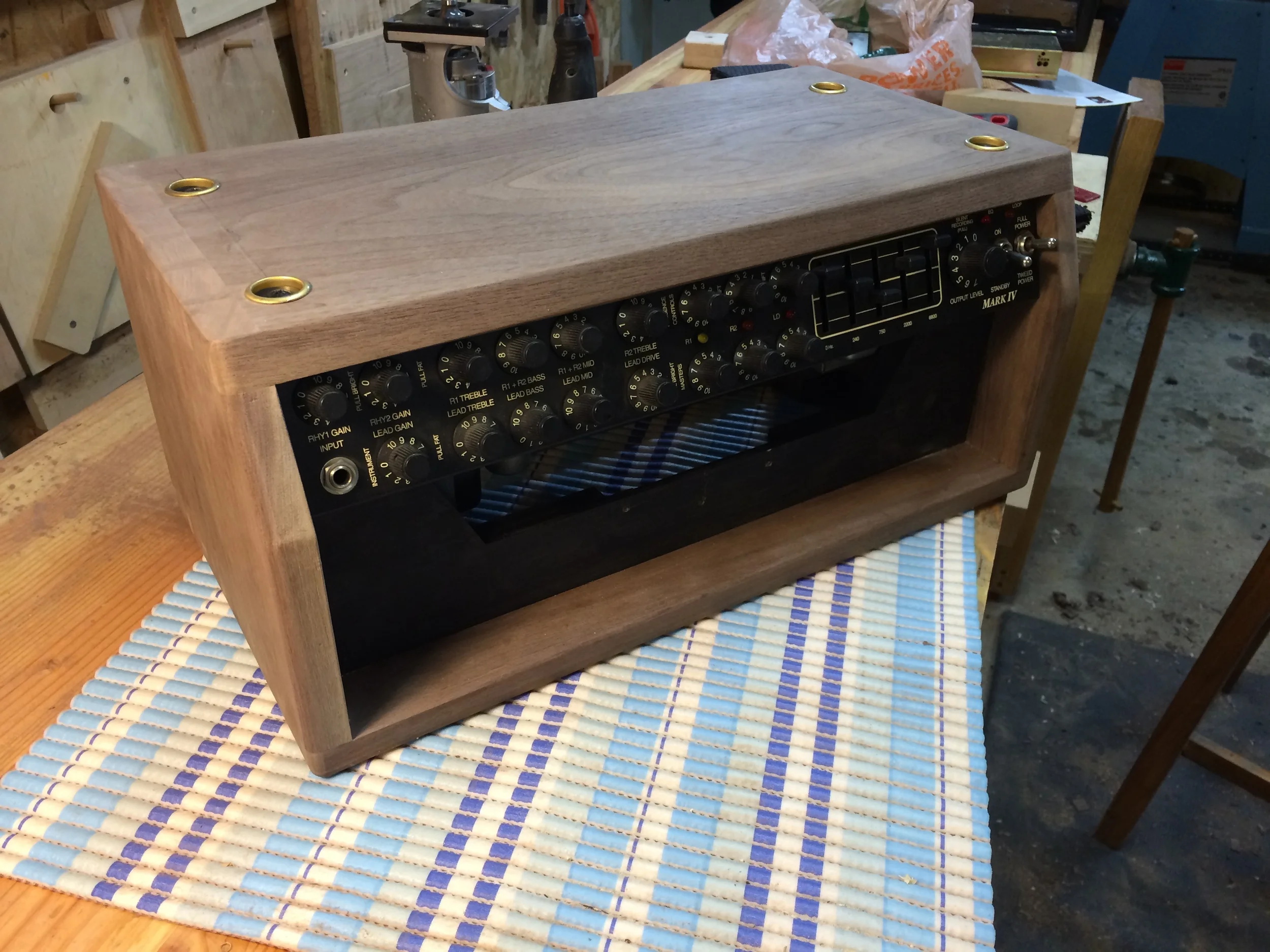
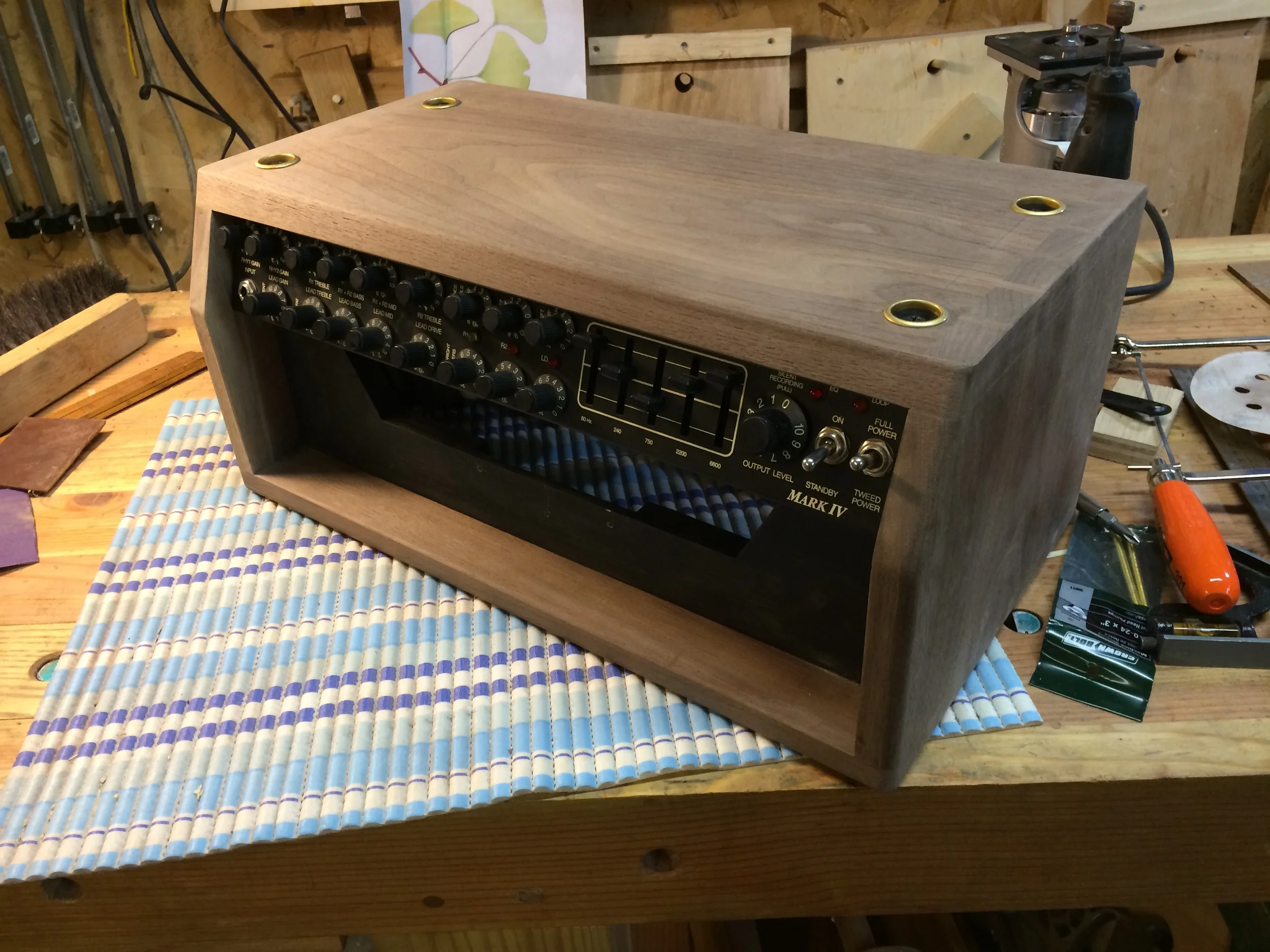
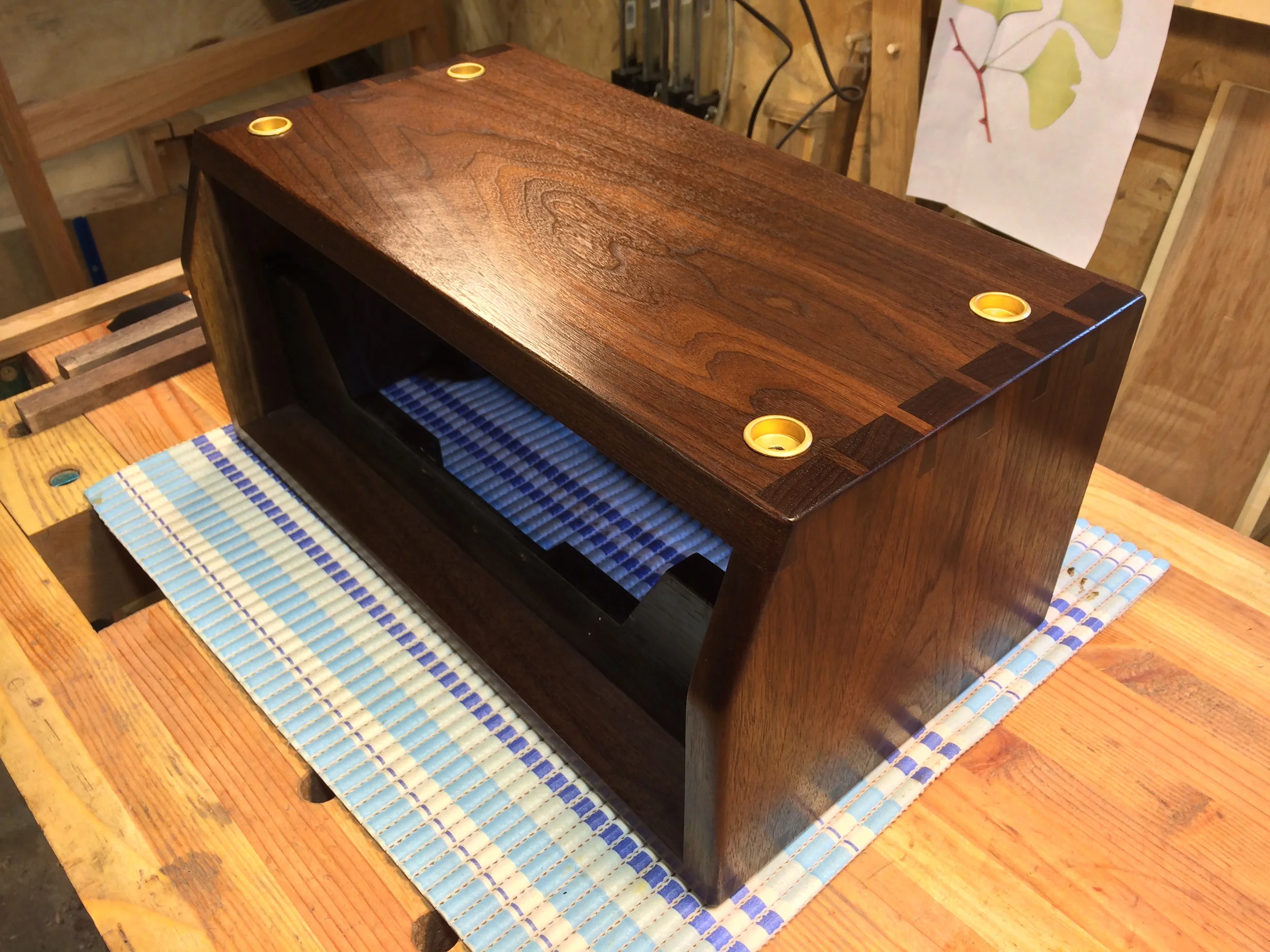
I started this little "side" project during the Christmas lull, thinking I'd get it done in a few days. While the majority of it went pretty rapidly, ordering the hardware, waiting for that to arrive, then fiddling with installing it took longer. And the cane grille took weeks to arrive. But finally, here it is...

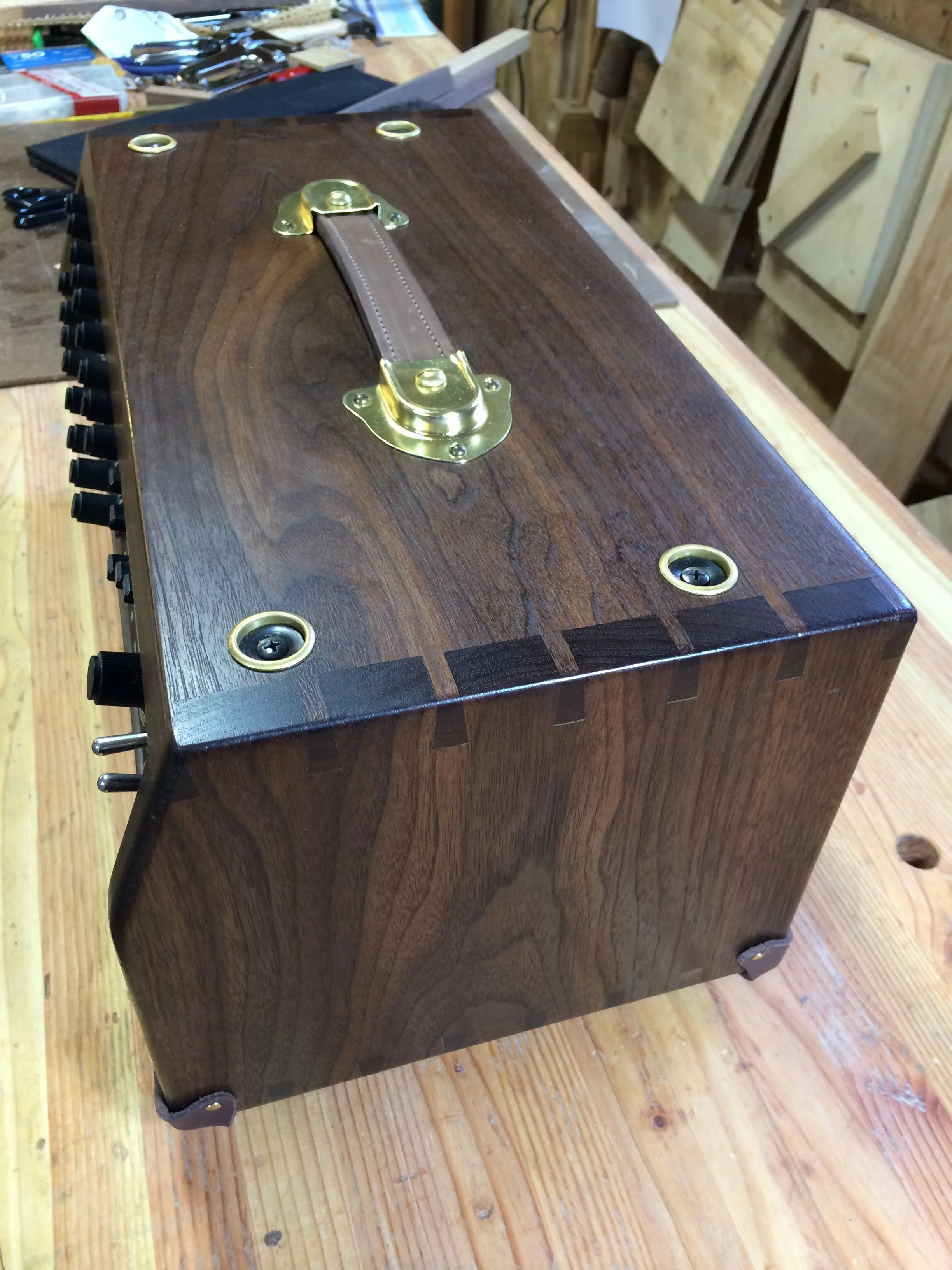
IMG_2224.jpg

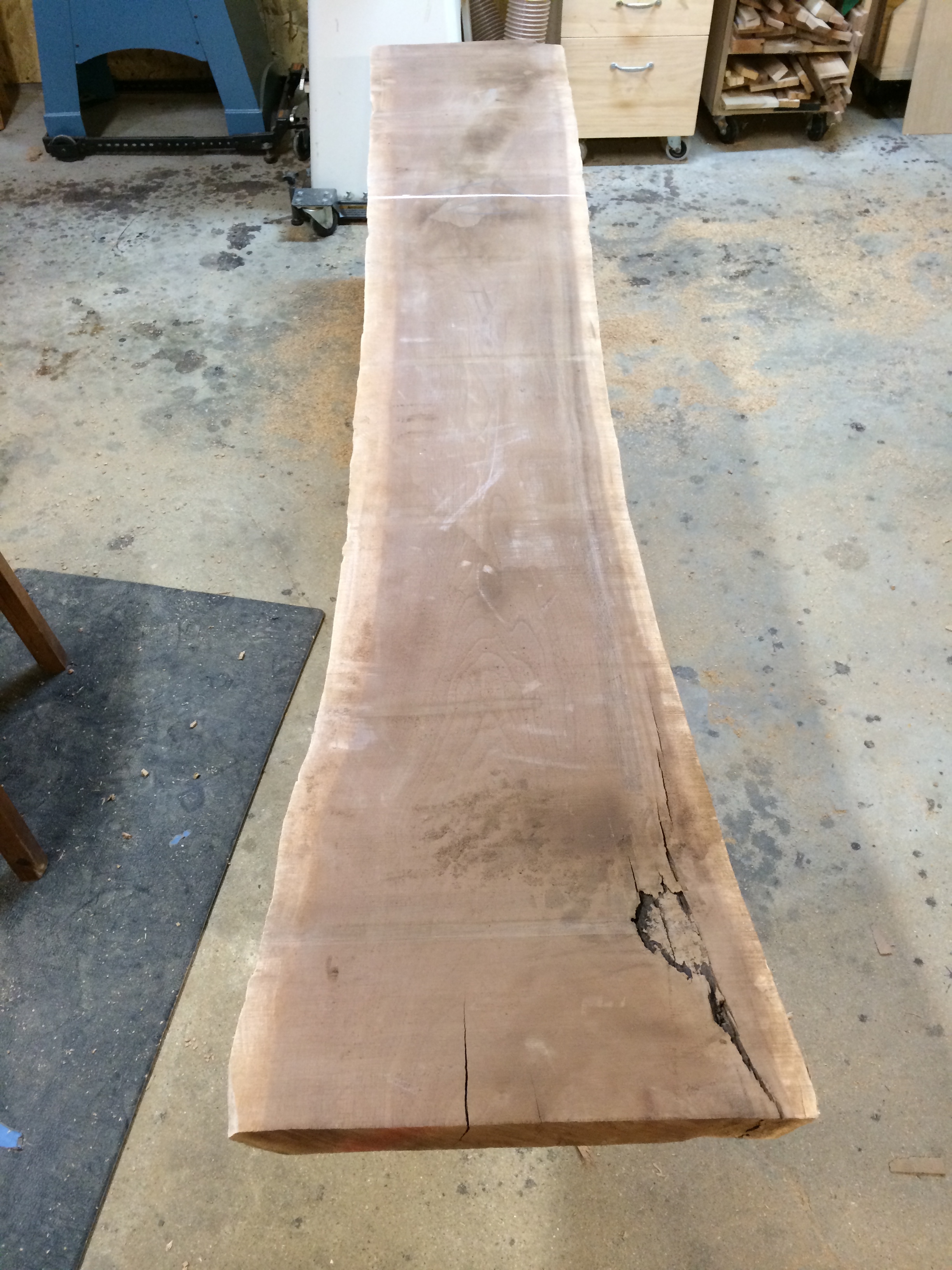
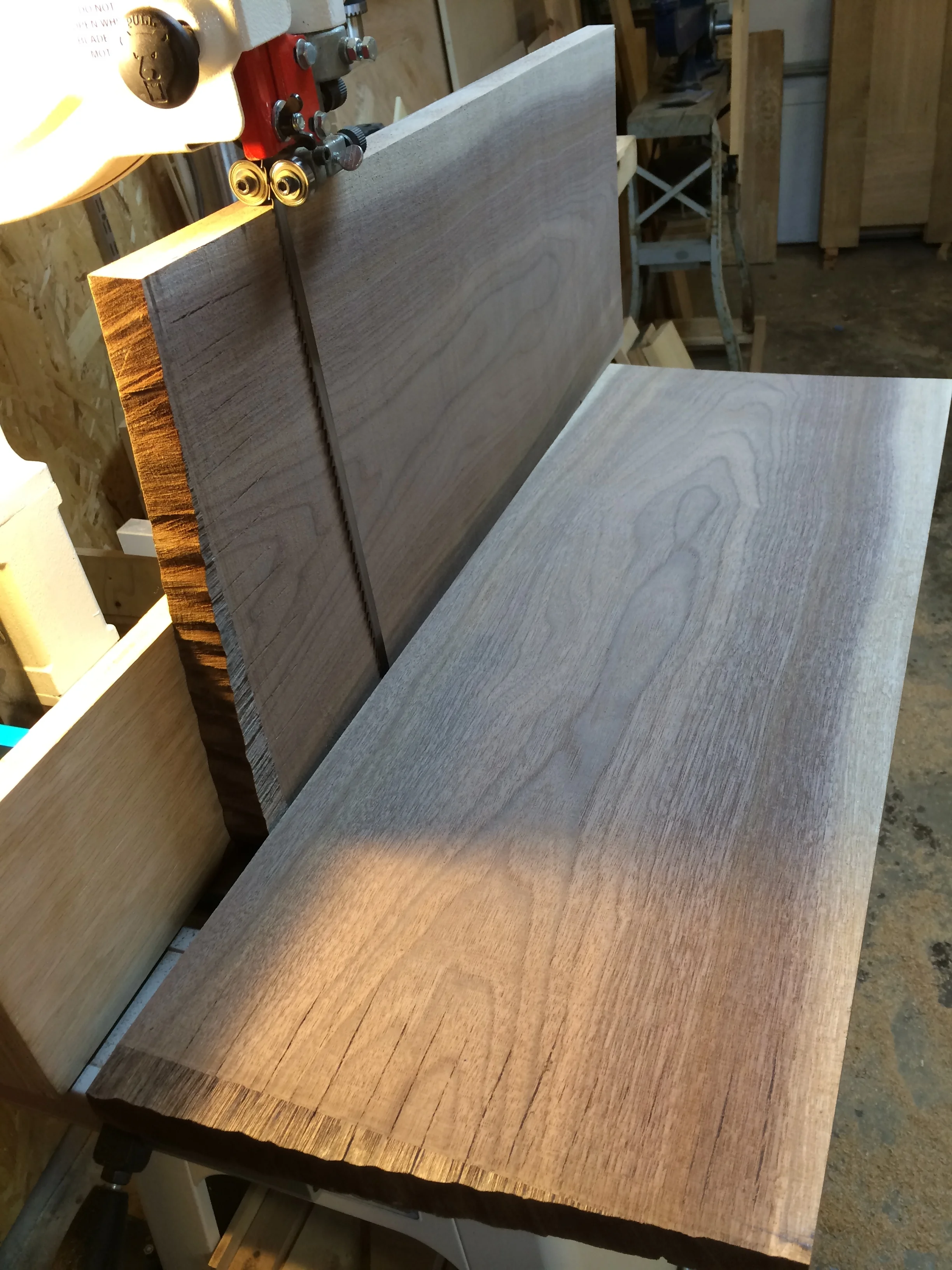
I started out with this gorgeous slab of walnut I picked up from my favorite urban lumber source, Horigan Urban Forest Products. It was an impulse purchase; I didn't really "need" it at the time, but I got it, and thought about uses for it later. It was an 8/4 slab, allowing me to do some nice grain wrap around after resawing it. 

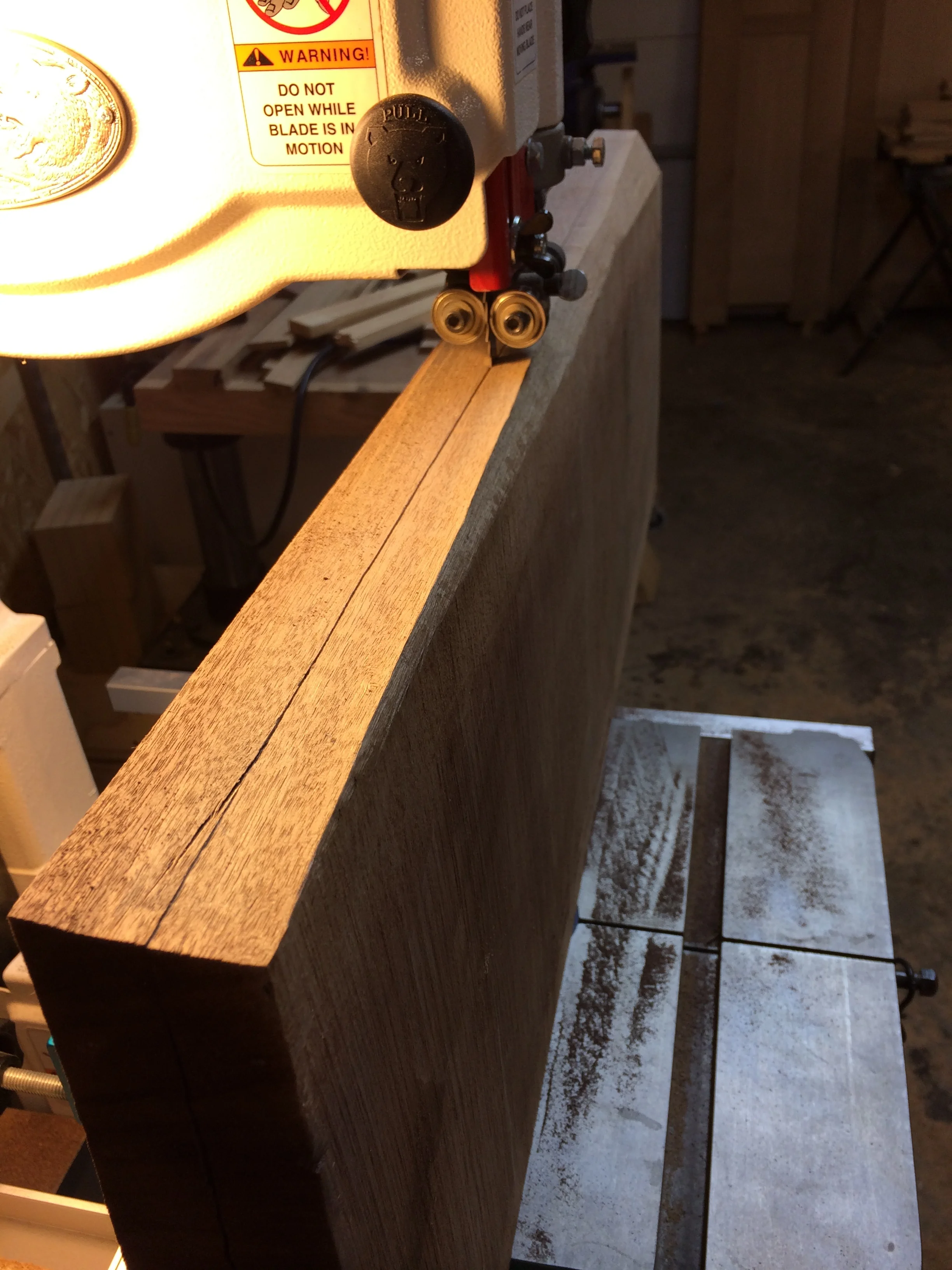
My 14" bandsaw with the 6" riser block (giving me 12" resaw capacity), and a 1/2" Woodslicer blade made a great, smooth, straight cut. Never underestimate the lowly, basic 14" bandsaw: tuned up with a sharp blade, it can do great things.
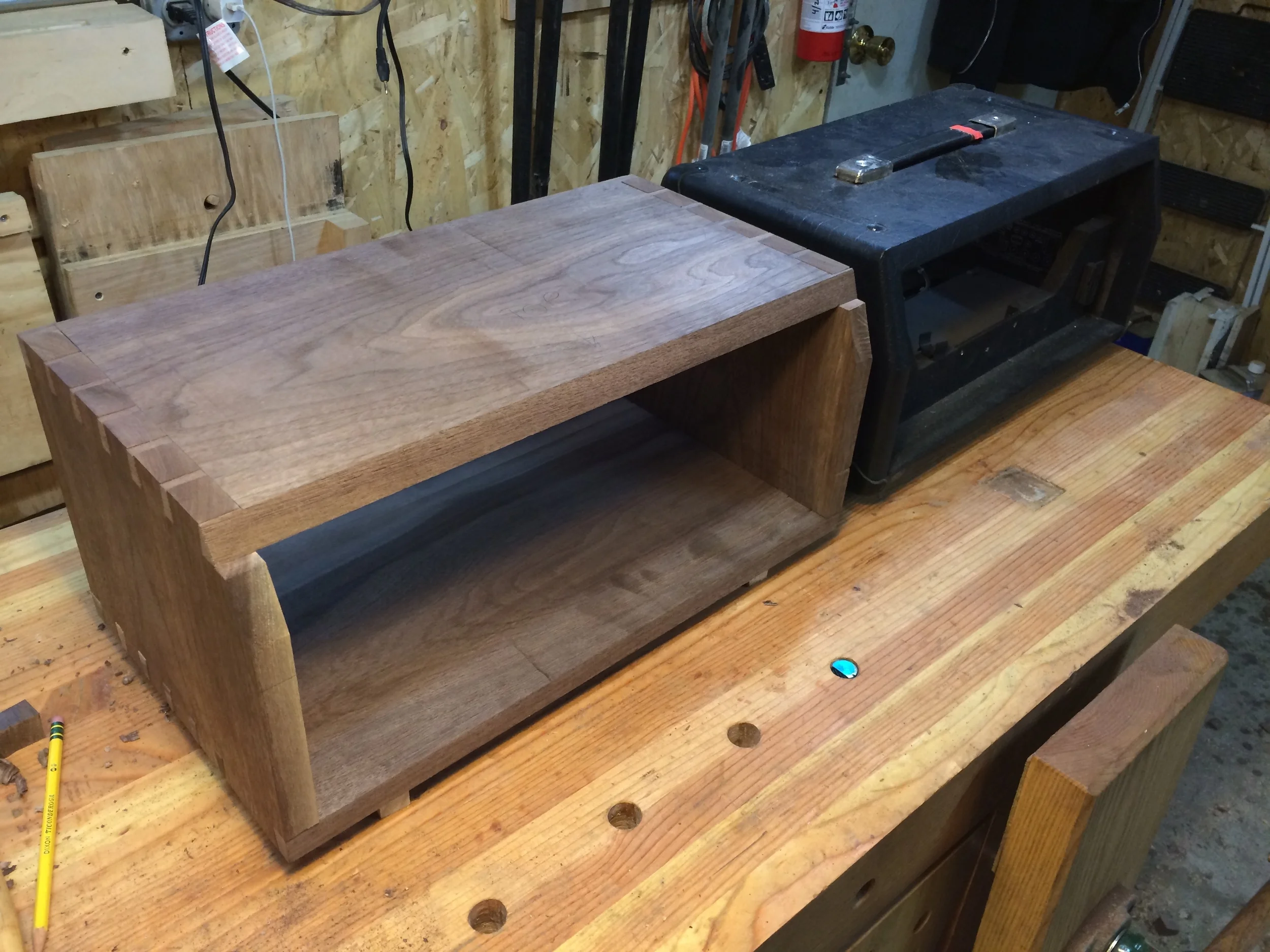
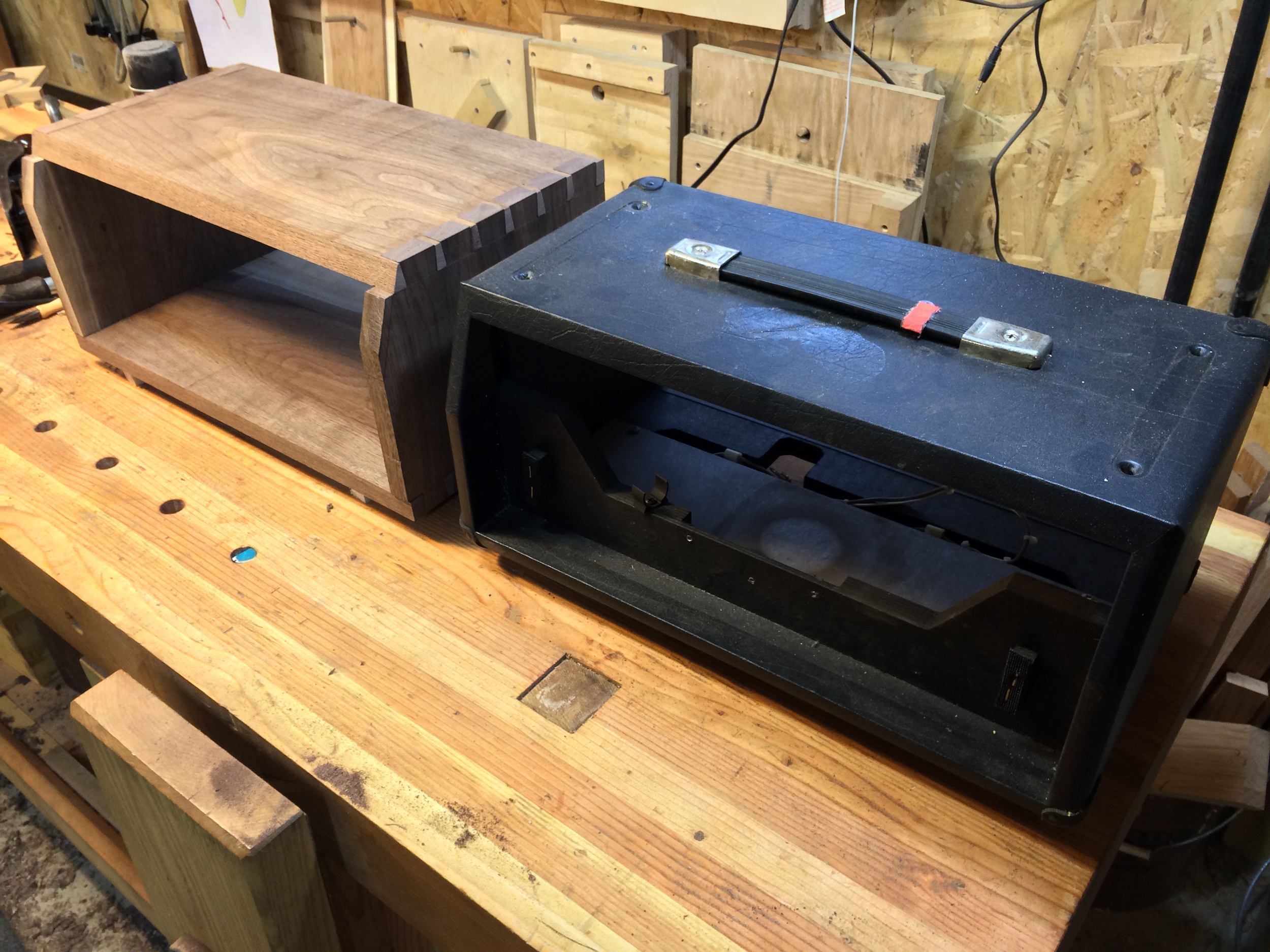
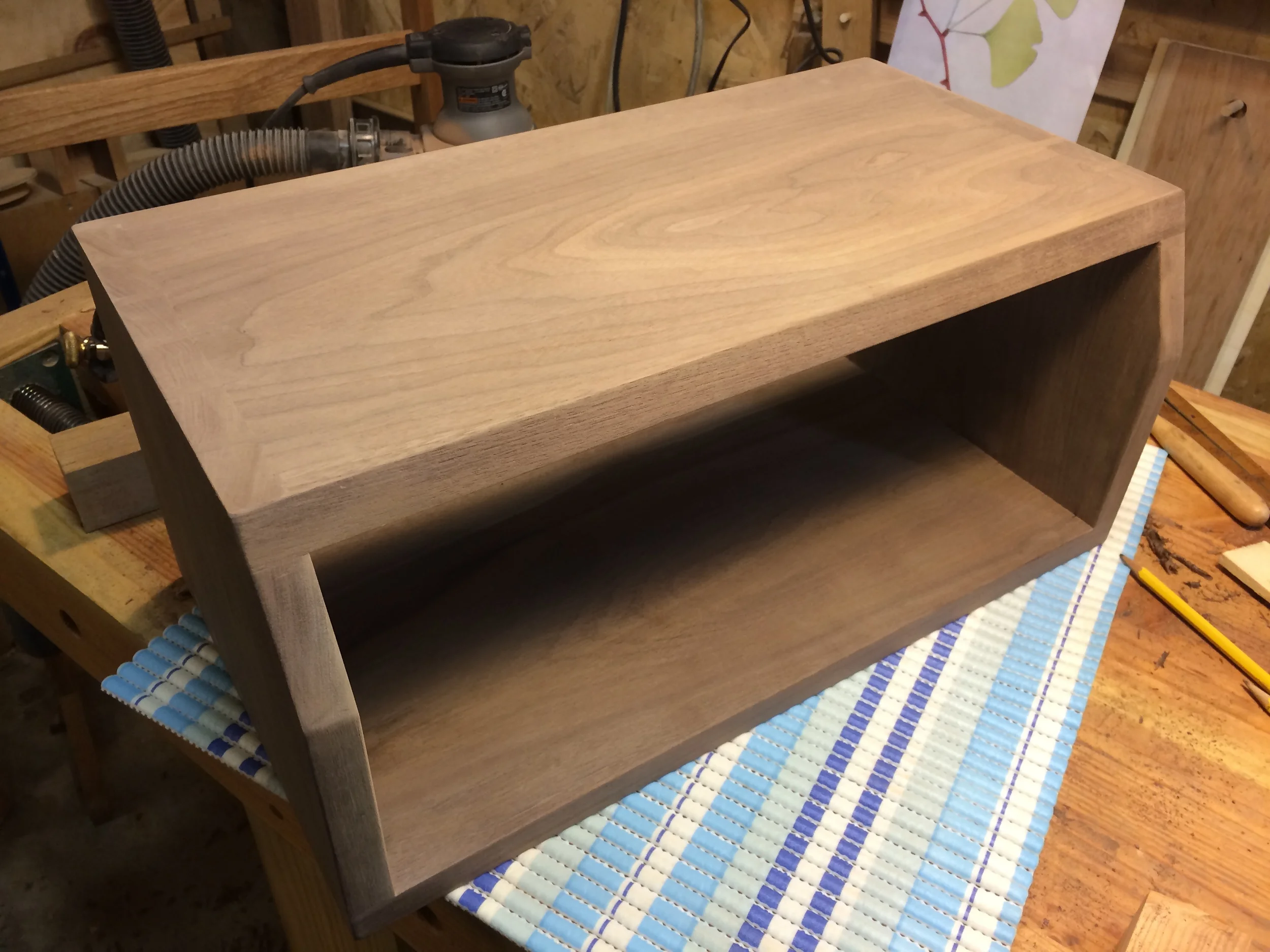
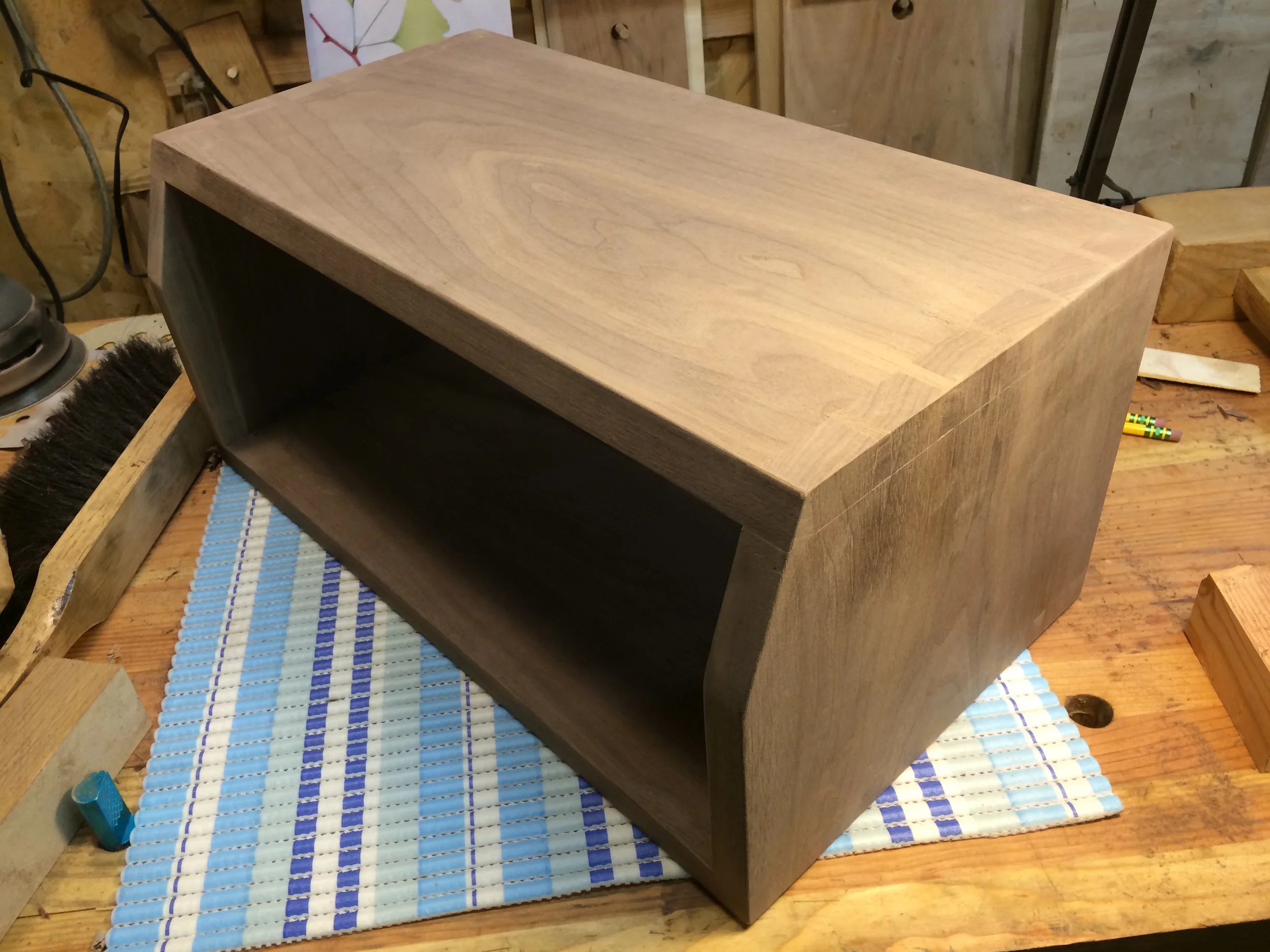
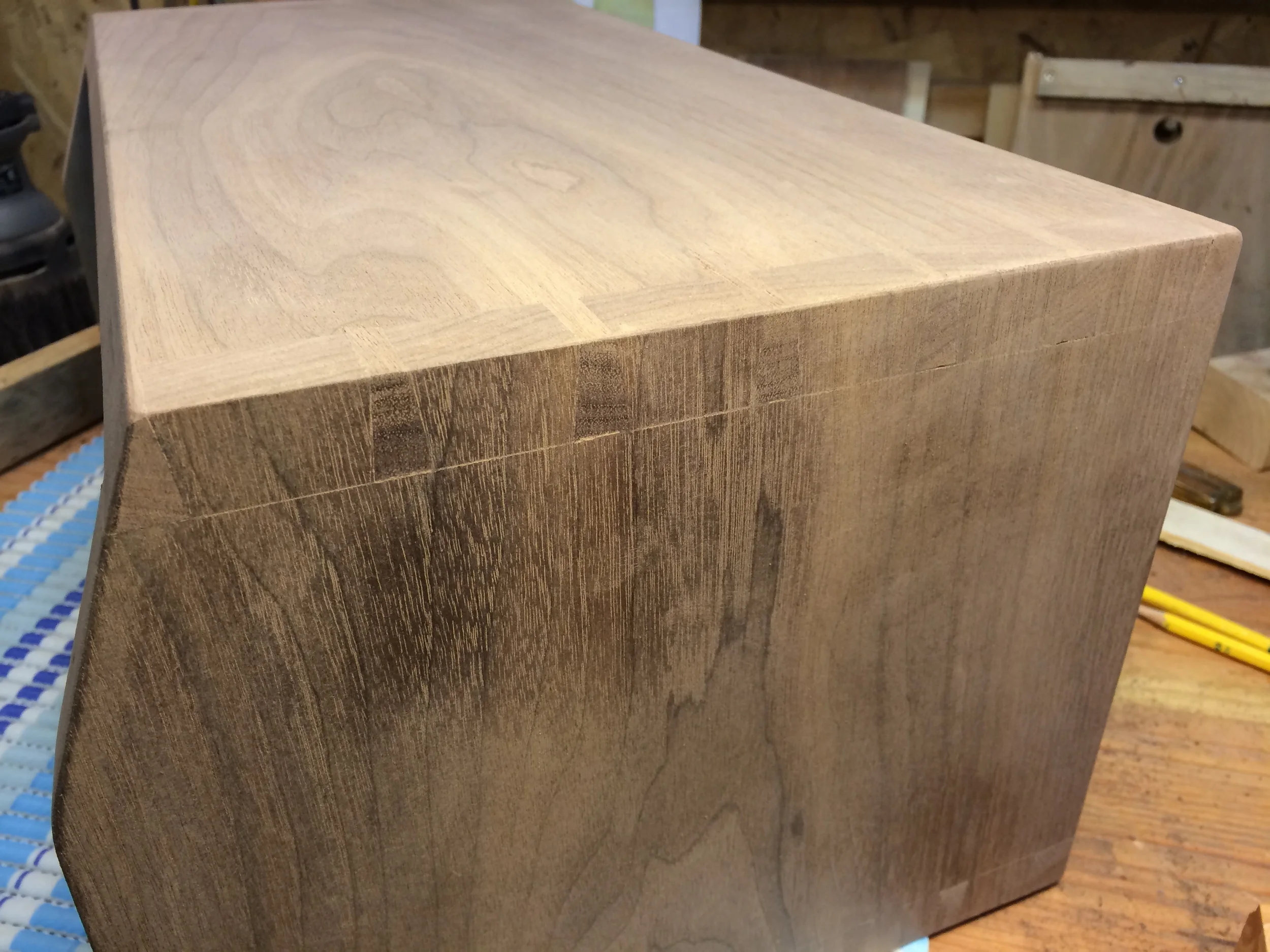
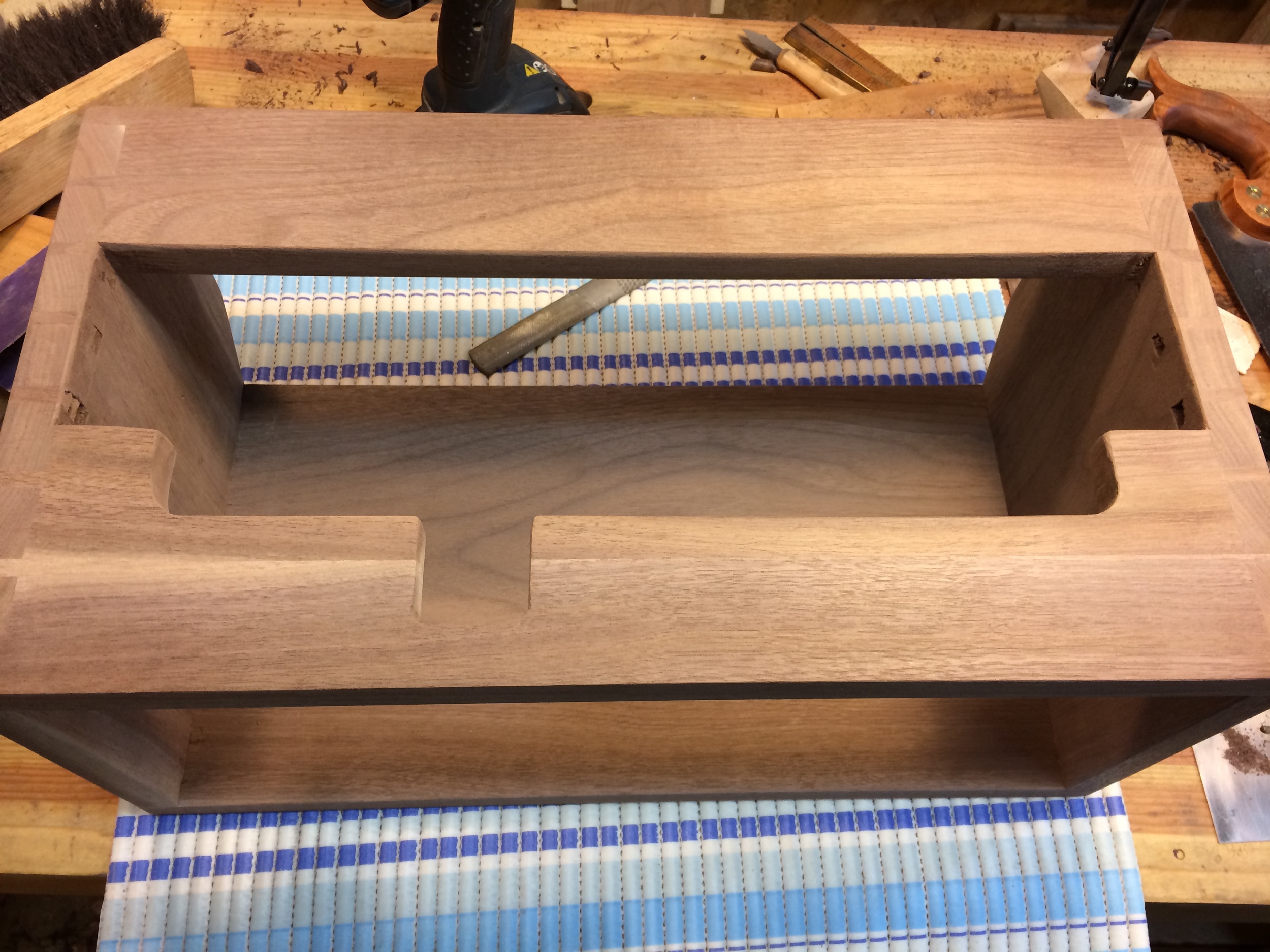
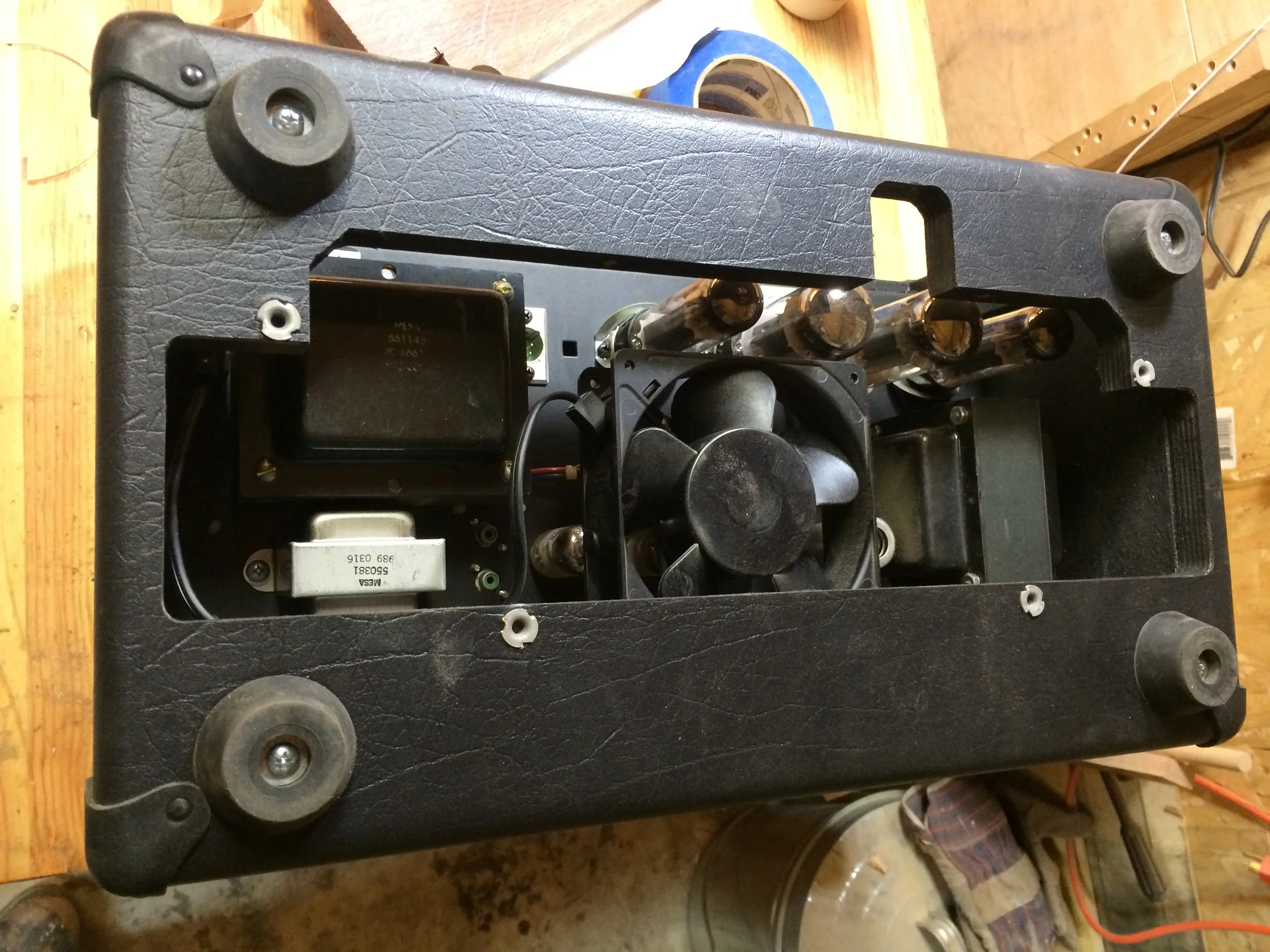
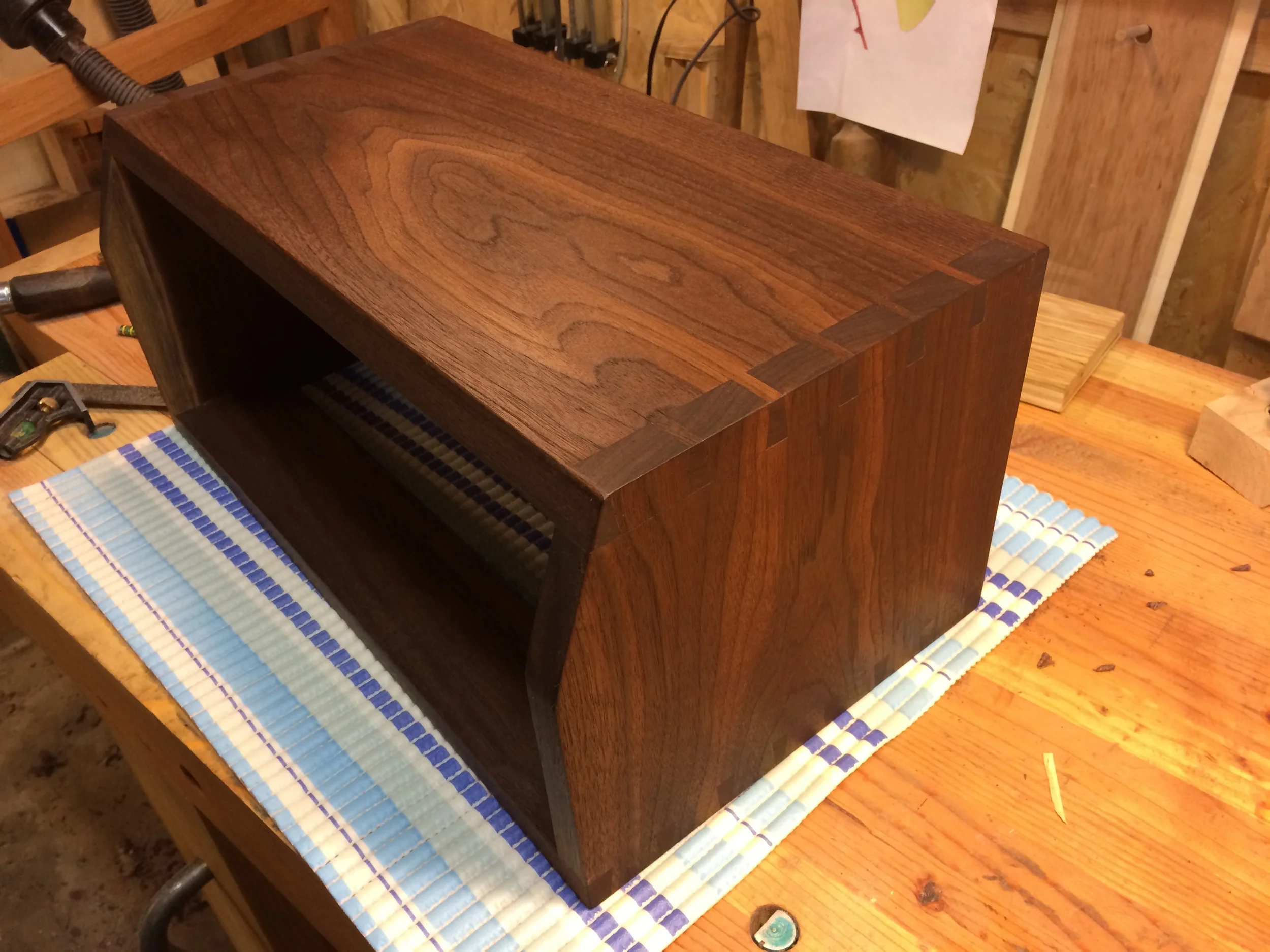
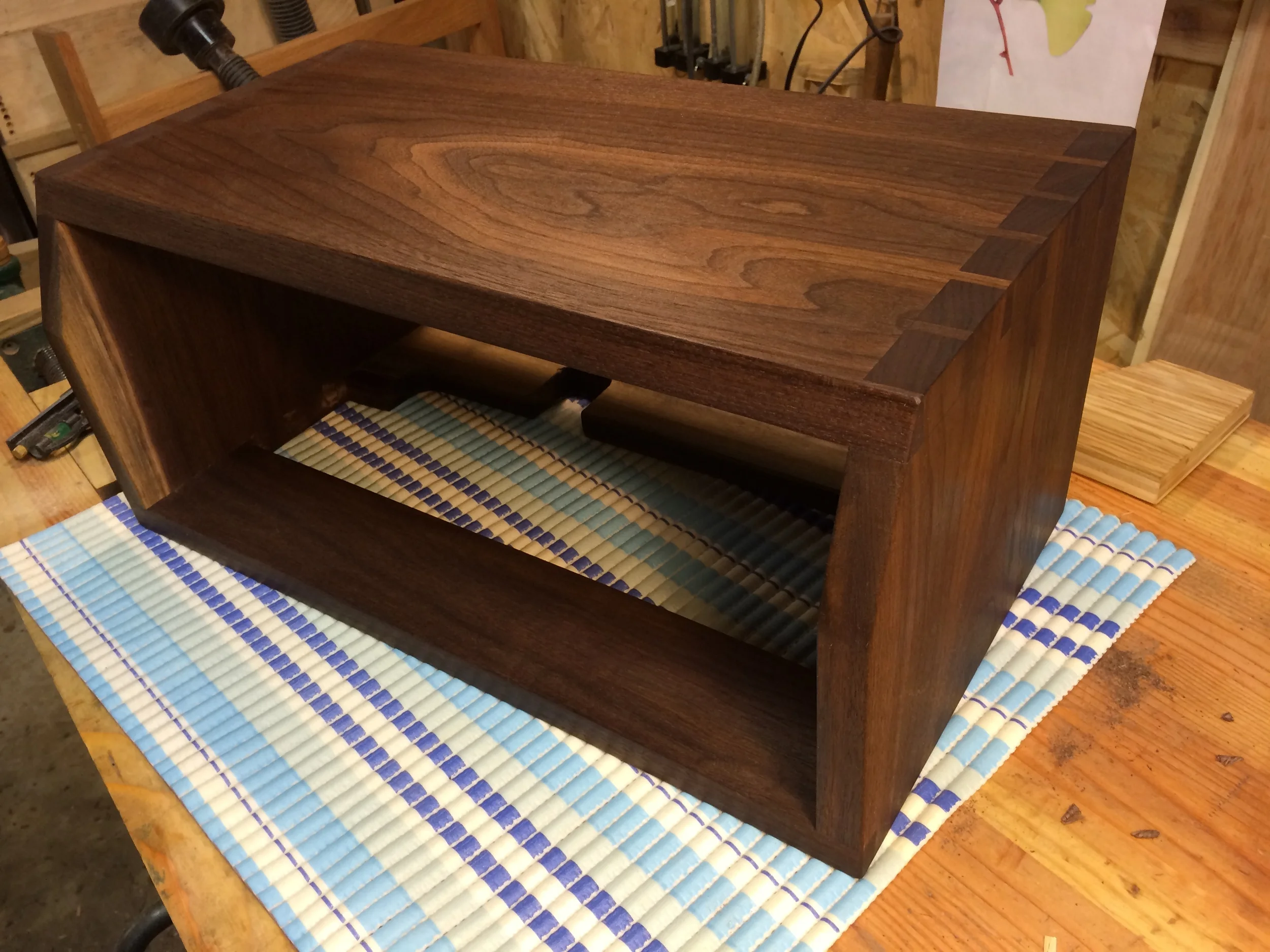
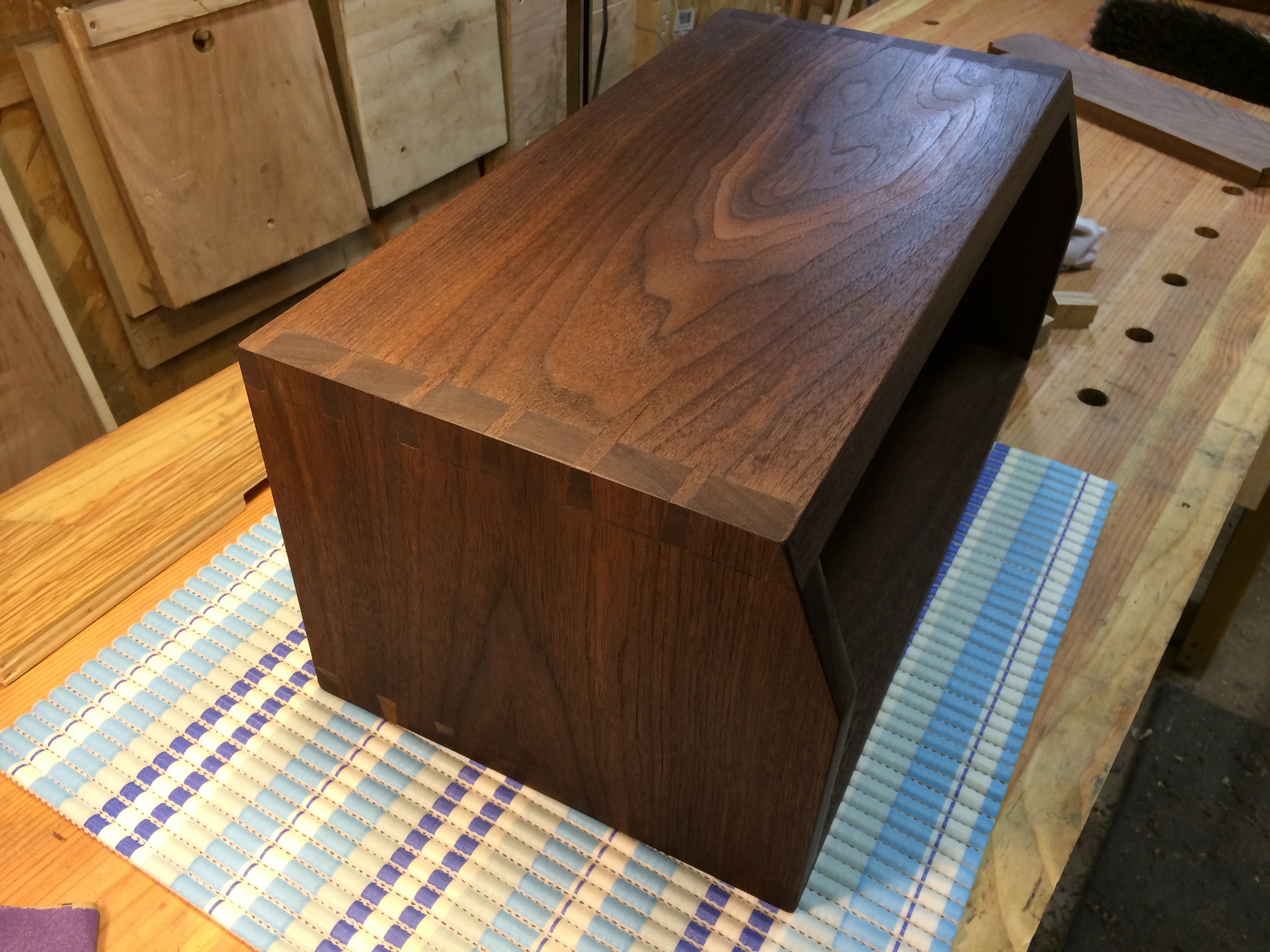
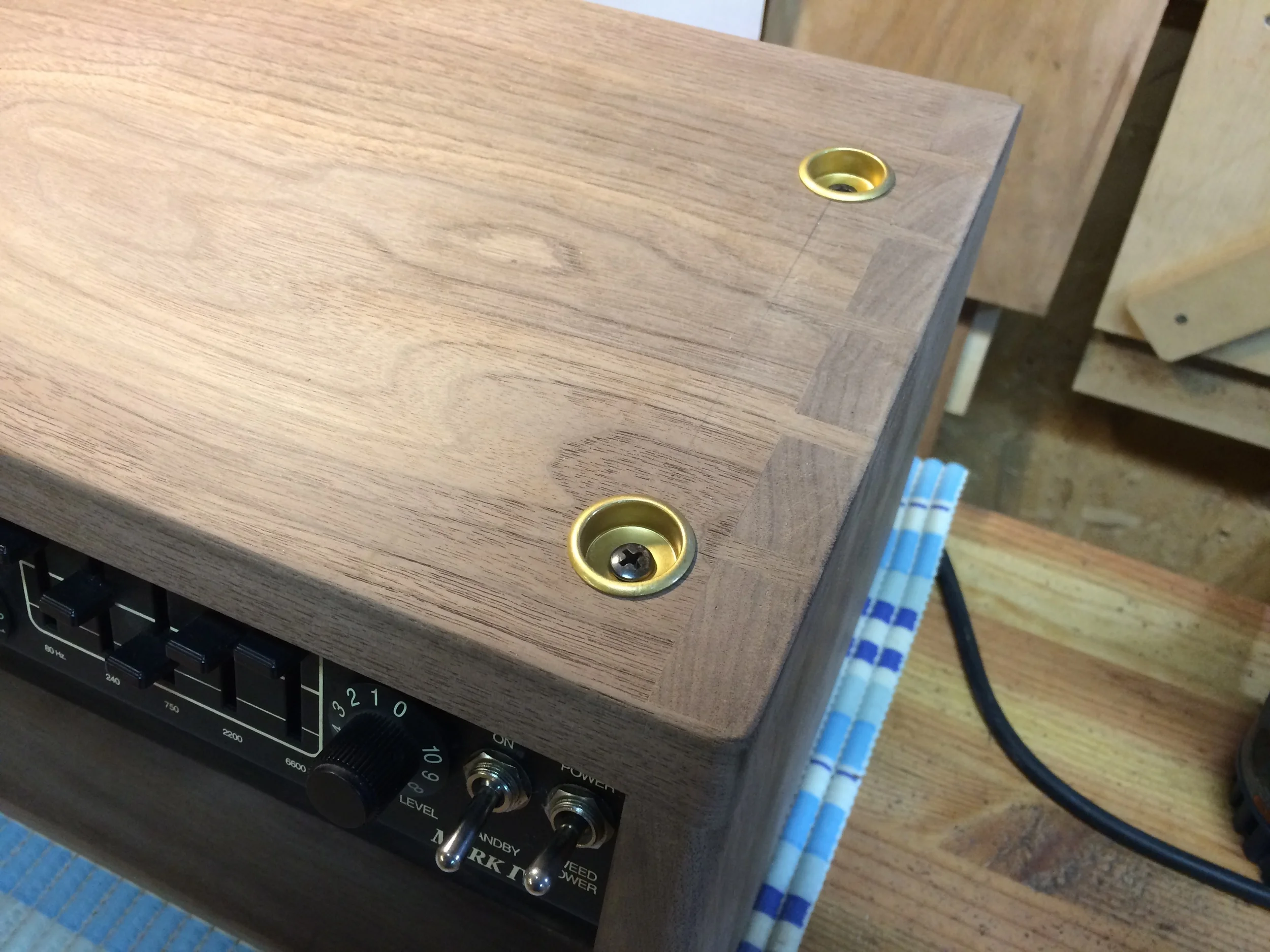
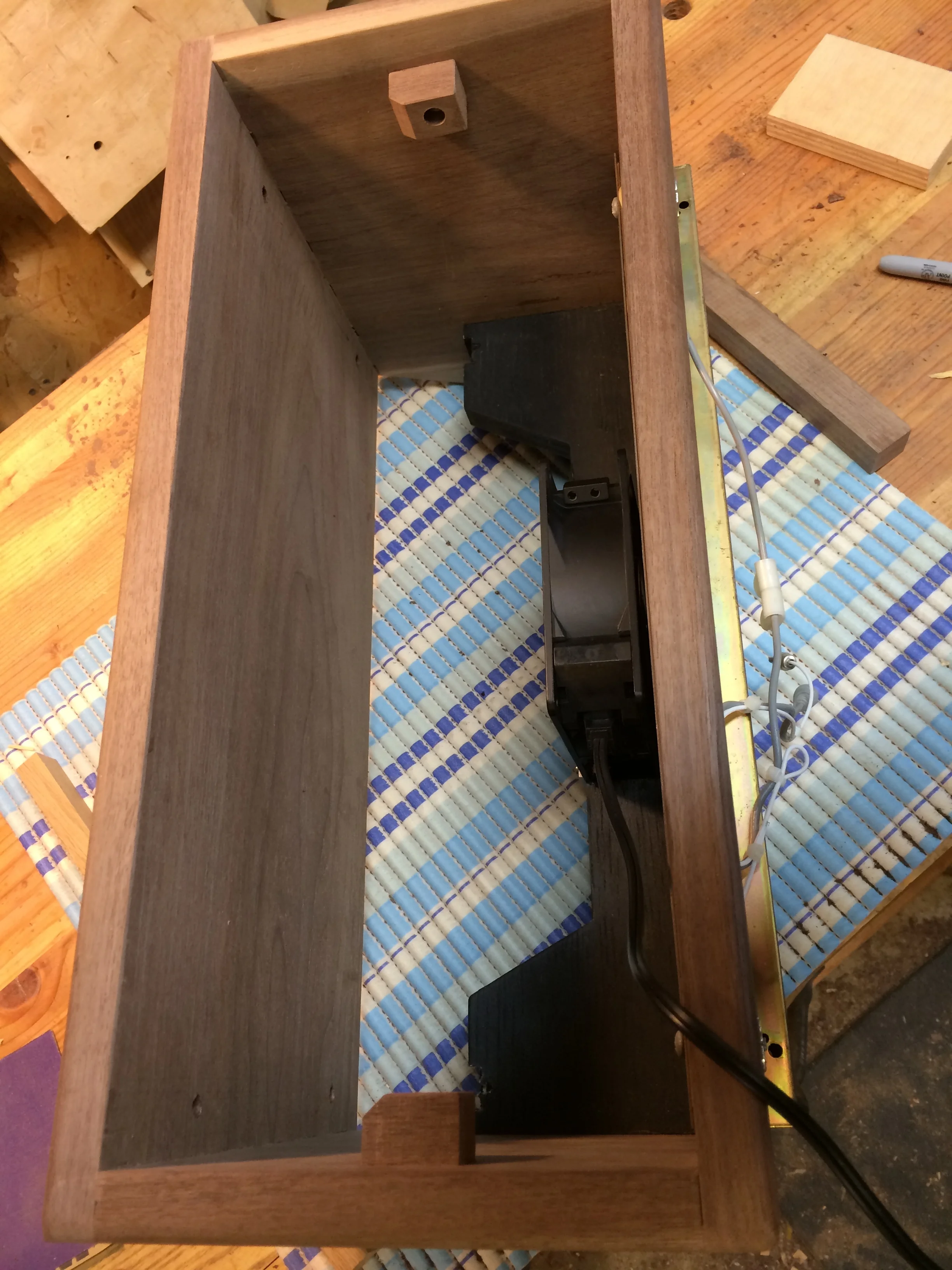
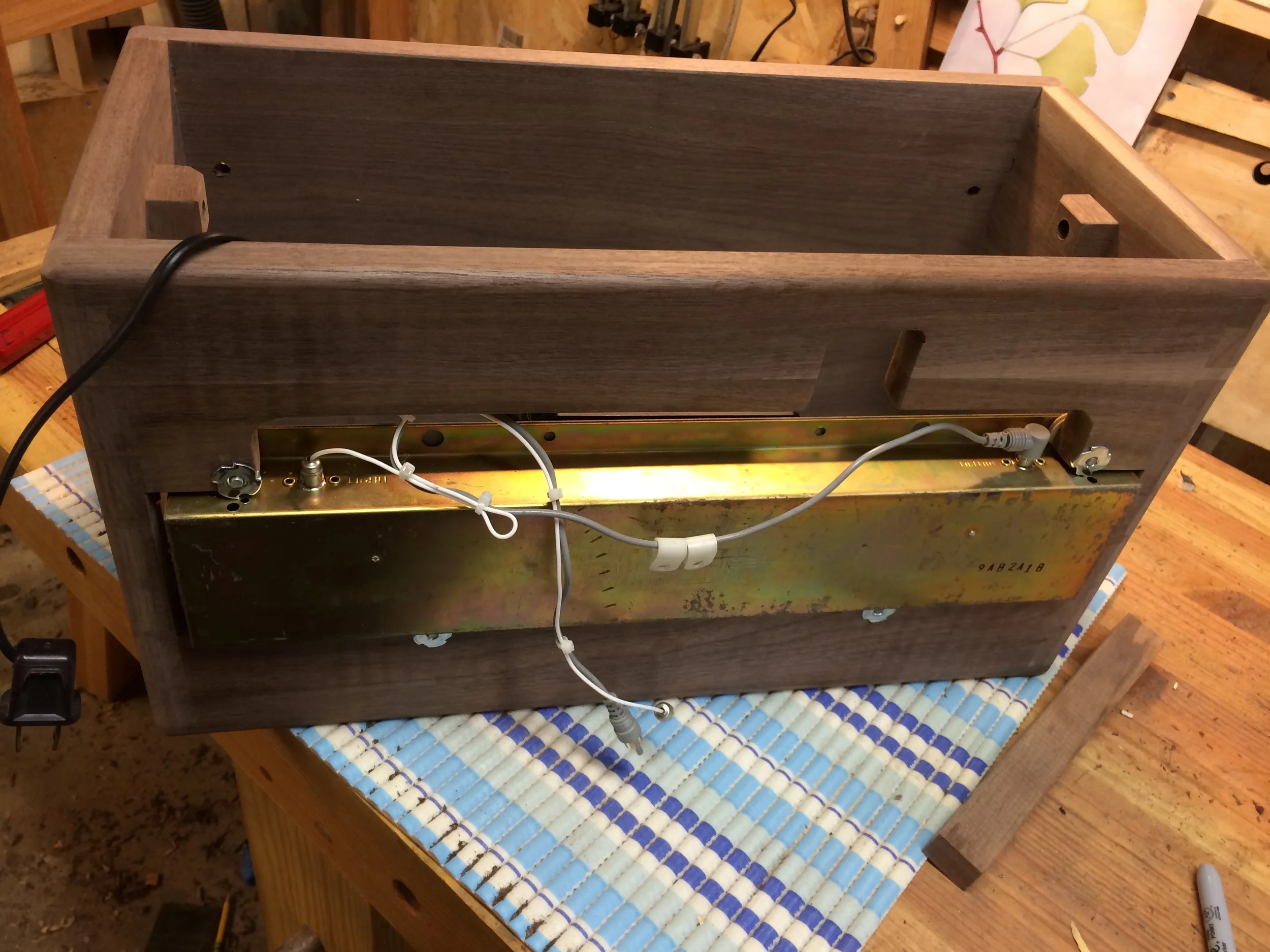
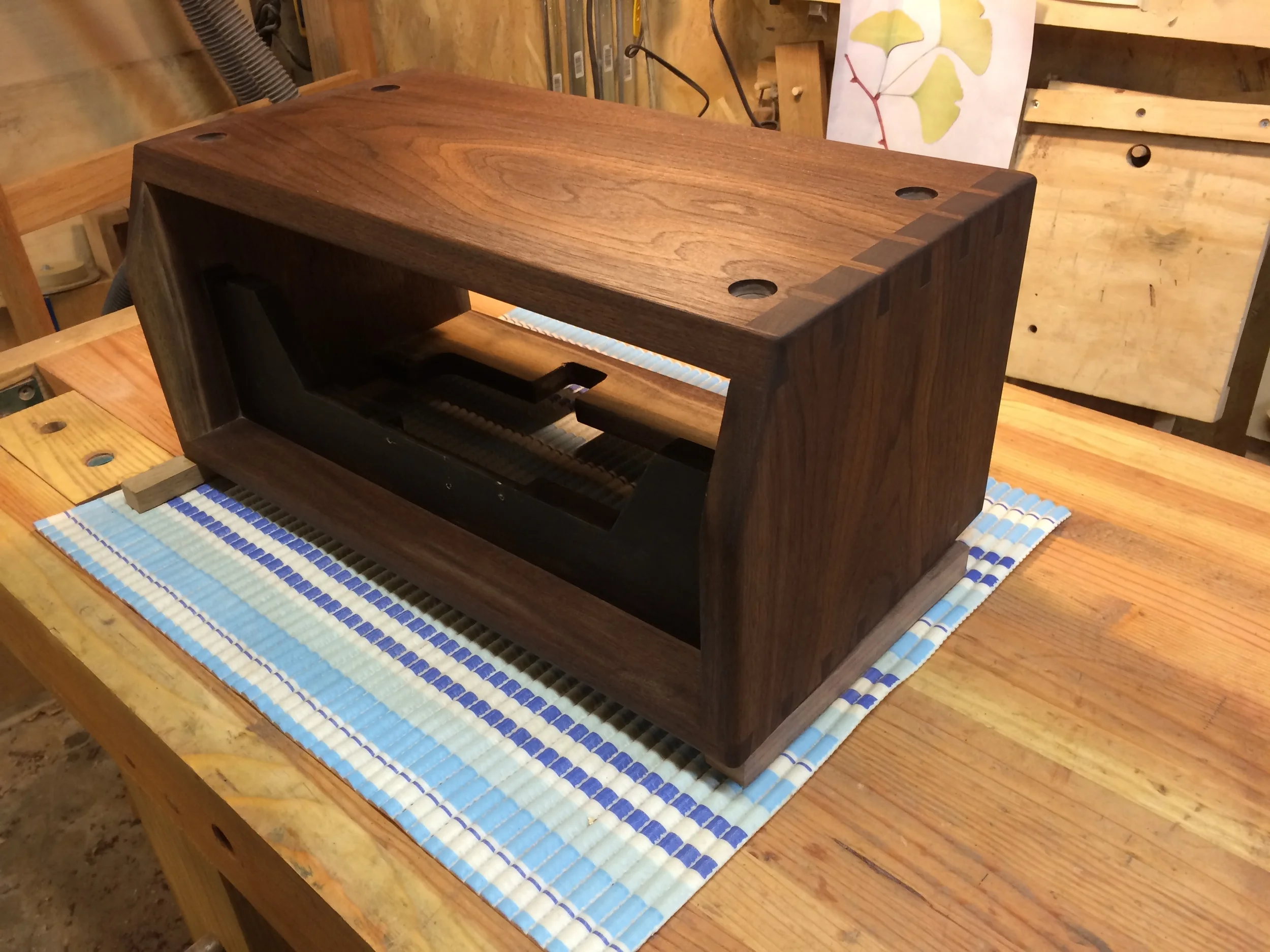
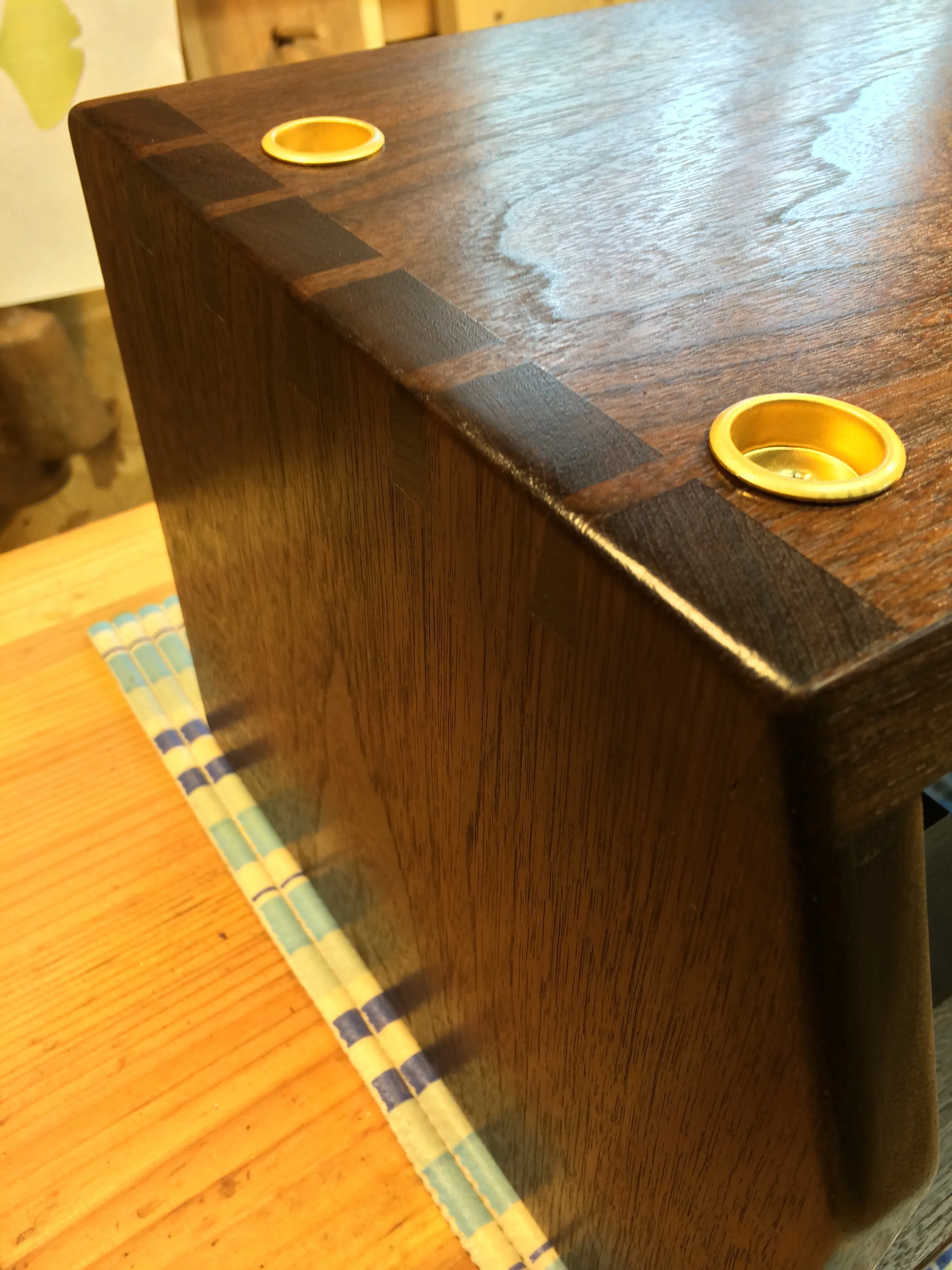
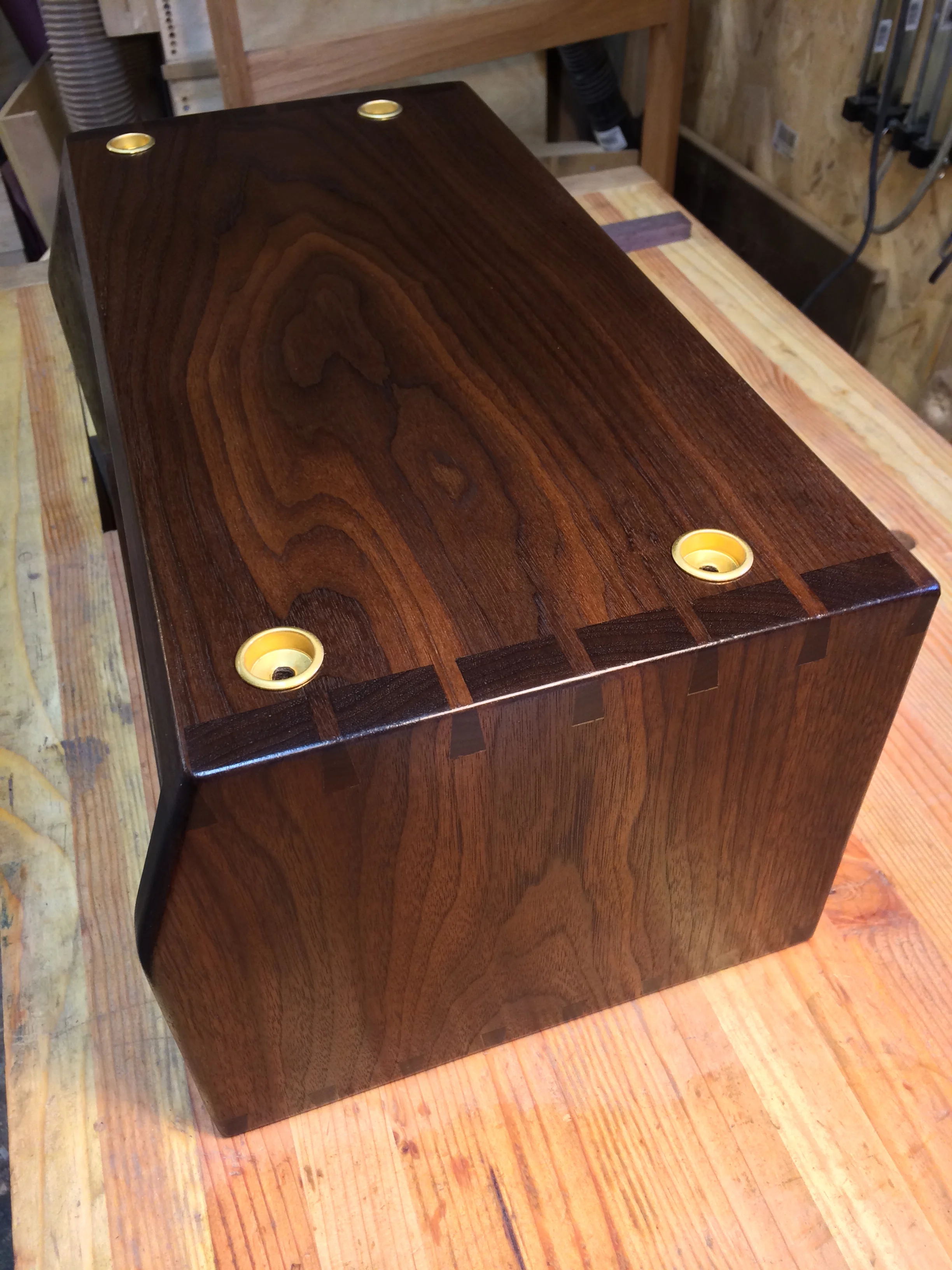
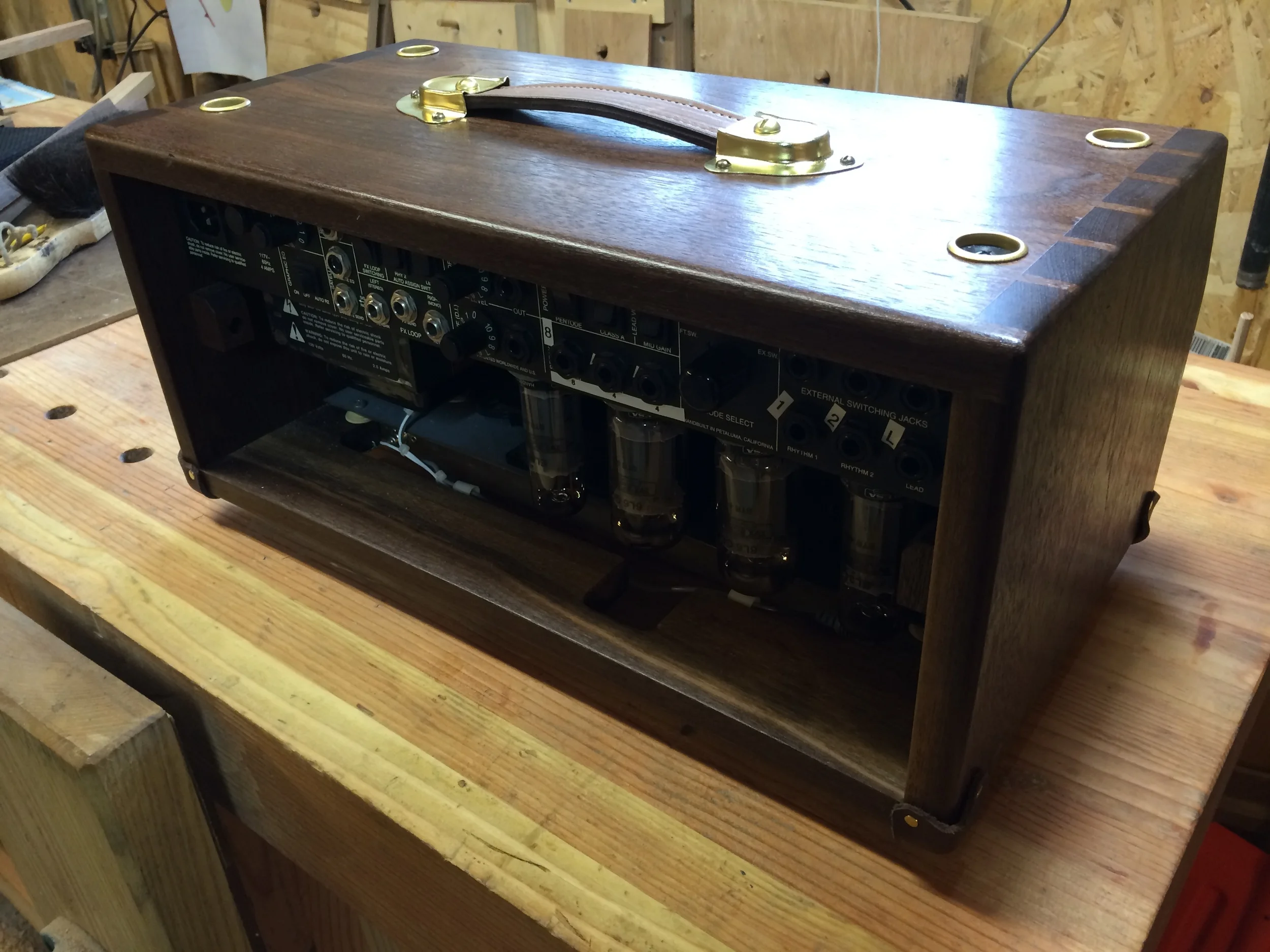
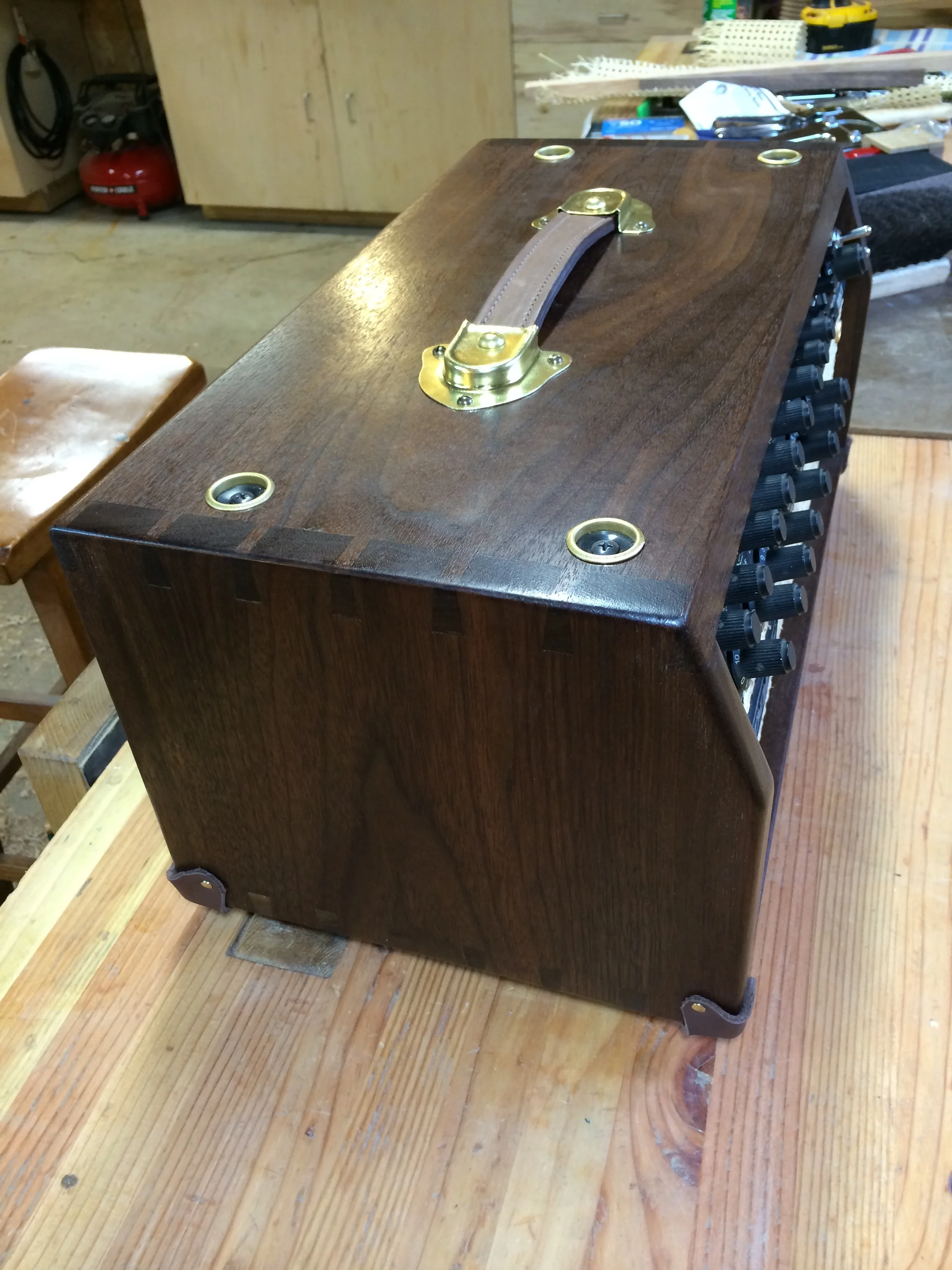
The construction was basically a four sided box, with a plywood support piece in the middle, cut outs for some hardware in the bottom, and then fittings for the mounting posts, a handle, and feet. Finally, the is the front cosmetic grille. I knew that I wanted full through dovetails for the joinery. As I got underway, I realized that this piece will be a great portable piece of my woodworking that I can show to (bore) my band/music buddies at gigs. Bonus!
The only issue I ran into during the joinery was that the bottom piece was starting to run into the lighter sapwood on the front & back edge. It would have looked odd from the from to the leading edge of the bottom piece milky white. So, I ripped that piece in half, glued it together with a sapwood running a few inches from the back, resulting in the front edge that matched the color of the other other pieces. Problem solved!

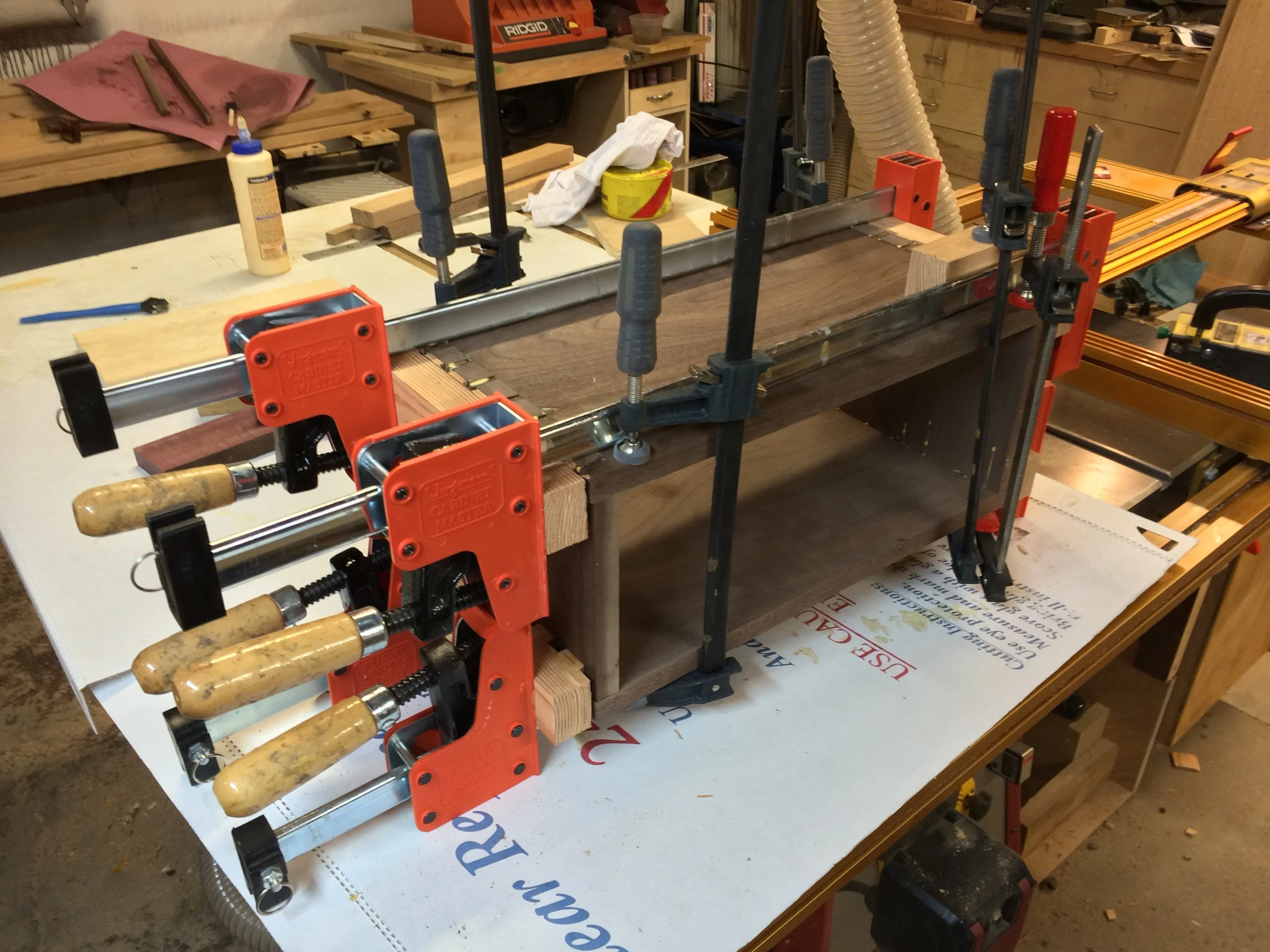
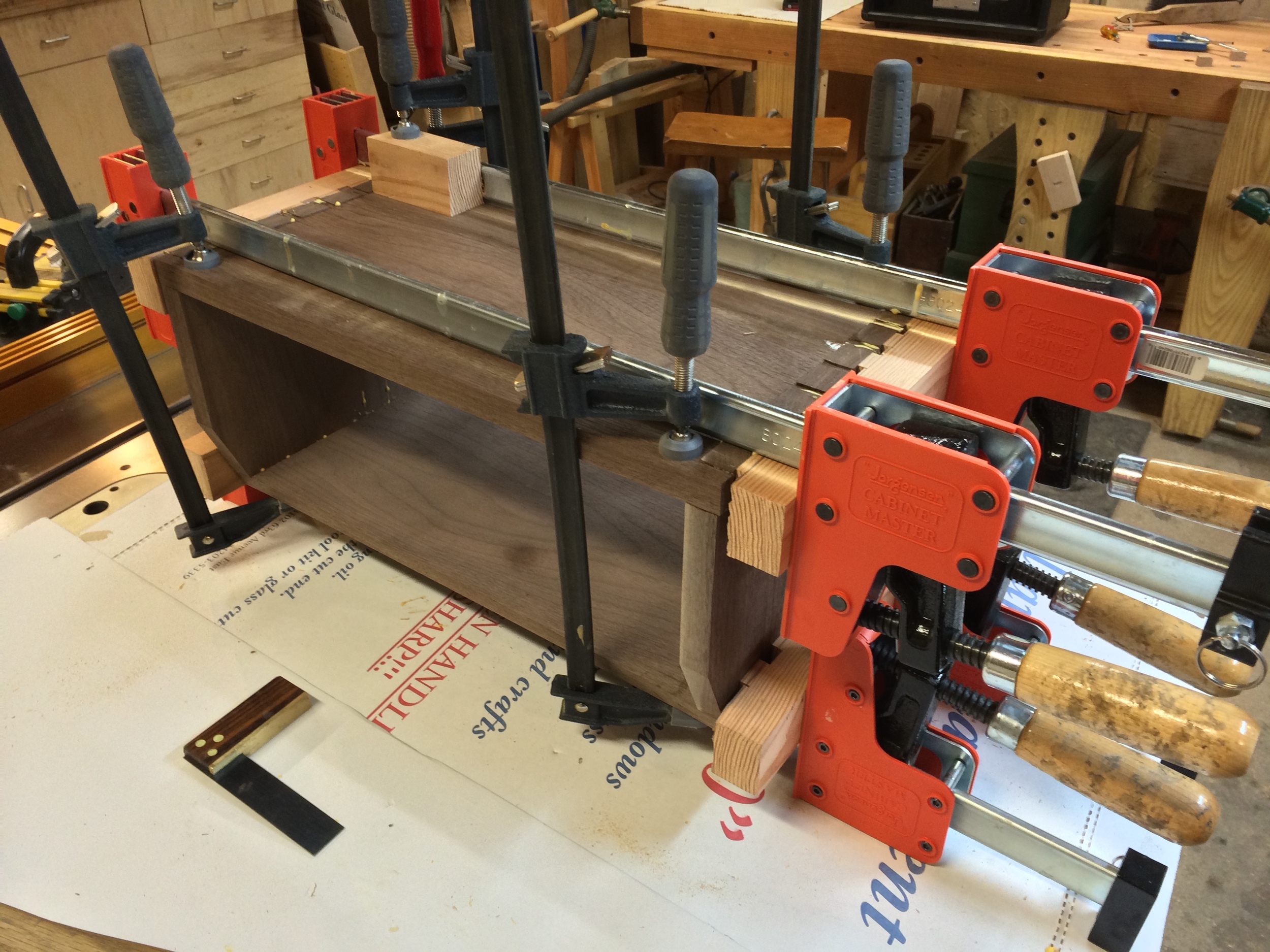
I enjoyed hand cutting the dovetails, and I was relieved when they fit very well. I smoothed the joints, cut the front top edge angle, and was ready for the internal cut out and support. With the original head as a guide, I just mimicked the pieces and cut out as needed.
After test fitting the hardware and electronics, I emptied it out, and applied my finish. I sanded up to 220, and started with a coat of oil (ok, technically an oil & varnish mix, Danish oil, natural). When that had dried, I brushed multiple coats of thinned blonde shellac, sanding lightly in between coats, until I build up a nice finish. I finished that off with some dark paste wax, applied will 0000 steel wool.

I then applied the hardware, starting with the leather corners. These are for both protection and decoration, and they were attached with 3/4" wide head brass tacks. I was worried they would look too "lumpy" but I quickly got the hang of shaping the pieces, and stretching them tightly as I tacked them in.

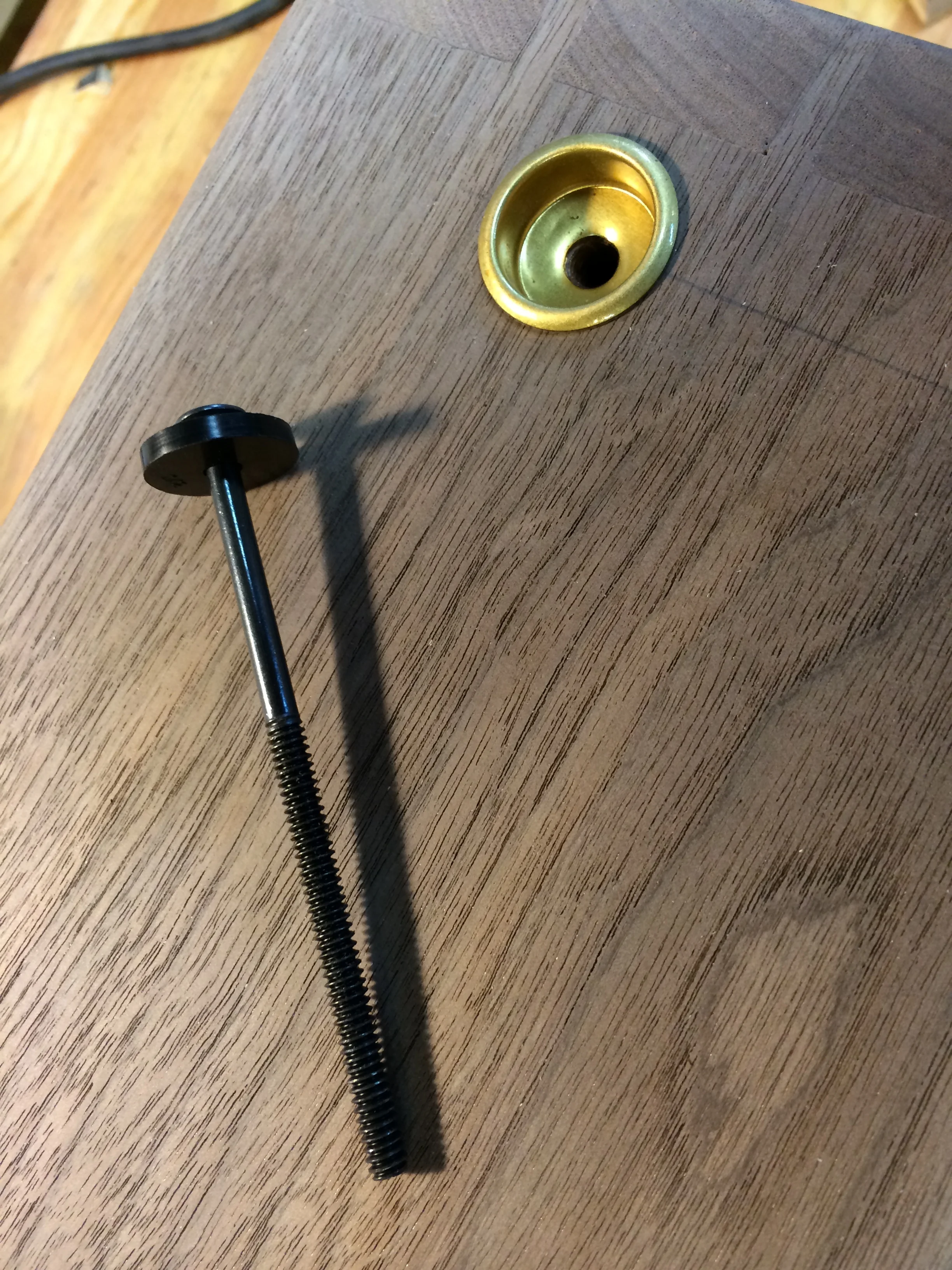
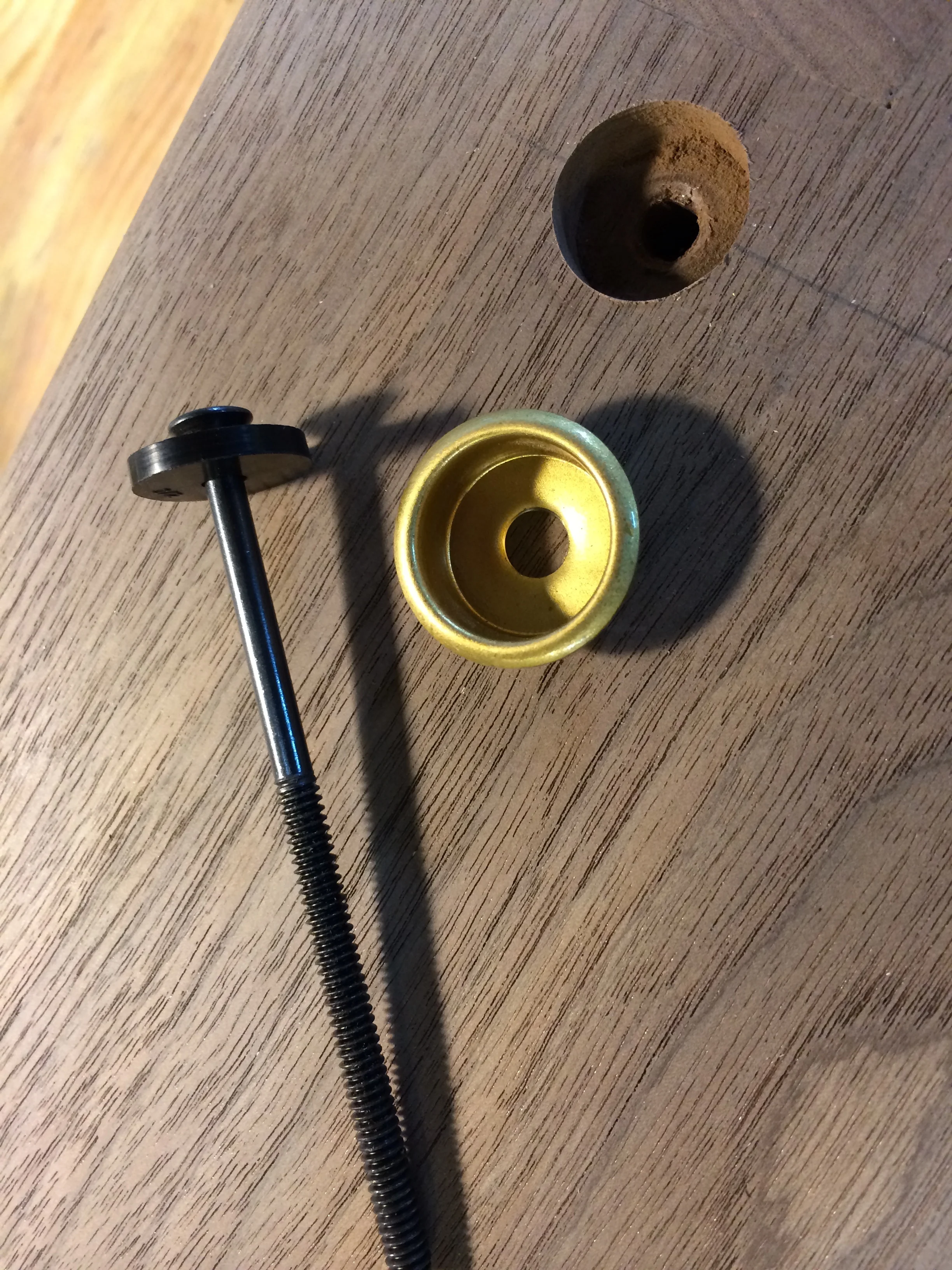
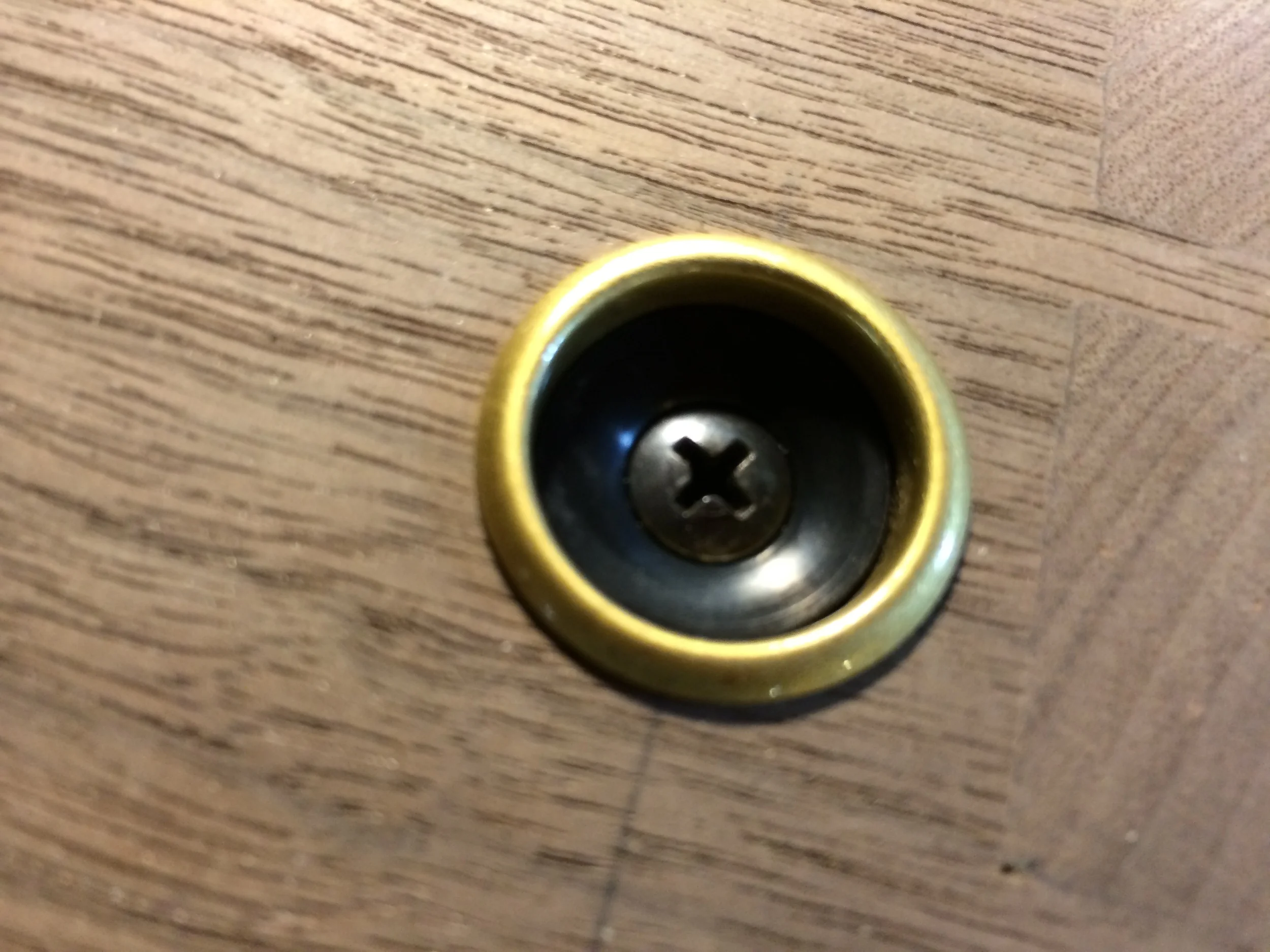
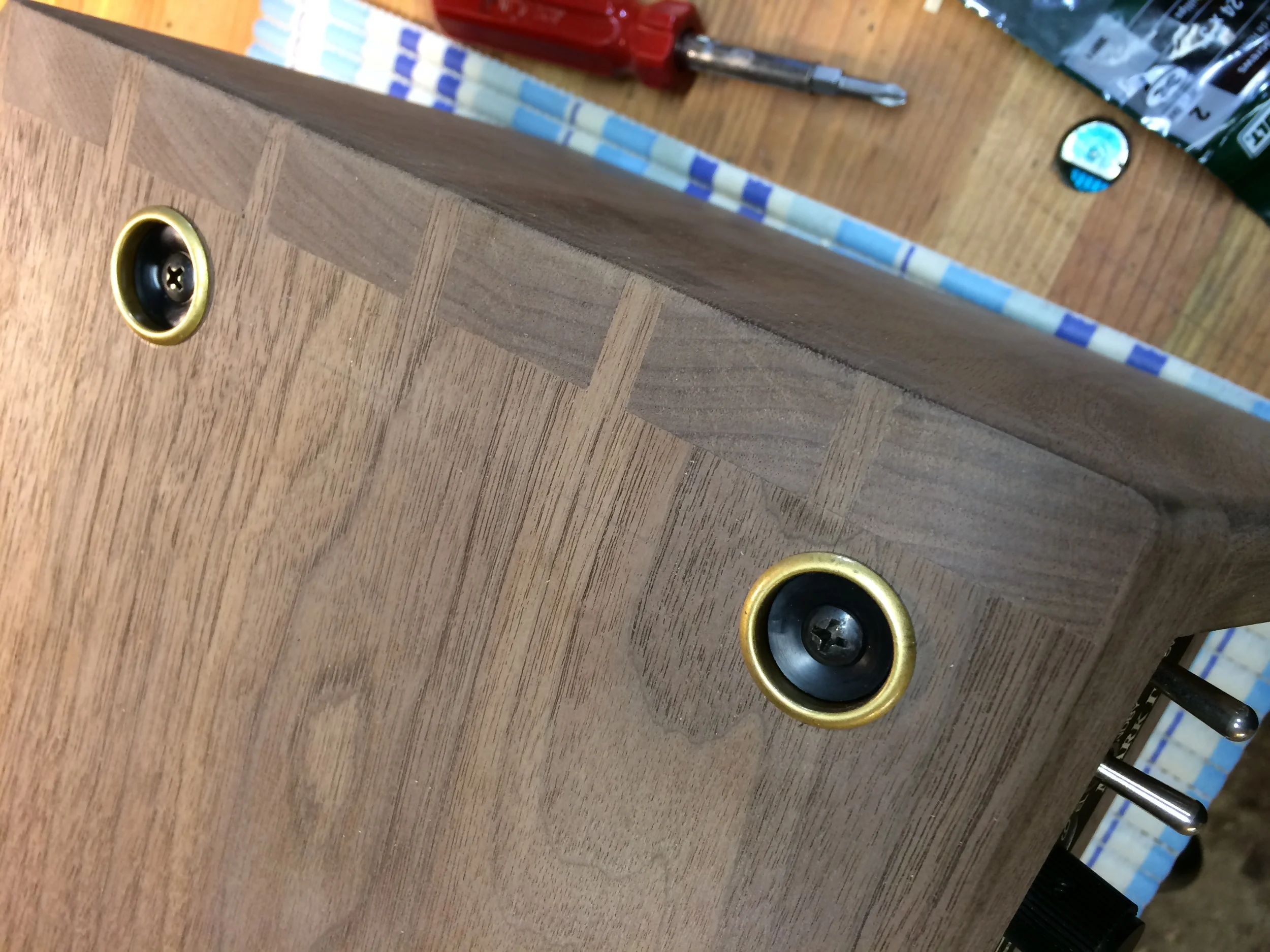
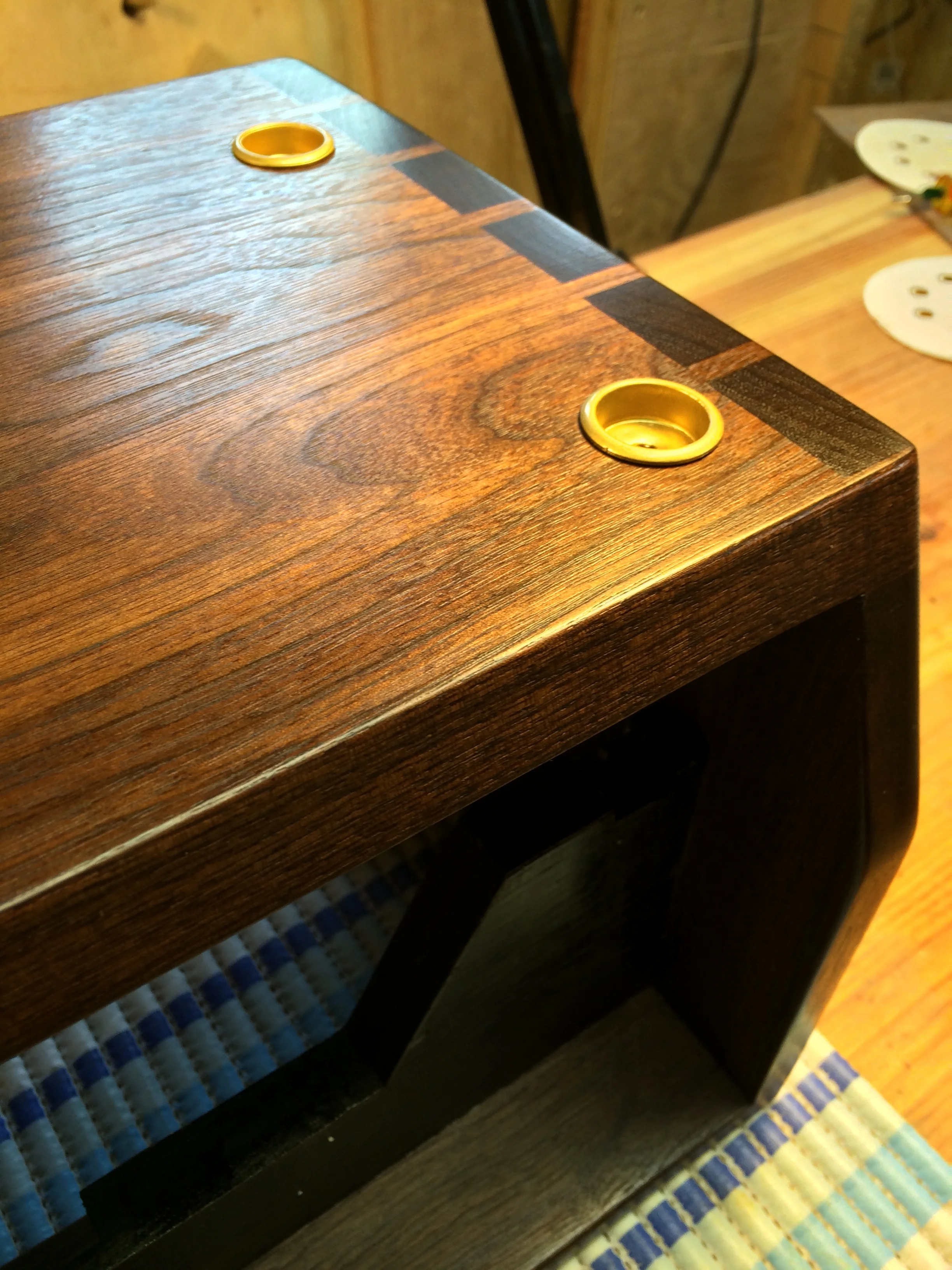
The four mounting screw holes in the top were interesting to get together as well. Per the original design, the electronics of the head are suspended from the top by four long threaded machine screws that fit into the chassis. On the original head, there were two long "plates" with two holes each to act as "washers" and distribute the weight of the guts across the top. I thought that looked a little too crude for this implementation, so i instead found some brass finger pull/cup things, and some black rubber plumbing washers. I recessed the pulls into the top, set the washer inside, and lowered the machine screw through it, providing a bit of the "shock mount" for the chassis. This is good for the health of the power tubes: it reduces the vibration from the speaker cabinet and prolongers their life. So it looks good and works better. Nice.

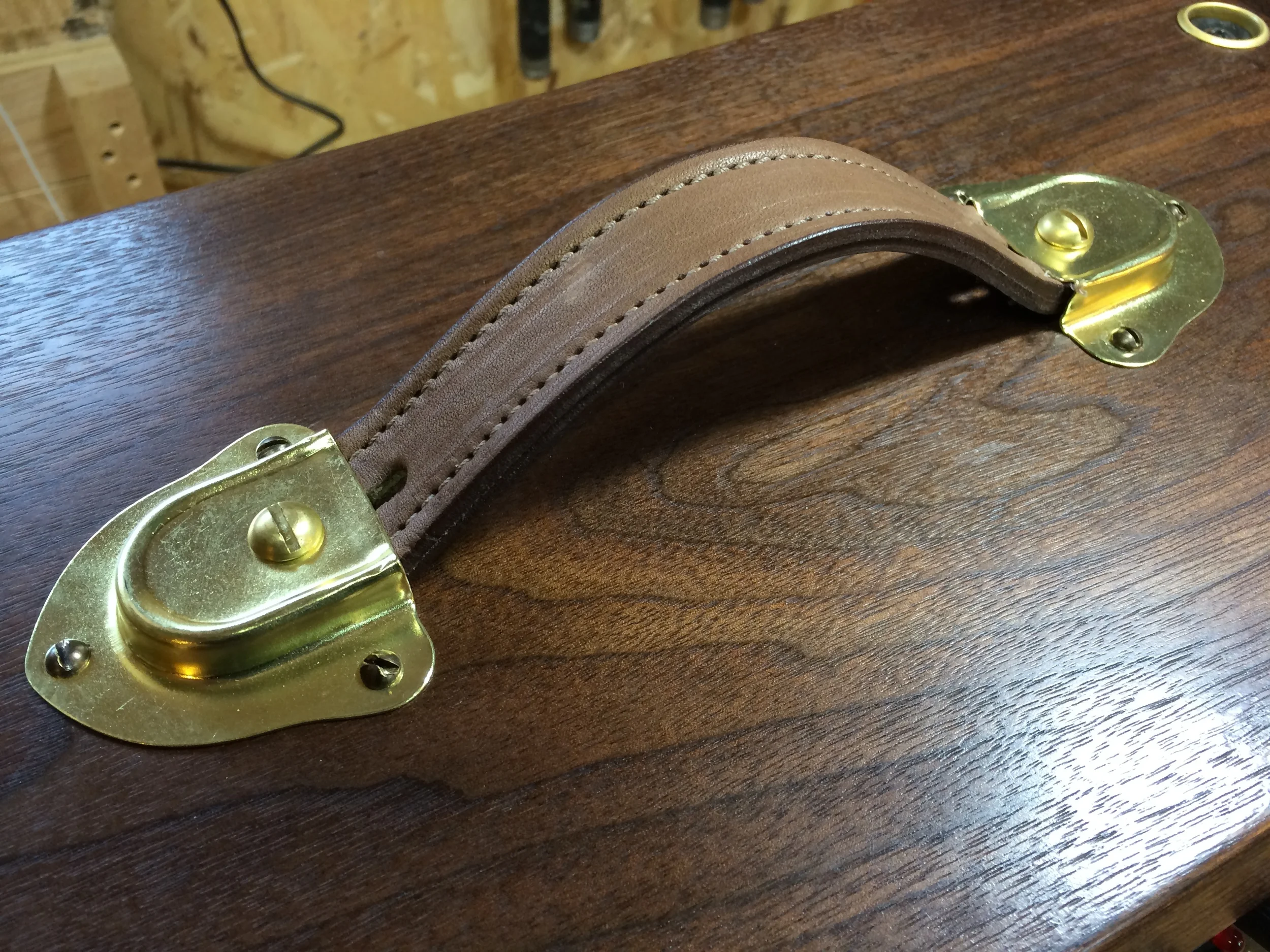
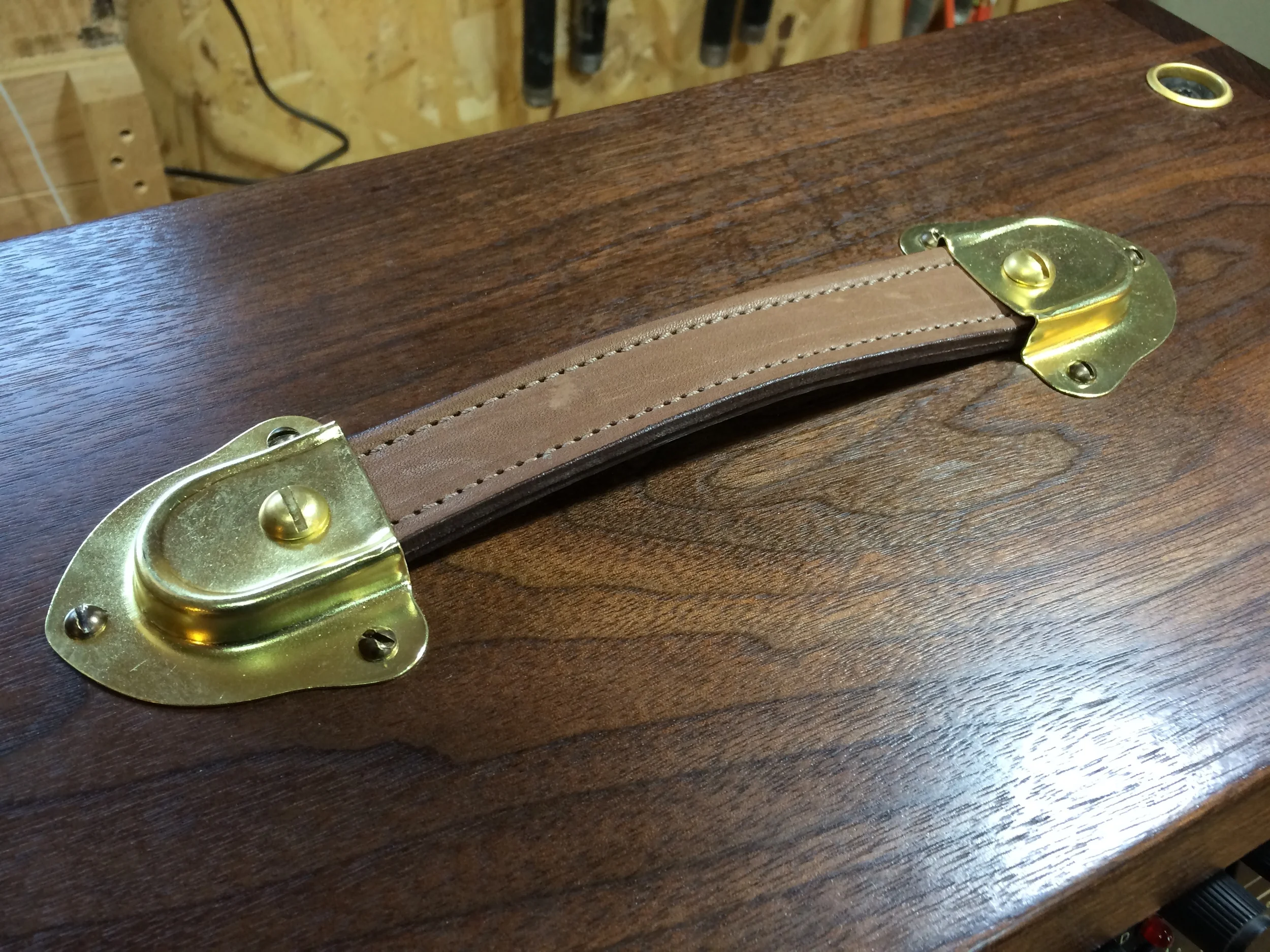
Only 1/2 of the handle hardware arrived, so I put on what I could, and a few weeks later, the rest arrived with the cane grille material. Finally, its done, and I think it looks better that what I could have ordered from Mesa back in the day, if i had the money.

This was my first trial into the world of amp/cabinet modification, and as it went well, I'll be building the matching speaker cabinet in a few months. THAT's going to look great at a gig.

Here is a gallery of the build...

Wardrobe, Part 2

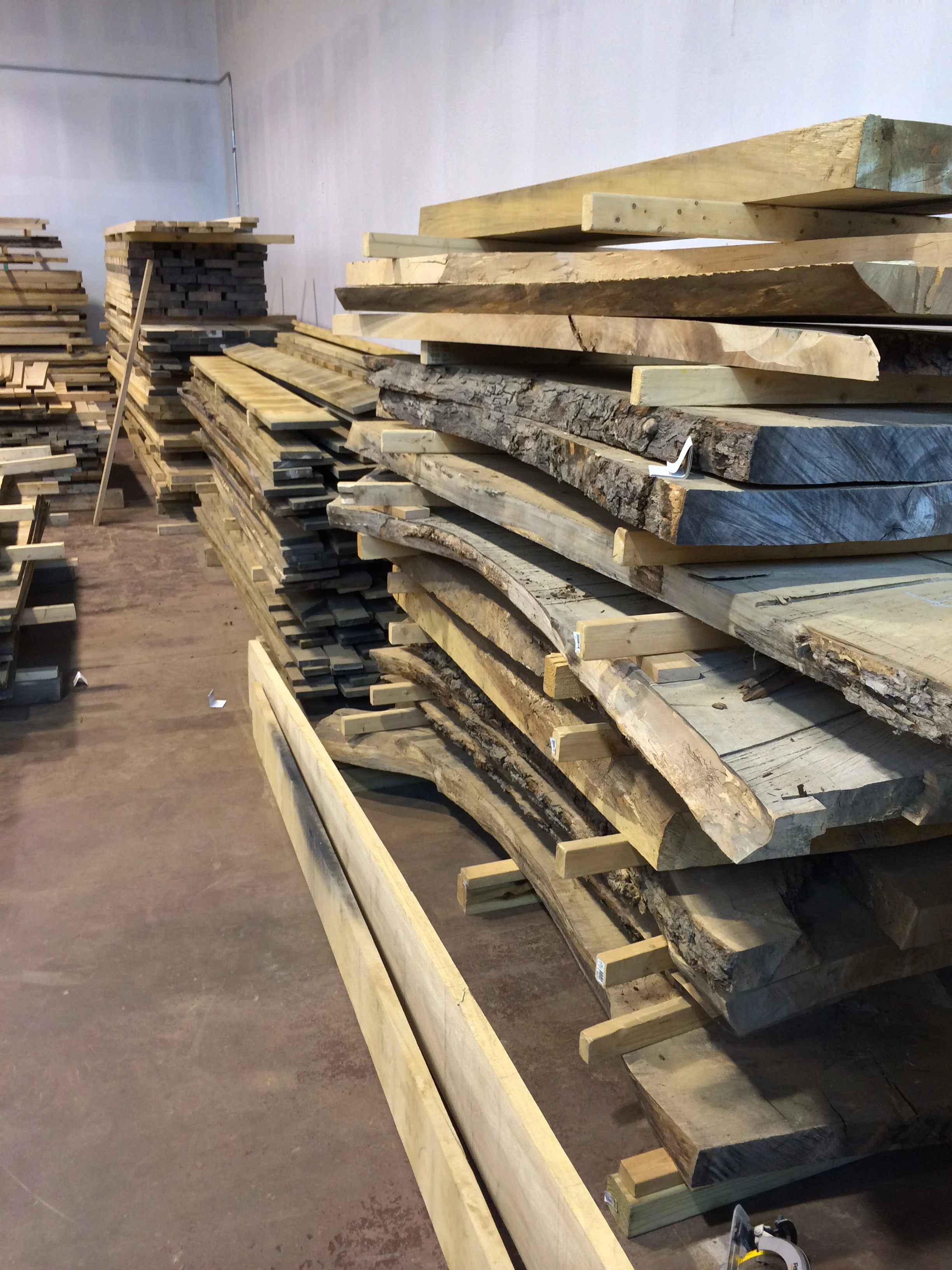
Woodtopia at Horigan Urban Forest Products

Woodtopia at Horigan Urban Forest Products

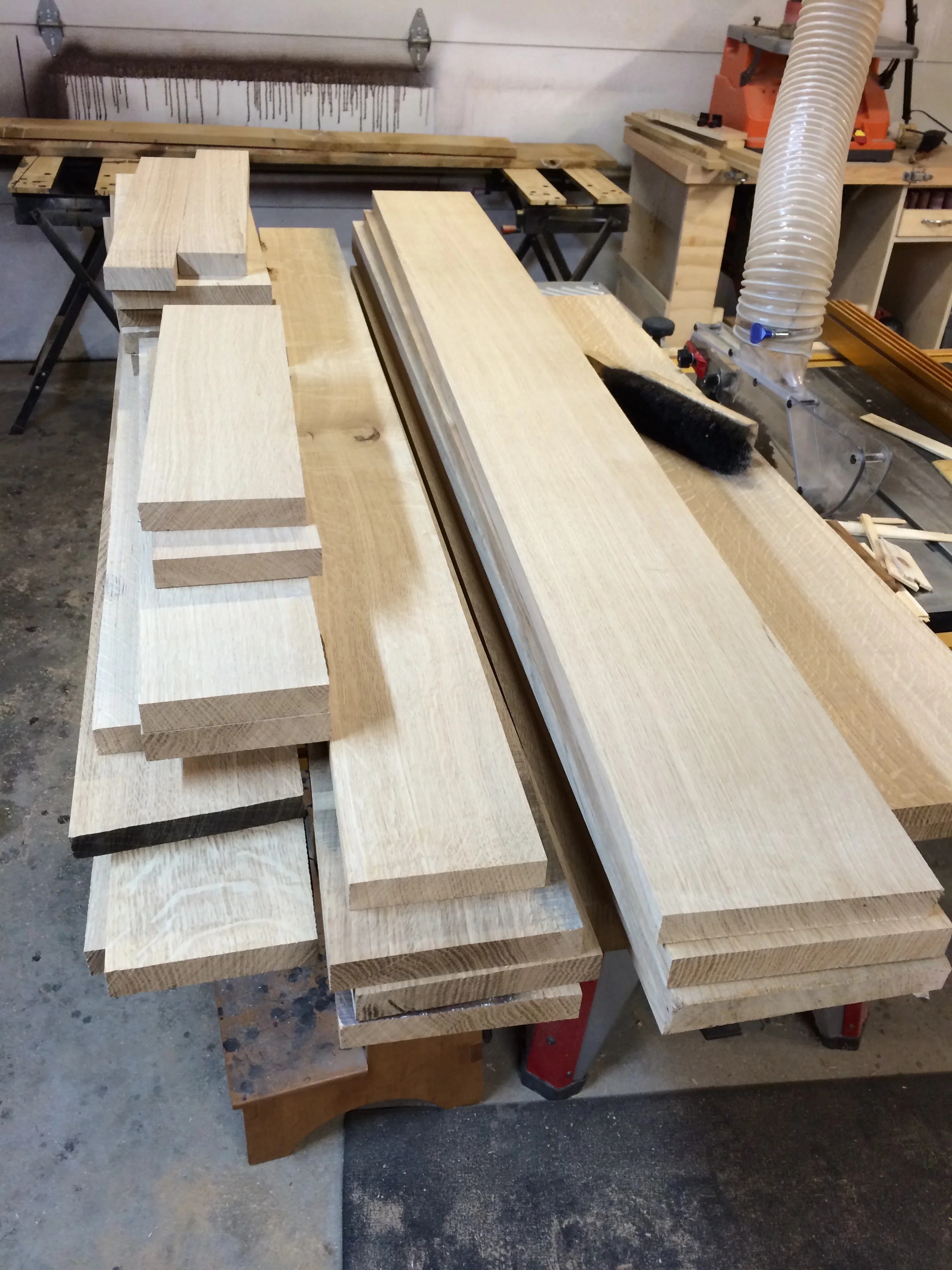
I've made some progress on the wardrobe build. I started a few weeks ago with a couple of trips to Horigan Urban Forest Products for some white oak. It's always a good experience there, as they consistently have great material, in quantity, and are very helpful.

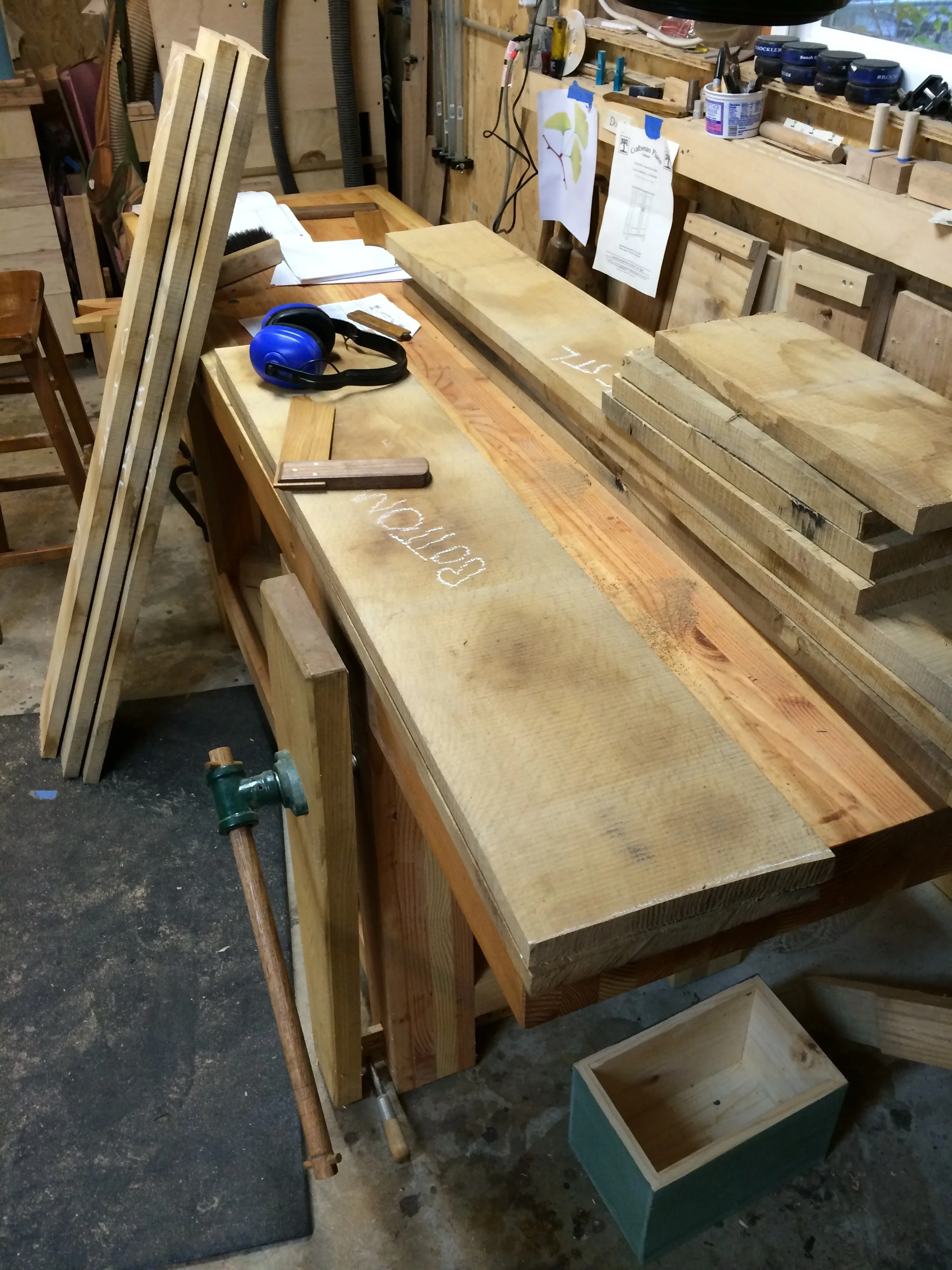
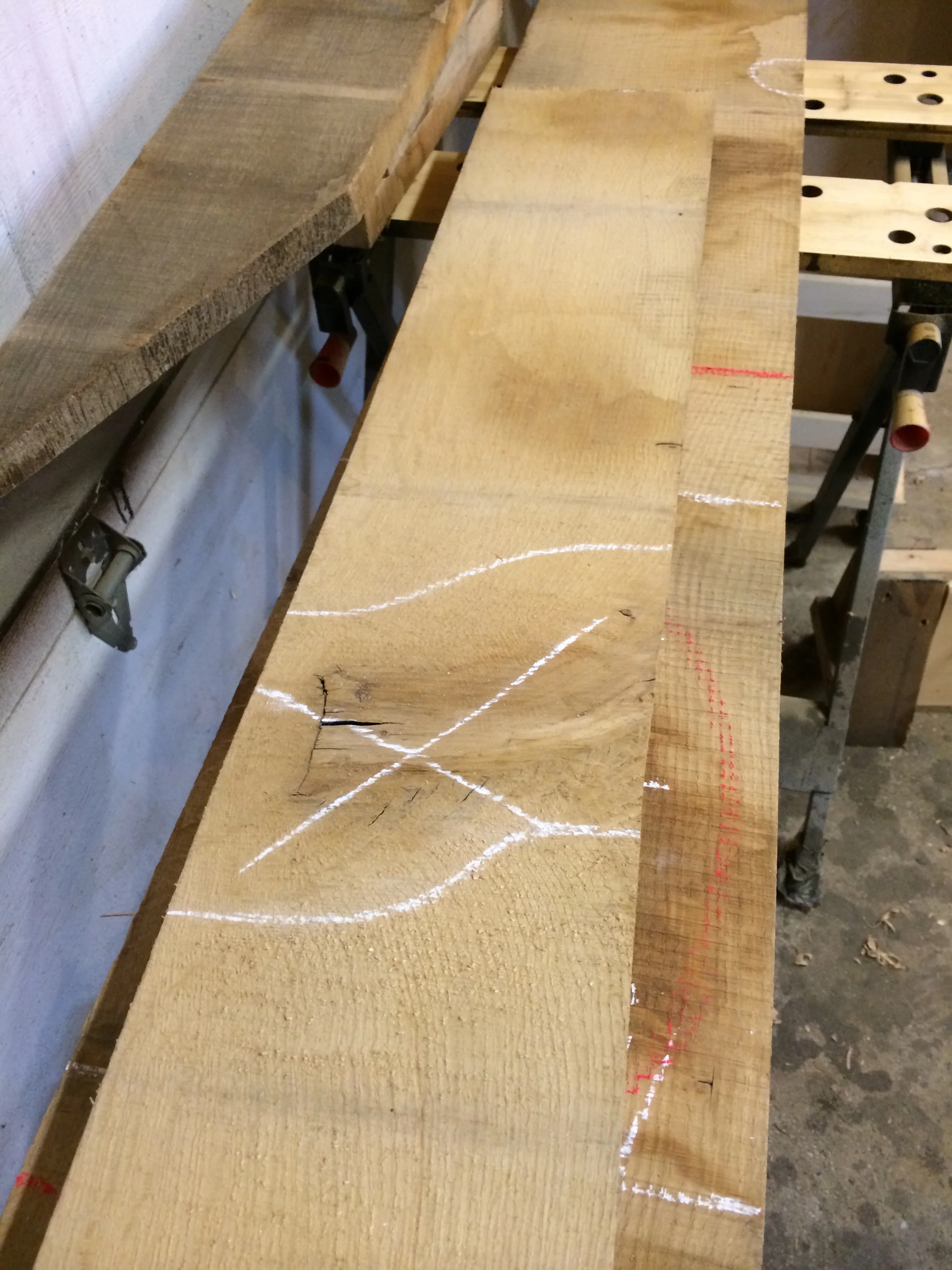
With my lumber in hand, I sized my pieces and marked out where my parts would go. I followed it up with a milling session, squaring up the parts and cutting them to slightly larger than final size, and then letting them acclimate to my shop. I'm still learning on estimating material, and discovered I was going to have to go back for more, (there's a lot more going on in this wardrobe than I thought as far as material goes). But I had enough on hand to start working on the main case.

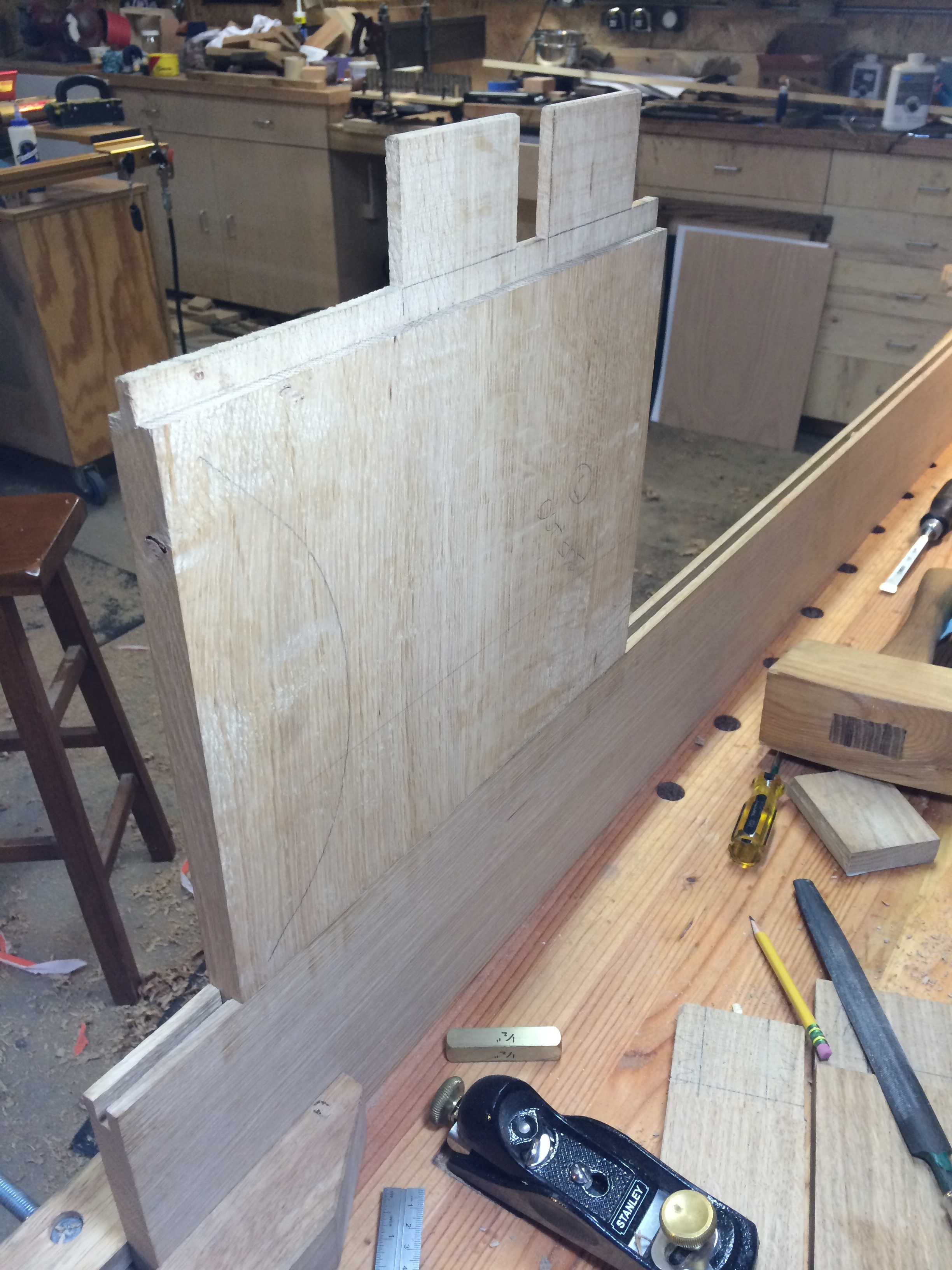
As there was some learning to be done on this build, I wanted to use one of the parts to help figure out my process for the others, so I started with one of the sides. The plans I am using as my starting point don't specify much of the joinery: it can be done however you like. Therefore, I had to figure out the sizes and placement of the mortise & tenons. Looking at the drawing of the side shown here (left), I decided on using a single mortise & tenon on the top two rails, and double mortise & tenons on the bottom wide rail. On the bottom one, I also oriented both joints nearer to the top side, so they would be clear of the arc that would be cut for the feet.

I also had to figure out a size for the mortise & tenons that would be appropriate. There is a certain amount of eyeballing that works just fine for this, but as a general reference, I followed some tips I picked up from Bob Lang at his "Mortises, Choose Your Weapon" presentation at the recent Woodworking In America 2013. Those tips go something like this:

  1. Make the tenon as long as possible without risking damage to the mortised piece.
  2. The tenon should be no more than 1/3 thickness of the mortised piece.
  3. Width of the mortise should be 1/2 width of the tenoned piece.

All good rules of thumb. As my material for the rails & stiles was a little thicker than 3/4", I went with a mortise width of about 1/4". Actually, I chose my mortise chisel that was about 1/4"-ish as my size. I then made them approx 2" wide, and 2 1/2" deep. I don't have a mortising machine, so my choices to cut the mortises were either a) clear out most of the waste with a forstner drill bit, and clean it up with a chisel, or b) just use the mortising chisel. I started out doing method a), but found that it really doesn't save me any time. After drilling out the waste, the resulting mortise sides are so rough that the clean up takes a lot of time. Also, with the length my forester bit (about 2 & 1/4" beyond the chuck), the mortise was still shallower than I would have liked it to be, requiring a switch to the traditional mortise chisel method anyway. Just like with the sides, the drilling left a ragged bottom that was harder to work than if I'd used the chisel only. So, I switched to method b) and got better results in less time. Conclusion: with the right tool (a sharp mortise chisel) and the right technique, drilling out the waste is more trouble than it is worth.

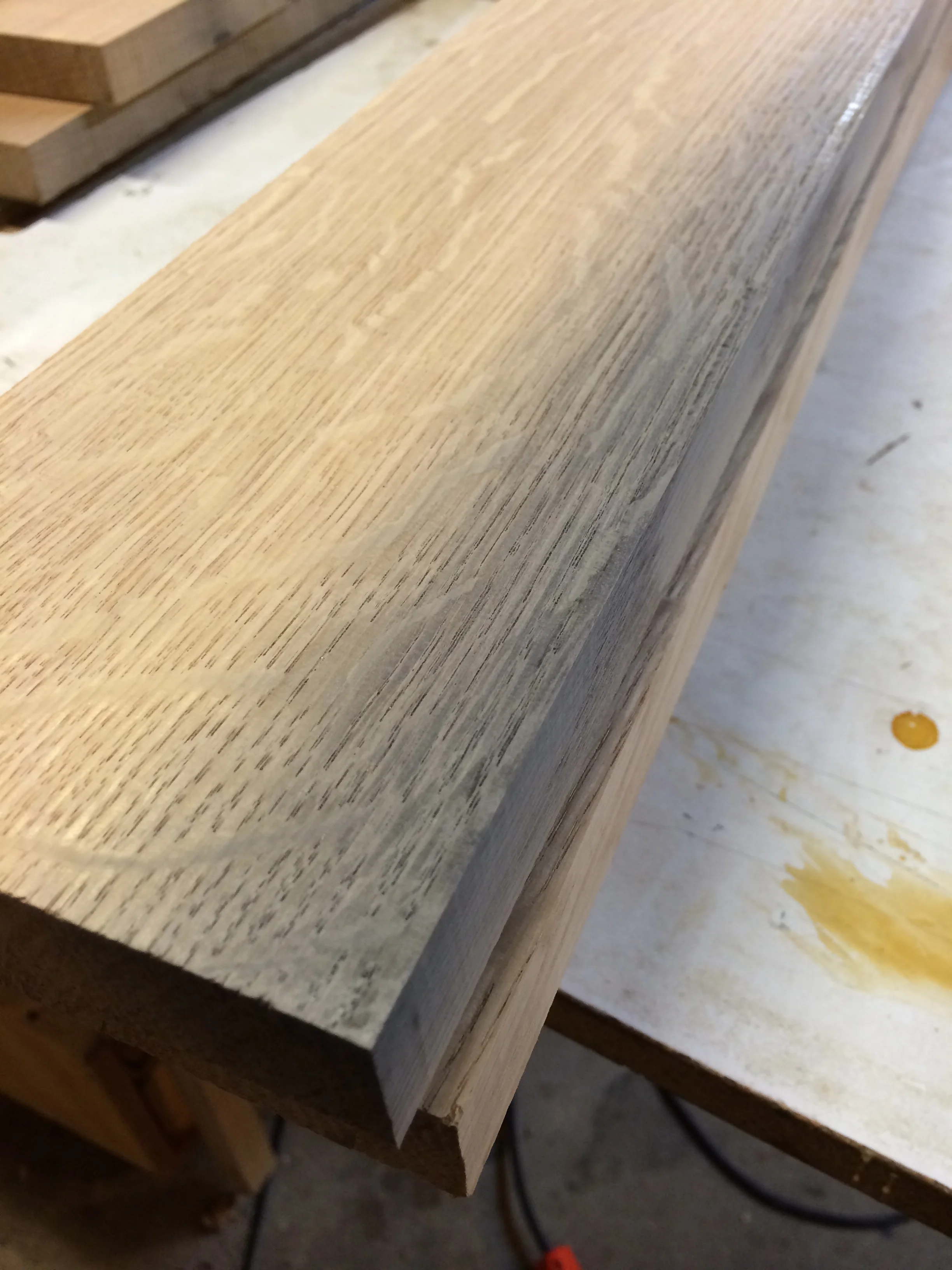
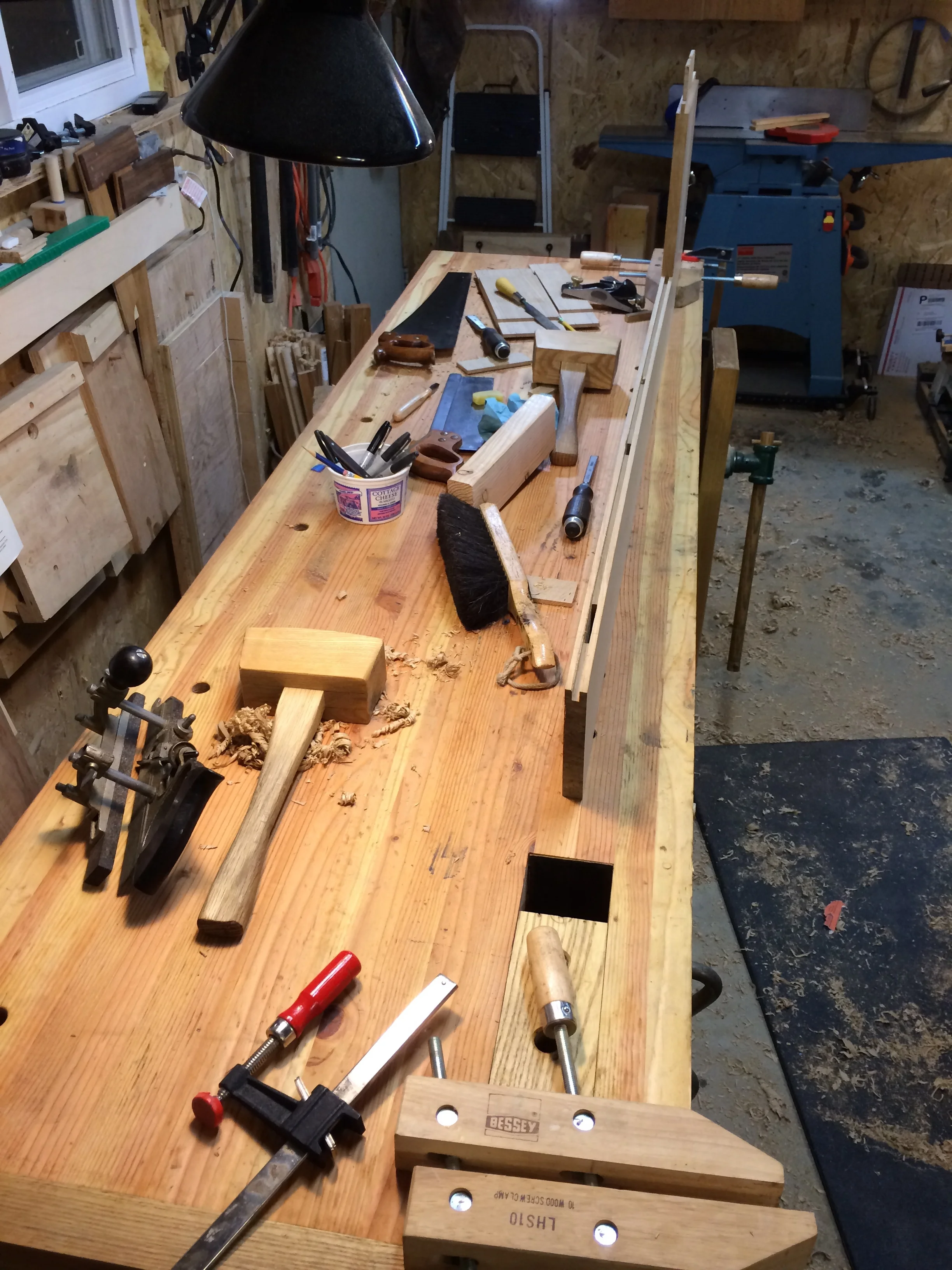
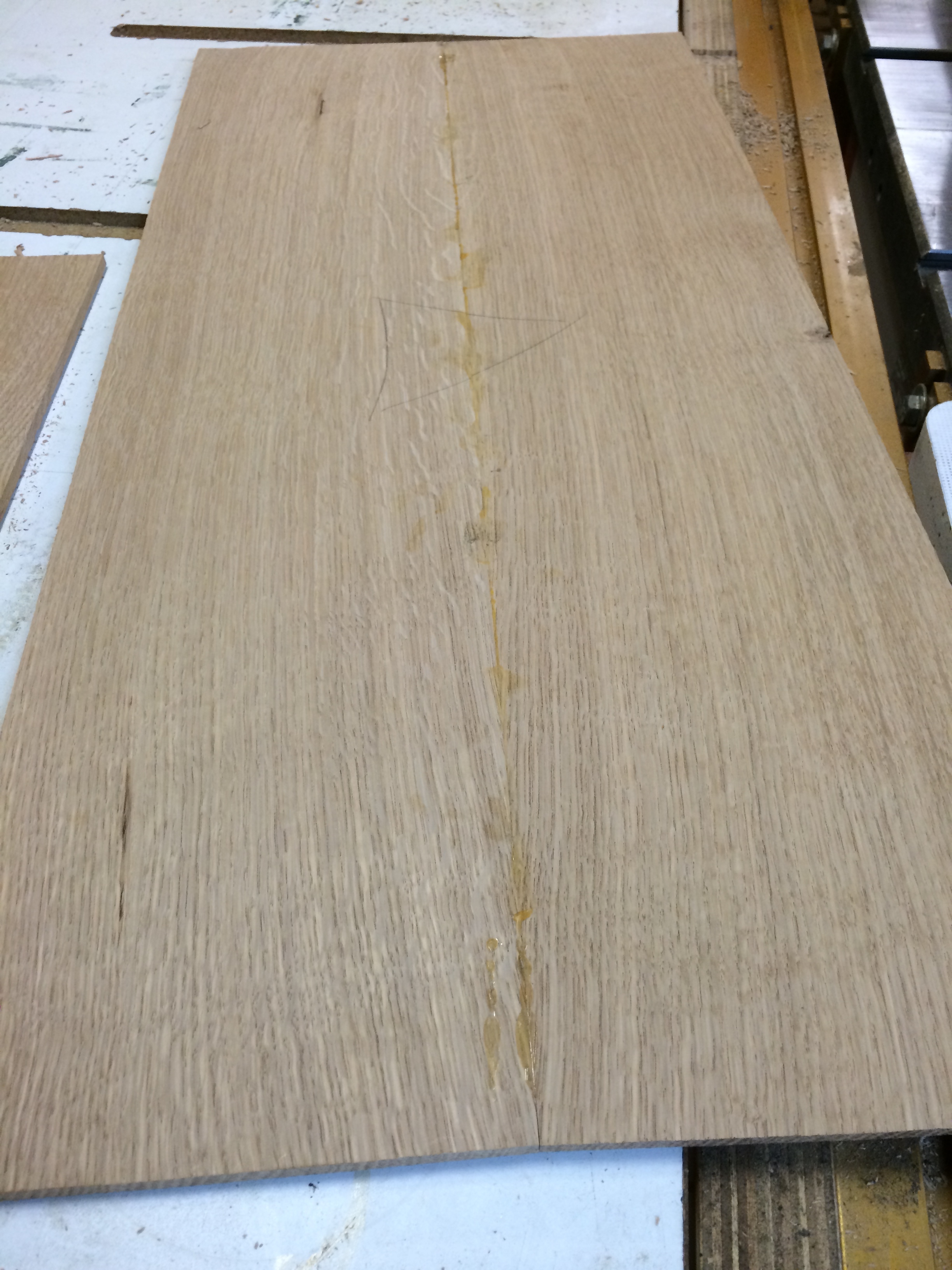
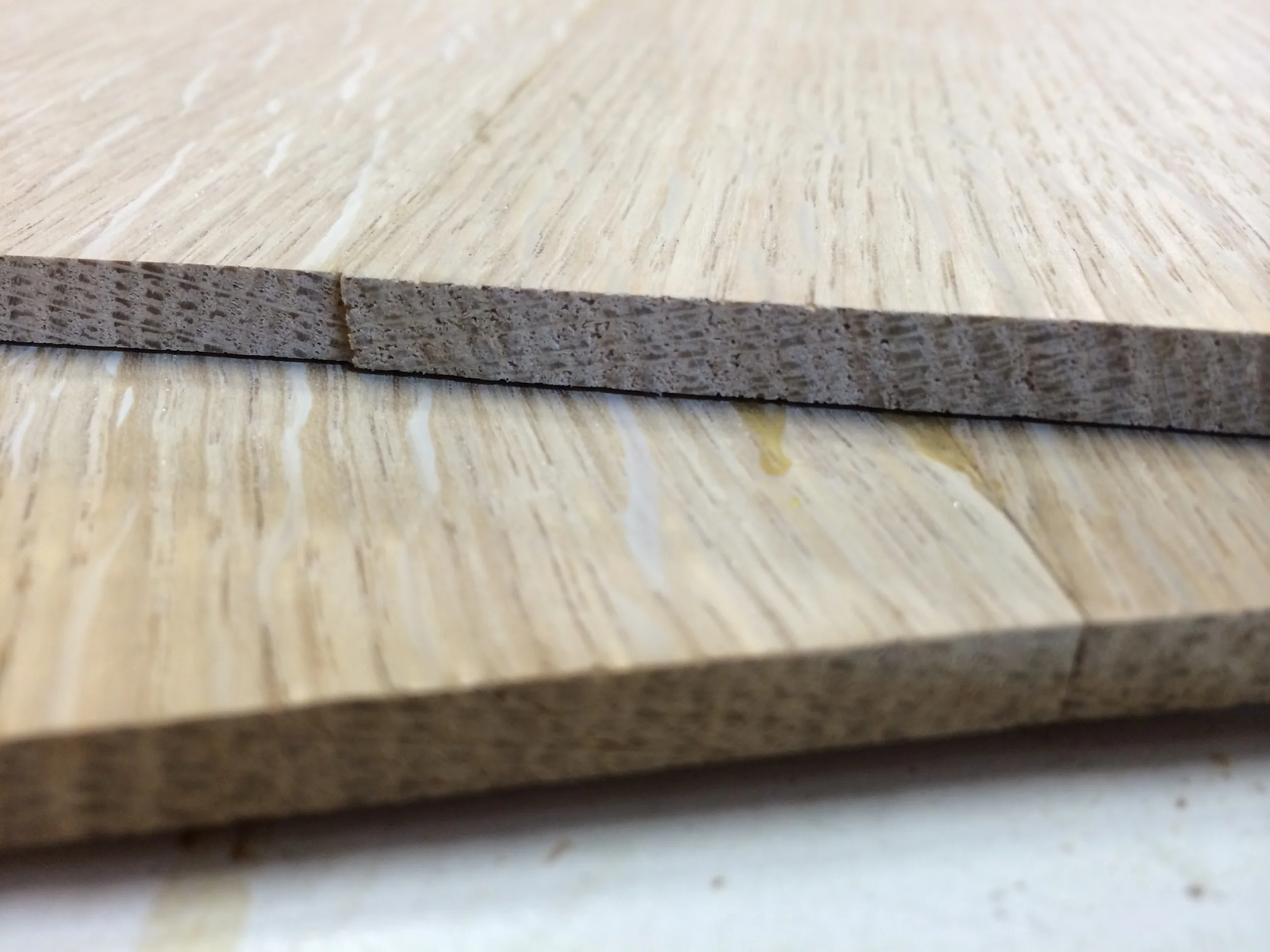
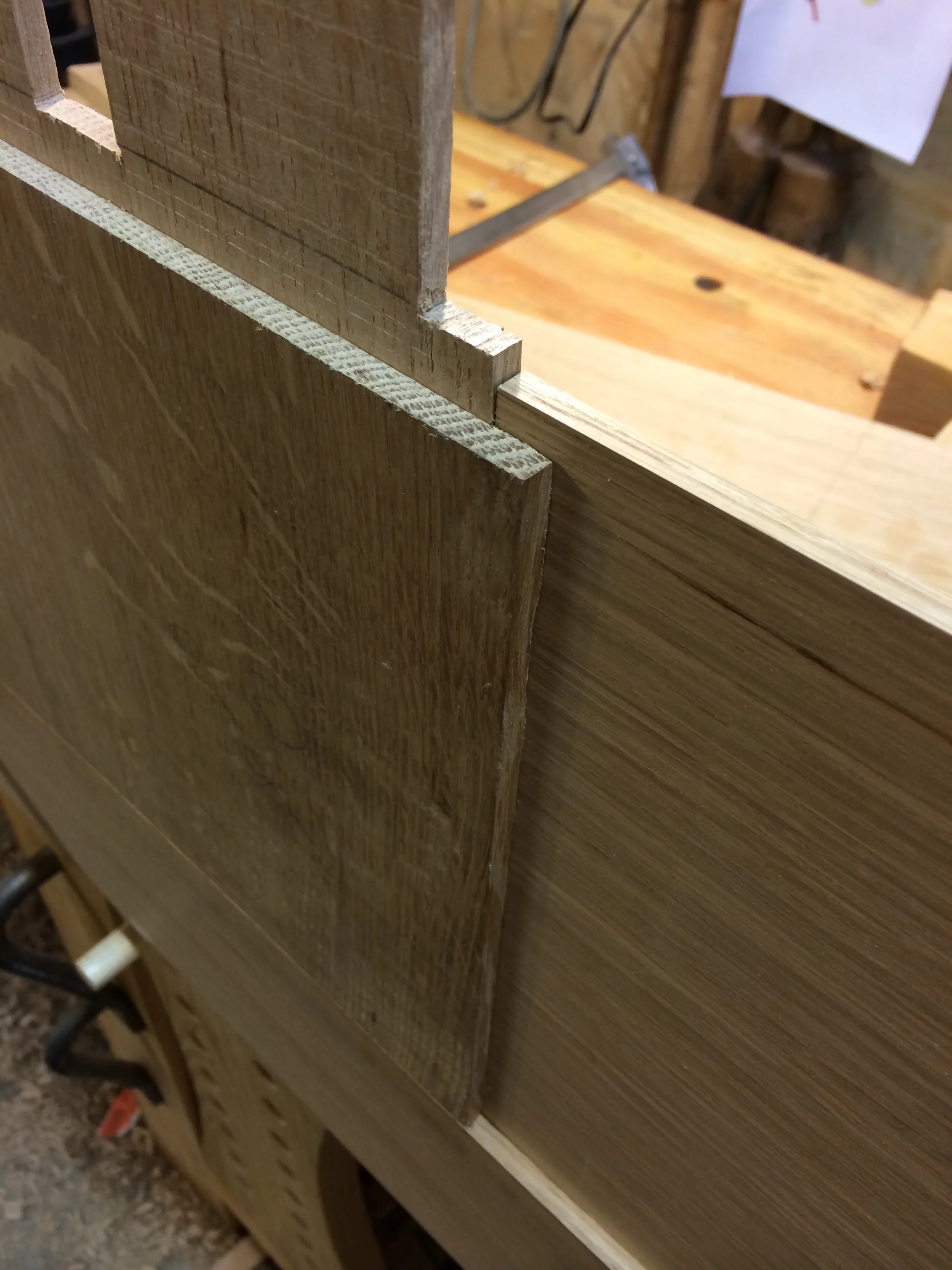
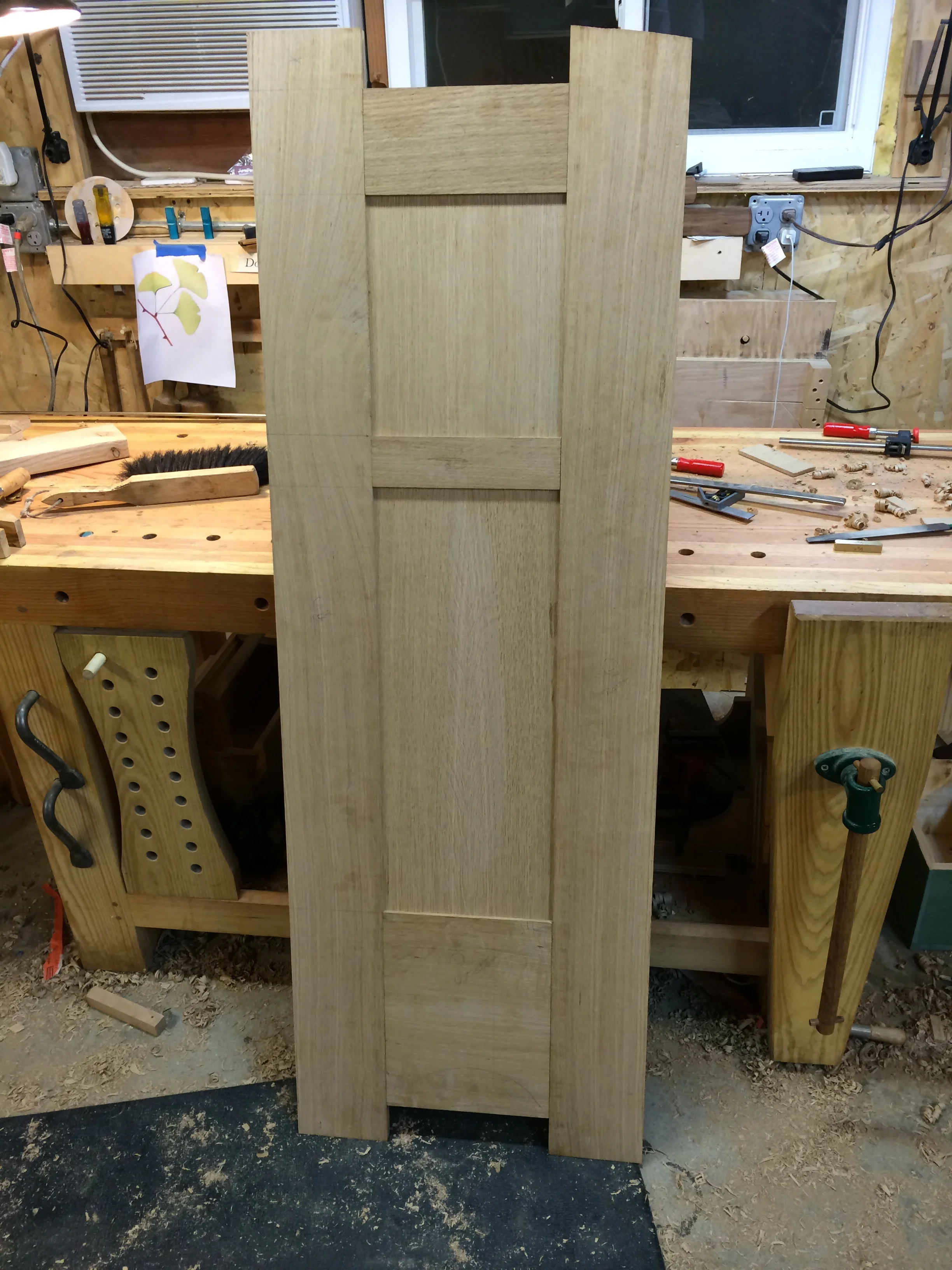
I cut the tenons with a dado blade on the table saw, (but could have just as easily used a tenon saw) leaving them slightly oversized to fit later. After I cut the grooves for the panel with a Stanley no. 45 plane, I fit the joints. Next up was re-sawing some pieces for the solid wood panels. A nice new Woodslicer II blade in my 14" bandsaw worked wonderfully, and after my glue up, I had some nice book matched 1/4" panels. Red, over at LumberJocks.com, made a nice post on the process that illustrates that process, and matches what I did pretty closely.

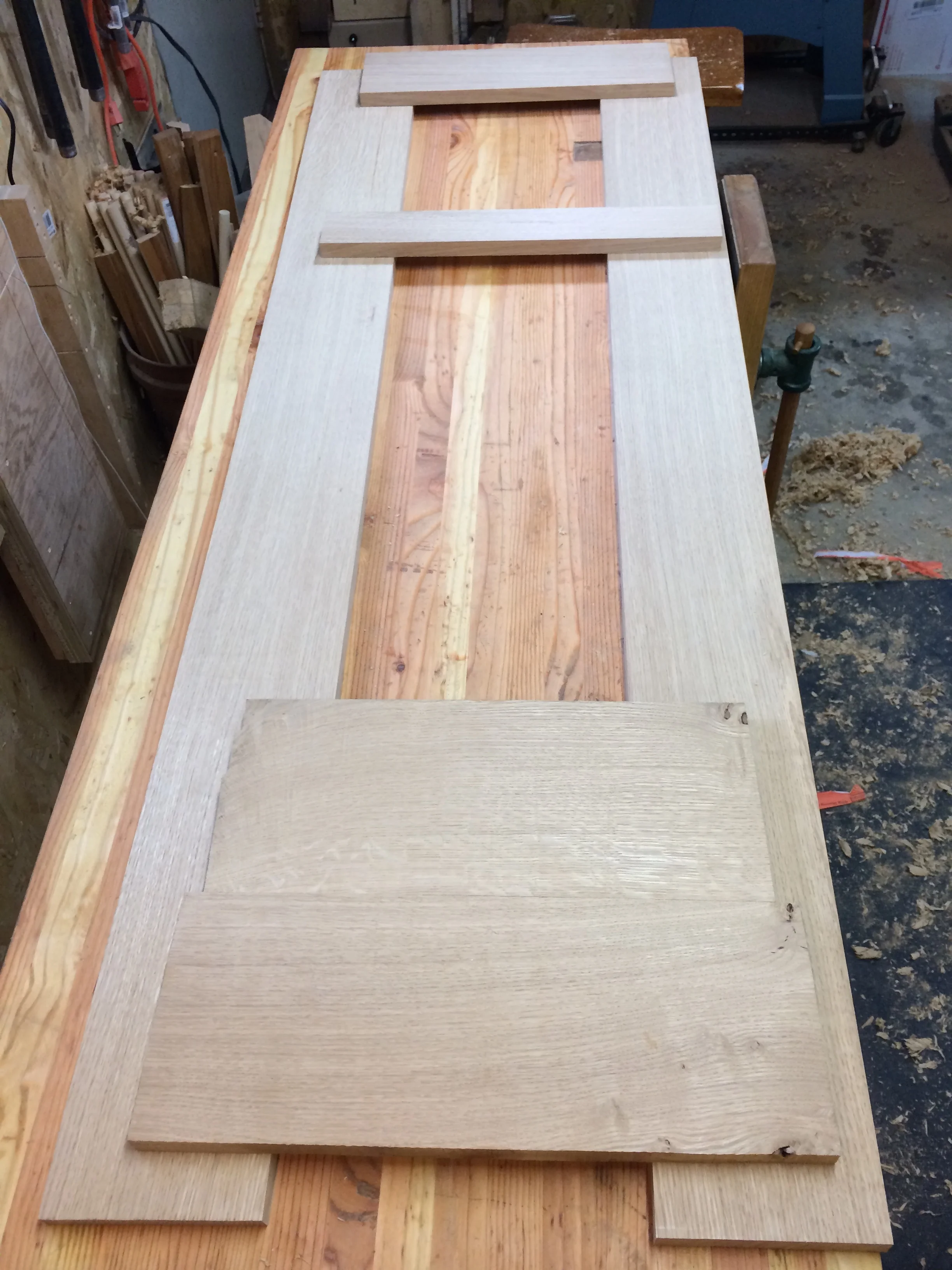
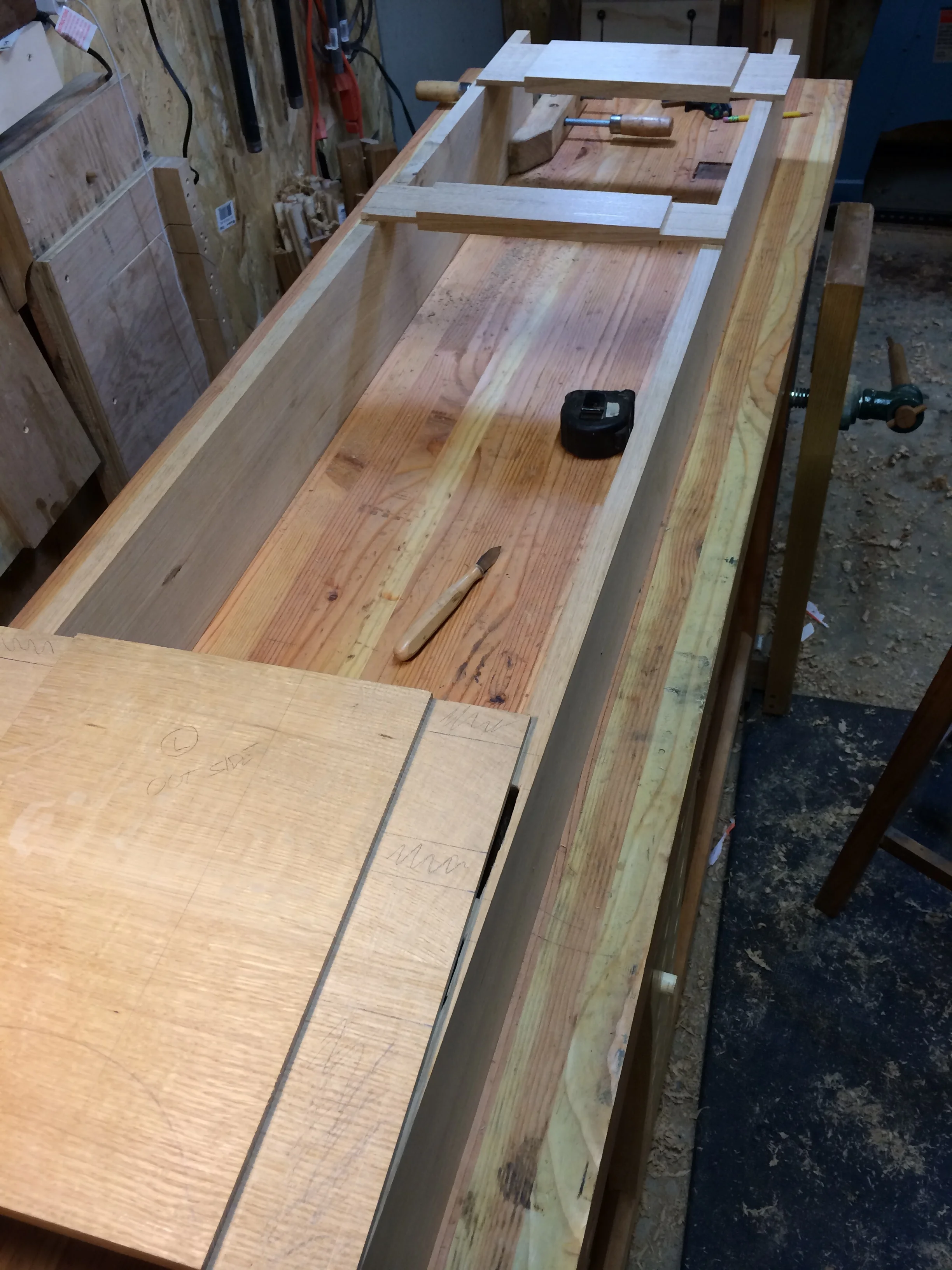
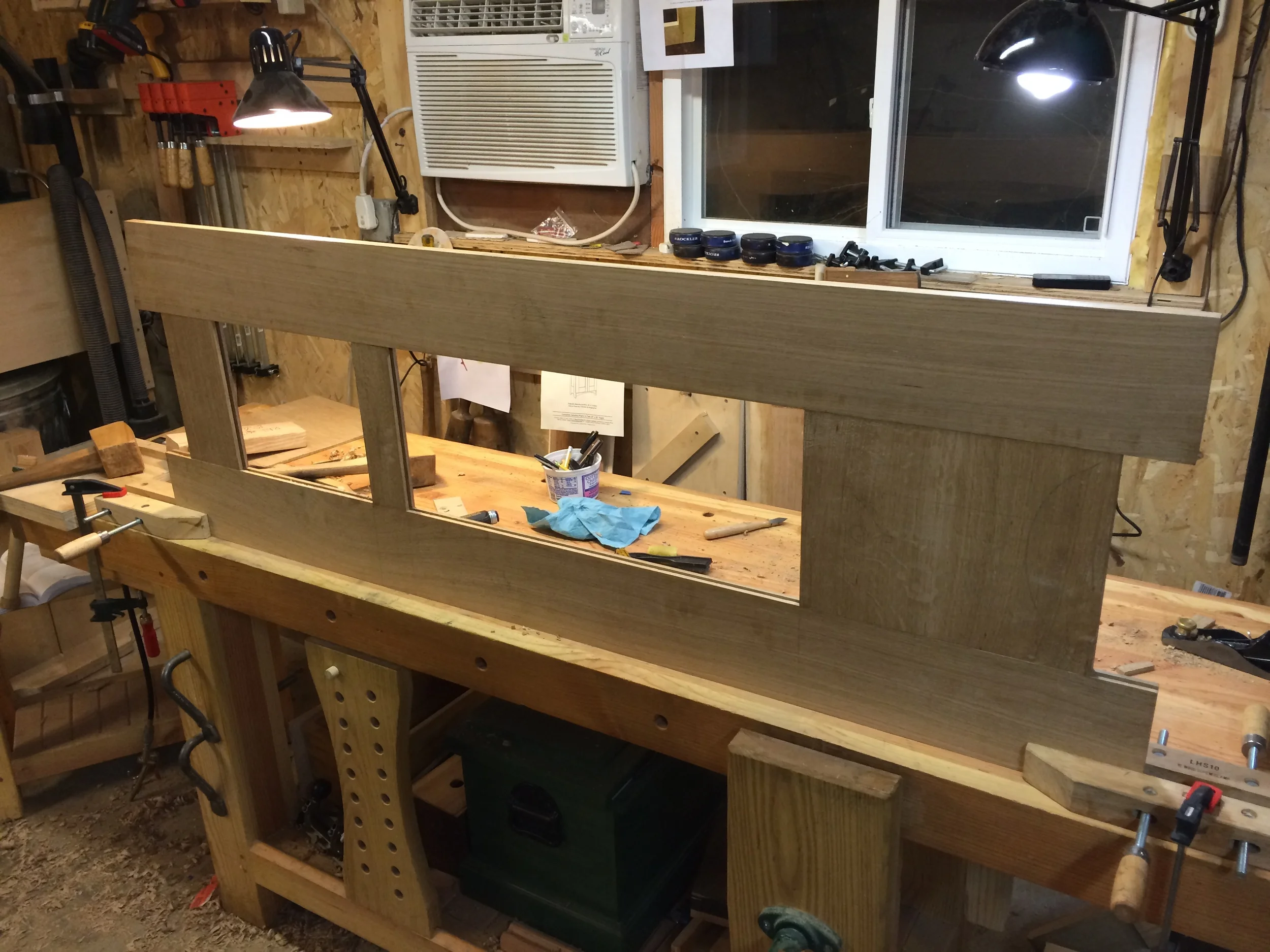
All that was left was a dry fit, and it came out well. Here's some pictures of the assembly. Only five more frame & panels (the other side, the back, and two doors), a top & bottom, the center divider, and all the drawers to go.